

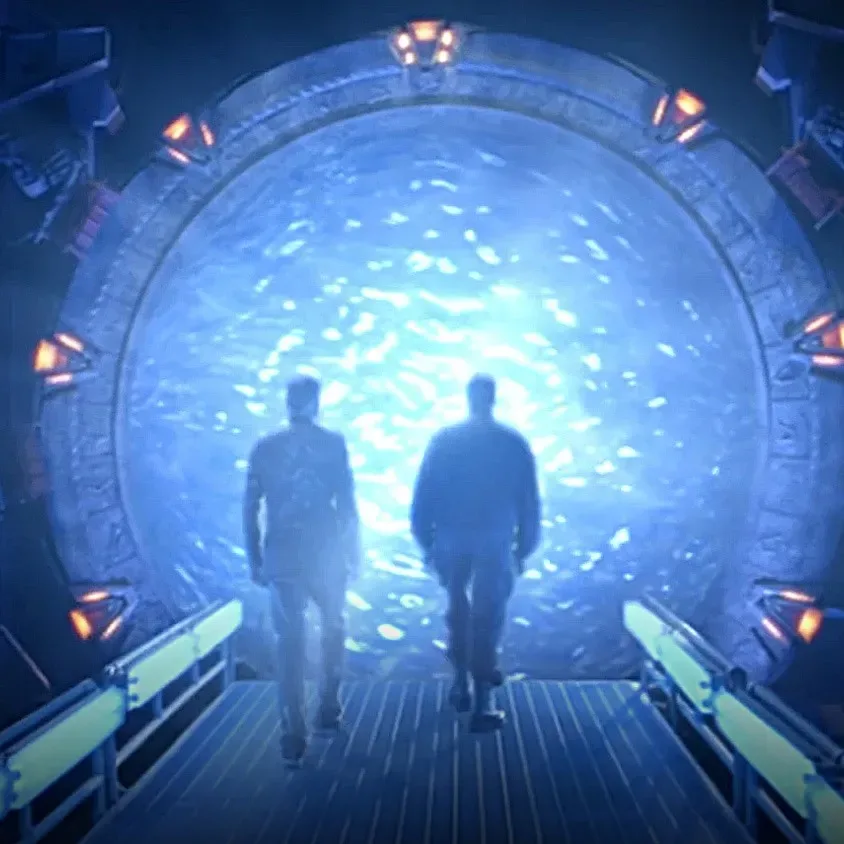
A proposed Stargate revival that was ultimately canceled had reportedly found a way to bring back one of the franchise's best-known characters without requiring newcomers to master decades of continuity first. The series would have featured Michael Shanks as Daniel Jackson, with the longtime SG-1 character trapped in a parallel universe whose history had diverged sharply from the familiar Stargate timeline.
The concept offers a revealing look at what the abandoned project was trying to accomplish. Rather than simply picking up after the many seasons of Stargate SG-1, Stargate Atlantis, and Stargate Universe, the show was reportedly being shaped as a soft reboot. It could have introduced the gate, its worlds, dangers, and mythology to an audience with no prior investment in the franchise, while Daniel's presence would have provided an emotional and narrative bridge for longtime fans.
Shanks confirmed during the Starfury: Ascension 2 convention in Birmingham, UK that he had been attached to the project. Further discussion of the planned series has outlined an alternate-universe premise in which various major developments from earlier Stargate shows simply did not happen. Daniel, however, would have carried knowledge of the original or "Prime" reality with him, making him both a familiar returning hero and an outsider in the world around him.
A Familiar Character in an Unfamiliar Stargate
Daniel Jackson is especially well suited to a premise built around discovery. Across SG-1, he was frequently the character most invested in language, archaeology, alien cultures, and the moral consequences of Earth's encounters through the Stargate. He began as an academic driven by the mysteries of ancient civilizations, then became a core part of SG-1's missions and one of the franchise's most enduring figures.
For useful background on this topic, read Rockstar's Rob Nelson Explains Why GTA 6 Satire Must Survive Long Development Cycles.
Putting that Daniel in a reality that does not align with his memories would have created an immediate dramatic engine. The character would understand the stakes behind the Stargate and the dangers that might emerge, but the people, institutions, alliances, and events he knew could be altered or absent. New viewers would be able to learn the rules alongside the new universe's characters, while established fans could recognize the weight of what had changed.
That approach is different from a total continuity reset. A complete reboot would discard the prior canon outright and recast or reinvent its characters. The reported Stargate plan instead appears to have aimed for a story that acknowledged the legacy universe while creating space to tell a more accessible version of the premise. Daniel's memories would have preserved the importance of the old stories, even if the show's setting did not depend on them.
It also would have supplied a clear personal conflict for Shanks' character. Daniel would not merely be an experienced expert helping a new team understand the Stargate. He would be separated from the people and world he knew, confronting alternate versions of familiar situations and potentially familiar faces. For a franchise that has long explored alternate timelines, ascension, alien technology, and the consequences of interference across worlds, a parallel-universe framework is a natural fit.
Soft Reboot Potential for New and Returning Fans
Long-running genre franchises regularly face a difficult balance when planning a revival. Existing fans often want the new entry to respect what came before, including the personalities and consequences that made the original run meaningful. At the same time, a prospective series needs an entry point for viewers who were not watching television during the original era of SG-1 or who have not worked through its extensive episode count.
The alternate-universe setting seemingly addressed both concerns. In practical storytelling terms, it could reintroduce core Stargate concepts without treating them as basic information that every character already knows. The writers could establish a different political situation on Earth, revise the status of past alien conflicts, and introduce fresh versions of the franchise's central institutions. Yet Daniel's perspective would allow the series to contrast those elements with the legacy continuity rather than pretending it never existed.
There was also reportedly room for the narrative to move toward the Prime universe in later seasons. That possibility suggests the parallel reality was not necessarily intended as a permanent wall separating the revival from the older shows. It could have been a launching point: a way to establish a new ensemble and a new version of the setting before expanding the story into the wider continuity fans already know.
Such a structure could have opened the door for appearances by additional Stargate veterans. Alternate-universe stories are particularly flexible because they allow a familiar actor or character concept to return without being strictly limited by previous events. A cameo could be a reunion with a known character, a radically different interpretation of that character, or a brief encounter that emphasizes how much the two realities have diverged. No specific additional returning cast members were confirmed for the canceled show, but the setup would have made those kinds of appearances possible.
The Project's Cancellation Still Stands
The revival was canceled despite years of work and a public unveiling that had generated considerable interest among Stargate followers. Shanks had already expressed disappointment over the abrupt end of the project, and his involvement made clear that the show had not been imagined as a distant reboot with no connection to the people who helped define the earlier series.
One account of the cancellation suggested concern that the revival might not attract viewers beyond Stargate's committed fan base. That characterization was later disputed by veteran Stargate writer Joseph Mallozzi, who had been working on the project. The competing accounts underline how little has been publicly settled about the decision-making behind the cancellation, but they also point to a familiar challenge for legacy revivals: the desire to preserve a dedicated audience while proving the property can grow larger.
The reported Daniel Jackson concept appears to have been a direct answer to that challenge. It was designed to give the show a recognizable lead and a genuine connection to the original creative era, while stripping away some of the continuity burden that can make a franchise with multiple series intimidating. Whether that would have succeeded cannot be known, but it was a more ambitious strategy than simply recreating the original format.
For fans, the loss is especially notable because Shanks has indicated that this project may have represented the best chance for a new Stargate production built with former members of the Stargate SG-1 team and with participation from members of the earlier cast. That does not mean Stargate itself has no future. Interest reportedly remains in continuing the franchise in some form, even though this particular revival is no longer moving forward.
Why the Lost Premise Matters
Cancelled productions often become curiosities because of what they might have been, but this Stargate proposal is notable for how clearly it identifies a path through a difficult franchise problem. It did not appear to want a clean break from the past, nor did it plan to demand encyclopedic knowledge from every new viewer. Instead, it would have made the tension between old and new continuity part of the actual story.
Daniel Jackson could have embodied that tension. He would have been a survivor from the established Stargate universe, stranded in a version of reality where his experience was valuable but incomplete. His presence would have reassured longtime viewers that the history they followed still mattered. At the same time, his displacement would have made him understandable to anyone entering the franchise for the first time: he, too, would have been learning what was different and trying to find his place.
There is no indication that the cancellation will be reversed, despite calls from fans for the project to return. For now, the parallel-universe Daniel Jackson story remains an unrealized chapter in Stargate's history. Still, the premise demonstrates that the franchise's future does not have to choose between nostalgia and reinvention. If Stargate does return in another form, the canceled revival's central idea may stand as a useful example of how a legacy universe can be honored while leaving the gate open for an entirely new audience.
Community
Discussion
Start the conversation.
No comments have been posted yet.