

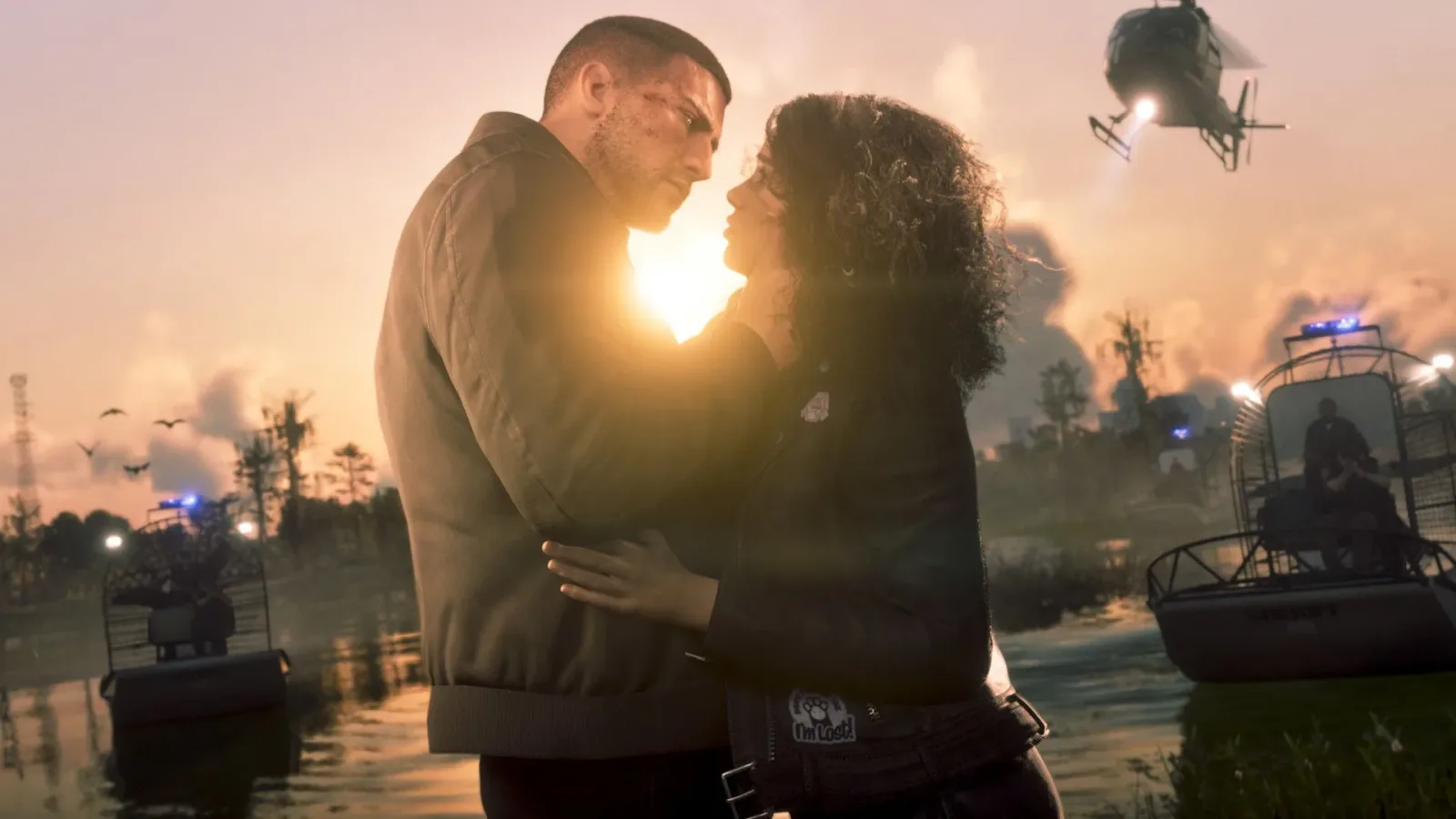
Grand Theft Auto 6 is arriving after one of the longest waits in modern blockbuster gaming, and Rockstar North co-lead Rob Nelson has explained one of the less obvious complications of that timeline: satire can expire.
The Grand Theft Auto series has built much of its identity around taking aim at the culture around it. Its fictional cities, radio stations, commercials, television programs, businesses, celebrities, and civilians have regularly reflected recognizable behaviors from the real world, then pushed them into absurdity. But creating satire for a game that can spend more than a decade in development means Rockstar cannot simply chase whichever headline or online trend is biggest at a given moment.
Nelson says the studio has to consider whether an idea will continue to work years after it is first discussed. GTA 6 has been in development since 2015, he said, while most of the team began moving onto the project after Red Dead Redemption 2 launched in 2018. That extended production runway has required the developers to think carefully about which subjects belong in the game and which may become irrelevant before the finished version reaches players.
Grand Theft Auto 6 is scheduled to release on November 19. While Rockstar has already shown a version of Vice City that looks built for the current era of viral videos, influencer culture, sensational local media, and consumer excess, Nelson's comments suggest that the game's satire is being selected with longevity in mind rather than simply reacting to the news cycle.
For useful background on this topic, read No Law's Port Desire Promises a Dense Cyber-Noir RPG Built Around Player Choice.
A moving target for a game built over years
Nelson described the core challenge plainly: an idea can take a long time to move from a concept into a completed game. Writing, casting, performance capture, filming, mission design, animation, audio work, testing, and implementation are all lengthy processes on a production of GTA 6's scale. A reference that feels clever and immediate at the beginning of that chain might feel old-fashioned, confusing, or completely disconnected from the culture by the end.
That does not mean Rockstar is avoiding contemporary subjects. Instead, it means the studio is looking for behaviors and institutions with staying power. Nelson said there will always be material worth satirizing because ridiculous situations and conduct are not likely to disappear. The important part is identifying targets that fit the world and the story Rockstar wants to make.
It is a useful distinction. A single viral clip, app feature, celebrity scandal, or political talking point can dominate conversation for a few days and then vanish. Broader habits, however, can evolve without losing their relevance. The desire to turn everyday life into content, the hunger for attention, exploitative marketing, conspicuous wealth, paranoia, and the willingness of people to embarrass themselves in public for a possible reward all provide more durable material. The details may change, but the underlying impulse remains recognizable.
For a series like Grand Theft Auto, that distinction matters enormously. The games are not merely collections of jokes or references. Their comedy is woven into the setting. Radio banter makes travel feel like a tour through a warped version of local culture. Advertising adds texture to stores, billboards, and television. Side characters and passersby help establish what a city values, fears, and laughs at. If too much of that material is tied to a short-lived moment, the fictional world risks feeling frozen in an era that had already passed before players got to explore it.
Vice City's contemporary setting brings a different challenge
GTA 6's return to Vice City gives Rockstar a particularly interesting balance to strike. Grand Theft Auto: Vice City was openly rooted in a stylized interpretation of 1980s Miami, drawing strength from a period that was already over. That gave the game a defined aesthetic language: neon, pastel fashion, period music, crime dramas, and pop-cultural excess reframed through Rockstar's particular sense of humor.
The new game is taking a different approach. Its Vice City reflects a contemporary environment, much closer in spirit to the present-day setting of Grand Theft Auto V. That makes observation more immediate, but it also creates the problem Nelson outlined. The closer satire sits to modern life, the faster its surface details can shift.
Material shown so far indicates that Rockstar understands where the most resilient opportunities may be. The extended look at GTA 6 included people recording activity in public and attempting to turn chaotic events into viral moments. That is not a joke about one specific platform, a single meme, or a fleeting creator trend. It is a broader look at a culture where people increasingly experience events through their phone cameras and may see attention as something to pursue in real time.
That behavior has already persisted through multiple changes in apps, algorithms, devices, and online communities. It is likely to remain legible even as the particulars continue to evolve. In other words, it is the kind of target that can make sense for a game with a development history stretching from 2015 to 2026.
Rockstar's satire works best when it serves the world
Nelson also emphasized that Rockstar does not choose subjects simply because they are available to mock. The studio evaluates whether an idea works within the story being told and the world in which it is being told. That principle is important because Grand Theft Auto's strongest satire often does more than deliver a punchline. It reinforces the atmosphere of a place where every system seems commercially motivated, socially performative, or quietly dysfunctional.
The in-game advertisements already glimpsed around GTA 6 are an obvious example of that tradition. Rockstar has long used fake commercials as a way to skewer capitalism, branding, dubious products, and the language companies use to sell people things they may not need. These jokes can be memorable, but they also make the setting feel complete. A city becomes more convincing when its residents are surrounded by local stations, odd businesses, terrible ads, and personalities selling themselves at every opportunity.
That approach can be more effective than directly recreating a real-world controversy. A fictional company selling an absurd lifestyle product may remain funny long after a real corporate campaign has been forgotten. A broadcaster amplifying panic or a self-appointed expert offering nonsense advice can work across eras because the joke is rooted in human behavior rather than one date on the calendar.
There is also room for GTA 6 to satirize the audience's own relationship with the world it depicts. Modern Vice City appears crowded with people watching, filming, sharing, reacting, and performing. For players, that creates a natural tension. Grand Theft Auto has always invited spectatorship: players explore, cause disruption, observe strangers, and encounter a city full of small stories. In a setting where nearly everyone has a camera, Rockstar can turn that familiar player perspective back on the fictional population itself.
Long production does not mean a game must feel old
Large-scale games now face a creative problem that earlier generations encountered less often. As development timelines grow, the period between a team's first ideas and a game's public release can cover multiple technological and cultural shifts. A concept chosen in 2015 may have been imagined before the habits of 2018, 2020, or 2026 had taken shape. Even a topic as significant as the COVID pandemic, raised during Nelson's interview, presents the question of whether it belongs in a fictional world that must feel coherent for years to come.
Nelson's answer is not that major events are off limits. Rather, Rockstar must find an angle that has time to mature and still belongs in the game's larger creative framework. A subject cannot simply be current; it must be useful. It needs to support the setting, characters, tone, and themes instead of making GTA 6 feel like a time capsule assembled from temporary headlines.
That is a demanding standard, but it fits the history of the series. Grand Theft Auto is often at its most memorable when it turns broadly familiar experiences into exaggerated fiction: bad advertising, tabloid thinking, vanity, political posturing, consumer culture, status obsession, and the gap between how people present themselves and how they behave. Those subjects do not require a precise reference to land. They are recognizable because they endure.
What to expect when GTA 6 arrives
Players will have to wait until November 19 to see the full range of targets Rockstar has chosen for GTA 6. The material revealed so far points toward a Vice City that recognizes the defining habits of modern public life without necessarily chaining itself to the fastest-moving parts of the internet.
Nelson's comments provide a clearer picture of the editorial discipline behind that choice. The goal is not merely to make fun of whatever is happening now. It is to find the situations, systems, and behaviors that will still feel absurd by the time players enter Vice City--and ideally years after they do.
For a franchise known for capturing a particular cultural mood, that may be GTA 6's most difficult task. The game needs to feel immediate enough to reflect the world players know, but broad enough to avoid becoming dated by the time its long journey from development to release is complete. Rockstar's answer, at least in Nelson's view, is to keep looking beyond the temporary detail and toward the human foolishness that never seems to go away.
Community
Discussion
Start the conversation.
No comments have been posted yet.