

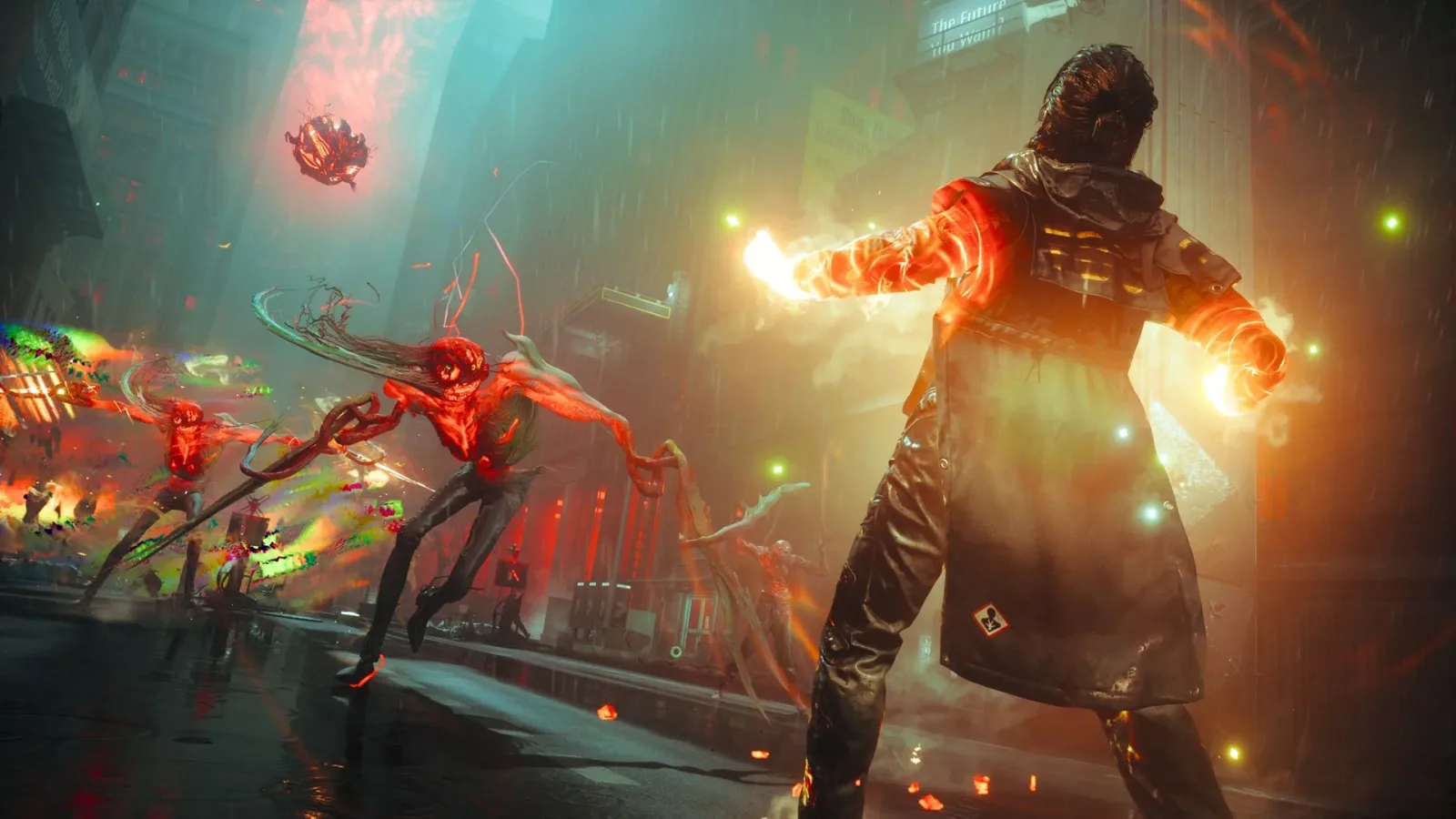
Control Resonant appears ready to make a major change to the formula established by 2019's Control. Jesse Faden's telekinetic gunfights inside the impossible Federal Bureau of Control headquarters have given way to Dylan Faden, a reshaped weapon, and a ravaged New York City where close-quarters aggression looks central to surviving. It is an action-RPG direction that could prove divisive for players attached to the first game's shooting, launching, and levitation-heavy identity.
Yet the most compelling element shown so far may not be the combat system at all. It is Manhattan itself: strangely empty, covered in an ethereal blue growth known as the Mold, and apparently open to the same reality-bending rules that made the Oldest House such an unforgettable setting. The city is no longer merely a familiar backdrop. In Control Resonant, it seems to have become a paranormal problem in need of containment.
Control Resonant is due to arrive on September 24, 2026, for PC, PlayStation 5, and Xbox Series X. A hands-off Gamescom 2026 presentation offered a closer look at Dylan's abilities, a grotesque Mold boss, and a progression decision that could shape an entire playthrough. The footage suggests an energetic and violent action-RPG, but the bigger question is whether its world will retain the unnerving sense of curiosity that defines this corner of Remedy's universe.
Manhattan has become unfamiliar territory
The version of New York seen in Control Resonant is not defined by traffic, crowds, or the familiar movement of a major city. Its sidewalks are quiet. In place of people, blue Mold has spread across the environment, creating an eerie visual contrast with the city's recognizable spaces. Remedy senior communications manager Miika Huttunen identified the substance as the Mold during the presentation, a detail that will immediately concern anyone familiar with its earlier appearances.
For useful background on this topic, read CeX Lists Retro Birmingham Store on Bull Street, Pointing to Dedicated Classic-Gaming Return.
The Mold is not simply scenery, either. Dylan is apparently required to consume samples of it as part of his mission. It is a wonderfully disturbing premise: the protagonist is not just fighting an invasive supernatural force, but willingly putting it inside himself. That detail naturally raises questions about what the substance does to Dylan, why he can use it, and whether the game will allow its power to change him in ways that go beyond a basic upgrade tree.
Removing the story from the Oldest House is a substantial risk, because that endlessly shifting office complex was more than a location. It supported Control's atmosphere at every turn, turning ordinary elevators, filing cabinets, office rooms, and service corridors into objects of dread or fascination. But Manhattan presents another intriguing possibility. A city gives Control Resonant an opportunity to make the paranormal feel larger, more public, and more invasive. Familiar urban landmarks and mundane streets can become uncanny once the world's rules begin to slip.
There is also a compelling contrast in the idea of an empty Manhattan. The Oldest House was claustrophobic, bureaucratic, and oppressive; its halls felt like the architecture itself was keeping secrets. A vacant city could create a different kind of isolation. Dylan may have far more space to move, but that does not mean he is safer. If anything, an emptied-out metropolis can make the player feel conspicuously exposed.
Dylan's Aberrant turns combat toward melee
Dylan enters this crisis with the Aberrant, an Object of Power capable of changing shape. Like other Altered Items in this setting, it is more than a conventional piece of gear. It gives the protagonist a flexible combat tool, with the demonstration focusing on its Drill form. In that configuration, Dylan can deliver piercing attacks to blue, furry Mold creatures that populate the city.
The shift from Jesse's Service Weapon to Dylan's melee-focused Aberrant is immediately noticeable. The creative direction behind the change is blunt: melee is considered cool. On the evidence shown, that confidence is not misplaced. Dylan can chain attacks while hovering in place, evade incoming threats, and trigger vivid finishing moves once enemies are vulnerable. Those finishers are not purely for spectacle, as completing them temporarily raises Dylan's damage output and encourages the player to keep the momentum going.
That emphasis pairs with one of Control Resonant's more important mechanical rules: health cannot be restored with healing items during a fight. Recovery comes from defeating enemies. The design clearly wants players to push forward, claim kills, and convert offense into survival rather than retreating to use consumables. It may give every encounter a sharp rhythm, particularly when Dylan is low on health and must decide whether he can safely reach the next enemy.
Still, the presentation did not make Dylan look invincible. He was frequently dodging attacks and repositioning amid hostile crowds, which creates the impression of a character with powerful tools but limited room for error. Whether he truly plays like a glass cannon will need hands-on confirmation, but the footage does suggest that aggression must be measured. Recklessly pressing attacks may not be enough when enemies can surround Dylan or interrupt his approach.
That distinction is important for fans worried that the sequel's new genre focus could turn the experience into a generic Soulslike. The boss shown during the presentation did include elements familiar to action-game players: a larger-than-life arena encounter, weak points to destroy in stages, and smaller enemies that complicate the main battle. But the game's combat identity currently seems more focused on mobility, combos, executions, and maintaining pressure than on deliberate stamina management or methodical punishment.
The Collective is a memorable early sign of Control's body horror
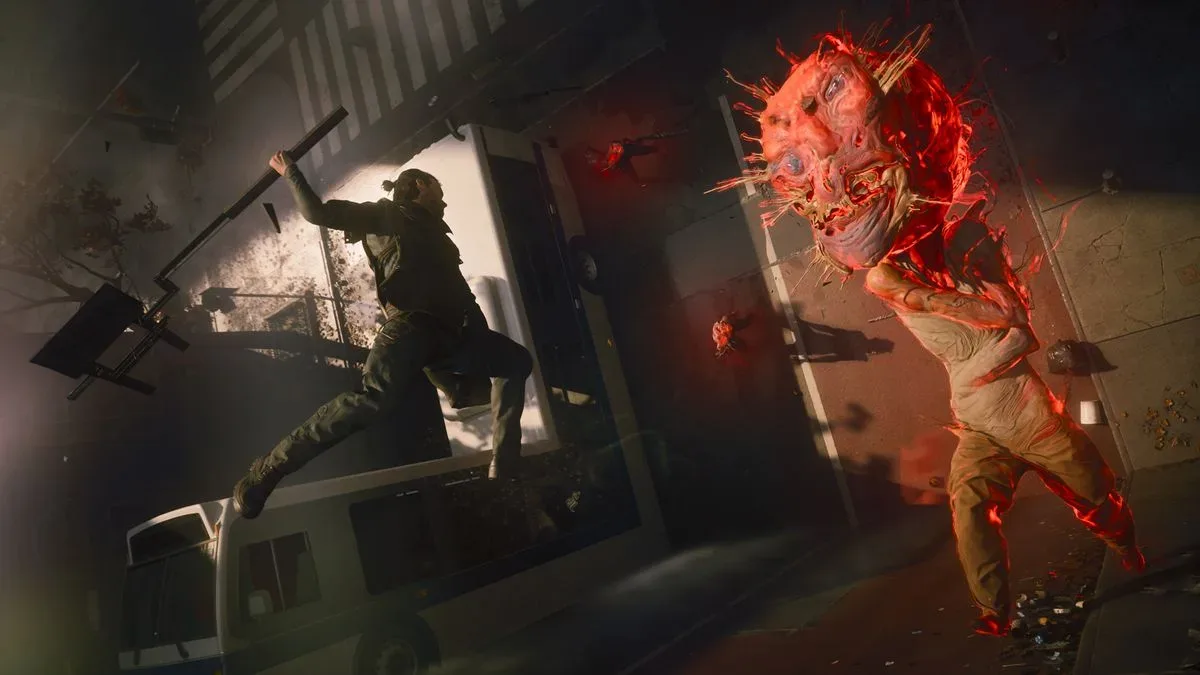
One of the strongest images from the gameplay presentation is The Collective, a boss encountered after Dylan crosses into another liminal dimension. It is composed of enormous faces built from the Mold, arranged into a grotesque formation that resembles a monument made of organic material. Its tentacles become a dangerous part of the encounter, while smaller creatures are sent after Dylan throughout the fight.
The battle requires Dylan to damage designated parts of the boss over multiple phases. Structurally, it is a recognizable action-RPG boss setup, but the visual concept is distinctly suited to Control. The Collective is not terrifying simply because it is large. It is disturbing because its anatomy is wrong, its faces are assembled rather than living, and its presence makes the arena feel like an infection has developed a will of its own.
That sense of visual invention matters. Control has always found much of its power in concepts that are both absurd and unsettling: mundane objects that become deadly, internal training materials that reveal something ominous, and supernatural phenomena described in the detached language of official paperwork. If Control Resonant is moving further into action-RPG territory, it will need enemies and boss encounters with enough personality to prevent the combat loop from becoming repetitive. The Collective is a promising sign that the game understands this need.
Mold powers may make each playthrough meaningfully different
After defeating The Collective, Dylan is offered a choice in another liminal space. The options are both tied to the Mold, but they serve different functions. One lets Dylan channel the substance through his arm for direct attacks. The other causes a Mold tentacle to burst from the ground and attack independently.
The key limitation is that only one of these powers can be selected for a full playthrough. That decision could make builds more distinct than a system where every ability is eventually unlocked. Choosing a personal offensive enhancement may produce a different rhythm than selecting an autonomous tentacle that can pressure enemies alongside Dylan. It also gives players a reason to consider their preferred style rather than automatically taking everything available.
There is, however, an important concession for completion-minded players. Existing powers carry into New Game Plus, meaning a second run can expand Dylan's toolset instead of forcing a permanent sacrifice. That approach balances replayability with commitment: the first choice matters in the moment, while a later playthrough provides access to what was left behind.
It remains unclear how broad this progression system will become, how many Mold-related choices await beyond this early example, or whether Dylan's relationship with the substance alters the narrative. Those unanswered questions are part of the appeal. In a game world where altered objects and supernatural contagions rarely have simple explanations, a power system can also be a storytelling device.
The real test is whether Control Resonant can still get inside players' heads
There is plenty to like in Control Resonant's immediate action. The Aberrant's transformations look satisfying, executions provide a clear incentive to stay aggressive, and The Collective demonstrates that the game's bosses may be as strange as its premise demands. But combat alone is unlikely to determine whether this follow-up resonates with longtime Control players.
The original game left a mark because it encouraged players to treat ordinary things as suspicious. A refrigerator could be a lethal mystery. A maze could reject conventional logic. A bizarre children's program could become unsettling evidence of a much larger threat. Its documents, recordings, side areas, and shifting spaces fostered the feeling that every detail might conceal a connection.
Control Resonant has the opportunity to bring that same tension to a far broader environment. What happens when the unknowable reaches public streets instead of hidden government offices? What strange rules govern Mold-covered Manhattan? What new Altered Items, thresholds, and unexplained rituals might be hiding behind shop fronts, subway entrances, apartments, and city infrastructure?
Dylan Faden has a formidable job ahead of him: saving a city while consuming the very substance that has overtaken it. But for players drawn to this universe's unsettling imagination, the most exciting prospect is not simply defeating the next creature. It is discovering what impossible thing is waiting around the next corner--and wondering whether it was ever safe to look at the world normally in the first place.



Community
Discussion
Start the conversation.
No comments have been posted yet.