

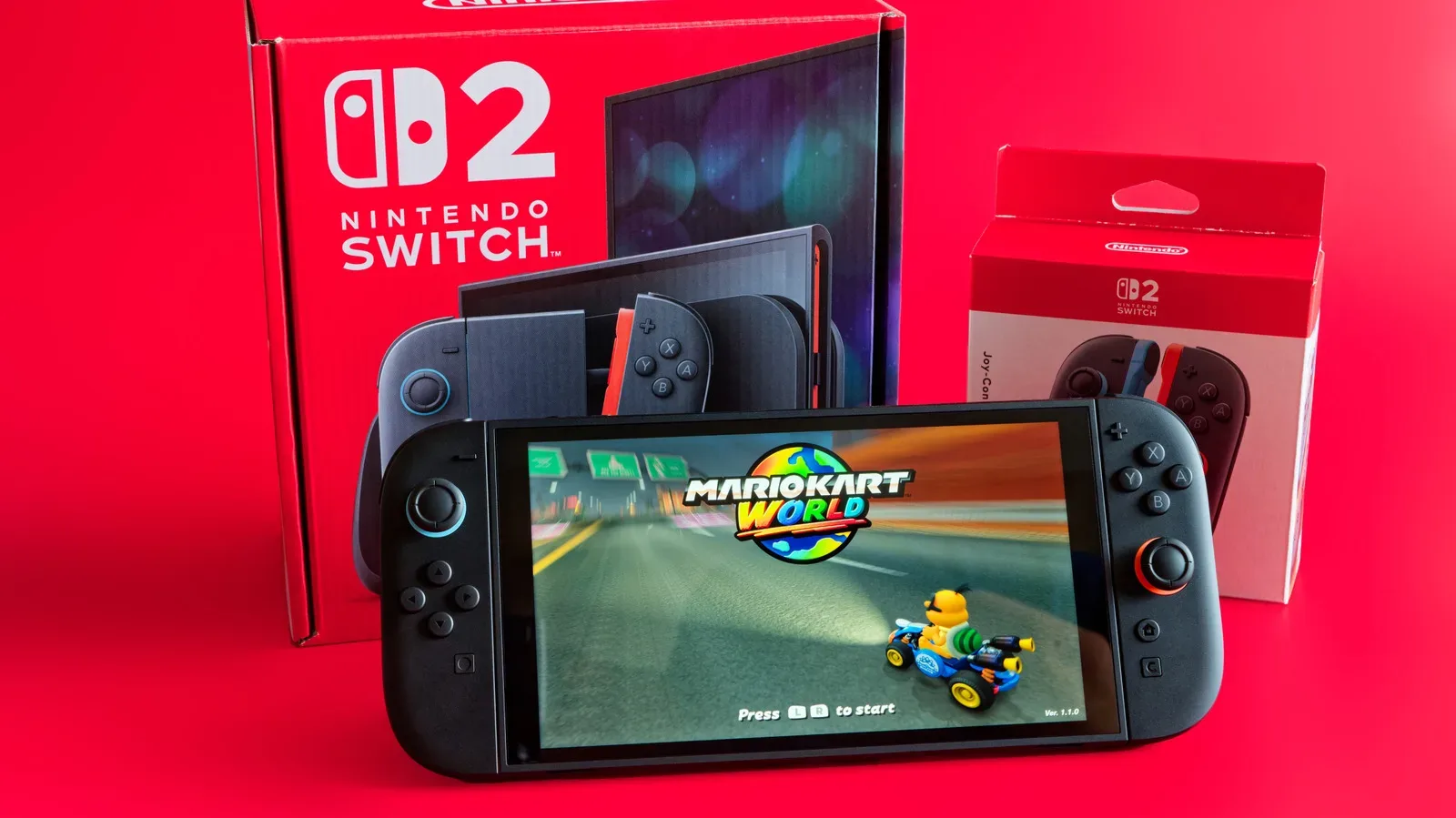
There is a particular ritual that comes with opening new hardware: lifting a console out of its box, connecting the accessories, powering it on, and peeling away any protective plastic still clinging to the device. On the Nintendo Switch 2, however, owners need to be careful not to treat every visible layer on the display as throwaway packaging.
Nintendo has repeatedly advised players not to remove the film already attached to the Switch 2 screen. While it can resemble the temporary plastic commonly placed on electronics during shipping, the layer has a different job. Nintendo describes it as an anti-scattering adhesive film, and it is intended to help protect users if the display glass breaks.
That distinction matters. The Switch 2 launched in the middle of 2025 and represents a substantial piece of portable gaming hardware. It arrived at $450 for the base system and $500 in a Mario Kart World bundle before the base model's standard price rose to $500. Regardless of when someone bought one, looking after the console's display is sensible. The pre-installed film is part of that protection, not an optional extra to discard on day one.
What the Switch 2's factory-applied film actually does
Calling the fitted layer a conventional screen protector can create confusion. A typical aftermarket protector is principally there to take the brunt of small everyday damage: scratches from dust, marks from repeated touchscreen use, or contact with objects when a handheld is transported. The film on the Switch 2 serves a more specific safety purpose.
For useful background on this topic, read N7 Day 2026 Becomes a Fight to Protect Mass Effect's Future After BioWare Closure.
If the screen glass were to crack or shatter, an anti-scattering layer can help hold fragments together rather than allowing loose shards to spread. That does not mean the display becomes unbreakable, nor does it eliminate the need to handle the system carefully. It means Nintendo has included a layer intended to reduce a particular risk associated with damaged glass.
For a device that is regularly held close to a player's hands and face, carried between rooms, docked and undocked, and potentially shared among family members, that role is worth taking seriously. A broken screen is already an unfortunate repair issue. Loose glass makes that situation worse. Keeping the anti-scattering film in place preserves the protection Nintendo designed into the unit.
The important rule for Switch 2 owners is simple: the pre-installed film is not meant to be peeled off like shipping plastic.
For another perspective on this story, read Do Not Peel the Nintendo Switch 2's Pre-Installed Screen Film: It Is There to Contain Broken Glass.
The layer can also be difficult to remove, which should be a warning sign rather than a challenge. It is not intended for routine removal or replacement. Trying to lift it with force risks creating an avoidable problem, whether that means damaging the display assembly, leaving residue, or removing a component that is meant to remain attached for the life of the console.
Why the temptation is understandable
The confusion is easy to understand because so many devices do arrive with clear, peelable films. Phones, televisions, monitors, controllers, and other electronics frequently use temporary protective sheets to keep surfaces clean before the customer opens the box. Those layers often include printed labels, tabs, or obvious edges that invite removal.
Switch 2 owners may also be accustomed to buying their own accessories immediately after purchasing a new handheld. Screen protectors, cases, carrying pouches, grips, and storage solutions are standard parts of the portable-console experience. Seeing a layer on the screen may lead someone to assume the system has already been fitted with a replaceable protector, or that it must be removed before installing tempered glass.
That is not the situation here. The factory film should stay on the display. Anyone who wants additional protection against superficial wear can place a separate, purpose-built screen protector over it. In other words, the decision is not between retaining Nintendo's film and using a new protector. The sensible approach is to leave the original layer alone and add protection on top if it suits the owner's needs.
Adding a second screen protector is still an option
Owners who are concerned about scratches or cosmetic wear do have practical choices. Nintendo offers an affordable screen protector made by HORI, and third-party options are widely available. These are the accessories designed for the familiar job people expect from a screen protector: creating a sacrificial outer layer that can pick up scratches instead of the screen beneath.
Tempered-glass models may cost more than basic film protectors, depending on the brand and package. They are often considered by players who want a firmer surface or more resistance to scuffs from everyday use. The exact choice will depend on personal preference, budget, and how the Switch 2 is used. A system that spends most of its time in a dock may face different hazards than one carried in a bag every day.
Before applying any accessory, owners should follow the installation instructions included with that particular product. The key point is to avoid treating Nintendo's anti-scattering film as the layer being replaced. It stays where it is; the optional accessory goes over it.
A useful way to think about the layers
- Factory anti-scattering film: Leave it attached. Its purpose is to help contain glass fragments if the display breaks.
- Optional aftermarket protector: Add this over the existing film if you want greater resistance to scratches, smudges, or cosmetic marks.
- Case or carrying solution: Use one to reduce the chance of the console coming into contact with keys, loose objects, hard surfaces, or other hazards while travelling.
These measures address different concerns. A tempered-glass accessory is not a reason to remove the built-in layer, and the built-in layer is not necessarily a substitute for a scratch protector. They can work together as part of a broader effort to keep the handheld in good condition.
Everyday habits can make the biggest difference
Screen protection is only one part of caring for a portable console. A Switch 2 is likely to be moved around much more than a stationary home system, and that mobility creates opportunities for accidental damage. Using a dedicated case during transport is a straightforward way to keep the screen away from loose items. It is especially useful if the console is placed in a backpack, luggage, or a shared storage space.
Players should also be cautious when setting the system down between sessions. A clear, stable surface is preferable to balancing it near an edge, leaving it on a crowded table, or placing it where another object could fall onto the display. These are ordinary precautions, but they are more valuable when protecting an expensive handheld whose screen is central to both portable and tabletop play.
Cleaning also deserves a gentle approach. The goal is to remove ordinary fingerprints and dust without aggressively scraping at the display or its edges. If an optional screen protector is installed, it may make routine cleaning less stressful because that accessory is intended to be replaceable. But the original anti-scattering layer underneath should never become the target of a removal attempt.
What to do if the display is already damaged
If a Switch 2 screen is cracked, the presence of the anti-scattering film becomes even more important. Owners should avoid peeling at lifted edges or trying to remove the film to inspect the break. The layer is intended to assist with containing damaged glass, and disturbing it could make a bad situation more difficult to manage.
A cracked display may require professional service or an official repair route, depending on the nature of the damage and the owner's available support options. The safest immediate approach is to handle the console minimally, keep it away from children or pets, and avoid applying pressure to the affected area. The broader message remains the same: the pre-installed layer is there to help in exactly this kind of scenario.
The bottom line for Switch 2 players
The Nintendo Switch 2's display film is easy to misunderstand because it looks similar to something many people would instinctively peel away. But it is not merely a shipping remnant. It is an anti-scattering adhesive layer that Nintendo says should remain on the console.
Leave it in place from the moment the system comes out of the box. If scratch resistance or a cleaner-looking surface is a priority, apply a compatible screen protector over the factory film instead. Pair that with a suitable carrying case and careful everyday handling, and players can give their Switch 2 a better chance of staying in good shape for years of portable play.
Community
Discussion
Start the conversation.
No comments have been posted yet.