

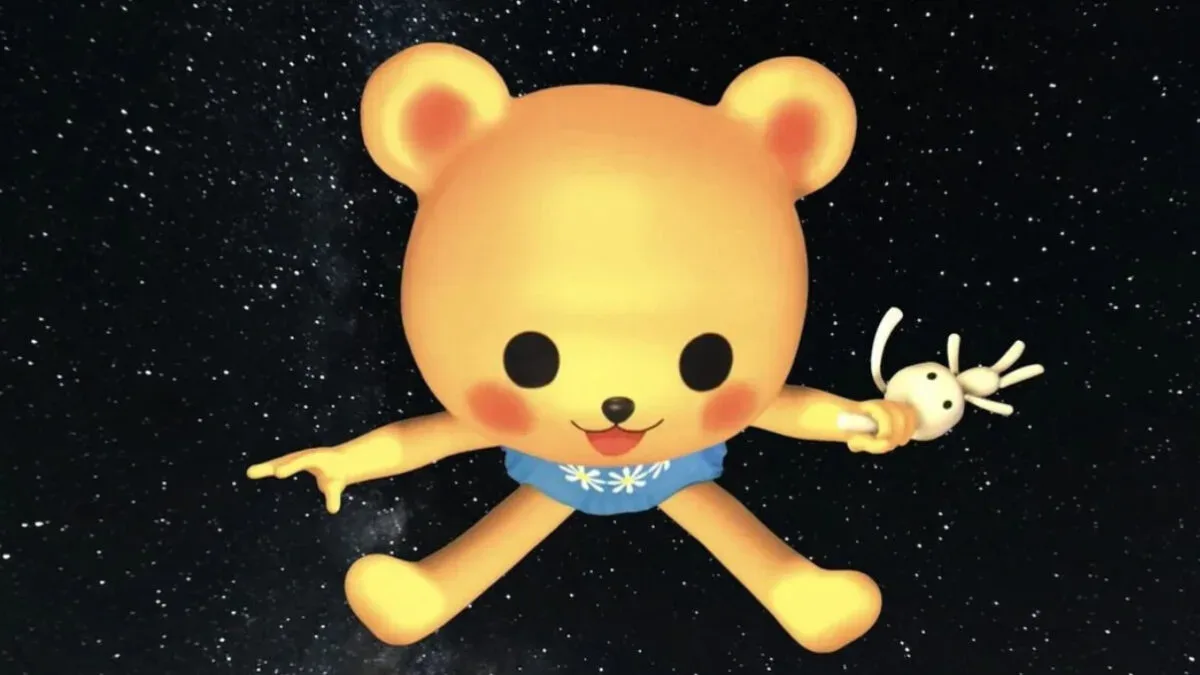
Cookie's Bustle: Mysterious Bombo World, an extraordinarily obscure Japanese PC adventure from 1999, has once again emerged from the margins of gaming history. Players who mailed in the game's registration cards more than 25 years ago were reportedly among those invited to a private event in Tokyo, an unusual gathering that has sparked fresh questions about the future of one of Japan's strangest cult games.
The invitation, attributed to an "Official Cookie's Bustle Team," did not announce a new game, a remaster, or a re-release. Instead, it presented the event as an early notice for the game's most dedicated customers. Its message looked backward at the title's brief original lifespan and forward toward a possible return: Cookie's Bustle was discontinued in 2001, while Cookie and Gray the rabbit subsequently entered what it described as a long hibernation. That sleep, the invitation suggested, may be close to ending.
For a game that has spent decades being difficult to obtain, difficult to document, and even more difficult to explain, that implication is enough to send its small but committed fan community into overdrive. Cookie's Bustle has always encouraged that sort of response. Its reputation rests not just on rarity, but on an atmosphere and story so peculiar that even a straightforward description feels insufficient.
Embedded X/Twitter post
A time capsule for an unusually elusive game
The Tokyo function was held over the weekend by QualityTime Consulting, a Japanese technology firm founded in 2006. Event material reportedly referred to it as a "25th secret event," while attendees and observers also characterized the gathering as a time capsule event. The anniversary language is itself part of the game's growing mythology: Cookie's Bustle launched in 1999, making the event technically tied to its 27th anniversary rather than its 25th.
For useful background on this topic, read Dan Houser Embraces GTA Comparisons While Building Absurd Ventures' Future.
Whatever the precise anniversary calculation, the party was clearly designed as a celebration of the game's legacy. Guests encountered musicians performing music associated with Cookie's Bustle, exclusive merchandise, cookies fashioned after the game's title character, and a person dressed as Cookie. Attendees were apparently asked not to photograph the event, though information about the celebration nevertheless made its way beyond the room.
That restricted atmosphere fits Cookie's Bustle almost too well. The game has survived largely through scattered recollections, collector interest, small archival efforts, and the persistence of people captivated by its unusual world. An event that appears to have contacted original customers through old registration records only adds another layer to its mystery.
Exactly how organizers obtained access to those pre-millennium customer registrations is not known. QualityTime Consulting's relationship to the game is also unclear, and no familiar names immediately emerged from a look at the company's publicly archived web presence. Still, invitations reaching people who registered the game in 1999 indicate that someone involved with the event had access to material that is both old and highly specific.
The surreal journey of Cookie
Released for Japanese PC players in 1999, Cookie's Bustle: Mysterious Bombo World is a surreal point-and-click adventure. It stars Cookie, a young woman from New Jersey who believes she is a bear and visually resembles one. Her adventure takes her to an isolated island country established by extraterrestrials, where she intends to take part in the aliens' athletic games.
That premise is only the beginning. Cookie becomes embroiled in a violent revolution, though the game frames its strangeness with a deliberately cute, almost storybook-like aesthetic. The collision of sweetness, absurdity, alien history, sporting competition, and political violence is a major reason the title remains memorable to the people who have encountered it.
Cookie's Bustle belongs to a corner of game history that is especially vulnerable to disappearing. Japan had a PC game scene during the 1990s, but it was comparatively small beside the country's enormous console market and also lacked the international visibility of many PC developers elsewhere. As a result, many Japanese computer games of the era received limited distribution, scant preservation, and little documentation outside specialist circles.
Other challenging-to-find Japanese releases, including Garage: Bad Dream Adventure, Zeddas, and Cosmology of Kyoto, have become touchstones for players interested in experimental, unsettling, and culturally singular works from that period. Cookie's Bustle developed a similarly devoted following. Its obscurity did not diminish interest; in many ways, it intensified it.
A difficult year that became a hopeful one
The latest event arrives after a turbulent chapter in Cookie's Bustle history. Earlier in the year, the game's already fragile online footprint became the focus of a dispute involving copyright claims and video removals. Fans noticed that material from ClassicsOfGame's detailed YouTube archive for Cookie's Bustle was disappearing.
The takedowns were connected to an individual identified as Brandon White, whose claims were viewed by fans as an attempt to control or erase the game's online record through aggressive use of copyright mechanisms. Reaching the game's actual creator, Keisuke Harigai, proved unsuccessful, leaving the community with limited clarity around ownership and authorization.
In March, the Video Game History Foundation successfully challenged the situation through legal action, bringing that campaign to an end. The restoration of the ClassicsOfGame material was a significant victory not only for Cookie's Bustle fans, but also for preservation efforts surrounding works whose ownership histories have become confusing or inaccessible.
That context makes the secret event feel more meaningful than a typical retro-game anniversary. Cookie's Bustle is not simply a title returning to public attention after years away. It is a game whose ability to remain visible online was recently threatened, and whose history remains fragmented. A celebration involving original registration-card holders now feels like a declaration that its story has not been allowed to end.
What could the "end of hibernation" mean?
The event invitation's wording naturally invites speculation, but no concrete product announcement has been reported. Those who attended did not mention confirmation of a modern port, a remaster, a sequel, or a physical reissue. At present, there is no verified indication of which platforms, if any, could receive a future Cookie's Bustle project.
There are several possibilities, ranging from a preservation-focused rerelease to a broader revival of the property. It could also be that the gathering was intended only as an anniversary celebration, with the language about Cookie's return serving as a tease rather than a firm promise. The absence of a public reveal means fans should be careful not to treat the event as confirmation of a specific game announcement.
Even so, the language used for the invitation is difficult to dismiss as ordinary commemorative copy. It explicitly positions the selected recipients as the first people who will hear news as Cookie and Gray awaken from their long dormancy. That is a notable message to send to customers nearly three decades after the game's release, particularly after an event built around rare access to the original community.
A formal reissue would be especially important for Cookie's Bustle because accessibility has always been part of the conversation around it. Games that survive mainly through collector circles, aging physical media, and isolated recordings are often one technical failure or disputed claim away from becoming even harder to study. A legitimate, carefully handled revival could bring the game to a new audience while helping secure its place in the history of Japanese PC development.
For now, the questions are part of the appeal
Cookie's Bustle has spent much of its existence generating questions: What exactly is it? Who owns it? Why did it vanish so thoroughly? Why has it inspired such loyalty among those who found it? The secret Tokyo event has not answered every one of those questions. If anything, it has supplied more.
What is clear is that the game is no longer completely silent. After the resolution of the copyright dispute, the restoration of archival video material, and an event that reached back to 1999 registration records, Cookie's Bustle has more momentum than it has had in years.
For now, no official path forward has been identified. But Cookie, Gray the rabbit, and the bizarre Bombo World have been placed back on the map. For a game with a history this strange, that alone is a significant development--and it may only be the beginning.
Community
Discussion
Start the conversation.
No comments have been posted yet.