

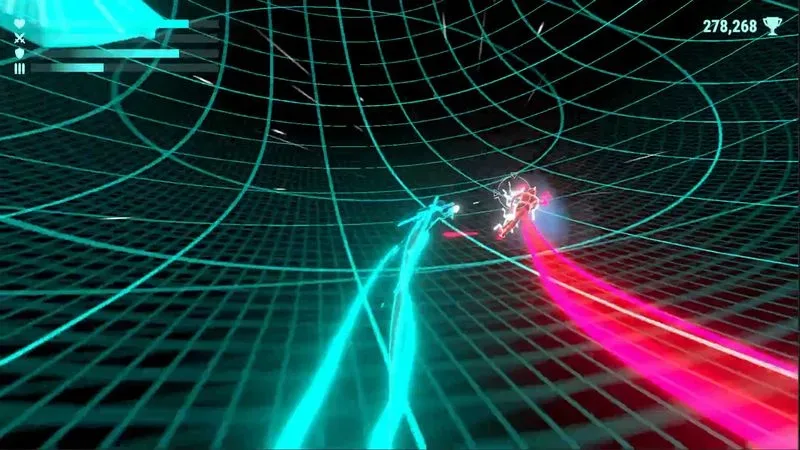
CoreRunner, a high-speed third-person skater shooter from developer Garland and publisher indie.io, is scheduled to launch on Steam on January 19, 2027. Its central idea is immediately distinctive: escaping a prison in cyberspace not simply through firepower or swordplay, but by turning the route beneath the player's skates into a weapon.
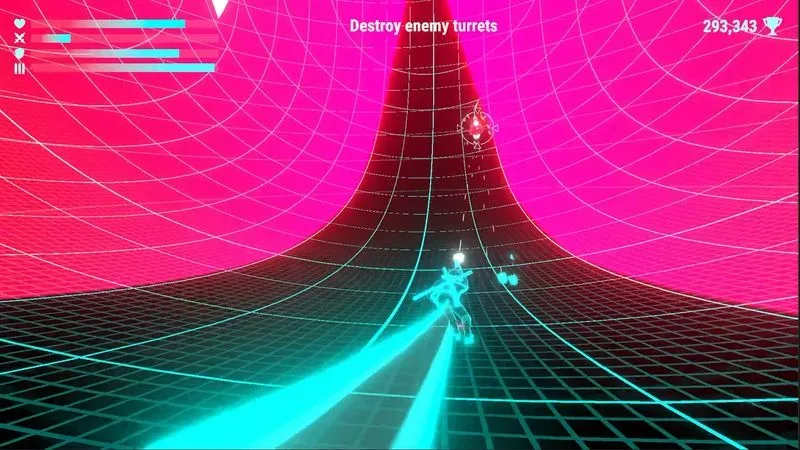
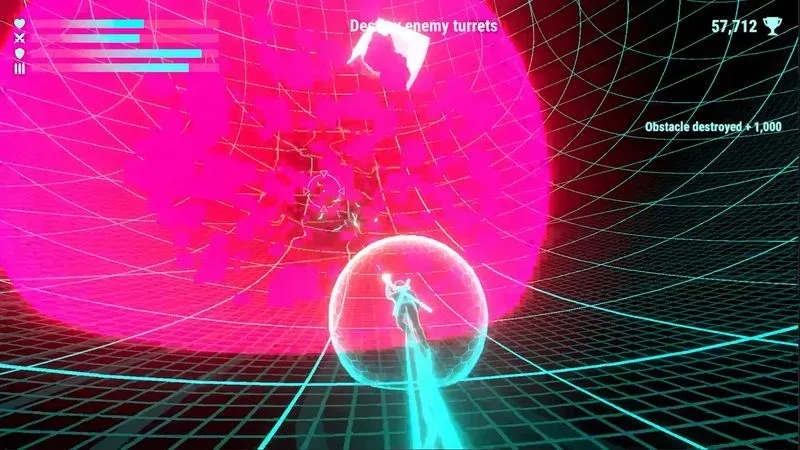
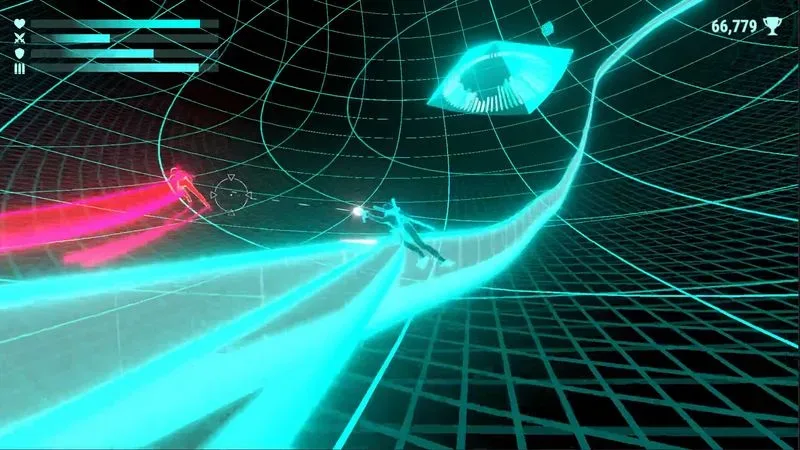
The game takes place inside the Core, a network of spherical prisons suspended in a digital void. Players race through neon, retrowave-styled arenas while wielding guns and katanas against a growing collection of mechanical threats. As they move, skates leave a bright trail behind them. Enemies caught inside that trail are imprisoned, unable to escape until they collide with the boundary and dissipate. In practice, CoreRunner's combat is built around creating shapes, controlling space, and deciding where to move next as much as it is about aiming a weapon or landing a melee strike.
A free Steam demo is already available ahead of release, and it includes more than 30 stages. That gives interested players a substantial chance to test the game's mix of movement, arena survival, and music-driven action before the full version arrives.
A prison escape where movement is the main weapon
CoreRunner frames the Core as a place designed to hold everyone inside. The game's escape premise is therefore more than a loose setting for action: every arena is part of a hostile containment system, and the act of skating becomes the means of challenging it. The Core may have been constructed to restrain its inhabitants, but it was not designed around someone capable of weaponizing momentum and a glowing path across the floor.
For useful background on this topic, read Project Helix Is Being Built as an Xbox Console, Not a PC.
That light trail is CoreRunner's defining mechanic. In many shooters, movement is primarily defensive: players dodge incoming fire, find cover, retreat from danger, or circle enemies while looking for an opening. Here, movement also creates an active hazard for opponents. The path a player draws can enclose enemies, turning an open section of an arena into a temporary cage. Once trapped, those enemies eventually crash into the trail and vanish.
The result is a combat structure that should reward quick spatial decisions. A player cannot simply focus on the nearest opponent; they also need to think about the loop they are building, the enemies they may pull into it, and the safe route still available once the trail has altered the arena. A carefully placed curve could corral a group. A rushed line could leave dangerous enemies outside the enclosure or make the player's own navigation more complicated.
That approach gives the skating a purpose beyond visual style. CoreRunner is described as a third-person shooter, but its identity rests on the relationship between movement and offense. Guns and katanas are important parts of the loadout, yet the trail makes every lap around an arena another tactical decision. Success will depend on blending all three tools rather than treating any one of them as the complete answer.
For another perspective on this story, read CoreRunner Brings Skates, Katanas and a Lethal Light Trail to Steam on January 19, 2027.
Guns, blades, and escalating digital defenses
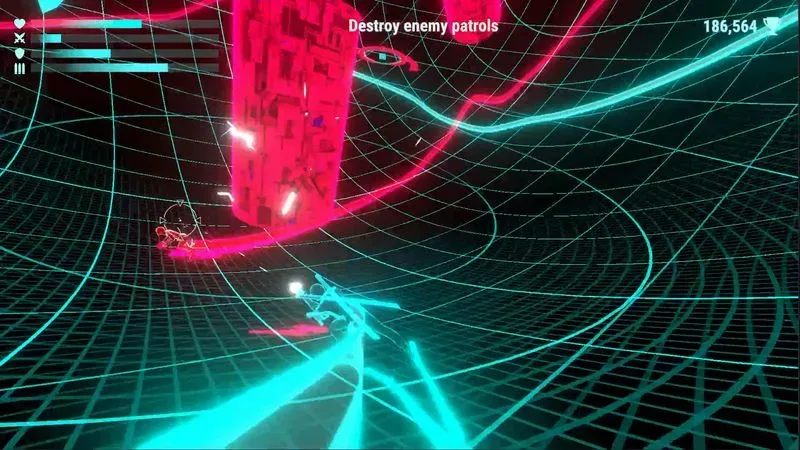
The Core is populated by several types of guardians intended to stop an escape. These include turrets, drones, homing missiles, and patrol units. Each presents a different pressure on the player's movement. Turrets can make particular lanes dangerous, drones can complicate attempts to establish a clean loop, homing missiles can punish predictable skating patterns, and patrols can increase the number of threats competing for attention.
Runs become more intense as they progress. Guardian numbers increase, and their aggression rises as players push farther into the prison network. The arenas also grow more hostile deeper into the escape. That escalation means a strategy that works in an early encounter may not remain sufficient once the screen is crowded with enemies and the level itself creates additional pressure.
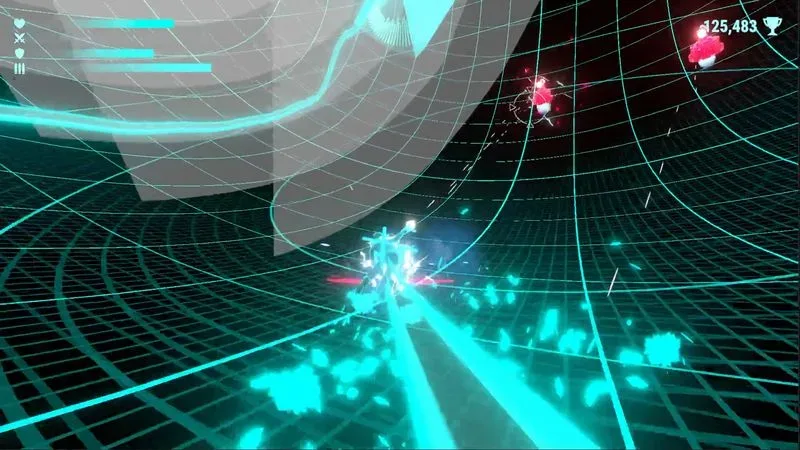
CoreRunner's ranged and melee options are meant to operate alongside the light-trail system. Ranged weapons offer a way to deal with threats at distance, potentially helping remove an obstacle before it disrupts a planned route. Katanas, meanwhile, suggest a closer, more immediate answer when the player is forced into dangerous proximity. Neither tool replaces the need to skate intelligently. Instead, the game's design presents them as parts of a wider survival toolkit.
This balance is especially important in an arena-based game. Players need room to build a trail, but enemies and hazards constantly contest that room. A crowded battlefield may make it difficult to complete a desired enclosure, while moving too conservatively can allow the opposition to pile up. The intended rhythm appears to be one of persistent adjustment: shoot when distance is needed, slash when danger closes in, and keep moving to transform the arena into a trap.
Synthwave synchronization shapes the pace
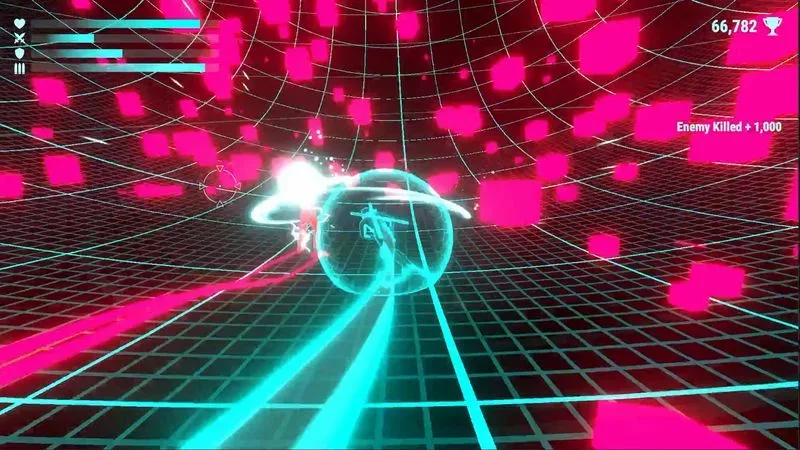
CoreRunner's arenas are synchronized to a synthwave soundtrack, with runs moving to the beat across neon environments. The music connection fits the game's visual direction, which draws on retrowave imagery and bright cybernetic landscapes, but it also promises a more deliberate pace to the action. Rather than serving solely as background atmosphere, the soundtrack is positioned as part of how each run unfolds.
Music-synced action can make a demanding game easier to read by giving movement and encounters a sense of cadence. It can also heighten the pressure when enemy activity, visual effects, and the soundtrack all accelerate together. CoreRunner's concept already asks players to manage several layers at once: their position, their existing trail, incoming threats, weapon choices, and the arena's changing hazards. A beat-driven structure could help unify those layers into a single forward flow.
The synthwave angle also distinguishes the game's prison setting from a conventional industrial or military escape scenario. The Core is not presented as a grounded facility of steel corridors and guards. It is a cyberspace prison of spherical arenas and luminous digital boundaries, where skating leaves tangible energy behind and defeated enemies dissipate after striking a line of light. The aesthetic and mechanical concepts are closely connected: this is a world where neon trails can plausibly become lethal architecture.
The demo offers an early look at the Core
Players do not have to wait until January to see how those systems fit together. The free demo on Steam includes more than 30 stages, providing a meaningful sample of the game ahead of launch. For a title centered on feel--speed, turning, route creation, weapon timing, and rhythmic momentum--a playable demonstration is particularly useful.
CoreRunner's pitch is easy to understand in broad terms, but its appeal will likely depend on how naturally its elements combine in motion. The question is not just whether skating, shooting, and sword combat work independently. It is whether carving a loop while under missile fire feels intuitive, whether trapped enemies create satisfying moments of release, and whether the soundtrack reinforces the intensity of a run. The demo gives players an opportunity to answer those questions directly.
Its 30-plus stages may also demonstrate how much variety the arena format can support. Since the game is built around increasingly aggressive guardians and hostile environments, stage design will be central to the experience. Different layouts can alter how easy it is to complete loops, where enemies can gather, and how much danger comes from standing still versus staying in constant motion. Even a familiar enemy set can feel different when the available space and hazards change.
CoreRunner's road to release
Garland is developing CoreRunner, while indie.io is publishing it. The announced release is limited to Steam, with no other platforms listed alongside the January 19, 2027 date. The game is therefore currently a PC release for players who want a fast, stylized action game that treats movement as more than a way to get from one target to another.
Its strongest hook is the way it turns a skater's path into a central combat system. The lethal trail is not merely a flourish attached to rapid traversal; it changes the meaning of every turn through an arena. Instead of reacting only to enemies, players can redraw the battlefield around them, using speed and geometry to place opponents in danger.
With guns, katanas, escalating robotic defenders, hostile arenas, and a synthwave pulse, CoreRunner is aiming for a kinetic escape fantasy in which the safest route is rarely a straight line. The free demo is available now on Steam, while the full attempt to break out of the Core begins on January 19, 2027.
Community
Discussion
Start the conversation.
No comments have been posted yet.