

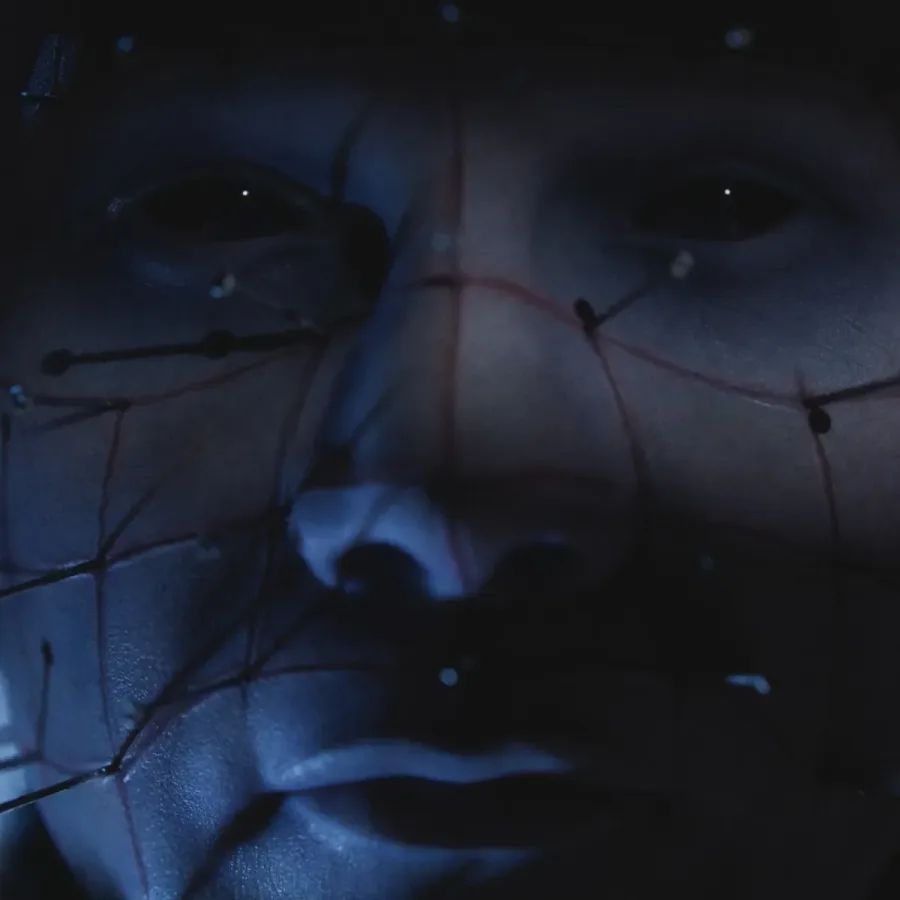
A French gaming creator says YouTube permanently deleted his channel after he uploaded gameplay from Clive Barker's Hellraiser: Revival, despite his efforts to obscure the game's opening nudity with black boxes. The creator, J0nathan, says the removal wiped out a channel with around 190,000 subscribers, more than 3,000 uploaded videos, and roughly a decade of work.
The case has drawn attention not only because the game begins with material that is plainly adult in nature, but because J0nathan says other uploads containing the same sequence, including uncensored versions, were still available on YouTube. His account of the situation highlights the uncertainty creators can face when games include sexual content, even when that content is edited before publication.
YouTube upheld the action after an appeal, citing its rules regarding sex and nudity. The response received by J0nathan stated that explicit material intended to be sexually gratifying is not permitted on the service. J0nathan argues that the gameplay was not uploaded for that purpose and that the contentious scene was essential story setup rather than the focus of the video.
An opening sequence that creates a major streaming problem
Hellraiser: Revival, developed by Saber Interactive, opens with a sexually explicit scene involving a topless woman and BDSM imagery. It is followed by a stretch in which a male character is nude. The material establishes the circumstances that set the game's horror story in motion, but it also creates an immediate challenge for anyone hoping to stream or upload the game under platform moderation rules.
For useful background on this topic, read Insta360 X4 Air Starter Bundle Drops to $350 With Extra Battery and Selfie Stick Included.
J0nathan says he covered the nudity in the opening scenes with black boxes before posting his gameplay. He also marked the video as not being made for children. However, he did not place an age restriction on it. His expectation was that the edits would be sufficient for a video whose remaining gameplay he viewed as conventional horror material, comparable in broad terms to a standard survival-horror release.
"My channel has been completely deleted, wiping out 10 years of hard work and destroying my main source of income," J0nathan said while describing the impact of the ban.
For creators, the distinction between a video label, a viewer age restriction, and editorial censorship can have significant consequences. A "not made for kids" designation is not the same as an age gate. The former identifies content under child-directed-content settings, while the latter limits viewing based on age. In this case, J0nathan says he believed any additional restriction needed would be added by YouTube, rather than resulting in a permanent account-level penalty.
A permanent removal after no prior warnings, J0nathan says
J0nathan says the enforcement decision was permanent. He also says his channel had not previously received warnings or strikes, making the sudden loss especially difficult to accept. Beyond the loss of a revenue source, he described the deleted archive as personally devastating because it contained years of his work and a large portion of his life documented through video.
The creator says he has attempted to use YouTube's appeal process, but believes the process has not resulted in meaningful human review. His initial appeal was reportedly rejected within minutes. Responses from support accounts on social media, he says, repeated a generic statement that the decision had been reviewed and would stand.
That speed is central to J0nathan's frustration. He questions how an appeal can be fully evaluated so quickly, especially when he says comparable videos remain online. The apparent inconsistency is difficult for creators to navigate: a clip may be interpreted one way in an individual moderation action while similar material continues to be visible elsewhere on the same platform.
"How can they possibly uphold such a decision when other videos showing the exact same scene without any censorship are still available on the platform?" J0nathan said.
The continued availability of other uploads does not necessarily establish why individual moderation actions differ. Videos may have different metadata, edits, reports, audience settings, upload histories, or review status. They may also simply not have been identified or acted upon. But from a creator's perspective, the result can still look arbitrary when a censored upload results in an entire channel disappearing while unedited footage remains searchable.
The risk extends to a creator's other channel
J0nathan says he has a side channel but is reluctant to use it following the ban. YouTube's rules prohibit users whose channels have been terminated from operating other channels, meaning an attempt to move his work to that account could potentially put it at risk as well. That leaves him in a difficult position: he has an existing alternative outlet, but fears that returning to publishing through it could lead to further enforcement.
He says he has contacted industry connections and fellow creators in search of someone able to help secure a direct review. He has also attempted to contact the game's developers through emails and posts on X, hoping they could help with a moderation dispute connected to their title. J0nathan says he has not received the intervention he was seeking.
For many video creators, a channel is more than a distribution page. It can be an archive, portfolio, community hub, income stream, and record of years of work. A sudden permanent deletion can therefore have consequences far beyond the removal of one controversial upload. In J0nathan's case, he says the lost channel represented more than 3,000 videos accumulated over ten years.
Saber Interactive had already warned creators about platform rules
Before the game's release, Saber Interactive publicly addressed concerns from streamers and video makers who were worried that footage from Hellraiser: Revival could be demonetized or, in the worst case, result in account action. The studio advised creators to use the available platform tools, including appropriate age restrictions and labels for sexual themes, while following the community rules of whichever service they used.
Saber also made clear that Hellraiser: Revival does not have a dedicated streamer mode. Such modes are increasingly common in games with licensed music, graphic scenes, or other material likely to create problems on video platforms. Their absence means creators must make their own decisions about what to cut, cover, skip, or flag before broadcasting and uploading.
The developer's guidance stressed that context and intent matter. That is a useful reminder, but it does not eliminate the practical difficulty of determining what will satisfy automated systems and human reviewers in advance. A creator may view a scene as necessary narrative context within a horror game, while platform policy may focus much more narrowly on the visual material itself and how it is presented.
What the dispute means for horror-game coverage
Horror games regularly deal with violence, mutilation, nudity, sexual themes, and disturbing imagery. Hellraiser in particular has always been associated with adult horror themes, and a game adaptation that uses provocative material is unlikely to be straightforward for mainstream video services. Creators have long balanced audience expectations for complete reactions and unedited gameplay against the rules governing monetization, recommendations, age access, and channel safety.
J0nathan's experience suggests that black bars or other visual censorship may not always be enough protection, particularly if a game's sexual material is present in a prominent opening sequence. A cautious approach would involve considering every available control before upload, including age restrictions and clearly identifying sexual themes where tools allow it. Even then, the dispute shows that uncertainty remains when enforcement decisions are made after a video goes live.
It also underlines why creator-facing content tools matter. Without a streamer mode, players must edit around scenes themselves, possibly at the cost of pacing, story context, or the completeness audiences expect from gameplay coverage. Developers can warn creators, as Saber did, but the final moderation decision belongs to the platform.
For J0nathan, the immediate issue is larger than one Hellraiser: Revival upload. He says he has lost his main channel, income source, and an extensive video archive despite having no earlier enforcement history. The unresolved question is whether the case will receive a fuller review and whether the disparity he identifies between his censored footage and other live uploads will be addressed. Until then, the episode stands as a stark warning for creators covering games whose content sits near the boundaries of platform policy.
Community
Discussion
Start the conversation.
No comments have been posted yet.