

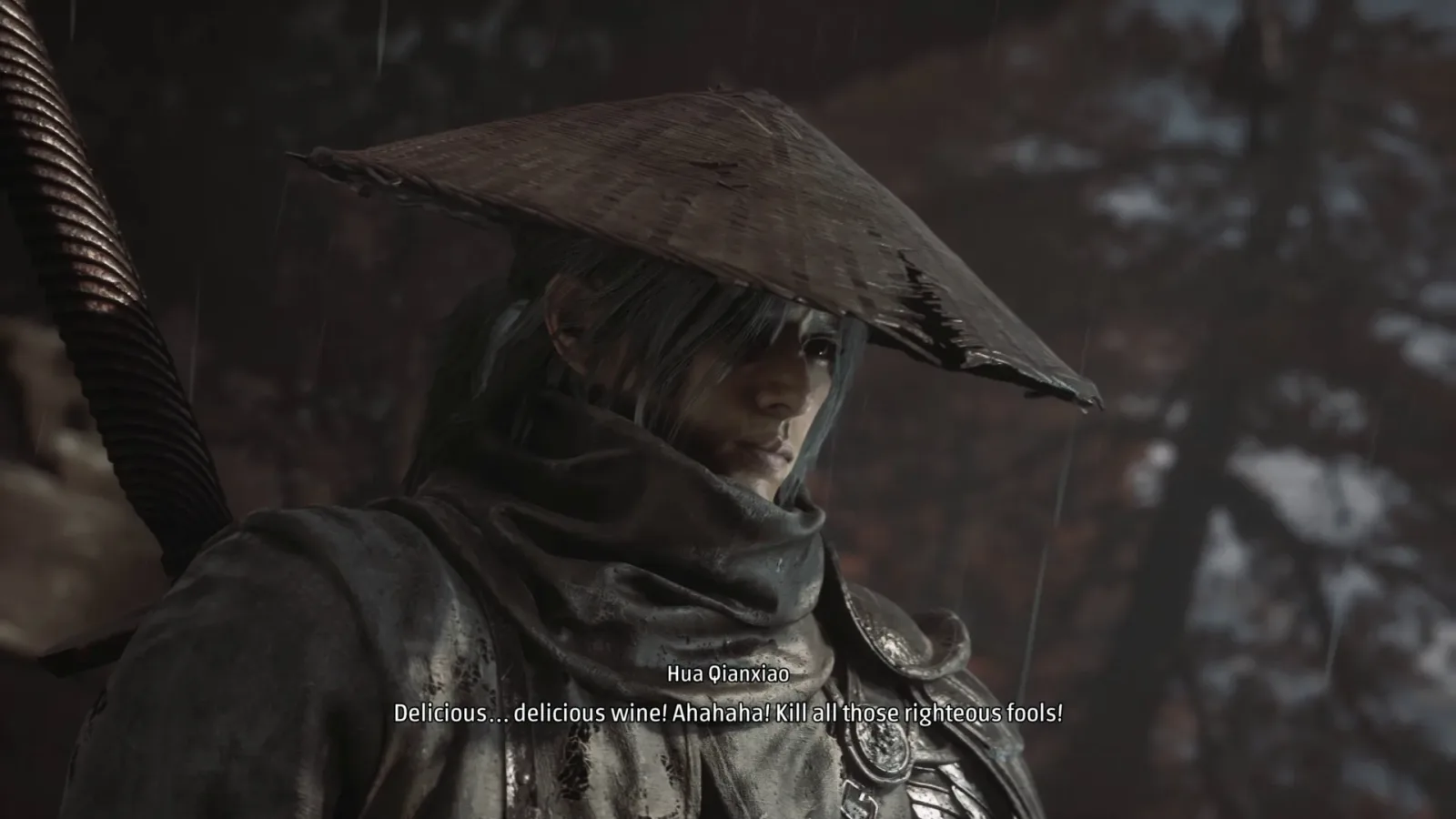
Phantom Blade Zero may look like a major new entry in the growing field of high-budget Chinese action games, but its history reaches much further back than its 2023 reveal. Developer S-Game has spent more than 15 years circling many of the ideas now being brought together in its ambitious 3D project: a bleak Ming Dynasty-inspired setting, crimson weapons, a protagonist named Soul, and a world where death, corruption, and martial artistry are tightly intertwined.
That long path is important context for Phantom Blade Zero. The upcoming game is not simply a studio's attempt to chase the popularity of Soulslikes or cinematic action games. It is the latest evolution of a franchise previously known as Rainblood, one that began with much smaller, rougher titles and gradually moved through turn-based RPGs, 2D hack-and-slash games, and mobile releases. The transition to a lavish, large-scale action game is dramatic, and it raises an interesting question: how much of the series' original identity survives as its scope expands?
From Rainblood to Phantom Blade
The first Rainblood games arrived in 2010 and 2011. They were turn-based RPGs made with RPG Maker, a striking contrast with the real-time swordplay that defines Phantom Blade Zero. The first game received a fan translation that was apparently approved by S-Game chief executive Qiwei "Soulframe" Liang, and it was sold through fan-oriented channels outside China. Even at this early stage, the games established the world and several recurring themes that would become foundational to the series.
Soul, the central figure in Phantom Blade Zero, was already present in those early games. His story involved a limited amount of time left to live after his heart was pierced by a cursed blade. That premise appears to echo in the new game, where Soul is again racing against a finite lifespan. Whether Phantom Blade Zero is directly retelling elements of the earlier story or revisiting them in a new form remains unclear, but the connection is much more substantial than a shared name or visual motif.
For useful background on this topic, read Warhammer 40,000: Rogue Trader Makes a Strong Case for Embracing the Imperium's Cruelty.
In 2013, S-Game followed the RPGs with Rain Blood Chronicles: Mirage, shifting toward a 2D hack-and-slash brawler built in Unity. It reached Steam and consoles, though its PlayStation and Xbox versions no longer appear to be available. The game was unpolished by modern standards, as were the earlier Rainblood releases, but it showed the developer moving closer to the fast melee combat that now defines Phantom Blade Zero.
After Mirage, the studio published three mobile games exclusively in China. Then, in 2023, it revealed Phantom Blade Zero while also releasing Phantom Blade: Executioners, a 2D beat 'em up that came to PlayStation 4, PlayStation 5, and mobile. The console editions of Executioners also appear to have been removed from storefronts. Across these games, the recurring image of a crimson blade cutting through grim, grey environments has remained remarkably consistent.
A huge leap in scale
Phantom Blade Zero represents an enormous escalation over everything that came before it. That expansion appears linked to substantial outside investment. In a 2021 open letter, Liang disclosed that Lingyou Fang, the company known internationally as S-Game, had completed financing worth hundreds of millions of dollars from Tencent. The investment was intended to support two major action RPGs over five years.
One of those projects is clearly Phantom Blade Zero. The other, referred to as Stellar Saga, has not resurfaced publicly in the same way. For now, Phantom Blade Zero is the clearest expression of what that funding has enabled: dense environments, a much broader combat toolkit, elaborate boss encounters, and the involvement of well-known martial arts talent.
Donnie Yen portrays the character Mó Yuan and also consulted on the game's action alongside stuntman and choreographer Kenji Tanigaki. Yen's presence gives the project immediate martial arts credibility, particularly for an action game so openly focused on the speed and rhythm of wuxia. Still, a famous performer alone cannot define an interactive combat system. The more meaningful question is whether the game's mechanics can turn that inspiration into satisfying play.
Combat built around forward momentum
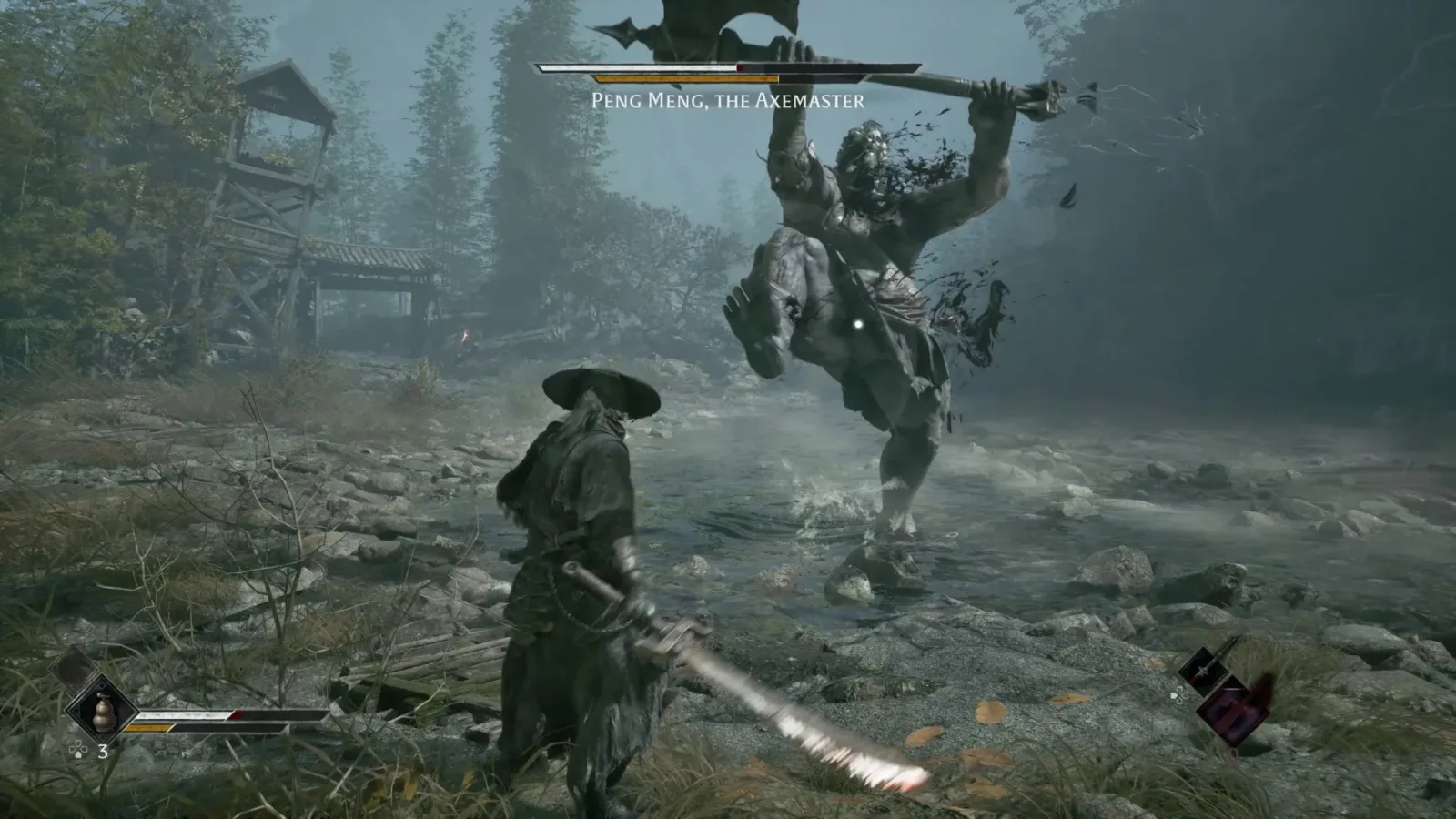
Recent hands-on impressions suggest Phantom Blade Zero is trying to distinguish itself from games that borrow Soulslike ideas without rethinking how they fit fast, stylish action. Its combat has surface similarities to titles such as Black Myth: Wukong and Wuchang: Fallen Feathers, yet its moment-to-moment feel has been compared more closely to a blend of Sekiro and Devil May Cry.
The central difference is its approach to stamina. In many action games with Soulslike influences, attacking repeatedly consumes stamina, creating a constant tension between extending a combo and retaining enough resources to dodge away from danger. Phantom Blade Zero instead reserves stamina expenditure for dodges and attempts to block specific color-coded attacks. Normal attacks and successful blocks do not drain that meter.
That choice encourages aggression rather than hesitation. Players can commit to pressure without feeling that every sword swing is quietly removing their ability to escape. Just as importantly, light attacks do not appear to lock players into a long animation priority chain. If an enemy attack is about to land, a block can be triggered in the middle of an offensive action. The result is a system designed to preserve flow: attack, recognize danger, defend, and resume pressure.
This is especially suited to the game's wuxia ambitions. Rather than treating martial arts spectacle as a cosmetic layer over cautious stamina management, S-Game appears to have designed combat around the idea of constant exchange. The player is meant to remain close, read the fight, and make fast adjustments instead of repeatedly retreating to wait for an opening.
Weapons, swaps, and meaningful choices
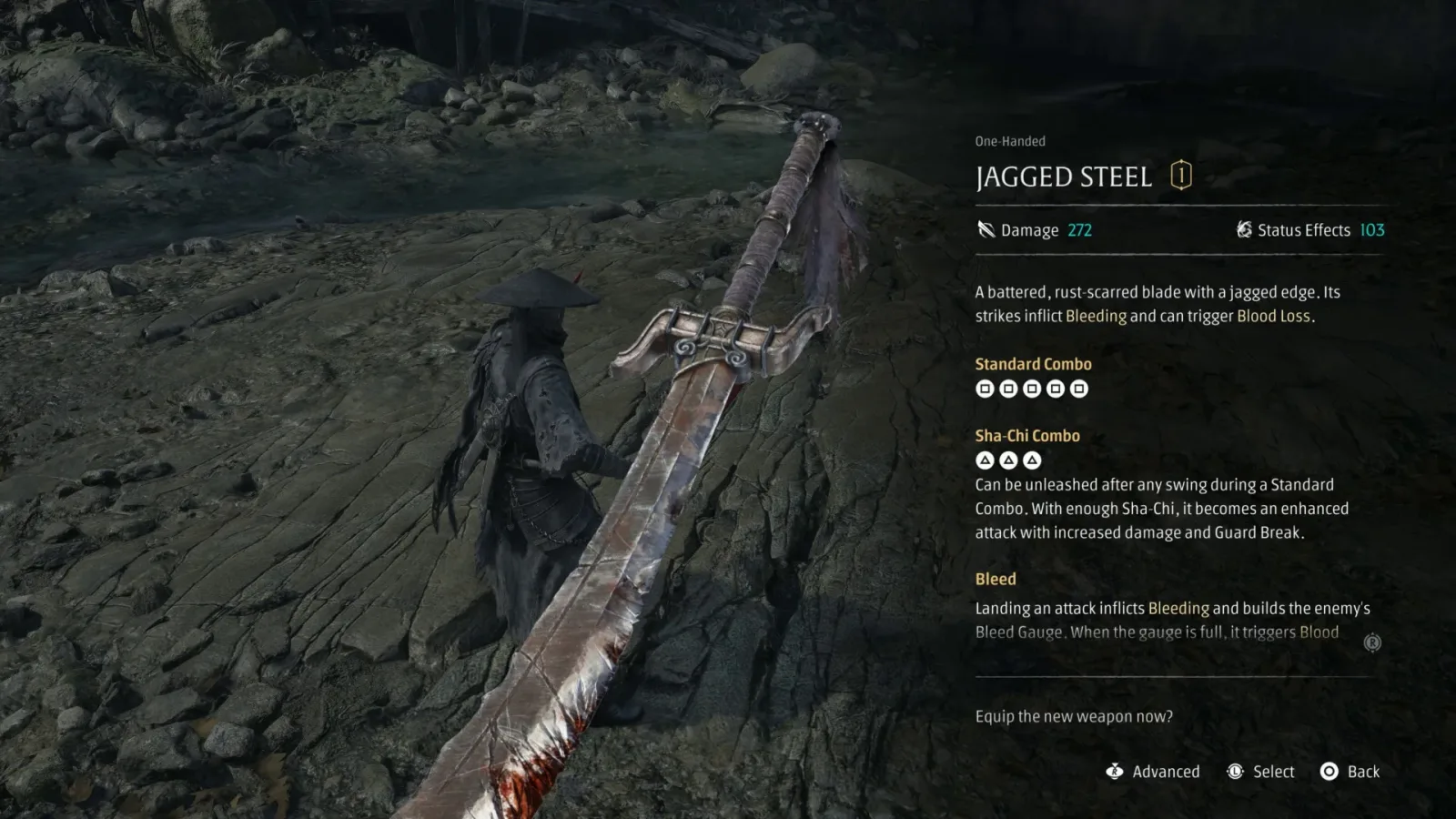
The game features 30 primary weapons, each with distinct movesets and characteristics, alongside 25 secondary weapons. Secondary options include tools such as axes capable of heavy charged attacks and miniature cannons that offer slower ranged fire. Players can equip two primary weapons simultaneously, using one as an off-hand option ready to enter the fight.
Swapping weapons can be done directly, but the more interesting option is to work a change into a combo with the left trigger. This combo swap can inflict significant damage and stagger, although it has a cooldown. That limitation is important because it prevents weapon swapping from becoming a universally correct response. If a player is controlling a fight effectively with a longsword, moving to dual blades simply because the special transition is available may disrupt a successful rhythm.
It is the kind of system that could give Phantom Blade Zero considerable depth. The weapons are not merely inventory items with different numbers attached; they are intended to become part of the player's decision-making during a fight.
Soulslike structure in a decaying world
While the combat aims for a more free-flowing identity, the world design more openly embraces Soulslike traditions. Phantom Blade Zero uses an interconnected structure in which regions loop back into one another, recalling the layered geography of the original Dark Souls. Instead of relying on a conventional detailed map, it presents areas through hand-painted ink-wash charts on Xuan paper that have been scanned into the game.
That approach fits the setting, which presents a ravaged interpretation of the Ming Dynasty. Disease, decay, conflict, and a pervasive sense of doom shape the environment. Some locations may initially seem visually muted, but that washed-out quality appears to be part of an intentional atmosphere of decline.
Steampunk-like industrial details offer an important counterpoint to the ruins and plague. They also create opportunities for a different style of grotesque enemy design. Rather than relying entirely on mystical corruption, the game can produce horrors shaped by crude machinery and inhuman mechanization. That gives the setting a potentially distinctive visual language even as it shares broad genre DNA with other cursed and collapsing fantasy worlds.
Bosses may test the formula
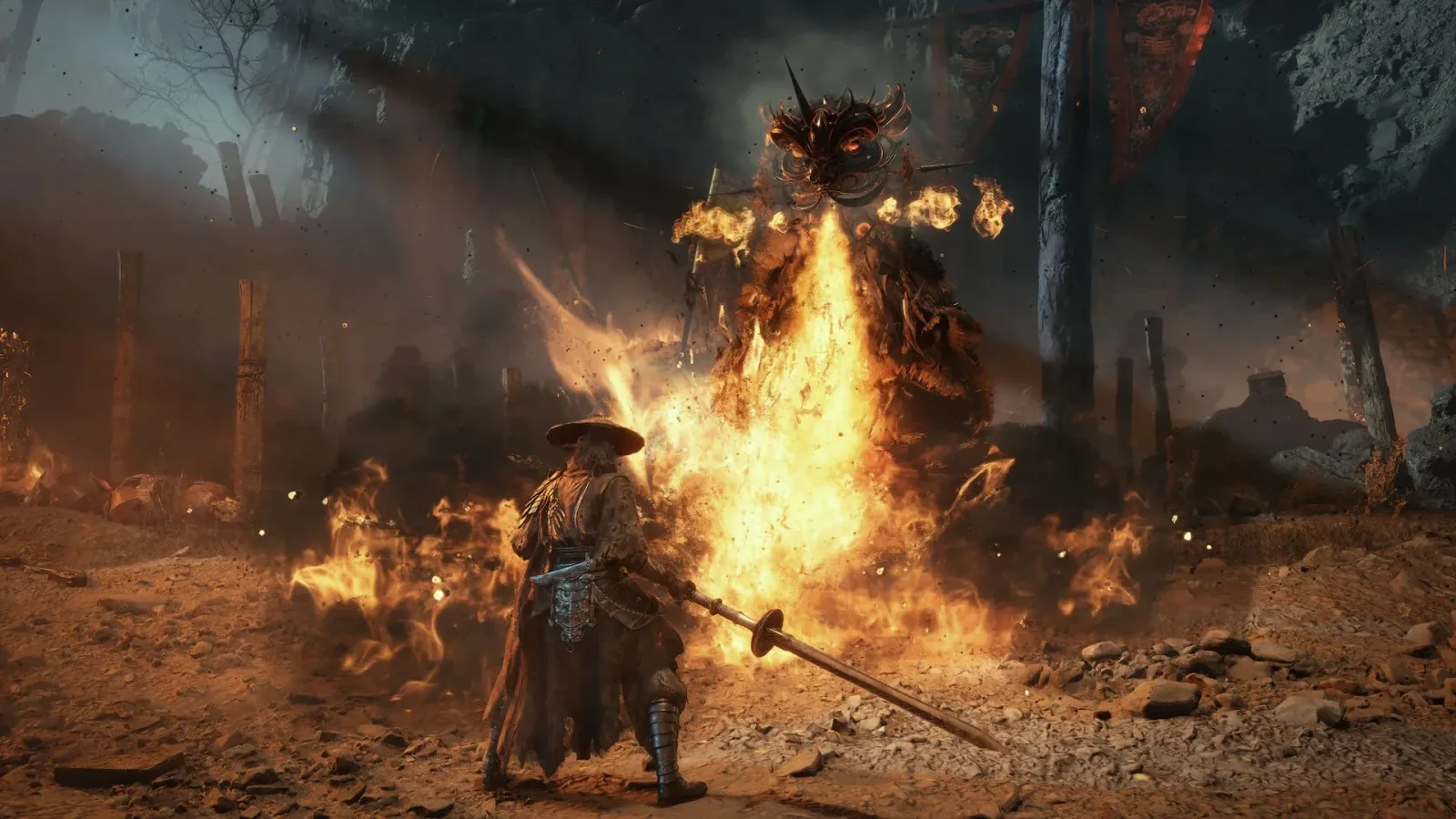
The hands-on experience was more enthusiastic about encounters with regular groups of enemies than some of the boss fights. Standard battles appear to fully support Phantom Blade Zero's aggressive tempo, with blocking, parrying, clashing blades, and stagger mechanics reinforcing a push-forward style of play.
Bosses, however, demand more traditional pattern recognition. Their relentless unblockable moves require careful positioning and outright avoidance, not merely quick reflexes or a well-timed defensive response. That is not inherently a weakness; demanding bosses are a natural fit for this style of action game. But it may create friction with a combat system otherwise built to reward players for staying directly in an opponent's face.
Whether that friction becomes a satisfying tactical contrast or an awkward interruption will likely depend on final balancing. If bosses allow the weapon and defense systems to shine, they could provide the game's greatest tests. If they repeatedly force players into evasive routines that undermine its best aggressive ideas, they may feel at odds with the rest of the experience.
A promising legacy, with narrative questions remaining
Phantom Blade Zero's most immediately intriguing narrative mechanic is Soul's countdown to death. On three difficulty settings, this deadline is only part of the story. An additional ultra-hard mode ties it to play: each death costs Soul one day. It is a clever way to turn the hero's condition into a mechanical consequence, but restricting it to the toughest setting means many players may never experience that extra pressure.
Beyond that premise, the story currently seems less compelling than the combat and world. Soul's revenge-driven journey has intrigue because of his dwindling time, but other characters reportedly lean heavily on broad statements about darkness, ideals, and personal codes. Mó Yuan stands out largely because of Yen's performance and presence, though a recognizable actor cannot by itself add depth to the surrounding cast.
Still, Phantom Blade Zero is compelling precisely because it carries so much history into a new scale of production. Its predecessors were scrappy and uneven, but they had a particular grit born from their limitations. The new game has greater polish, far more money behind it, and the potential to become S-Game's defining work. Its challenge will be preserving the strange, personal spirit of Rainblood while delivering the refinement expected from a blockbuster action release.
For now, the signs are promising. Phantom Blade Zero's weapon-driven combat, unusual stamina rules, wuxia focus, and interconnected world give it ideas of its own. After 15 years of iteration, Soul's next battle looks like more than a fresh start. It is the culmination of a long-running experiment finally receiving the scale to match its ambitions.
Community
Discussion
Start the conversation.
No comments have been posted yet.