

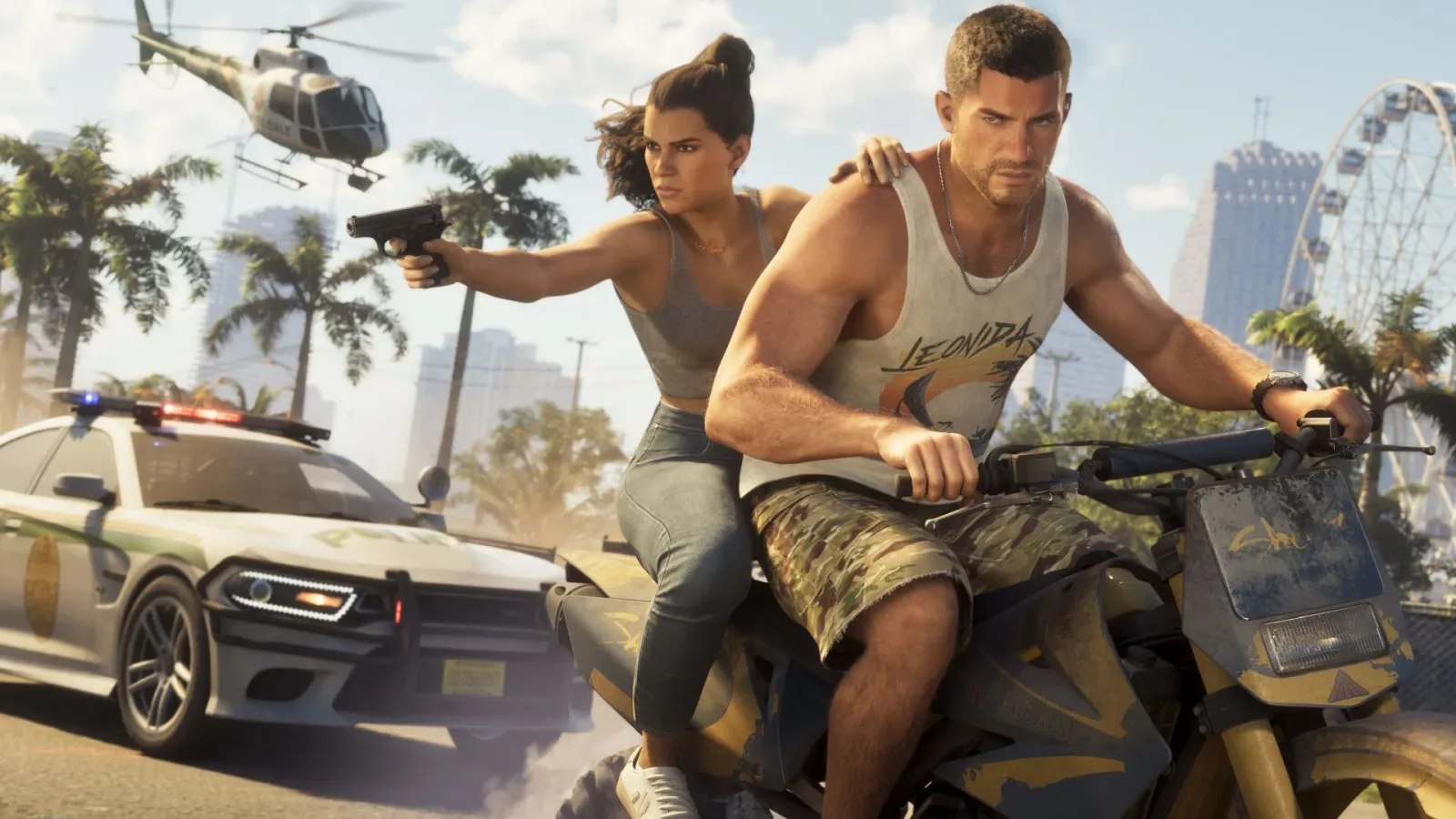
Cyberpunk 2 creative director Igor Sarzynski has delivered one of the more relatable reactions to a colossal new open-world release: a mixture of admiration, professional panic, and a joke about walking away from game development altogether.
In a post on Bluesky dated November 23, 2026, Sarzynski said that "GTA 6-induced-open-world-game-dev-depression is real." He went on to praise Rockstar Games' latest release in extraordinarily strong terms, pointing to its scale, density, internal coherence, and apparent attention to detail. In Sarzynski's view, the game represents an exceptional technological and creative accomplishment.
The post ended with a deliberately dramatic gag: "Cyberpunk 2 is cancelled, imma go sweep autumn leaves in my backyard now." For fans awaiting CD Projekt's return to the Cyberpunk universe, it was not an announcement that the project had actually been shut down. Sarzynski later clarified the more serious point beneath the joke: Cyberpunk 2 is intended to be its own thing, with a different and unique flavor from Rockstar's crime-focused open-world giant.
That distinction matters. GTA 6's arrival is bound to become a reference point for the entire industry, particularly for studios making large, systemic worlds. But admiration for a rival studio's extraordinary achievement does not mean every open-world game must try to become the same kind of experience.
For useful background on this topic, read Sunrise on the Reaping Fans Debate Whether Its Biggest Problem Is Explaining Too Much.
A joke rooted in a real creative challenge
Sarzynski's message struck a chord because it captures a familiar pressure within game development. Whenever a game arrives that dramatically raises expectations for visual fidelity, environmental detail, production scale, simulation, or commercial performance, other teams can suddenly find themselves judged against it--whether those comparisons are reasonable or not.
GTA 6 is especially likely to intensify that dynamic. Rockstar Games has long occupied a rare position in blockbuster development: it can invest enormous time, talent, and resources into a single open-world production because its games have a record of reaching an audience that few releases can match. That does not make the work easy, nor does it diminish the creative achievement. It does, however, make Rockstar's circumstances unusually difficult to replicate.
For another developer, simply deciding to make "our GTA 6" is not a workable production plan. Open-world games are among the most complex projects in the medium. They require not only a vast physical map, but also a convincing population of characters, activities, missions, animation, audio, user interface systems, vehicles or traversal, combat, progression, performance optimization, testing, and an enormous amount of content that players may never even encounter on one playthrough.
A city can look impressive in a screenshot while still feeling lifeless in motion. Conversely, a game can have a smaller footprint and deliver a more memorable experience through its quests, role-playing choices, atmosphere, characters, or mechanical depth. The most successful games in the category tend to understand which of those strengths they are built to emphasize.
"I think we're doing something of our own, with a different unique flavor," Sarzynski said in a follow-up. "GTA is impressive in a way all great art is, it expands what is possible, a captivating vision flawlessly executed."
That follow-up provides the important context for the original joke. Sarzynski is not presenting GTA 6 as a reason for Cyberpunk 2 to abandon its own ambitions. Instead, he is describing a game that expands the perceived limits of the medium while arguing that CD Projekt's sequel will have a separate creative identity.
CD Projekt's praise for Rockstar has been widespread
Sarzynski is not alone at CD Projekt in expressing excitement over GTA 6. The studio's joint CEO, Michal Nowakowski, offered congratulations on the game's launch day. Pawel Sasko, associate game director on Cyberpunk 2, also celebrated Rockstar's achievement, describing the release as a "generational banger."
The response reflects professional respect between developers who understand the realities behind games of this scale. Players see the final product, but development teams recognize the years of iteration, coordination, technology work, art production, design decisions, and difficult compromises required to put a massive world in front of millions of people.
That perspective also explains why Sarzynski's "development depression" line lands as more than a throwaway joke. Seeing a peer release something polished and ambitious can be inspiring, but it can also make creators acutely aware of the mountain in front of them. In competitive creative fields, both feelings can be true at the same time.
For CD Projekt, the response suggests confidence rather than capitulation. The company has already made a distinctive mark in the open-world role-playing space with Cyberpunk 2077, a game built around a different set of priorities from Grand Theft Auto. Its setting, tone, character builds, dialogue choices, quest construction, and first-person role-playing perspective create a fundamentally different relationship between the player and the world.
Cyberpunk 2 does not need to imitate GTA 6 to be compelling. In fact, attempting to do so would risk losing the qualities that make the series recognizable. A sequel has the opportunity to take lessons from the wider genre while remaining focused on the elements that best fit its own universe.
One genre, many definitions of success
The label "open world" can make very different games sound more alike than they really are. A densely authored urban sandbox, a fantasy adventure built around exploration, a survival experience, and a narrative-heavy RPG may all use an open map, but their design goals can be almost entirely separate.
Rockstar's games are often praised for presenting places that feel active beyond the player's immediate mission. That kind of environmental density can be a major draw. Yet role-playing games may place more importance on the consequences of player choices, the variety of character builds, companion stories, or questlines with multiple outcomes. Other developers may prioritize traversal, emergent combat, crafting, co-operative play, or a particular visual style.
There is no single checklist that determines whether an open-world game succeeds. Bigger maps are not automatically better. More activities do not inherently produce stronger pacing. Higher levels of visual detail are impressive, but they cannot replace a satisfying core loop or a world that gives players meaningful reasons to care.
That is why Sarzynski's emphasis on a "different unique flavor" is more useful than any simplistic comparison. A healthy genre is not one where every studio chases the same design target. It is one where developers can look at exceptional work, learn from it, and still make choices that fit their own games.
The risk of unrealistic expectations
GTA 6's success may nonetheless create uncomfortable conversations throughout the business side of games. Sarzynski's comments were playful, but they point toward a serious possibility: investors and executives who are less familiar with the practical limits of development could ask why other studios cannot make a game on Rockstar's level and obtain Rockstar-sized results.
That thinking has appeared before. Major hit games often trigger waves of imitation, with companies pursuing the next trend rather than assessing whether their teams, budgets, technology, and audiences are suited to it. The industry saw versions of that reaction during the rush to build games modeled after Fortnite's enormous success. A blockbuster can demonstrate what audiences want from one particular game; it does not provide a universal blueprint that every company can execute.
Creating a project at GTA 6's apparent scale requires more than ambition. It depends on resources, development history, established tools, experienced teams, a publisher's willingness to accept lengthy production cycles, and confidence that the eventual release can earn back a towering investment. Those conditions are not widely available.
For players, the best outcome is not a market full of games attempting to copy one blockbuster. It is a market where high-profile releases push standards forward while leaving room for different approaches, different budgets, and different creative voices. Rockstar can set one kind of benchmark; CD Projekt can pursue another.
Cyberpunk 2 remains a separate journey
There is still much that has not been detailed publicly about Cyberpunk 2, including the precise shape of its world and the systems that will define it. Sarzynski's comments do not fill in those gaps, and they should not be read as a promise that the sequel will compete with GTA 6 feature for feature.
What they do offer is a glimpse into the mindset of one of the people leading the project. He sees GTA 6 as an artistic and technical achievement worthy of enthusiastic praise. He also believes Cyberpunk 2 is pursuing a different direction rather than surrendering its own identity in the face of an intimidating standard.
The autumn leaves, then, can wait. Sarzynski's cancellation remark was a joke born from awe, not a change in plans. And if GTA 6 expands ideas about what an open-world game can accomplish, Cyberpunk 2's task will be to answer that challenge in a way that feels unmistakably like Cyberpunk.

Community
Discussion
Start the conversation.
No comments have been posted yet.