


Warning: This article contains major spoilers for The Hunger Games: Sunrise on the Reaping, including character connections and changes from the novel.
The Hunger Games: Sunrise on the Reaping has arrived in cinemas worldwide to an enormous commercial response, but the newest Panem prequel is already inspiring a familiar kind of franchise conversation. Viewers are discussing the changes made while adapting the book, including a significant omission surrounding Maysilee's death. Yet a vocal section of the audience believes the film's more fundamental weakness is not what it removed. It is how often it appears determined to explain its connections, themes, and lore out loud.
The debate comes from a tension at the heart of any long-running prequel. A prequel has to welcome people who may not remember every earlier installment, while also rewarding committed fans who know exactly where the story is headed. For some viewers, Sunrise on the Reaping pushes too far toward reassurance, taking implications that longtime followers would understand and turning them into direct declarations.
That approach has become the centerpiece of fan criticism even among people who are otherwise positive on the film. The complaint is not simply that the movie references the wider Hunger Games history. References are part of the point of a story centered on Haymitch Abernathy's past. The concern is that several of those references are delivered with so little ambiguity that viewers feel the film leaves them no room to make connections independently.
For useful background on this topic, read Final Fantasy VII Remake's Original Director Wanted Bigger Changes, but Newer Staff Protected Its Iconic Look.
A prequel that spells out familiar history
Two moments have drawn particular attention. One involves President Snow naming Lucy Gray, his past love from the earlier prequel story. Another finds Haymitch seeing Asterid and Burdock Everdeen in the woods with their infant daughter, Katniss. In that scene, Katniss's name is repeated, making the family link unmistakable.
For audiences who have followed the novels and films across the full series, those revelations are not difficult puzzles. Snow's connection to Lucy Gray is established franchise history, while the Everdeen family appearance carries its own emotional weight without necessarily requiring repeated identification. Fans arguing against these choices say the scenes could have trusted viewers to recognize what they were seeing.
One widely shared reaction summed up the feeling by arguing that the film states motives and mechanics that could have been conveyed through the action. Another viewer lamented what they saw as a broader modern tendency for movies to prioritize absolute clarity over subtext, particularly for audiences dividing their attention while watching. The larger objection is therefore about storytelling rhythm as much as lore: when characters explain the threat, the connection, or the emotional meaning, the audience may stop feeling invited to participate.
This criticism matters especially in The Hunger Games, a series built on political symbolism, public performance, private resistance, and the danger of reading between the lines. Panem's citizens are routinely forced to decode propaganda, survive systems designed to distort reality, and understand what powerful people mean without those people saying it plainly. Fans who wanted more restraint from Sunrise on the Reaping see explicit exposition as at odds with that tradition.
There is also a difference between helping new audiences follow the plot and announcing every legacy connection. A character's name can be useful orientation for a casual moviegoer, but it can also make a cameo feel less organic to a dedicated fan. In a franchise whose timeline stretches across multiple decades, that balancing act is difficult. Some viewers will appreciate the clarity; others will feel that the movie turns discovery into a checklist.
The Maysilee change remains a major point of contention
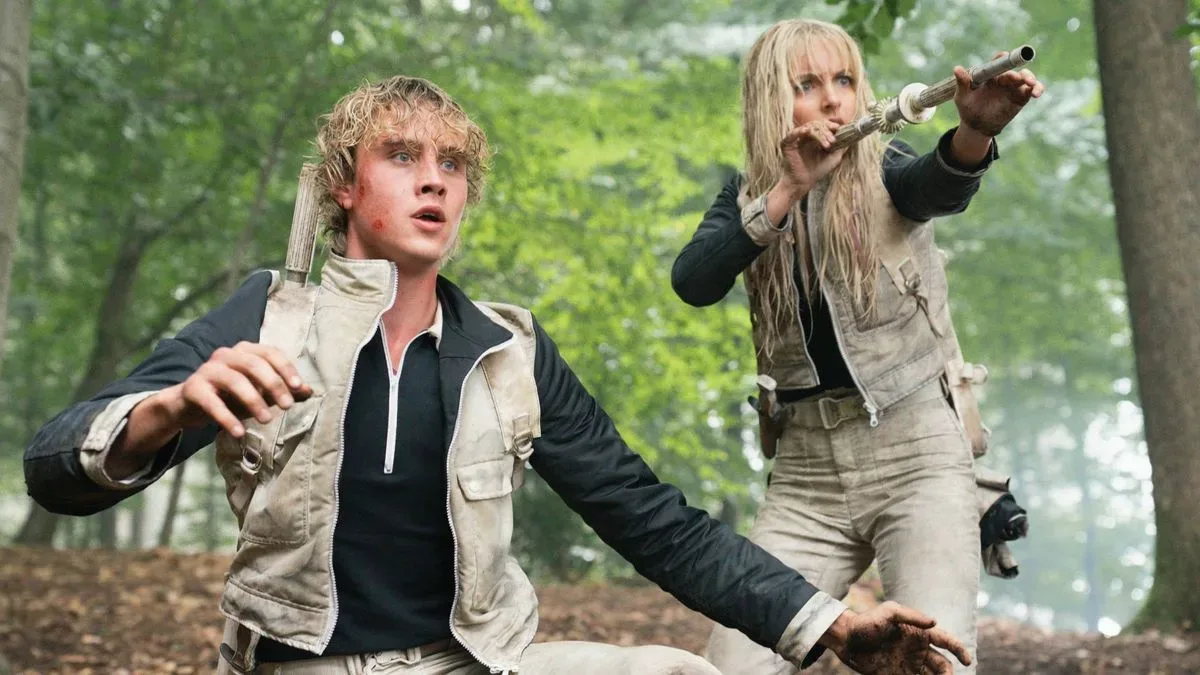
The exposition debate has not erased concerns about adaptation changes. Maysilee's fate is one of the most notable examples. In the film, she is killed after birds programmed to target her attack. The presentation suggests that the Capitol selects Maysilee as part of its punishment for Haymitch, extending the regime's cruelty toward the people closest to him.
The book gives the moment a more specific context. There, the gamemakers pursue Maysilee because she previously killed several gamemakers who entered the arena. That detail changes the texture of the event. Rather than being solely collateral damage in an assault meant to break Haymitch, Maysilee has directly challenged the machinery controlling the Games. Her death becomes connected to her own act of resistance as well as the Capitol's wider brutality.
For readers who miss that material, its absence is not a minor continuity footnote. It affects Maysilee's agency and the significance of the arena's retaliation. The movie version still communicates the danger of the Capitol and the personal devastation inflicted on Haymitch, but the book's version gives Maysilee a sharper role in the conflict. It presents her as someone who acts against the institution, not merely someone the institution chooses to sacrifice.
That said, the sequence was not omitted because it was never considered. Director Francis Lawrence confirmed that the relevant scene was filmed. In comments to CinemaBlend, Lawrence called it probably the most debated sequence and explained that the decision came down to the film's thematic focus on Haymitch.
Lawrence said the material included both the action involving the gamemakers and a subsequent fight between Maysilee and Haymitch. The conflict concerned implicit submission, but the filmmakers ultimately felt Haymitch was no longer in a state of submission at that stage. As a result, they concluded it did not fit the movie's thematic design.
That explanation clarifies the adaptation logic without guaranteeing that every reader will agree with it. Film adaptations are often forced to decide whose story a sequence serves. A moment can be compelling on the page, reveal essential character information, and still become difficult to accommodate if its emotional center pulls attention away from the movie's chosen protagonist. In this case, Lawrence's comments suggest the production viewed the deleted material as powerful but misaligned with Haymitch's arc as constructed for the screen.
The limits of fitting a novel into one film
Lawrence also indicated that adapting every piece of the book would likely have required more than a single movie. That is an important part of the conversation around the changes. Sunrise on the Reaping must deliver the Games themselves, Haymitch's development, Panem's political violence, recognizable franchise history, and the emotional groundwork for events viewers know are still decades away.
Every added scene has a cost. Expanding Maysilee's confrontation with the gamemakers could deepen her characterization, but it would require setup, aftermath, and enough space for the audience to understand why it matters. Likewise, understated references may feel satisfying to veteran fans, but more direct dialogue can quickly establish information for viewers entering through this installment.
Those practical considerations do not end the argument. They explain why the choices were made, rather than proving they were the right choices. The strongest reaction from disappointed fans is that the film may have sacrificed some confidence in its audience while also cutting a moment that gave an important supporting character more agency. Put together, those decisions can make the adaptation feel narrower than the novel, even if its central Haymitch story remains intact.
Strong numbers, divided details
Despite the debate, the response to Sunrise on the Reaping has been extremely strong overall. The film holds a 94% audience score on Rotten Tomatoes and brought in $225 million worldwide during its opening weekend. Those figures underline that the criticism is occurring within an enthusiastic reception rather than a broad rejection of the movie.
That combination is common for a beloved book adaptation. A movie can connect with audiences, earn substantial box-office success, and still generate detailed scrutiny over a single missing sequence or an overly direct line of dialogue. In fact, the intensity of the discussion reflects how much viewers care about the texture of Suzanne Collins' world: not only what happens in Panem, but how the story lets its audience understand it.
For some, the clearer approach makes the prequel accessible and emotionally immediate. For others, it blunts the franchise's edge by making the subtext into text. The Maysilee change provides a concrete example of material lost in translation, while the repeated lore explanations reveal a larger disagreement about how much a legacy franchise should guide its audience.
Neither issue is likely to disappear soon. As more viewers see the film and readers compare it with the novel, discussion will continue around whether its streamlined focus strengthens Haymitch's story or gives up too much of the book's complexity. What is clear is that The Hunger Games: Sunrise on the Reaping has arrived as both a major box-office event and a new flashpoint for fans who want Panem's stories to retain their trust in implication, observation, and silence.
The Hunger Games: Sunrise on the Reaping is now playing in cinemas.
Community
Discussion
Start the conversation.
No comments have been posted yet.