

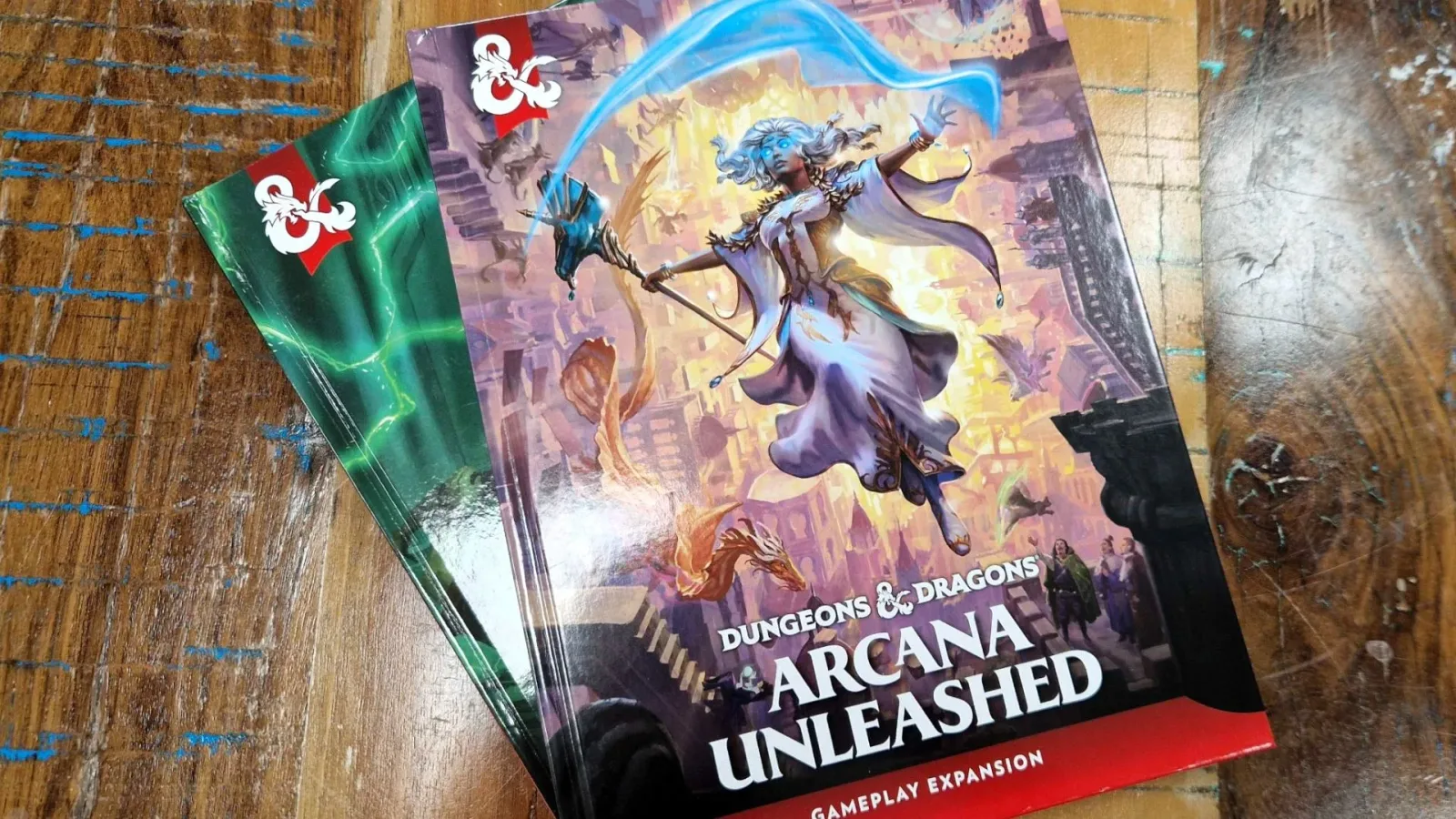
Dungeons & Dragons Arcana Unleashed has arrived with a concentrated package of player options for groups that want their campaigns to feel more steeped in magic. The 160-page gameplay expansion introduces new subclasses, backgrounds, feats, spells, magic items, and campaign-building material, all centered on arcane themes. Alongside it comes D&D Arcana Unleashed: Deadfall, a separate adventure for characters from levels 11 through 20 that takes players to Thay for an espionage-focused confrontation involving the enduring villain Szass Tam.
The headline addition for many players may be the new Necromancer Wizard. Necromancy has long been an attractive fantasy archetype in D&D, but turning the concept into a character who meaningfully commands the dead from the early game has not always been straightforward. Arcana Unleashed directly addresses that gap, giving the subclass tools that establish its identity much sooner than a conventional spell selection alone could manage.
That is only one part of the expansion, though. Arcana Unleashed includes eight arcane-themed subclasses across Wizards, Clerics, Fighters, Monks, and Warlocks. It also gives Dungeon Masters material to shape worlds where strange magical forces, patrons, artifacts, and spellcraft can become major parts of the campaign rather than occasional dressing. It is a relatively compact release, but its premise is broad: give both sides of the table more reasons to make magic central to the story.
A Necromancer That Starts Feeling Like a Necromancer at Level One
The most notable feature of the Necromancer design is how quickly it lets a player inhabit the fantasy. Instead of waiting until the third-level Animate Dead spell becomes available, the subclass begins with access to Find Familiar at first level and changes the familiar option so the character can call a zombie or skeleton. That creates a visible undead companion almost immediately, rather than leaving a prospective necromancer to spend early levels feeling like a more generic Wizard with a future plan.
For useful background on this topic, read Valve Removes Adults-Only Steam Classification From Vampire RPG Nighthawks.
The undead familiar is not simply cosmetic. It can also function as a means of restoring the Necromancer's health, adding a practical survival benefit to the subclass's signature creature. At sixth level, the character can cast Animate Dead once per long rest without consuming a spell slot. Together, those elements build toward the familiar image of a spellcaster who relies on undead servants and gradually improves their ability to maintain them.
It is a sensible approach because a subclass needs to communicate its role early. The appeal of a necromancer is rarely limited to the possibility of eventually learning a few death-related spells. Players are usually looking for the theatrical and tactical experience of having an undead aide, treating death as a resource, and commanding creatures others might fear. Giving those ideas mechanical weight at the beginning of a campaign makes the choice more immediately rewarding.
The early implementation also leaves room for a character to develop organically. A skeleton or zombie familiar can be played as a grim assistant, an unsettling remnant of someone from the character's past, a silent bodyguard, or even an oddly domestic servant. Those details are not rules requirements, but they illustrate why an early undead companion can be especially useful at a roleplaying table. It gives players and Dungeon Masters a recurring element around which scenes can be built.
Eight New Subclasses Spread Magic Beyond Full Casters
Arcana Unleashed is not exclusively a Wizard book. Its eight subclasses extend magical identities to several classes, including Clerics, Fighters, Monks, and Warlocks. That matters because D&D parties often include players who want a supernatural flavor without necessarily playing a traditional robe-and-spellbook caster. A martial character with a magical specialty can change the tone of an encounter just as much as a new spell list can.
The Arcane Archer stands out as an example of the book's more playful combat possibilities. Its magical arrows can produce effects that go well beyond ordinary ranged damage, including an option that sends a target to another dimension for a turn. Mechanics like that are useful not just for power, but for creating memorable turns: the archer is not merely firing again, but temporarily removing an enemy from the immediate fight and forcing the rest of the battlefield to react.
For players, the wider selection of subclasses means the expansion can support several kinds of magical character concepts at once. A party could include an undead-focused Wizard, an arcane martial specialist, a magic-infused Monk, and a Warlock tied to a peculiar patron without every player reaching for the same class. That breadth is valuable in campaigns where the group wants mystical themes to be prominent but still wants varied roles in exploration, combat, and social scenes.
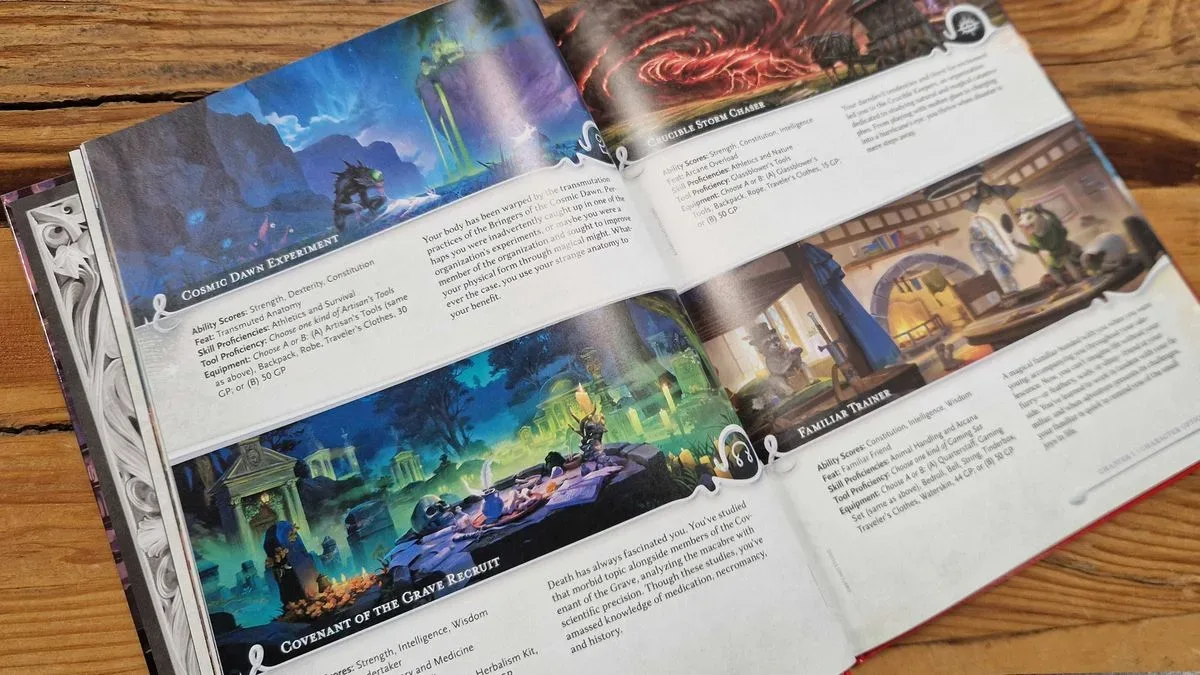
The added backgrounds and feats should similarly help characters establish their magical connections from the start. Backgrounds can frame where a hero learned unusual practices or why they have access to occult knowledge, while feats offer another route to tailoring a build. A player does not necessarily need to replace their entire class identity to bring more magic into the character; these options can provide a smaller but meaningful arcane angle.
Spells, Items, and Patrons Give Dungeon Masters More Hooks
Beyond character creation, Arcana Unleashed supplies original spells and magic items, plus arcane patrons that can help organize a campaign. This is an important distinction between a book full of player-facing rules and one built to influence a whole game. New spells and equipment affect what adventurers can do, but patrons can establish why they are doing it.
An arcane patron can serve as a source of assignments, secrets, favors, rivalries, and escalating complications. Depending on how a Dungeon Master uses the material, such a figure or force could be a benefactor, a demanding mentor, an unknowable magical institution, or something much less trustworthy. The value is not merely having another quest giver. A patron can make the party's magical choices feel connected to the setting and can give an ongoing campaign a clear thematic thread.
The world-building material is designed with that same goal in mind. It offers prompts and ideas for Dungeon Masters who want to make magic feel embedded in the setting. A campaign can be transformed by deciding who controls spellcasting, how ordinary people view magical practitioners, what kinds of enchantments are commonplace, and what dangerous knowledge is forbidden. Those questions create consequences for magical characters, ensuring their abilities have a place in the world rather than existing only during combat encounters.
For a homebrew campaign, that focus could be the book's most durable feature. Subclasses and feats are immediately usable, but setting concepts can inspire entire regions, factions, and plots. Even groups not using every new rule may find that a magical patron, a strange item, or a different approach to arcane politics is enough to launch the next adventure.
Deadfall Makes Thay the Stage for Espionage
Deadfall takes the magical premise into a high-level campaign. Intended for characters between levels 11 and 20, it centers on a plot involving Szass Tam and explores his homeland of Thay. The Red Wizard-controlled nation is a fitting location for an adventure about dangerous magic: it is portrayed as a harsh place where mages rule with cruel authority, making it sharply distinct from many more familiar corners of the Forgotten Realms.
The campaign's "wizard spy thriller" framing is especially notable. D&D adventures can often be reduced to a sequence of ruins, monsters, and open fights, but Deadfall appears interested in missions where planning, infiltration, and player choice matter. An early assignment asks the party to eliminate a group of villains while leaving the method up to them. That structure evokes the preparation and improvisation of a heist, with players assessing targets, devising an approach, and adapting when the plan collides with reality.
That is a strong fit for high-level characters. By levels 11 to 20, adventurers typically have powerful magic, travel options, contacts, and specialized abilities that can undermine a simple locked-door scenario. An espionage framework can make those capabilities part of the fun. Teleportation, disguises, divination, magical deception, and overwhelming force can all be possible solutions, but each may carry different risks in a hostile nation governed by spellcasters.
Thay also offers a useful contrast with campaigns built around more conventional heroic exploration. In a place shaped by tyrannical magical rule, the party may need to think carefully about whom they trust, how visibly they use their abilities, and which local powers could turn against Szass Tam. The setting naturally supports intrigue, moral pressure, and missions where a victory achieved quietly may be very different from one achieved through a direct assault.
A Focused Expansion for Magic-Heavy Tables
Arcana Unleashed and Deadfall are shorter than many major D&D releases, yet their subject matter gives them a clear purpose. The gameplay expansion is aimed squarely at players who enjoy spellcasters and magical character concepts, while its Dungeon Master content supports campaigns where the arcane is a defining force. Deadfall then provides a ready-made high-level adventure that uses a famously dangerous magical setting for something more covert than a standard dungeon expedition.
The Necromancer may be the clearest reason to look closely at the rules. By granting an undead familiar from first level and later allowing a no-slot use of Animate Dead, the subclass delivers its core fantasy sooner and more consistently. But the larger collection is what makes the release useful for a full group: new subclasses for multiple classes, extra backgrounds and feats, spells and items, and material for turning magic into a campaign engine.
For Dungeon Masters, the pair of books presents two complementary paths. Arcana Unleashed can seed a homebrew world with arcane patrons, magical complications, and new player options. Deadfall can instead take an established group into Thay for a level 11-20 campaign of espionage, villainy, and high-powered magical conflict. Either way, the releases are positioned to give tables more than isolated character upgrades. They offer tools for making the consequences, culture, and danger of magic matter throughout an adventure.
Community
Discussion
Start the conversation.
No comments have been posted yet.