

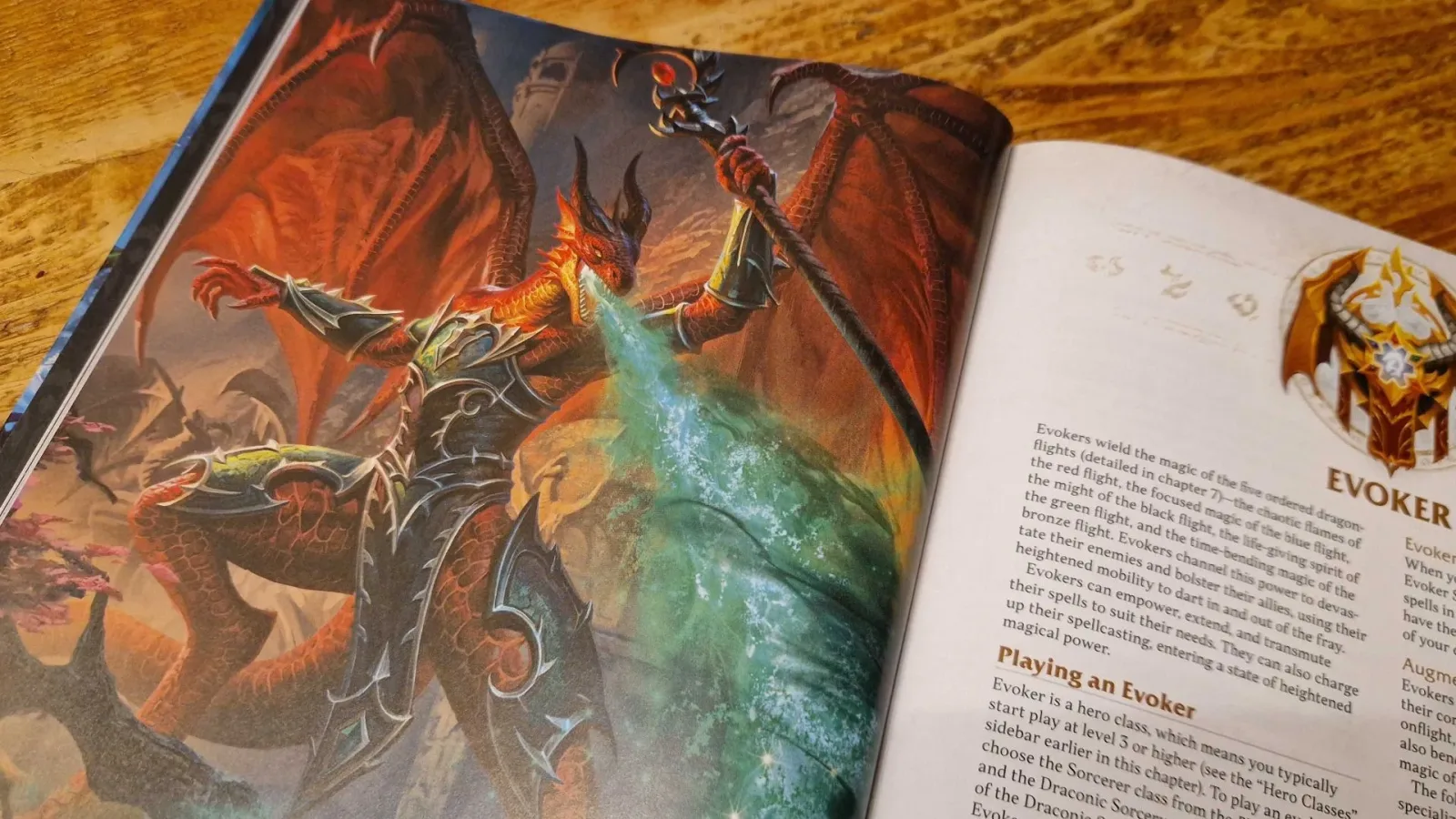
Dungeons & Dragons: World of Warcraft is not being positioned simply as a trip through familiar Azeroth locations. For Wizards of the Coast Principal Game Designer James Wyatt, the forthcoming D&D crossover has also been a design experiment with potential lessons for the future of the tabletop RPG.
Launching on November 17, 2026, D&D: World of Warcraft is the first Dungeons & Dragons Universes Beyond expansion. It adapts characters, classes, factions, dungeons, creatures, and conflicts from Blizzard's long-running PC MMORPG for a tabletop rules framework built around player choice and Dungeon Master improvisation. That difference is central to the project: Azeroth can provide enormous amounts of material, but an MMO's loops and structures cannot always be moved directly to a D&D campaign.
Wyatt described the book as an unusually broad collection of tools, one intended to serve groups with very different interests. Players and Dungeon Masters can lean into the Alliance and Horde conflict, explore the Burning Legion, Dragonflight, Elemental Lords, Old Gods, Scourge, and other major Warcraft forces, then use material designed to sustain a campaign through 20 levels and beyond. Each major theme includes an endgame component, giving DMs ingredients to combine rather than a single mandatory narrative path.
That approach reflects a larger goal: retain the identity of Warcraft while preserving the freedom that makes a D&D table work.
For useful background on this topic, read Foxhole Engines of War update Brings Submarines, Aircraft and New Warfare Tools December 7.
Azeroth as a Campaign Toolkit Rather Than One Fixed Story
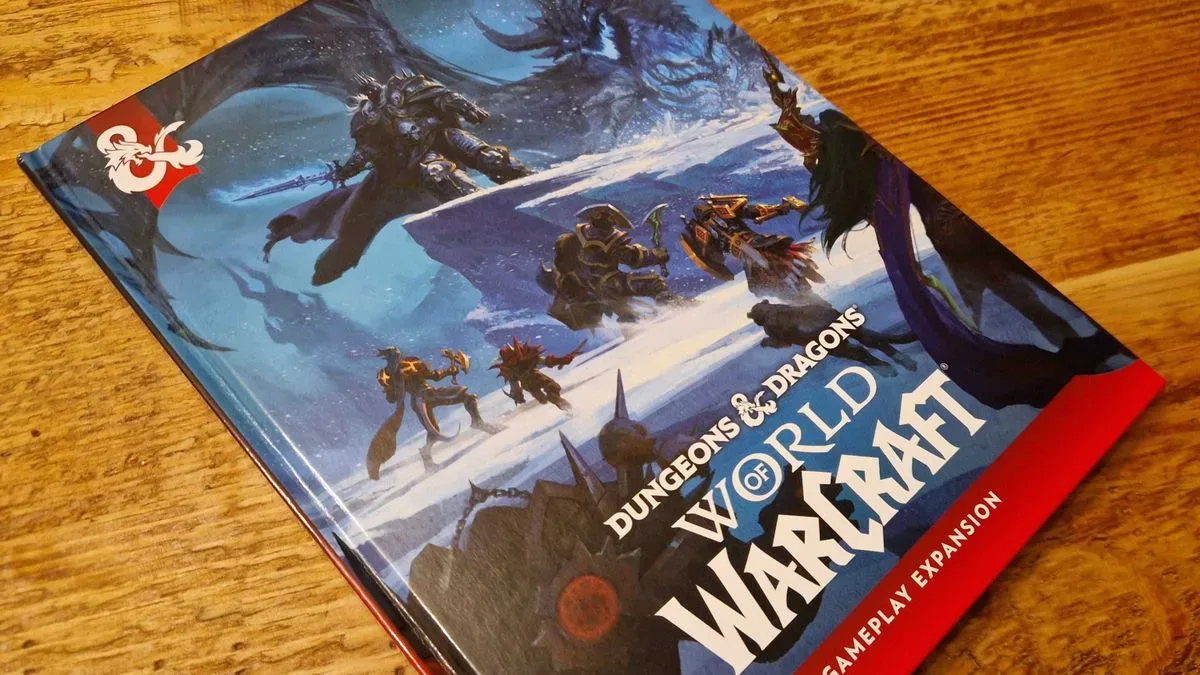
The Lich King may be among the most prominent figures associated with the book, including on its cover, but he is not presented as the sole centerpiece or ultimate villain every group must face. One major option arrives through the accompanying Map Pack, which includes a digital code for an Icecrown Citadel adventure. Characters can enter the citadel at level 16 and progress to level 20 as they reach the Frozen Throne.
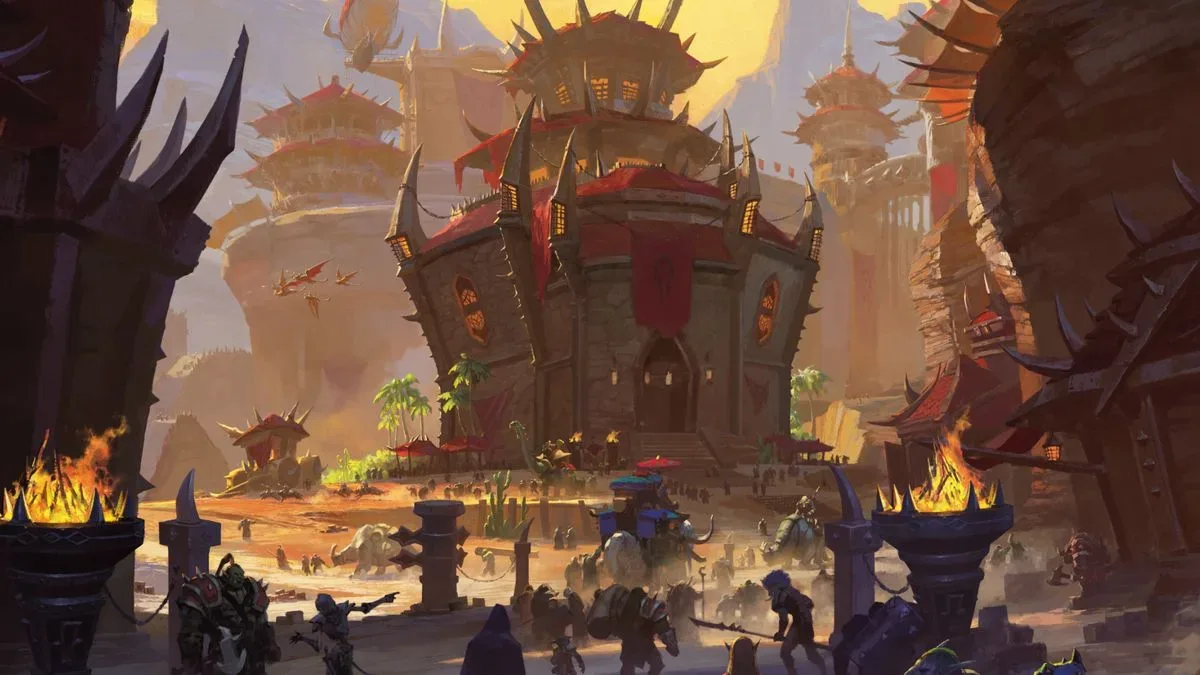
Icecrown is only one route through the setting, however. The book lays out multiple factions and campaign themes that DMs can develop in their own combinations. A party could wage war against the Scourge, confront cosmic threats tied to the Old Gods, become entangled in Dragonflight stories, or build an entire campaign around the political and military friction between Alliance and Horde.
Wyatt highlighted the latter as a particularly compelling possibility: a mixed-faction adventuring group trying to bring an end to the conflict through diplomacy, secret meetings, intrigue, and subterfuge. It is the kind of premise that takes advantage of tabletop role-playing's flexibility. The campaign need not reproduce a pre-existing Warcraft storyline beat for beat. Instead, the group can treat Azeroth's established tensions as the starting point for their own decisions.
That should also make the material useful beyond the audience already invested in World of Warcraft. The book's factions, threats, environments, and campaign frameworks can potentially offer a source of ideas for D&D players who simply want compelling fantasy tools for their home games. Wyatt characterized the release as close to an "Everything" book in scope, albeit one organized around Azeroth.
Turning MMO Dungeons Into Tabletop Spaces
Dungeons are foundational to both games, but their function changes dramatically between formats. In an MMO, an instance has a programmed layout, tightly authored encounters, repeatable routes, and combat designed around real-time mechanics. At a D&D table, players may approach a room from an unexpected direction, negotiate with something presumed hostile, bypass an encounter, or set fire to a carefully prepared plan.
The development team's answer was to represent Warcraft dungeons faithfully in visual terms while leaving room for a Dungeon Master and players to reshape the experience. Wyatt said the maps were generally translated to resemble their in-game counterparts as closely as possible. His own research on Icecrown Citadel involved exploring it in-game, including using a high-level Druid to move invisibly through sections and flying around the exterior to better understand how the fortress fit together.
Rather than offering a fully prescriptive script for every space, the dungeon material is presented in a style comparable to concise map-based adventures. Maps identify key locations and bosses, provide descriptions, and suggest the creatures or situations that might be found there. The remaining uncertainty is a feature rather than a gap. DMs receive enough structure to stage an Azeroth adventure, while the table remains free to create the chaos, surprise, and unexpected solutions that tabletop games invite.
It is an important distinction for a licensed adaptation. Accuracy in architecture and atmosphere can help a dungeon feel recognizable, but too much rigidity could undermine the medium it is entering. A D&D group needs the latitude to make a plan, abandon it, and deal with the consequences.
"Paraphrasing" Warcraft's Famous Bosses
Bringing iconic characters into D&D creates another challenge. A boss encounter in World of Warcraft is shaped by digital systems, group roles, cooldowns, visual spectacle, encounter phases, and the expectation that players can retry after failure. A monster in fifth-edition D&D needs to function within turn-based combat and within the much less predictable conditions of an individual campaign.
Wyatt's preferred term for the process is "paraphrase," rather than a direct translation. The priority is not reproducing every system and attack exactly. It is identifying what makes a character or battle feel iconic, then expressing that feeling through D&D mechanics.
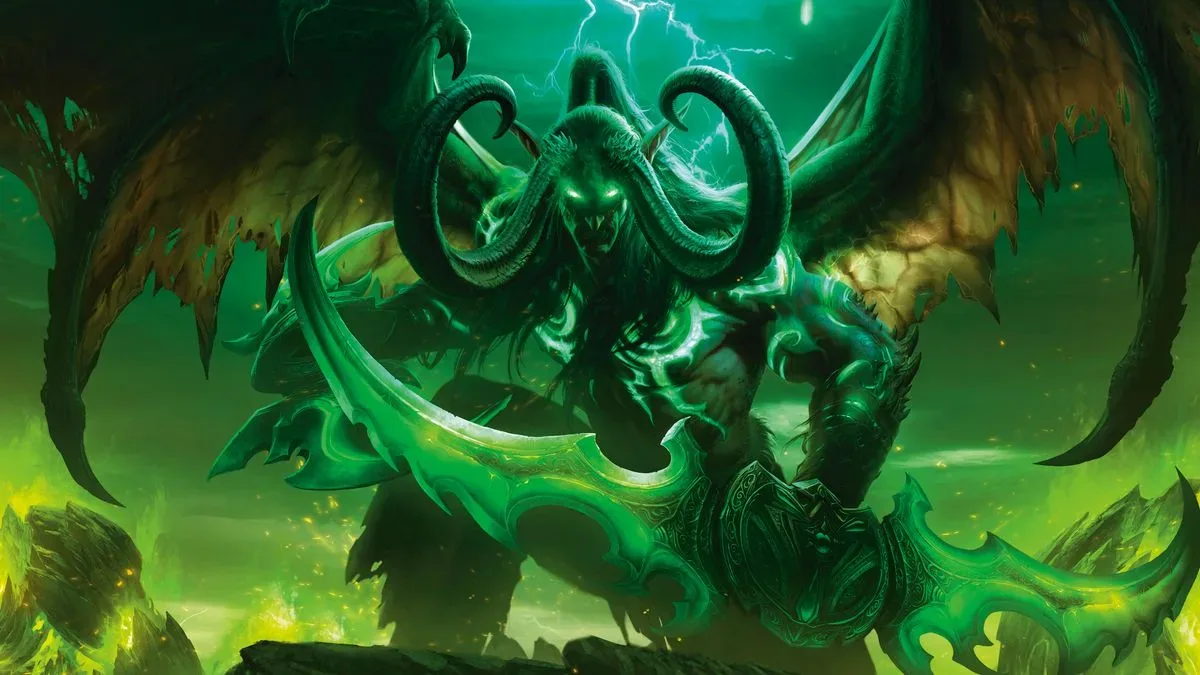
Illidan is one example. In the book, he has a Challenge Rating of 24, placing him above the danger level expected for even a level-20 party. His statistics are intended to give him the survivability needed for a major confrontation, but the more difficult task is deciding which abilities most effectively communicate the fantasy of fighting Illidan in tabletop form. The objective is a fight that evokes the character's recognizable presence without pretending that D&D and an MMO handle encounters in identical ways.
The same thinking applies across the setting. A stat block must be balanced, but it also has to carry identity. If an Azeroth character loses the signature elements that fans associate with them, numerical balance alone will not make the encounter satisfying.
Why the Book Avoids MMO Grind
Not every recognizable World of Warcraft convention belongs in a D&D session. Wyatt specifically pointed to daily-style tasks and repetitive collection quests as concepts that require caution. Spending time hunting creatures for drops can work differently in an MMO, where the act may take seconds and exists within a larger progression loop. At a tabletop, the same job can become a slow sequence of encounters that consumes an entire evening without giving players meaningful choices.
The book's adventure guidance instead emphasizes avoiding the grind. Player actions should make a lasting difference in the world, characters should receive the spotlight, and the campaign should not repeatedly elevate non-player characters above the group's own achievements. Those principles are especially relevant when adapting a game whose world is packed with celebrated heroes, villains, and quest givers.
Mounts provide a useful example of the contrast between formats. In an MMO, a rare mount can be a highly visible marker of a difficult accomplishment, while travel speed is a constant practical concern. In D&D, a party can often acquire ordinary transportation much more casually. Still, special rewards remain possible: defeating the Lich King can yield the Reins of Invincible. The difference is that tabletop success is shared. The triumph belongs to the group that reached the moment together, not solely to an individual player pursuing a prestige reward.
Hero Classes Could Have a Future Beyond Azeroth
The most intriguing long-term design possibility Wyatt identified involves the book's treatment of the Death Knight and Demon Hunter. Using Warcraft terminology, they are Hero Classes, but mechanically they are subclasses that alter a character's base class features. Wyatt said the team is interested in the potential of that model and may explore whether a comparable approach could have a place in core D&D.
There are no announced plans for which classes might receive that treatment, and Wyatt stressed that he does not yet know what any future implementation would look like. Still, the idea suggests that the crossover is giving the D&D team a practical testing ground for more transformative subclass design.
Monster design is another area where lessons may carry forward. Wyatt also pointed to the Druid's setting-specific Wild Shape forms as an example of reusable design technology. Work on the Warcraft material helped provide a model for a future D&D release featuring a Druid who takes on an enormous, kaiju-like form. Wyatt referred to that option as a Cataclysm Druid, though the final name may change. It could be connected to the planned Dark Sun reboot, which is expected early next year.
For now, D&D: World of Warcraft remains focused on letting tables make Azeroth their own. Its real test will be whether its dungeons feel flexible, its heroes and villains feel authentic, and its new mechanical ideas deliver the right balance between Warcraft flavor and D&D freedom. If Wyatt's hopes are realized, its influence may continue long after parties have fought their way through Icecrown Citadel.
Community
Discussion
Start the conversation.
No comments have been posted yet.