

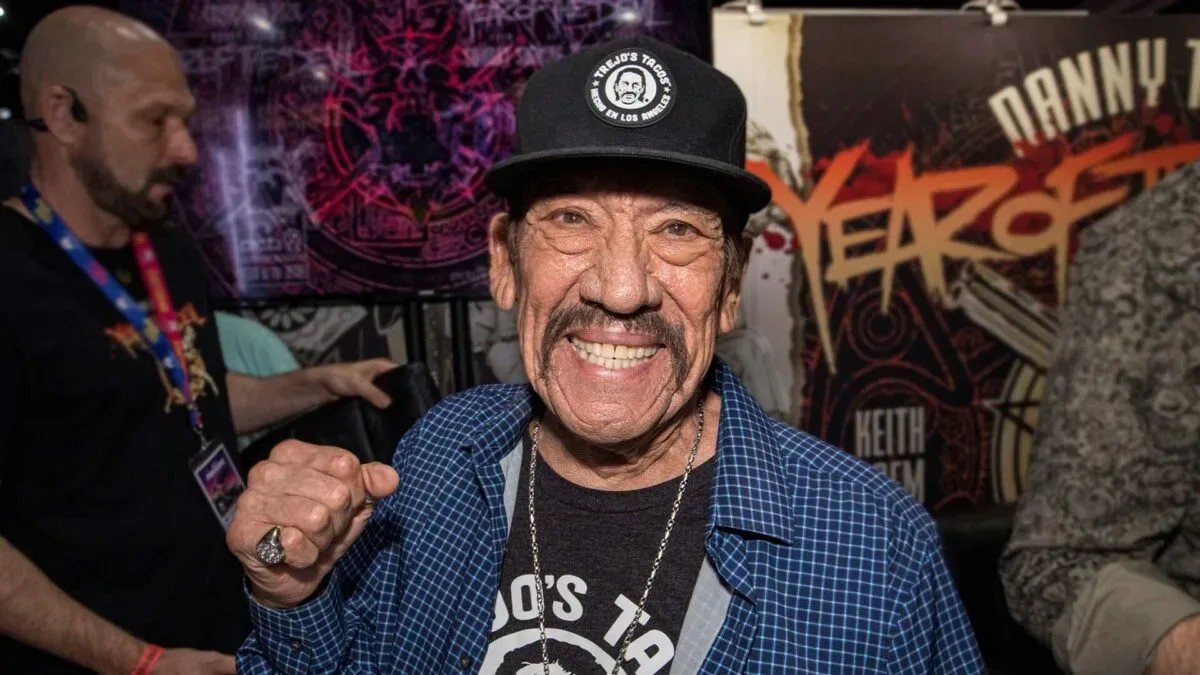
Danny Trejo's involvement in the upcoming film Pawn Shop has become the subject of a growing controversy, with the actor's son Gilbert Trejo saying his father was misled about the project before signing on. The dispute has particular resonance for gaming audiences: Trejo has built a long history in games alongside his extensive movie and television career, appearing in franchises including Grand Theft Auto, Call of Duty, Far Cry, and Like a Dragon.
Pawn Shop is connected to Ben Shapiro's media company and has drawn criticism from people who view its apparent framing as supportive of Immigration and Customs Enforcement. Trejo, who is of Mexican descent and has publicly identified himself as a Democrat, addressed the backlash directly in an Instagram statement last week. He stressed that he is a proud Mexican, has always supported his community, is pro-immigrant, and is not pro-ICE.
Gilbert Trejo subsequently offered further context in a private Instagram Story, arguing that his father did not have a full understanding of the production's affiliations or intentions when he agreed to appear. His account portrays the situation as a painful collision between contractual obligations, public assumptions, and a project whose political associations became clear only after work had started.
Gilbert Trejo says the project was presented differently
According to Gilbert Trejo, Danny Trejo's agent initially described Pawn Shop as a morally complicated story set in a difficult period. In that pitch, Trejo's character was portrayed as a hardworking Mexican pawn shop owner seeking peace while the people around him behaved badly. That kind of role would not be out of character for an actor who has often brought depth and empathy to tough-looking figures across a career spanning more than 200 films.
For useful background on this topic, read Legacy Games Storefront and Launcher Will Shut Down in February 2027.
Gilbert said the family did not realize Shapiro was involved until roughly two weeks into filming. He also claimed that his father had not previously been familiar with Shapiro or the rhetoric associated with him. Those assertions have not changed the criticism aimed at the production, but they offer an explanation for why Trejo participated despite his own stated beliefs on immigration.
The younger Trejo further said that his father cannot simply denounce the film's backers or leave the project without facing legal consequences under his contract. He described Danny Trejo as being stuck with a production he did not want to be associated with in the way it is now being discussed online.
"He's handcuffed to this stupid project," Gilbert Trejo wrote, arguing that many people had rejected his father before hearing the full circumstances.
Gilbert also criticized the way the controversy has played out publicly, suggesting that the project's association with Trejo had produced attention for Shapiro while driving a wedge between the actor and portions of the Mexican and immigrant communities that have long celebrated him. His comments urge a more nuanced reading of an actor's involvement in a work, especially when contracts, agents, producers, and incomplete information can shape a decision long before the public sees the finished result.
A familiar face to players across multiple generations
For many game players, Danny Trejo is more than a recognizable screen actor. His voice, likeness, and public persona have appeared in some of the medium's biggest series, often adding a sense of history and personality to worlds already packed with famous performers.
One of his best-known game appearances came in Grand Theft Auto: Vice City, where he played Umberto Robina. The character is the leader of the Cuban gang in Little Havana and becomes an important contact for protagonist Tommy Vercetti. Released in 2002, Vice City remains a landmark open-world game, and Trejo's role helped give its Miami-inspired setting an added connection to crime cinema and television.
Trejo has also appeared as himself in games. He was featured in Call of Duty: Black Ops, part of a roster of celebrity figures associated with the game's Zombies mode. The appearance fit naturally with an actor whose screen image has long been tied to grit, action, and survival. For players, these kinds of cameos can be memorable because they turn a familiar performer into a participant in the game's fiction rather than simply a face on promotional material.
That crossover continued in Far Cry 6, where Trejo again appeared as himself in downloadable content. The collaboration leaned into his larger-than-life persona while placing him in the fictional Caribbean nation of Yara. His presence was part of the game's broader approach to celebrity-driven expansions and missions.
More recently, Trejo appeared in Like a Dragon: Infinite Wealth. The series has a strong tradition of mixing earnest drama, absurd comedy, side activities, and celebrity appearances, making it a particularly fitting place for an actor who has moved comfortably between intimidating roles and lighter, self-aware performances. Trejo's willingness to work across formats has made him a recognizable figure not only to film fans but to players who may know him first from a mission, a voice role, or an in-game cameo.
Why the backlash has been so intense
The reaction to Pawn Shop is inseparable from immigration politics in the United States and from Trejo's personal history. He has publicly spoken about being proud of his Mexican heritage, and he has often been embraced as a prominent Mexican American performer whose life story includes addiction recovery, incarceration, acting success, and extensive community work.
That background made his attachment to a film perceived by critics as pro-ICE especially jarring. To many observers, Trejo's name and image carry meanings that seem incompatible with the politics they believe the project promotes. His own Instagram message was an attempt to make his position unambiguous: he said he supports immigrants and does not support ICE.
Gilbert Trejo's statements do not erase the concerns people have about the movie itself, nor do they establish what the finished film will ultimately say. The production has not yet been released, and the available discussion concerns its reported premise, affiliations, and the public arguments surrounding it. But his account does challenge a simplified narrative in which Trejo knowingly sought out a political project that reflected views opposite to those he has publicly expressed.
The episode also highlights a recurring issue across entertainment industries. Performers do not always have complete information about the eventual branding, financing, messaging, marketing, or political reception of a production at the moment they sign a contract. In games, film, television, and advertising alike, talent may join based on a script, a role description, an agent's presentation, or a limited understanding of who is behind a project. Once an agreement is in place, withdrawing can be expensive and legally complicated.
Contracts and public judgment
Gilbert Trejo's central claim is that his father is constrained by the agreement he signed. If accurate, that would mean Danny Trejo's options are limited even if he strongly disagrees with the project's political reputation or with people involved in it. It is a reminder that celebrity participation does not always equal endorsement of every element surrounding a work.
At the same time, public audiences often make judgments based on the information they can see: a cast list, a trailer, a producer's name, or a company logo. That response is understandable, especially when the subject involves immigration enforcement and communities directly affected by policy. The tension in this case is between that immediate reaction and Gilbert Trejo's request for people to consider the conditions under which his father accepted the role.
For now, Danny Trejo has made his own position clear in broad terms. He says he is pro-immigrant, opposed to ICE, and proud of his Mexican identity. His son says the actor was drawn into Pawn Shop without being told the full story and cannot easily separate himself from it because of contractual obligations.
Whether the controversy changes how audiences receive the film remains to be seen. For players who have encountered Trejo throughout decades of games, the situation is another example of how game culture and the wider entertainment business can overlap in unexpected ways. A performer known for bringing charisma to digital crime sagas, zombie survival, guerrilla action, and sprawling RPGs now finds his public image caught in a real-world political dispute--one his family says does not reflect his beliefs.
Community
Discussion
Start the conversation.
No comments have been posted yet.