

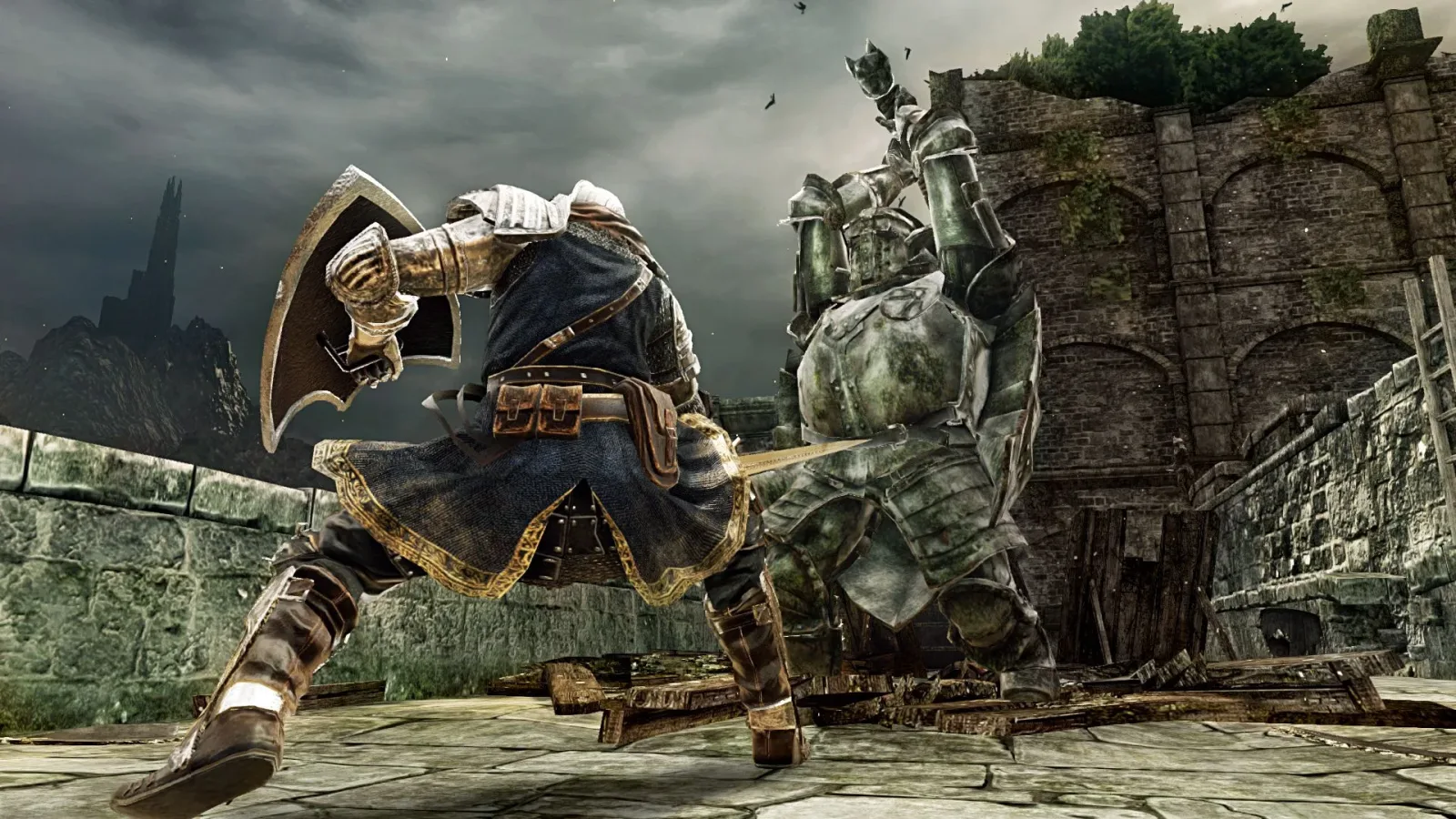
Dark Souls 2 is getting a full Seamless Co-op mod on Tuesday, September 22, giving PC players a new way to experience FromSoftware's divisive middle Souls entry with friends. Built by modder Yui, whose prior multiplayer overhauls have become especially well known among Elden Ring, Dark Souls, and Dark Souls 3 communities, the project is designed to remove many of the interruptions and restrictions built into the game's original online systems.
The mod will not be restricted to supporters. Yui has said it will be released through Nexus Mods and GitHub as well as being announced through Patreon. That should make it broadly accessible to the PC community once it goes live.
Dark Souls 2 already supports online co-op, but its original implementation can be demanding even by Souls standards. Players must navigate summoning conditions, item-based limits, shifting world states, and the fact that ordinary milestones can abruptly split a party apart. Seamless Co-op is intended to replace that stop-start structure with a persistent shared session, allowing a group to journey through the game together rather than repeatedly reconstructing a multiplayer lobby.
A start-to-finish group playthrough
The central promise is straightforward: a group can tackle Dark Souls 2 cooperatively from the opening areas through to the end of the game without standard transitions forcing summoned players out. As explained by Amirah, who also worked on the project, sessions maintain synchronized progress and avoid the usual interruptions tied to death, boss victories, and loading screens.
For useful background on this topic, read Stellar Blade Director Hyung-tae Kim Wants to Collaborate With PlatinumGames Again.
That distinction is important for a game structured around many separate regions, boss arenas, and bonfire checkpoints. In the vanilla experience, crossing particular boundaries or beating a major encounter can mean that phantoms disappear and have to be summoned again. The Seamless Co-op approach instead seeks to preserve the party through those events, keeping everyone together as the group moves between locations.
Progress is also designed to carry over for summoned players, rather than treating their time in another player's world as a detached helping session. That makes the mod a potentially appealing option for friends who want to complete one coordinated campaign, progressing together instead of alternating hosts or replaying the same content solely to catch everyone up.
For a game as large and unusually structured as Dark Souls 2, that could substantially alter the rhythm of a co-op run. The base game's fragmented online design has long made cooperative play possible, but not always convenient. A persistent session should let players focus more on exploration, build experimentation, difficult encounters, and the occasional inevitable catastrophe in a crowded corridor.
Optional proximity chat includes invaders
One of the mod's more distinctive additions is proximity voice chat. The feature is available for co-op partners and invaders, letting nearby players communicate without relying on external voice applications. It is optional in both cases, so groups that prefer a quieter, more traditional Souls atmosphere can leave it disabled.
For friendly parties, proximity chat could make navigation and combat coordination more immediate. Dark Souls 2 is full of branching paths, hidden dangers, ambushes, and locations where a few seconds of warning can make the difference between a clean advance and a trip back to the bonfire. It may also make the game's stranger multiplayer moments more social, particularly when a group is trying to explain why it has collectively walked into another trap.
Including invaders is a more unpredictable prospect. Invasions have always been part of the broader Souls identity, creating a clash between PvE adventurers and an opposing player with their own tactics and objectives. Proximity voice could turn those encounters into chaotic exchanges, tense negotiations, or simply more memorable duels. Since the setting can be turned off, it will not become a requirement for players who want to keep invasions limited to gestures, movement, and combat.
A death mechanic meant to preserve the challenge
Persistent multiplayer also creates a design problem. If death does not reset the world state in the usual way, players could potentially gain an advantage by repeatedly dying while preserving too much progress. The mod addresses that possibility through a new mechanic involving cursed soul fragments.
Each death grants a cursed soul fragment, and the fragments carried across the group gradually empower enemies. In other words, a party can continue its uninterrupted session after a setback, but accumulating deaths makes the world increasingly dangerous. The system gives the group a reason to avoid treating death as meaningless while still preserving the convenience of seamless progression.
Resting at a bonfire resets enemies and clears the group's soul fragments, providing a deliberate reset point. That creates an interesting tactical tradeoff. A team that presses onward after several deaths may be able to retain momentum, but it does so against increasingly threatening opponents. Returning to a bonfire clears that escalating risk, while naturally bringing back the enemies that were defeated along the route.
The cursed soul fragment rule is itself optional. Players seeking a more relaxed adventure can disable it, while those who want a co-op format that still pushes back against careless play can keep it enabled. That flexibility fits the broader purpose of the mod: modernize the multiplayer structure without requiring every group to pursue exactly the same experience.
Quality-of-life upgrades beyond multiplayer
Seamless Co-op is not solely focused on party persistence. The release also includes several quality-of-life changes aimed at making Dark Souls 2 feel better to control and easier to revisit.
- Improved controller dead zone behavior, intended to offer more responsive analog input.
- A fix for a mouse-and-keyboard double-clicking issue that could create the impression of input delay.
- Access to formerly limited-time event content at any time, allowing players to experience that material without waiting for a specific online event window.
Those changes matter because Dark Souls 2 has always inspired unusually specific debates about how it feels compared with the other games in the trilogy. Its enemy placements, progression choices, movement, adaptation mechanics, and atmosphere are all frequent subjects of discussion. Even players who enjoy the game often acknowledge that it has rough edges, while its critics can be especially vocal about its differences from Dark Souls and Dark Souls 3.
The controller and mouse-and-keyboard adjustments will not settle every argument about the game's design, but they may remove friction that has nothing to do with intended difficulty. Likewise, permanently available event content helps ensure that players returning years later can see more of the game without having to plan around a limited activation period.
A timely reason to revisit a contested Souls game
Dark Souls 2 remains the trilogy's most debated installment. Some players consider it the weakest of the three, often pointing to design decisions that differ sharply from its predecessor and successor. Others defend its ambitious scope, distinctive environments, extensive build options, PvP possibilities, and willingness to experiment. Its reputation has never been simple, and that is likely part of why a comprehensive co-op overhaul is such an interesting development.
A seamless multiplayer structure will not transform Dark Souls 2 into a different game. Its levels, bosses, systems, and peculiarities remain intact. What it can do is provide a smoother route into those ideas for newcomers and returning players alike. Friends who may have skipped the game, bounced off its standard summoning process, or simply wanted an excuse for a fresh run will soon have one.
Yui's earlier Seamless Co-op projects established a strong appetite for less restrictive FromSoftware multiplayer on PC. Bringing the same general philosophy to Dark Souls 2 fills a notable gap in that collection of mods. It also arrives with features tailored to the game's own needs, especially the shared progression system and the cursed soul fragments that account for persistent worlds.
When the mod releases on September 22, players will be able to find it on Nexus Mods and GitHub. As with many large gameplay mods, prospective users should read its installation notes and compatibility guidance carefully before beginning a campaign, particularly if they use other modifications. But for groups eager to brave Drangleic without constant resummoning, Dark Souls 2 Seamless Co-op looks set to offer one of the game's most substantial modern community upgrades.
Community
Discussion
Start the conversation.
No comments have been posted yet.