


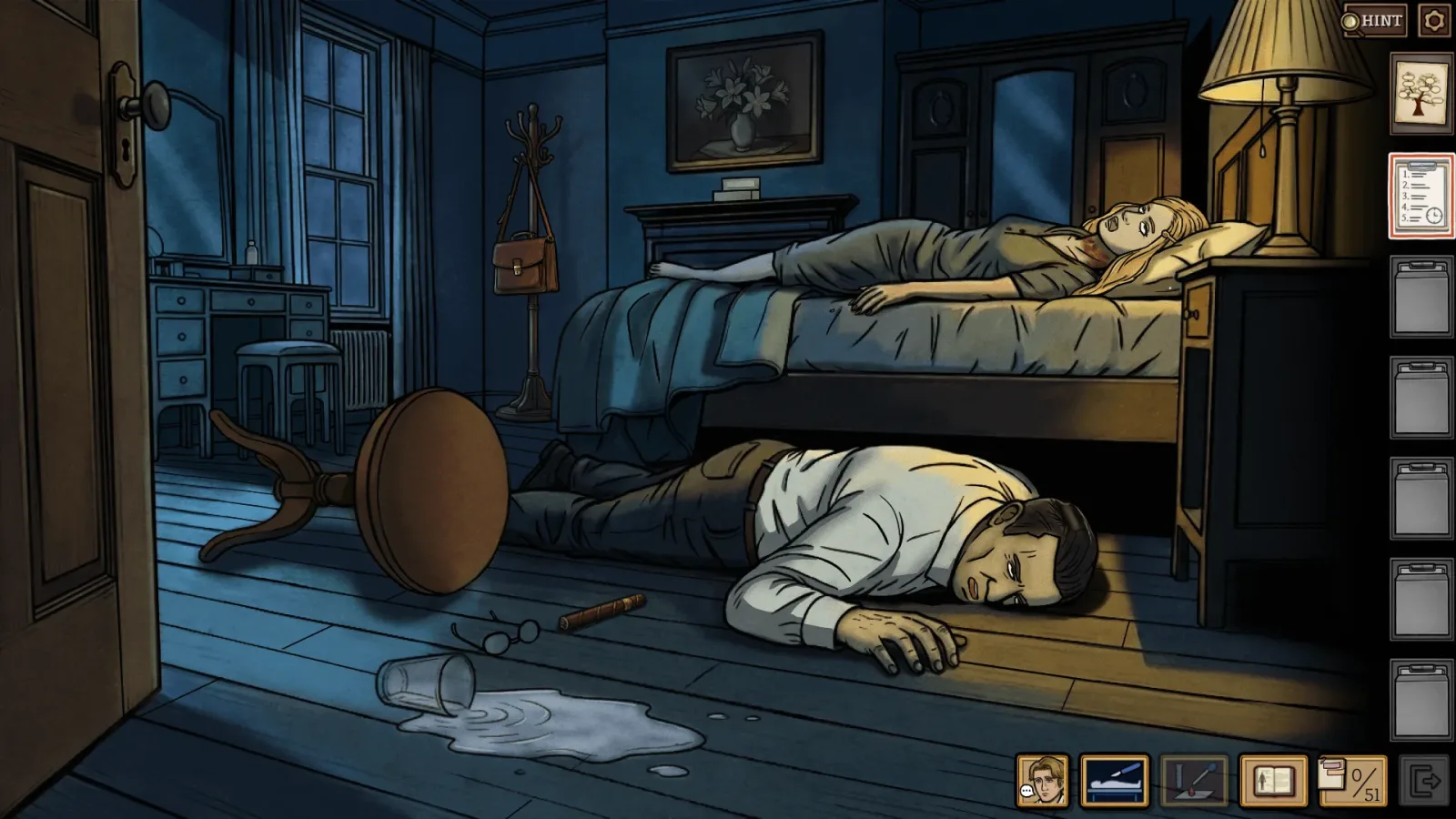
Death at Fleming Manor, the forensic mystery game from SUPERTHUMb, is now available on Steam for PC and Mac. Set at an isolated English estate in 1959, the game puts players in the role of an investigator confronting a string of unexplained deaths--and requires them to do more than simply identify a culprit.
Every case calls for close examination of the scene, the body, the people connected to the estate, and the documents left behind. Players must ultimately file formal records that establish a victim's identity, cause of death, and the manner of death. Was it an accident? Was it self-inflicted? Was it murder? The game's central promise is that these decisions are not just decorative detective-fiction flavor: the conclusions players submit help determine the final outcome.
The Steam launch arrived on November 3, 2026. Death at Fleming Manor is priced at $17.99 in the US, £14.99 in the UK, EUR17.99 in Europe, and ¥1,840 in Japan. A 10% launch discount is available during the game's first two weeks on sale. Before release, more than 120,000 players had added the mystery to their wishlists.
A mystery built around paperwork and proof
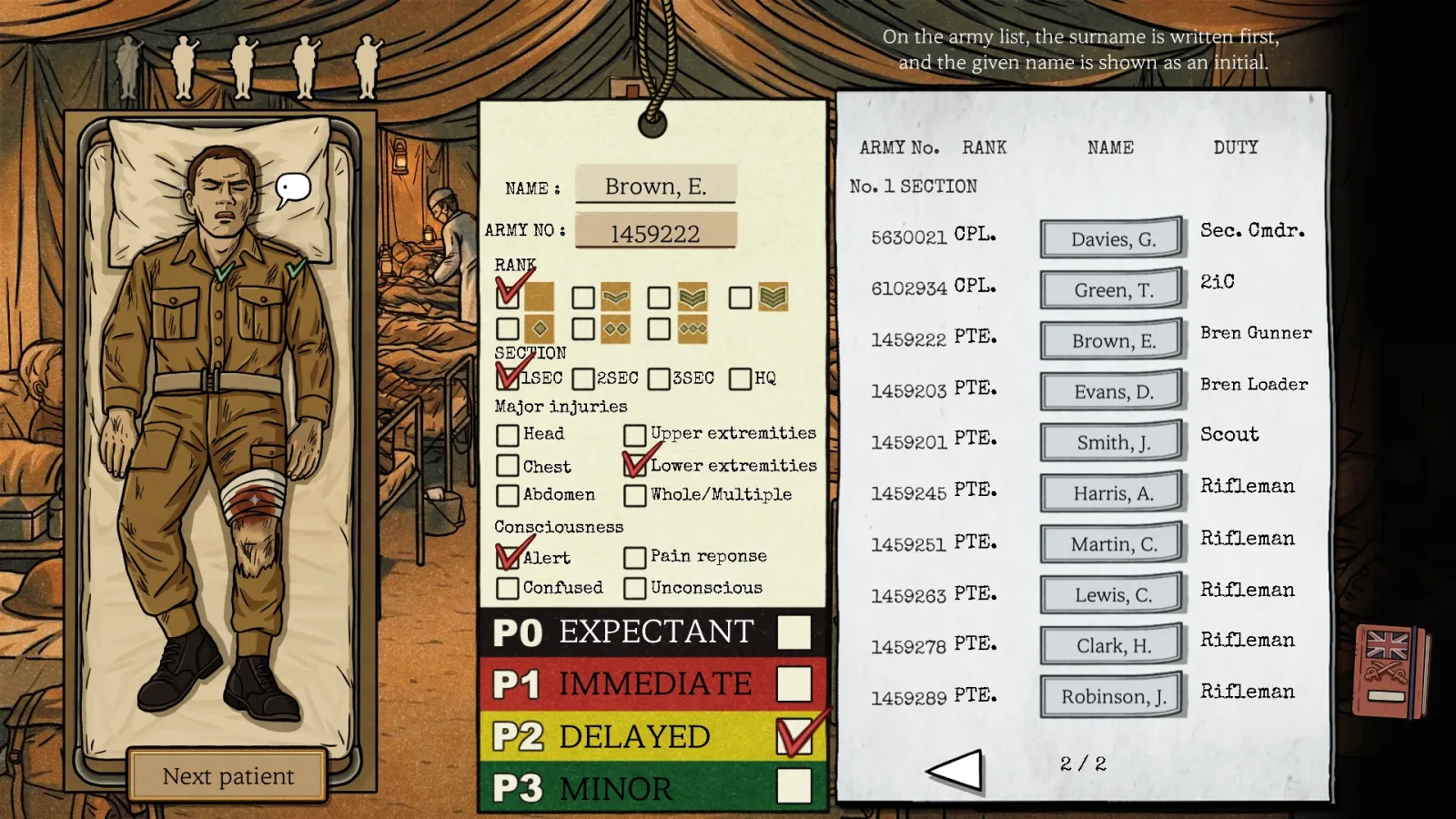
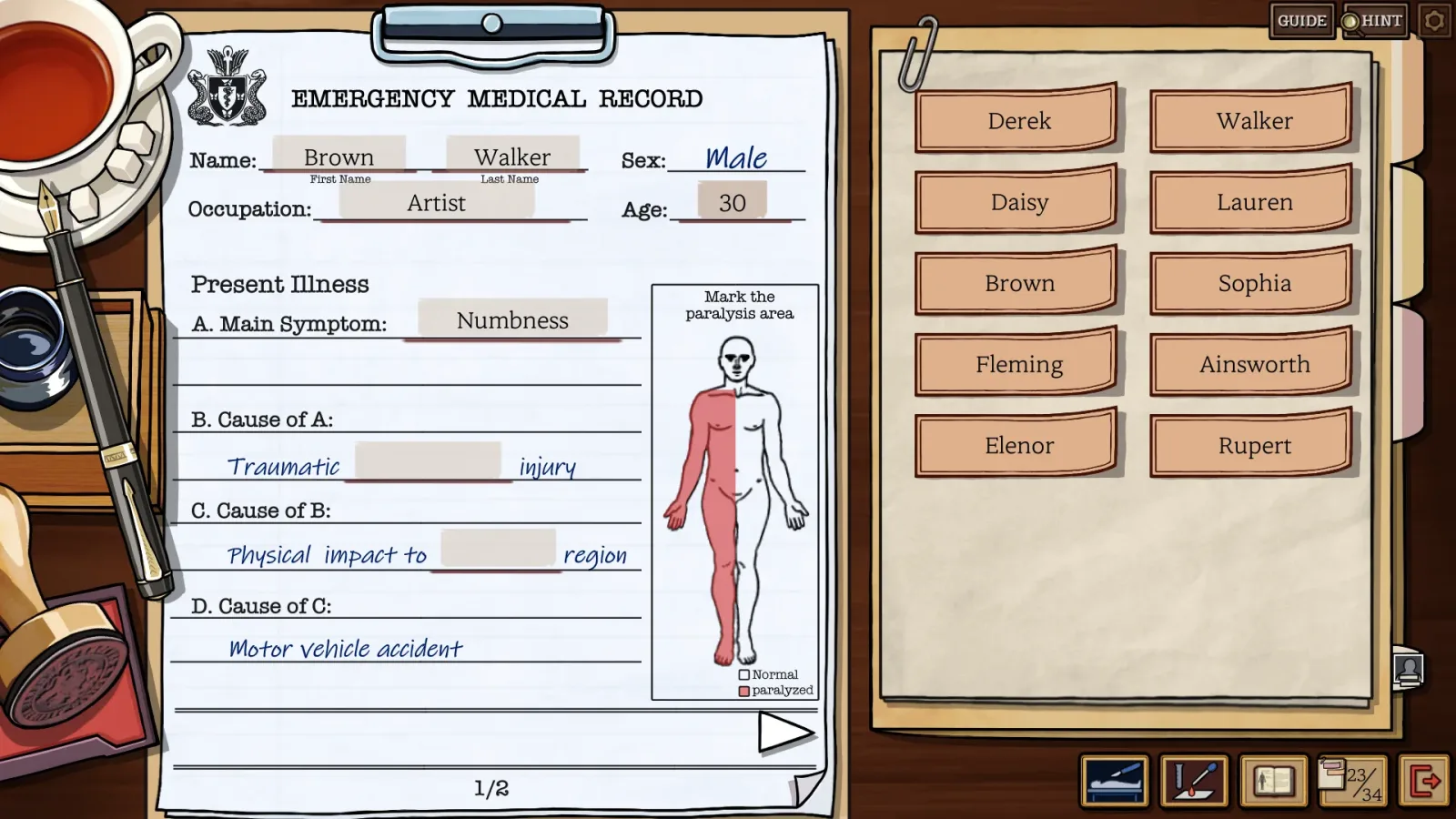
For many detective games, gathering clues is only half the process, while the game itself eventually confirms whether a player has reached the correct answer. Death at Fleming Manor instead emphasizes the work of translating observations into defensible official findings. The player is expected to complete death certificates and emergency reports, matching the evidence gathered during an investigation to each conclusion entered in the paperwork.
For useful background on this topic, read FIRSTS Brings a Tile-Falling Mini Crossword to Mobile and Web on November 26.
That approach gives the game a particularly forensic angle. A suspicious detail might raise a theory, but a theory is not automatically treated as fact. Players need to establish the relevant points in their reports with supporting evidence. The distinction matters because identifying the cause of a death and deciding its legal or official classification can be separate challenges. An investigator may understand that something is unusual, yet still need to determine precisely what can be proven.
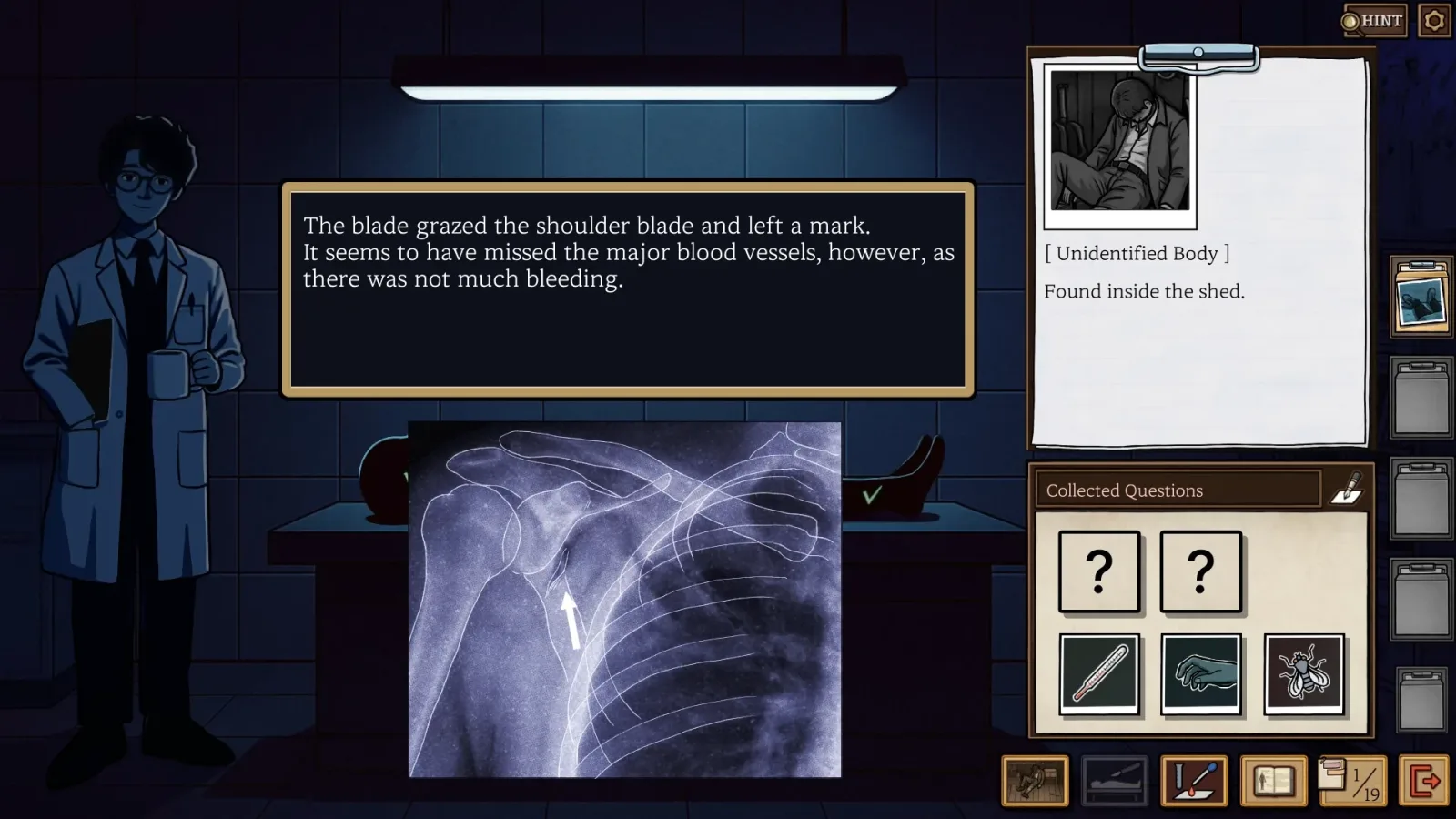
At Fleming Manor, that tension is framed through a series of deaths that have unsettled the residents of the remote estate. Players will examine locations, inspect bodies, interview the people still living at the manor, and study the available evidence. The setting and period place the investigation in a world of paper records and personal testimony rather than modern databases or instant technological answers. The estate itself becomes the contained stage for a classic whodunit structure, but the player's responsibilities extend beyond naming a suspect.
England, 1959, and an isolated estate
The game's 1959 setting is central to its atmosphere. A country manor full of residents, secrets, routines, and potential motives is familiar terrain for detective fiction, but Death at Fleming Manor approaches that premise through the procedures surrounding a death investigation. The result aims to combine the appeal of a period mystery with the more methodical process of establishing exactly what happened.
For another perspective on this story, read Death at Fleming Manor Opens Its Forensic Mystery on Steam.
The visual presentation supports that historical framing through hand-drawn ligne claire art. This clean-lined style takes inspiration from European mystery comics of the 1960s, creating a look intended to complement the setting without relying on photorealism. The game also uses a soundtrack influenced by classic detective dramas, reinforcing the tone of a deliberate, observant investigation rather than a fast-paced action thriller.
While the manor provides a focused location, its mysteries are designed to be varied through the individual cases and their evidence. Death at Fleming Manor asks players to pay attention to details across scenes and bodies, then weigh those discoveries against statements from residents. The game's premise leaves room for uncertainty, misdirection, and the kind of revelation associated with old-fashioned mystery stories, but it treats the final report as a meaningful act rather than a simple end-of-case checklist.
Influences from modern deduction games
SUPERTHUMb cites Return of the Obra Dinn and The Case of the Golden Idol as key inspirations. Both games are well known for asking players to actively form deductions instead of merely following highlighted objectives, and Death at Fleming Manor appears to share that confidence in the player's ability to interpret information.
That comparison is useful for setting expectations. Rather than centering its design on combat, chase sequences, or a single binary puzzle solution, Death at Fleming Manor is built around observation, inference, and careful documentation. It wants the player to do the intellectual work of linking clues to conclusions. This means details that initially seem incidental may have a direct role in determining what can be entered into an official record.
The formal reporting system is also an important distinction. Detective fiction often presents deduction as a dramatic final reveal, but a forensic investigator must articulate findings in specific terms. By asking players to fill out death certificates and emergency reports, the game turns that act of articulation into a core mechanic. A correct hunch without sufficient support is not necessarily enough; the report must reflect evidence the investigator can justify.
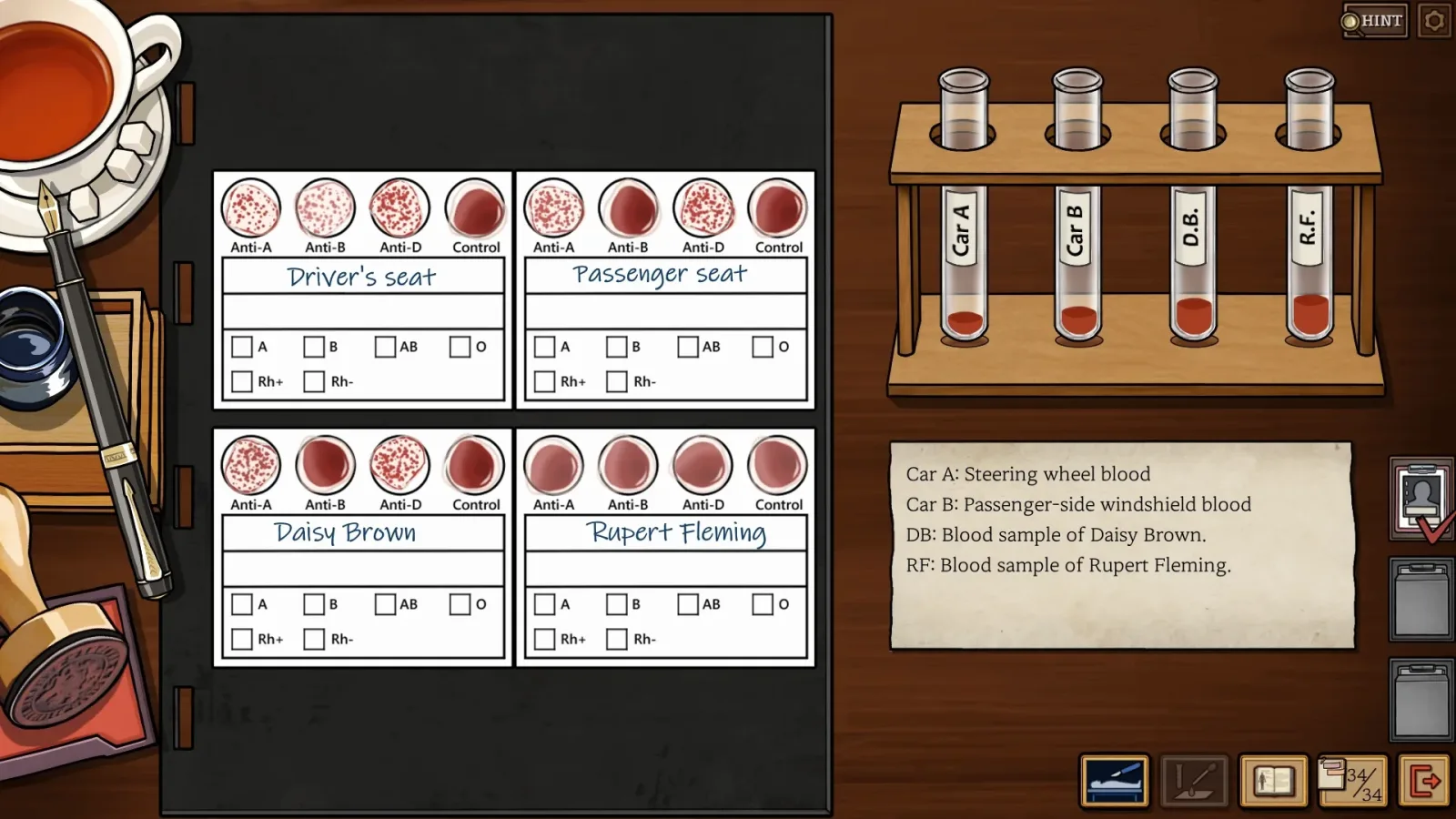
Players are required to support each part of their findings with evidence, rather than waiting for the game to validate a suspicion on their behalf.
This structure may appeal to players who enjoy lingering over a case after they have formed an early theory. It also creates the possibility that two related questions require different answers: what likely occurred, and what the investigation can definitively establish. That is fertile ground for a mystery game, especially one built around official decisions whose consequences shape the ending.
Language support and AdventureX appearance
Death at Fleming Manor launches with support for English, Japanese, Korean, Simplified Chinese, and Traditional Chinese. Its release on Steam covers both PC and Mac, giving players on either desktop platform access to the full investigation.
The development team is also scheduled to bring the game to AdventureX in London, where it will be playable on the show floor on November 7 and 8. The event appearance arrives shortly after the Steam release and gives visitors a chance to investigate Fleming Manor in person, potentially offering a first look for attendees who have followed the game during its lengthy wishlist build-up.
Early critical reactions have highlighted the game's combination of classic detective-story sensibilities and its forensic mechanics. Reviews have praised the deduction work, shifting investigations, and twists, while also noting its affection for foundational mystery fiction. Those responses fit the game's apparent goal: presenting an approachable period whodunit while demanding enough rigor that players must earn their conclusions.
A different kind of murder-mystery verdict
Death at Fleming Manor arrives at a time when investigative games increasingly trust players to untangle information for themselves. Its particular hook is not only that players investigate deaths, but that they must formally account for them. The final challenge is not just discovering an answer hidden by the manor's residents--it is making sure the answer can stand up on the page.
For players drawn to mysteries that reward note-taking, attention to contradictions, and the satisfaction of fitting disparate details together, the game's premise offers a focused alternative to more action-oriented crime stories. A country estate in 1959 supplies the familiar dramatic setting; death certificates, emergency reports, and evidence-led findings supply the unusual investigative framework.
With its launch now underway, Death at Fleming Manor invites Steam players to enter the estate, inspect the evidence, hear what the residents have to say, and decide what the dead can reveal. Just as importantly, it asks them to live with the conclusions they place on the official record.
Community
Discussion
Start the conversation.
No comments have been posted yet.