

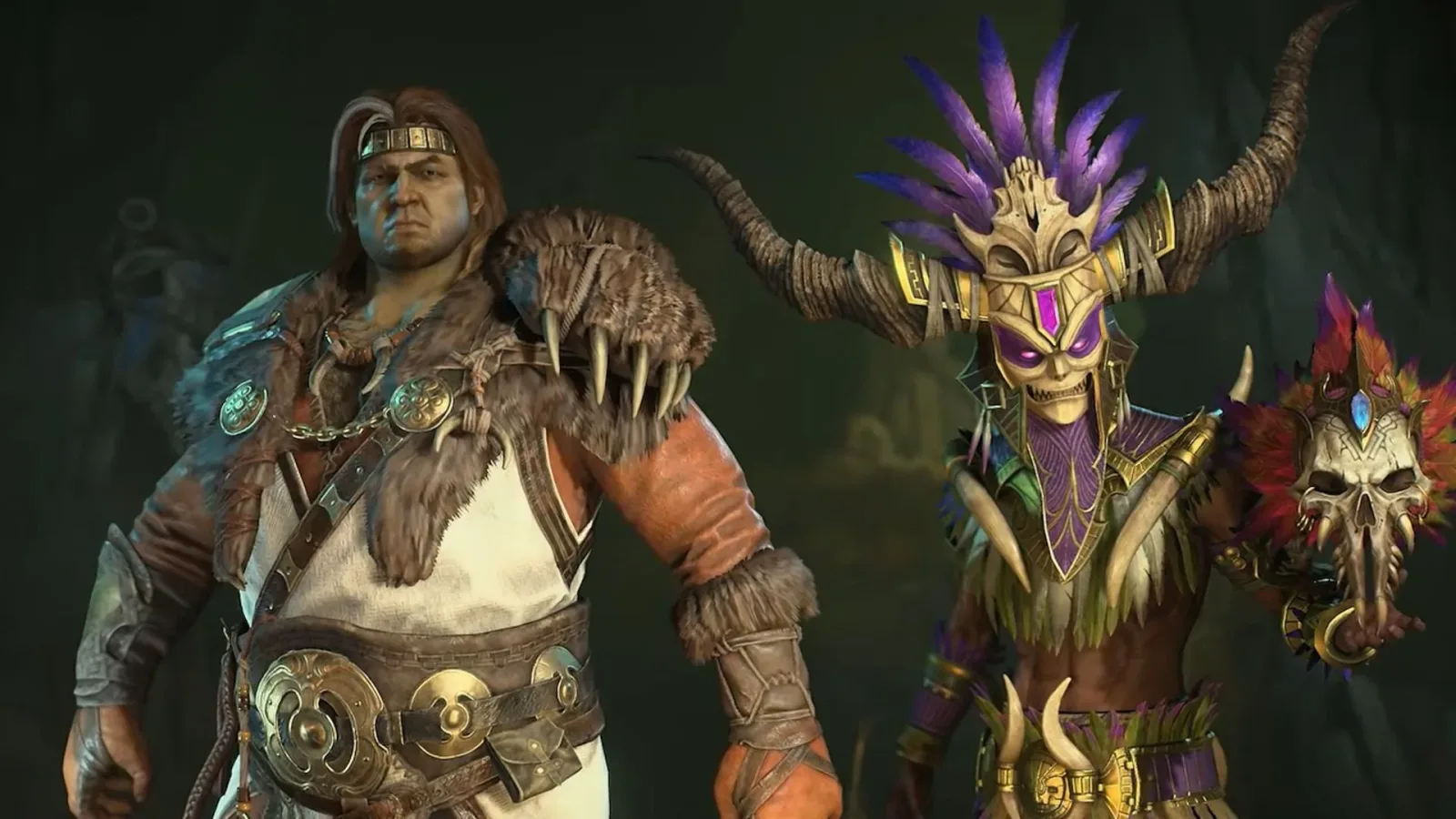
Diablo 4 Season 15 has created an unusual inventory problem for some of Sanctuary's most committed endgame players. Splinters of Evil, among the season's most difficult drops to obtain, apparently cannot stack when they are the same type. A character can carry one Splinter of Hatred, one Splinter of Terror, and one Splinter of Destruction, but a second copy of any one category creates a frustrating dilemma: leave an exceptionally scarce reward on the ground, or find an unconventional way to move it elsewhere.
Players have now rallied around a homebrew workaround that can preserve the duplicate item. It is not a simple quality-of-life trick, and it is certainly not a replacement for an official inventory solution. The process requires another person, a second character that meets the relevant progression requirements, careful party management, and an understanding of how an active game instance persists while one player changes characters. Still, for anyone farming at the highest level of Season 15, it could mean the difference between securing a rare Splinter of Evil and watching one go unclaimed.
Why duplicate Splinters are such a problem
The central issue is straightforward but particularly painful because of the rarity involved. Splinters of Evil come in three known types: Hatred, Terror, and Destruction. They can be farmed from Diablo, Mephisto, and Baal at Torment tier 10. For players who have progressed far enough to challenge that content repeatedly, each drop represents a potentially valuable piece of a long endgame grind.
Unlike conventional materials or consumables that accumulate into a stack, these Splinters appear to be deliberately limited to one of each kind per character inventory. If a player already possesses a Splinter of Hatred and another one drops, they cannot simply pick up the duplicate. The game's inventory restriction turns what ought to be an exciting moment into an administrative problem.
For useful background on this topic, read World of Warcraft: Forever Beta Extended as Character Name Reservations Near.
That limitation will not affect every Diablo 4 player. Torment 10 is high-level territory, and farming the bosses capable of dropping the items is an activity aimed squarely at the endgame. But that narrow audience is also the one most likely to keep running the same demanding encounters, optimize every reward, and feel the loss sharply when a rare item cannot be collected.
The annoyance is magnified by the fact that the restriction is not about a full inventory in the usual sense. A player could have plenty of open slots and still be unable to take a duplicate Splinter because the character already owns one of that specific variety. In a loot-driven action RPG, being forced to abandon a coveted drop due to a one-per-type rule is understandably difficult for dedicated farmers to accept.
The party-and-alt workaround
A method demonstrated by Diablo creator Rob2628 offers a way around the limitation, at least under the right conditions. The broad idea is to leave the duplicate Splinter in the existing world while switching from the character that already has one to another eligible character that does not. A friend remains behind to keep the instance available, allowing the alternate character to join and claim the item.
It sounds easy in principle. In practice, every step matters.
- Farm a duplicate Splinter of Evil. The method only becomes necessary when a player obtains a second copy of Hatred, Terror, or Destruction while their current character already has that same Splinter in their inventory.
- Have a qualified friend in the party. The assisting player needs to be capable of accessing Torment 10, since this is where the relevant farming takes place. They must be present in the game when the duplicate appears.
- Leave the duplicate on the ground. Since the original character cannot take another copy, the Splinter remains where it dropped rather than being collected immediately.
- Keep the friend in the active instance. The helper's job is to remain near the item and, crucially, keep the current world from disappearing when the original player logs out or swaps characters.
- Change to an alternate character without that Splinter. The player then selects another character that does not already possess the same variety of Splinter in its inventory.
- Rejoin the held instance. The friend invites the alternate character into the still-active game, letting that character return to the location of the dropped item.
- Pick up the duplicate on the alt. Because the alternate character lacks that type of Splinter, it can collect the reward that the primary character could not.
The most important part is the instance management. The friend is effectively acting as an anchor for the world state. They need to avoid accepting the option to return to their own world, because doing so could end the session holding the uncollected Splinter. If the instance closes or resets before the alternate character returns, the entire effort is wasted.
A solution built on trust and timing
This is not a workaround players can casually perform between solo runs. It depends on another person being online, being far enough into Diablo 4's endgame to enter Torment 10, and being willing to pause their own activity while the character swap happens. The friend must also understand the instructions well enough to avoid leaving the session at the wrong moment.
There is an obvious social upside to that arrangement. Diablo has always supported co-operative play, and a reliable party member can turn an otherwise painful drop into a recoverable situation. Friends can take turns acting as the instance holder, helping one another retain rare rewards that would otherwise be lost to the inventory restriction.
But the workaround also highlights why players are asking for a more direct answer from Blizzard. Not everyone maintains a Torment 10-capable group. Some players focus on a single character, leaving them without a suitable alternate to receive a duplicate. Others may have the alternate character but no friend available at the exact moment a rare Splinter drops. Solo players are especially poorly served by a process that requires a second person to preserve the instance.
Even for organized groups, the approach is cumbersome. It interrupts the rhythm of boss farming, requires logging out and navigating character selection, and introduces the risk of a missed invitation or accidental world departure. The rarer the item, the more stressful those points of failure become. A system designed around collecting loot is asking players to coordinate a small handoff operation just to avoid leaving that loot behind.
What the workaround does and does not change
The method does not remove the one-per-character limitation. It simply relocates the duplicate to another character's inventory. Players still cannot stockpile multiple copies of the same Splinter on a single hero, at least not through this process. Anyone hoping to build a large reserve on one main character will not find that goal solved here.
It also is not a confirmed official feature or a guaranteed permanent technique. It relies on the current behavior of multiplayer instances and dropped items remaining available while another player stays inside the session. As with many community-discovered methods in an online game, it could be affected by a patch, a server issue, an unexpected disconnect, or changes to how Diablo 4 handles party worlds and loot persistence.
Players considering the process should therefore treat it carefully. A duplicate Splinter should not be assumed safe until the alternate character has actually joined the instance and picked it up. Communication between both players matters, particularly around invitations and prompts that might send the helper away from the held world.
A symptom of a larger loot-management question
The controversy is ultimately less about whether players can invent a workaround and more about whether they should have to. Seasonal endgame systems often rely on chase items to keep difficult activities rewarding over long periods. When those items are rare, the expectation is that a successful drop will feel like progress. A non-stacking rule can undermine that feeling if it transforms a successful roll into a discarded object.
There may be design reasons for limiting how many Splinters of Evil a single character can hold. Such limits can slow down hoarding, control the pace of powerful crafting or progression loops, and push players to make meaningful decisions about when to use important resources. Yet a limit can still feel overly rigid when it offers no convenient means to bank, transfer, or otherwise retain a duplicate reward.
The current player-created answer demonstrates both the ingenuity of the Diablo 4 community and the friction built into the system. It is clever, but it is also demanding enough that many players may decide it is not worth interrupting a run. For those with a trusted friend, an eligible alternate character, and the patience to manage the transition, the technique provides a possible safety net. For everyone else, a duplicate Splinter of Hatred, Terror, or Destruction can remain one of Season 15's most frustrating sights on the ground.
Until the inventory behavior changes or a more accessible option emerges, the practical advice for high-tier farmers is simple: if a duplicate Splinter drops, do not rush to end the session. Check whether a party member can hold the instance, make sure an alternate character is ready to enter Torment 10, and coordinate the swap carefully. It is an awkward ritual for such a valuable reward, but at present it may be the best available path to keeping it.
Community
Discussion
Start the conversation.
No comments have been posted yet.