

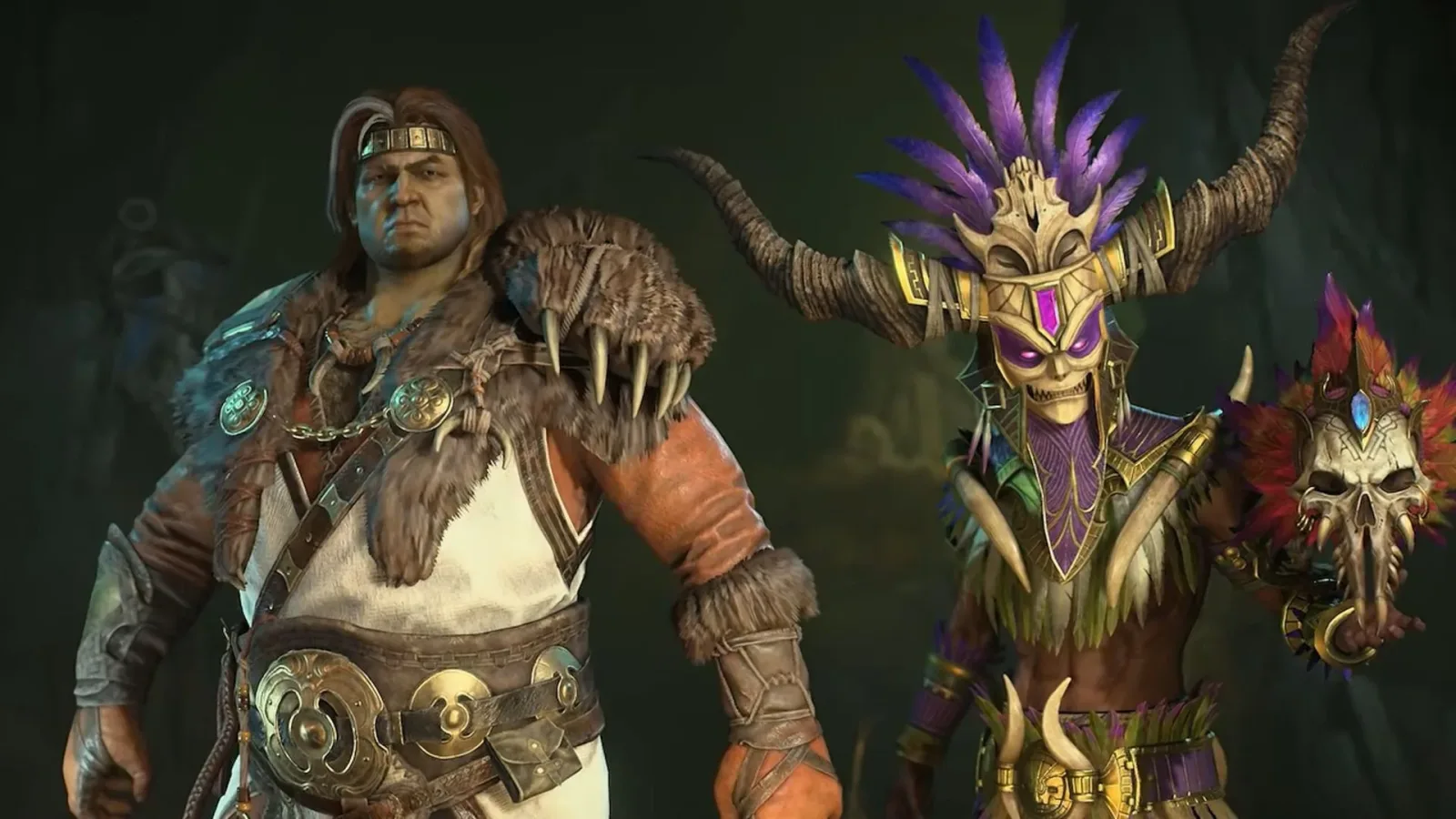
Diablo 5 is set to reshape several long-established series conventions, and one of its most notable changes is also a narrative one. Rather than relying on fixed towns and dedicated safe zones across Sanctuary, the newly announced action RPG will give players a caravan built around a group of followers. The travelling hub is intended to provide a measure of comfort and connection in a world otherwise defined by danger, monsters, and constant movement.
That caravan is more than a practical replacement for a town. Jennifer Hepler, Diablo 5's narrative director, has described it as a way to introduce some of the most appealing qualities of traditional party-based role-playing games into Diablo's faster, loot-driven action-RPG framework. Hepler's background includes eight years at BioWare, where she was a key writer on Dragon Age: Origins, Dragon Age 2, and Dragon Age: Inquisition.
Speaking alongside game director Joe Shely and executive producer Matt Zitterman during a BlizzCon 2026 panel, Hepler explained that her experience with more conventional RPG structures informed the caravan concept. It is meant to evoke the familiar feeling of returning to camp and speaking with companions, an idea closely associated with games such as Dragon Age and Baldur's Gate.
A home away from Sanctuary's horrors
Diablo has traditionally used settlements, hubs, and safe spaces as pauses between expeditions into hostile territory. Players visit vendors, manage gear, pick up quests, interact with other characters, and then head back into dungeons or the open world. Diablo 5 is taking a different route. Its caravan will travel with the player, creating a more personal and mobile refuge instead of a fixed location on the map.
For useful background on this topic, read A Practical Starter Guide to Mobile Games: Find Your First Great Fit.
The premise fits the tone of Sanctuary. Diablo's world is rarely safe for long, and a moving group of allies creates the sense that the player is carrying a small community through an increasingly dangerous land. The caravan also potentially gives the game a more continuous rhythm: rather than repeatedly returning to the same settlement, players can check in with a familiar cast as their journey progresses.
Hepler characterized the feature as bringing the best elements of traditional RPGs to Diablo's action-RPG format. In particular, the caravan provides a campsite-like place where players can interact with their followers. That distinction matters because it frames the system around character relationships, atmosphere, and dialogue rather than simply offering another menu or upgrade station.
"The caravan brings some of the best elements of traditional RPGs into Diablo's ARPG format by giving you that sort of Baldur's Gate or Dragon Age campsite where you can interact with your followers," Hepler said.
For a franchise best known for immediate combat, randomized loot, and repeated runs through dark environments, a companion-centered travelling camp is a meaningful shift. It suggests that Diablo 5 wants to make room for quieter moments without losing the momentum that defines the series.
Followers will have personalities, not deep equipment management
Hepler also clarified an important limitation. Diablo 5's followers are not being built as direct equivalents to companions in Dragon Age. Players should not expect to level up each follower's skills, dress them in different clothing, or manage them with the same depth commonly found in a party-focused RPG.
Instead, the emphasis is on personality. The followers will be characters players can speak with and get to know through the caravan system. That leaves room for Diablo 5 to use companions as a narrative tool while avoiding a dramatic change to its core action-RPG identity. The game is not being presented as a full party-management experience; the player remains at the center of the adventure.
This approach could be especially important for Diablo's pacing. Deep companion customization can be rewarding, but it also asks players to spend substantial time considering builds, gear, relationships, and tactical party composition. Diablo's usual loop is much more immediate. Players fight through enemies, earn new items, refine a character build, and continue into more difficult encounters. Keeping followers focused on personality allows the caravan to add emotional texture without necessarily turning every stop into an elaborate management exercise.
That balance is at the heart of Hepler's description. The system is borrowing the intimacy of a campfire conversation rather than recreating every system found in BioWare-style RPGs. Players may have companions around them who feel distinct and memorable, but Diablo 5 is still being designed as a Diablo game first.
A notable narrative influence on a foundational feature
It is significant that the caravan is being linked directly to the work of Diablo 5's narrative leadership. Narrative directors are often associated with story, dialogue, lore, and character writing, but the caravan influences the broader shape of the game's adventure. It changes where players regroup, how they meet recurring characters, and how the game may transition between high-intensity action and narrative downtime.
Hepler's work on the Dragon Age series makes the comparison particularly natural. Those games made camps, party banter, and recurring companion conversations central to their identity. A player's relationships with allies often developed over time, with new conversations appearing as the story advanced. Baldur's Gate has similarly made camp interactions an important setting for character moments.
Diablo 5 is not promising an identical relationship structure. Still, the decision to establish a caravan populated by recognizable followers gives Blizzard a framework for delivering ongoing character interactions in a way previous Diablo games have not emphasized as strongly. A fixed town can contain memorable NPCs, but a travelling camp can make allies feel more directly connected to the player's personal journey.
That could also strengthen the narrative continuity of a long campaign. In an action RPG, large stretches of play may be dominated by combat and exploration. A recurring caravan offers an identifiable place to return to between major story developments. If followers react to events, discuss the state of Sanctuary, or reveal more of themselves over time, those exchanges could give players a stronger sense of progression beyond experience levels and equipment drops.
Diablo 5 is changing the familiar formula
The caravan is only one part of the announced sequel, but it is an especially clear example of Diablo 5 pursuing ideas outside the franchise's usual boundaries. The contrast between a Diablo or Path of Exile-style action RPG and a traditional RPG such as Dragon Age or Baldur's Gate is substantial. One format generally prioritizes rapid combat, itemization, repeatable challenges, and character-build experimentation. The other often puts greater weight on companions, dialogue choices, party composition, and extended narrative scenes.
By blending a campsite-style social space into its structure, Diablo 5 appears to be looking for a middle ground. It can preserve the urgency and darkness of Sanctuary while giving the player a more grounded group of people to travel with. The caravan is described as cozy, but it is still positioned against the threats creeping and crawling across the world. That contrast may prove central to its appeal: a brief sense of safety that exists because the surrounding world is so unsafe.
There are still major questions about how extensively the system will affect the wider game. The announcement does not establish how often followers will have new dialogue, whether their interactions will change based on story progression, or how the caravan will function alongside Diablo 5's combat and loot systems. It also remains to be seen whether other aspects of the sequel will show similar influence from traditional RPG design.
What is clear is that Diablo 5 is not treating narrative as a layer placed separately on top of action. The caravan has been described as a structural feature, one designed to change the player's sense of place and provide recurring contact with follower characters throughout the journey.
Three classes confirmed so far
Alongside the caravan details, Diablo 5 has confirmed its first three classes: the Demon Hunter, the Monk, and the entirely new Plague Knight. The return of the Demon Hunter and Monk connects the sequel to familiar Diablo archetypes, while the Plague Knight signals an addition to the series' playable roster.
Blizzard has also said Diablo 5 will feature "more classes than ever before." The full lineup has not yet been revealed, so it remains unclear which other returning archetypes or new concepts will join the Demon Hunter, Monk, and Plague Knight.
For now, the caravan stands as one of the clearest indicators of Diablo 5's direction. It is a mobile base rather than a traditional town, a place for followers with personalities rather than fully managed party members, and a deliberate effort to bring a little more of the companion-driven RPG experience into Sanctuary. How far that influence reaches will become clearer as more of Diablo 5 is revealed, but the sequel is already positioning its journey through hell as something players will not undertake entirely alone.
Community
Discussion
Start the conversation.
No comments have been posted yet.