

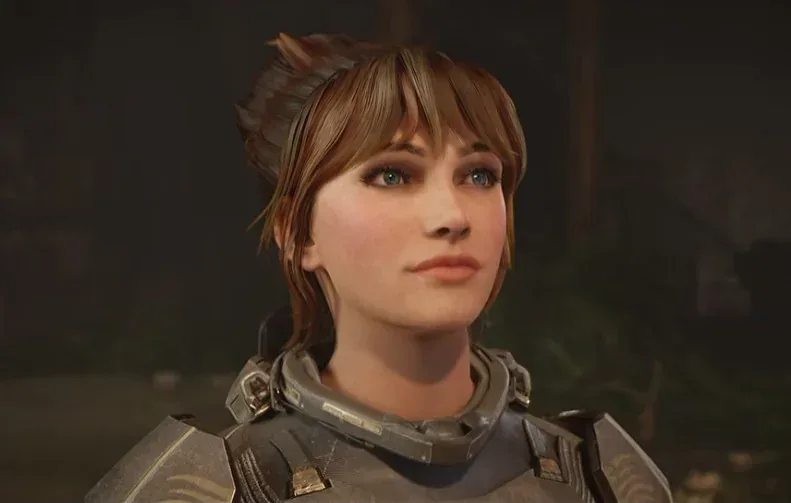
Exodus has unveiled the female version of protagonist Jun Aslan, referred to in promotional material as "FemJun." The reveal gives players a clearer look at a character option that had been mentioned previously but had not featured prominently in the game's public-facing footage. It also has an unmistakable effect: it invites comparisons to Mass Effect, not simply because Archetype Entertainment includes former BioWare talent, but because of the specific language attached to the reveal.
For many RPG fans, "FemJun" immediately recalls "FemShep," the long-running community and developer shorthand for the female Commander Shepard in Mass Effect. That association is understandable. "FemShep" became a widely recognized label during the original trilogy's lifetime, and the female Shepard was embraced in large part because of Jennifer Hale's acclaimed performance. Mark Meer's male Shepard is also a defining part of the series, but the cultural prominence of FemShep became one of the clearest examples of a customizable protagonist option developing its own powerful identity.
That history helps explain why the name is recognizable, but it does not necessarily settle whether it is the best way to present a lead character in a new RPG. Exodus has positioned Jun Aslan as its central figure. If the male-presenting version is simply called Jun, while the female-presenting version is marketed as FemJun, the wording creates a hierarchy whether intended or not: Jun is the assumed baseline, and the woman is the variation that needs an additional label.
A familiar label with complicated baggage
There is a practical reason that shorthand like FemShep or FemJun catches on. Players, developers, marketing teams, and online communities often need a quick way to distinguish alternate versions of a protagonist. Names are useful when discussing trailers, voice performances, visual designs, romance paths, or saved-game choices. The issue is less about the existence of a distinction and more about which version receives the unqualified name.
For useful background on this topic, read Final Fantasy 14's Alternative Dress Attire Finally Arrives on the Mog Station.
If one character is called Jun and another is called FemJun, "male" becomes invisible because it is treated as the normal state. The woman's identity, meanwhile, is marked first by gender. It is a small linguistic choice, but character marketing is built from small choices. Names, box art, trailers, narration, and screenshots all tell audiences whose story they are expected to see before they ever enter a character creator.
Mass Effect emerged in a different moment for big-budget role-playing games, and its terminology was shaped in part by the vocabulary that players had already adopted. FemShep was memorable, easy to search, and ultimately attached to a character beloved by a huge part of the audience. But borrowing that format in 2026 can feel more like an inherited convention than a necessary solution. A new game does not have to repeat every habit associated with the games that influenced it.
There are alternatives that can make the distinction without turning one option into an exception. A studio can refer to "Jun's male and female appearances," use descriptive labels only when needed, or foreground both versions under the same protagonist name. It could even build its messaging around the player's version of Jun rather than treating a single face as the central, definitive one. None of these approaches is revolutionary. They simply avoid assigning default status through a prefix.
Why the reveal matters for Exodus
Exodus has repeatedly drawn attention from players who see potential connections between Archetype Entertainment's work and the legacy of BioWare's science-fiction RPGs. That expectation carries both enthusiasm and scrutiny. Fans of choice-driven space adventures are understandably interested in party dynamics, storytelling, player decisions, and protagonist customization. They also notice when a game's presentation appears to echo familiar BioWare language.
Jun's female appearance therefore matters beyond a single trailer. Earlier material left some players uncertain about how prominently a female protagonist option would be supported. References may have existed in smaller pieces of information, but visibility is important. A choice that is technically present yet absent from major footage can still give the impression that it is secondary. The new reveal answers at least part of that concern by putting the female version of Jun directly in front of the audience.
That is a positive clarification, especially for players who want confirmation that they will be able to approach Jun Aslan through more than one gender presentation. Yet the rollout also creates the question of why the character was separated into a distinct announcement rather than introduced alongside the other version from the beginning. It is possible that the design was finalized later, that the marketing plan changed, or that the team saw value in giving the reveal its own moment. No explanation has been established, so the reasons remain uncertain.
Still, presentation shapes perception. When one version of the hero arrives first and receives the plain character name, while another arrives later under a gendered label, audiences are likely to read an intended priority into that sequence. Even if the final game gives each option equal depth, equal customization, and equal narrative consideration, the early promotional framing can be difficult to separate from the discussion around it.
The default-character problem is larger than one name
The discussion around FemJun also reaches beyond gender. Both of the publicly presented default Jun designs appear white. In a game expected to offer character customization, that choice is worth examining. Character creators have become much more capable over time, frequently providing a range of skin tones, facial features, hairstyles, hair textures, eye colors, and other options. Those tools can allow players to build protagonists who resemble themselves, reflect imagined identities, or simply fit the role-playing fantasy they want.
Yet promotional campaigns often still gravitate toward a narrow idea of the default hero: white, conventionally attractive, and usually male unless the marketing is specifically emphasizing a woman. The result is an odd contradiction. The game may offer a broad set of possibilities at launch, while the advertising repeatedly signals that only one type of person represents the official version of the adventure.
There is no need for every promotional image to represent every possible player-created Jun. That would be impossible. But a studio can make more intentional choices across a campaign. It can rotate character looks in trailers, show a variety of customization outcomes, highlight different hairstyles and complexions, and communicate that the protagonist belongs to the player rather than to one narrowly defined default. Doing so does not diminish a particular version of the character. It broadens the invitation to play.
This is especially relevant in science fiction. The genre is often celebrated for imagining distant worlds, unfamiliar societies, and futures radically changed by technology. A future-facing RPG has an opportunity to be imaginative not only in its planets, enemies, and lore, but also in who gets visibly centered within its world. When familiar defaults persist without reflection, they can make even an expansive fictional universe feel smaller than it needs to be.
Customization is more than a menu feature
For role-playing players, protagonist creation is not a minor checkbox on a feature list. It establishes the relationship between the audience and the story. Some players prefer a tightly authored hero with a fixed identity and appearance. Others value the ability to inhabit the role through visual and gender expression. Both approaches can work, but a game that presents customization should treat its available choices as meaningful parts of its identity rather than as quiet alternatives to the "real" lead.
That does not mean every option needs separate trailers, or that a studio must discard an iconic default design. It means the campaign should avoid implying that one option is the protagonist while everyone else is an add-on. The distinction is subtle, yet it can influence whether players feel recognized before they have even started the game.
Exodus now has an opportunity to show how its customization works in practice. Future presentations could clarify the range of Jun Aslan's appearances, demonstrate the character creator, and give players a sense of whether the game supports diverse identities with the same care it devotes to its central sci-fi premise. That would be more useful than relying on labels inherited from an older fandom vocabulary.
Mass Effect comparisons will continue
Calling Exodus a spiritual successor to Mass Effect can be reductive. Archetype Entertainment is making its own game, and any new RPG deserves room to establish its own tone, systems, characters, and ambitions. At the same time, comparisons are not likely to disappear when the game's development pedigree and promotional choices repeatedly evoke one of the most influential sci-fi RPG series of its era.
The FemJun reveal is a small but revealing example. It offers welcome confirmation that the female version of Jun is part of Exodus' protagonist lineup. It also brings old assumptions about default heroes, gendered terminology, and visibility back into focus. Those questions are not confined to one trailer or one game. They are part of an ongoing conversation about who big-budget RPGs present as central by default--and who is introduced as an alternative.
Exodus has time to define its own approach. Showing more of its character options and treating Jun as a protagonist shaped by players, rather than a single default with variations, would help it move beyond the shadow of the comparisons it currently invites.
Community
Discussion
Start the conversation.
No comments have been posted yet.