

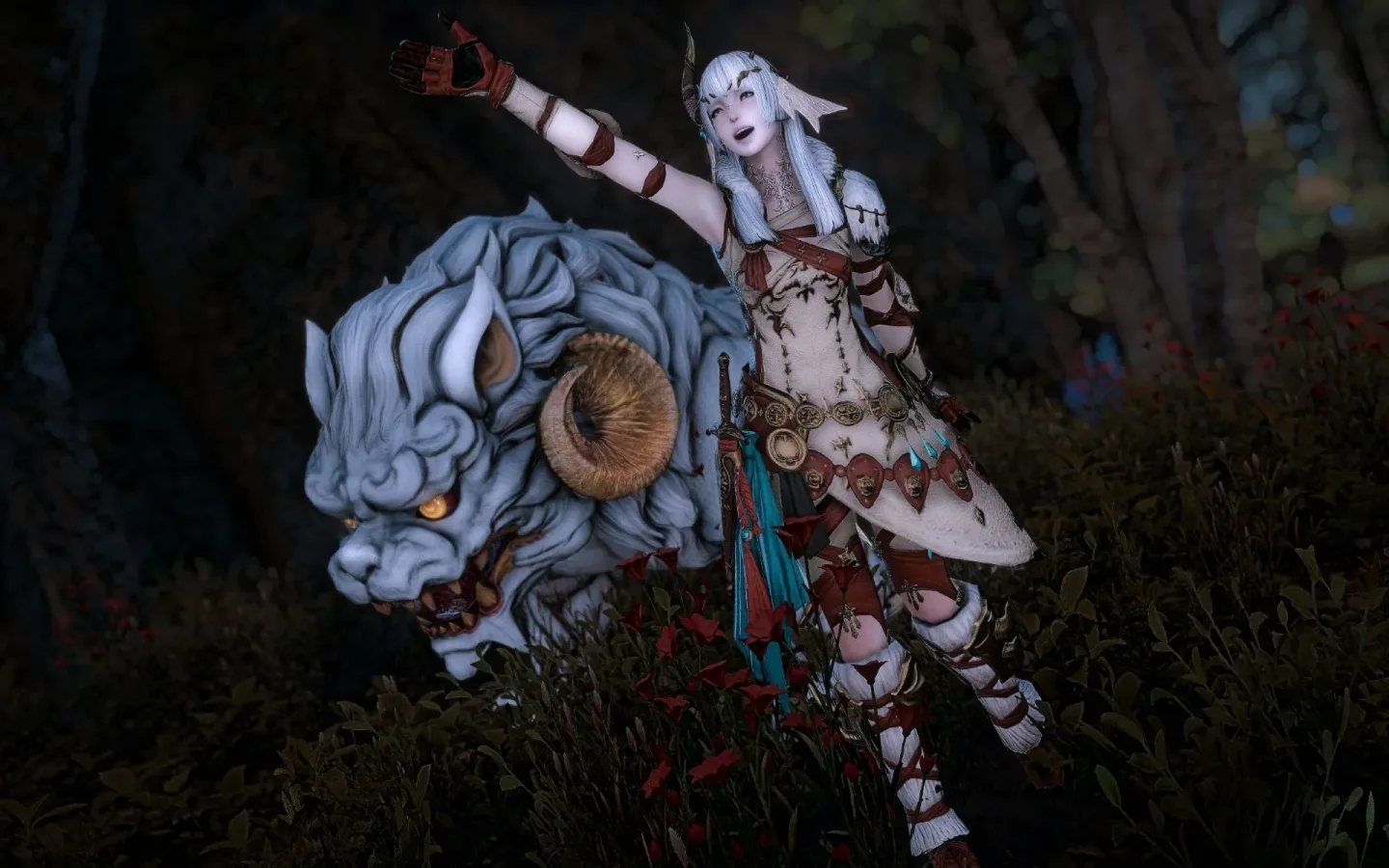
Final Fantasy 14 has added Beastmaster in Patch 7.56, and the MMO's newest limited job is already inspiring a wave of creature-collecting enthusiasm. For many players, the appeal is immediate: travel through Eorzea, find beasts, add them to a growing collection, bring them into combat, and seek out the next target. It is a loop that gives the long-running MMORPG a distinctly monster-training flavor, and early community response suggests that it has landed extremely well.
Beastmaster arrives after years of anticipation as one of Final Fantasy 14's more unusual job concepts. Rather than following the structure of a conventional combat role, it is a limited job, placing it alongside content designed with its own progression, activities, and rules in mind. That distinction has prompted some discussion about what Beastmaster can and cannot become, but it has not stopped players from diving into Patch 7.56's headline addition.
The core idea is simple, even if the mechanics can become more involved: Beastmasters capture creatures found around the world and use them as part of their combat toolkit. The job encourages players to experiment with actions and combinations, then continue searching for additional creatures to expand their options. A dedicated bestiary helps track that hunt, turning the job's advancement into something that feels closer to filling out a collection than merely earning another level.
A new reason to revisit Eorzea
One of the most notable effects of Beastmaster's debut is how it sends players back into older parts of the game world. Areas from A Realm Reborn, including Central Shroud, have become relevant destinations for players pursuing specific creatures. In an MMO with a huge amount of older overworld content, any system that creates a fresh reason to revisit familiar zones can be valuable.
For useful background on this topic, read Star Wars Zero Company Patch Targets Crashes, Stutters and Beskar Save Problems.
That sense of rediscovery is a major part of the job's appeal. Beastmaster is not only about standing in one place and optimizing a rotation. Players have a reason to roam, look for potential additions to their bestiary, and decide which creatures are worth pursuing next. The act of collection becomes intertwined with combat progression, with each successful capture potentially opening another tactical possibility.
Fans have repeatedly compared the broad concept to creature-collection games such as Pokémon and Palworld. The comparison is less about Final Fantasy 14 abandoning its own systems and more about the fantasy Beastmaster creates. Building a roster, calling creatures into battle, and trying to complete a catalogue gives the job a structure that feels different from the game's established tanks, healers, melee jobs, physical ranged jobs, and casters.
Players have enthusiastically leaned into that identity. One widely shared player look paired the job with an Ash Ketchum-inspired glamour, a fitting expression of the trainer fantasy that Beastmaster has unlocked. Reactions to that costume and other Beastmaster screenshots have highlighted how naturally the job's presentation supports a playful, collector-focused approach to Final Fantasy 14.
The Crucible adds a tougher target
Collection is not the only goal awaiting Beastmasters. Patch 7.56 also includes the Crucible, an activity described by players as having a roguelike-like edge. It represents a more demanding avenue for those who want to test their growing creature roster and understanding of the job's combinations rather than simply chase the next bestiary entry.
The Crucible also offers a visible long-term incentive through its official rankings. Players who place can pursue the sparkling Tourmaline Golem mount, providing a prestige reward for those prepared to tackle the job's more punishing content. That pairing of accessible collecting and difficult challenge may be one reason Beastmaster has made such a strong first impression: there is room for casual exploration, but also a reason for dedicated players to push further.
Achievements tied to the job have received praise as well. For collectors, achievement hunters, glamour enthusiasts, and players who simply enjoy having a self-contained progression path, Beastmaster appears to offer several overlapping motivations. A player can approach it as a bestiary project, a combat experiment, a ranking pursuit, or an excuse to revisit zones that may otherwise have been left behind after earlier expansions.
Players want more than limited-job status
The loudest positive sentiment around Beastmaster is not merely that it is entertaining; it is that some players wish it were a standard job. That reaction speaks to how quickly its central loop has connected with the community. A conventional job would typically have broader use across Final Fantasy 14's usual group content, and the desire for Beastmaster to fit into that framework reflects players' interest in taking its identity beyond its dedicated activities.
At present, however, its limited-job label is an essential part of the conversation. Limited jobs can allow for systems and power concepts that might not fit cleanly into regular party balance, but that freedom comes with restrictions. For players who enjoy the job's creature-driven design, the question is whether its separate progression and content will continue receiving enough support over time to keep the experience compelling.
That concern inevitably brings up Blue Mage, Final Fantasy 14's other prominent limited job. Blue Mage has its own committed audience and specialized challenges, but some Beastmaster players have voiced worries that the new job could eventually receive less attention than it deserves. The fear is not that the debut lacks substance; early impressions are quite the opposite. Instead, it is a question of long-term expansion, new objectives, and whether Beastmaster will keep gaining reasons to return.
There are also players offering constructive criticism about ways the job could improve. That is expected for a newly introduced system, especially one with a wide range of potential creatures and combat interactions. The important early takeaway is that these conversations are happening alongside strong enthusiasm, rather than replacing it. Players are discussing refinements because many already see enough potential in Beastmaster to want it to grow.
A different kind of Final Fantasy 14 progression
Final Fantasy 14 is built around many forms of progress: main story advancement, raid clears, crafted equipment, PvP rewards, exploration, relic pursuits, mounts, minions, and more. Beastmaster fits comfortably into that larger ecosystem while introducing a progression style that feels particularly personal. Two players may set out with the same job, but their immediate goals can differ depending on the creatures they want, the combinations they want to test, and how deeply they want to engage with the Crucible.
That flexibility is especially useful in a game now many years into its life. Veteran players often have established routines and extensive collections, so a new feature benefits from offering an unfamiliar reason to engage with the world. Beastmaster's bestiary hunt does exactly that. It gives even well-traveled adventurers an incentive to look at old regions with a new purpose.
The job's initial success also demonstrates the appeal of letting Final Fantasy 14 borrow the emotional rhythm of a collection game without losing its own setting. Eorzea is full of recognizable monsters, and Beastmaster turns those creatures into a new kind of relationship: not just enemies to defeat or scenery to pass, but targets to seek out and tools to understand. The result is a fantasy that many players appear to have been eager to experience inside the MMO.
Early excitement leaves room for evolution
Patch 7.56 has given Beastmaster a promising start, with positive reactions centering on its satisfying hunt-and-battle loop, its achievements, its return to older zones, and the challenge offered by the Crucible. The Pokémon-like vibe has become a frequent shorthand for why the job works, but the enthusiasm goes beyond a simple comparison. Players seem to enjoy having a fresh gameplay identity within Final Fantasy 14--one that asks them to collect, experiment, and show off their favorite finds.
Whether Beastmaster maintains that momentum will depend on how it evolves. More levels, additional utility, new beasts, and future challenges are all natural hopes for players who have already embraced the job. Its limited-job status means it may never operate exactly like Final Fantasy 14's standard roles, yet the early calls for broader integration underline just how much fans like the concept.
For now, Beastmaster has done what a major MMO update should do: it has made players excited to log in and chase a new goal. In a world as familiar as Eorzea, finding a reason to wander off the usual path, hunt down another creature, and see what it can do in battle is proving to be a powerful reward in itself.
Community
Discussion
Start the conversation.
No comments have been posted yet.