

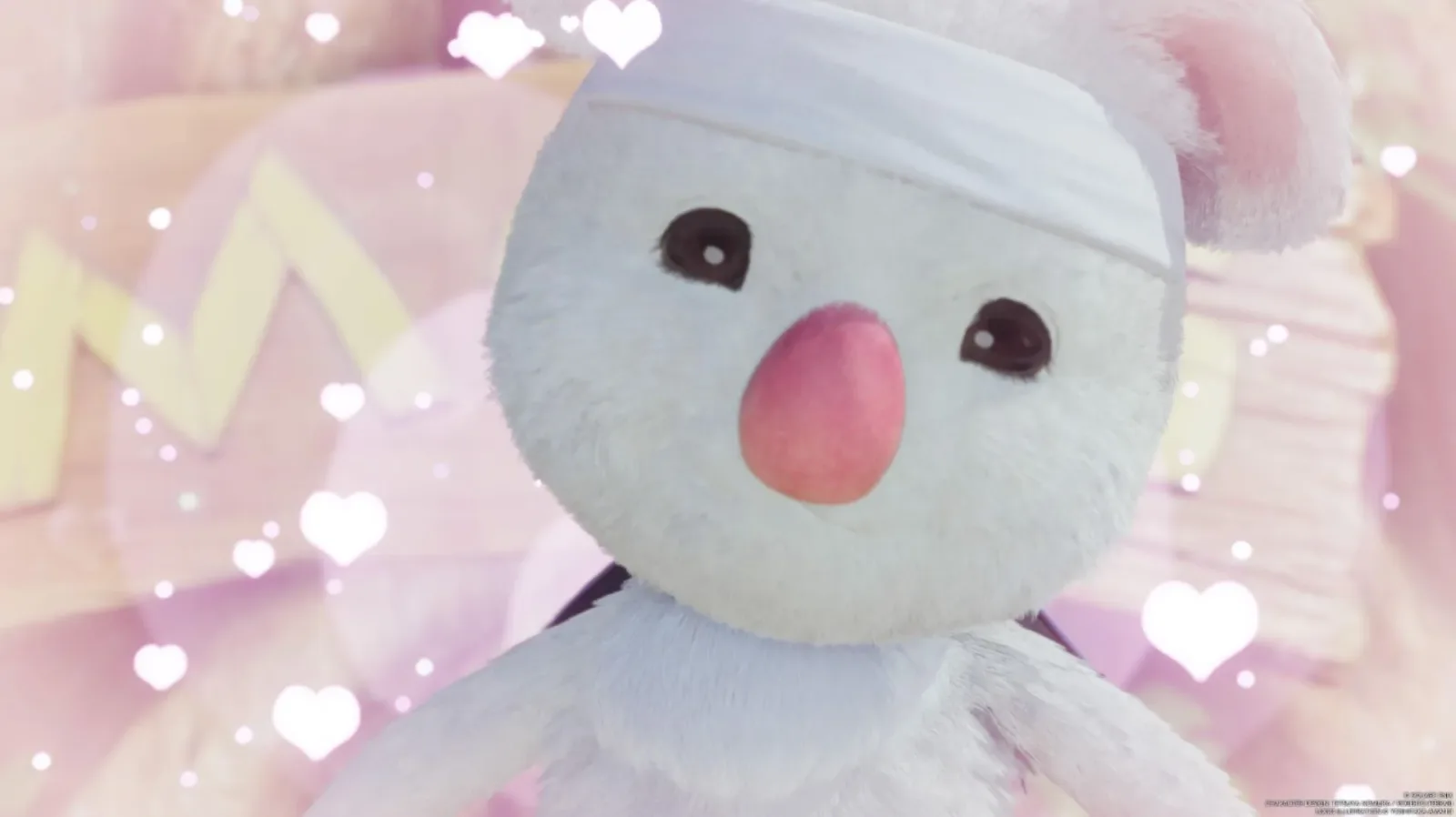
Final Fantasy 7 Revelation will once again feature the Moogle Houses seen in Final Fantasy 7 Rebirth, but the tiny creatures are taking a notably different career path in the remake trilogy's final chapter. Director Naoki Hamaguchi has confirmed that the Moogles have left behind their work as Moogle merchants and are now attempting to make it on stage as their own idol group.
The return comes with an important caveat for players who found Rebirth's Moogle-focused activity more frustrating than charming. Hamaguchi acknowledged that the previous mini-game did not appeal to everyone, particularly to players who preferred to stay focused on exploration, combat, and the central RPG adventure. The team has therefore changed the returning activity with accessibility in mind, aiming for an experience that more players may enjoy.
It is an unusual update, even by Final Fantasy standards. Moogles have long been among the series' best-known mascots, often filling roles as helpful merchants, mail carriers, save-point icons, or whimsical supporting characters. Revelation's version of the creatures is apparently set to embrace a full performance career instead. That setup suggests the game's Moogle material will retain the exaggerated humor that has become a recognizable part of the remake project, while also responding directly to feedback surrounding one of Rebirth's more polarizing diversions.
A return for the Moogle Houses
In Final Fantasy 7 Rebirth, Cloud could visit dreamlike Moogle-filled areas and take part in the Moogle House mini-game. The basic task involved gathering up the creatures while avoiding the playful obstacles placed around the environment. These challenges were connected to the Moogle merchant side of the game, making them part of the wider loop of unlocking access to useful items and services.
For useful background on this topic, read Castlevania: Belmont's Curse Demo Arrives October 1 With Save Transfer Support.
For some players, that activity was a welcome burst of colorful absurdity in an enormous RPG packed with optional content. For others, it interrupted the kind of momentum they wanted from the game. Rebirth contains an enormous range of systems and side activities, from combat challenges and exploration to card battles, races, collectible hunts, and more. That variety is one of its defining traits, but it also means an individual player's feelings about the game can depend heavily on which optional activities click with them.
Hamaguchi framed the issue in those terms, noting that different players naturally have different mini-game preferences. His comments point to a practical design challenge within a role-playing game: the characters move through the world in a way that supports the game's particular structure, rather than functioning like characters in a purely action-driven title. A mini-game that deliberately shifts the pace can be enjoyable for one audience and unwelcome for another.
The Moogle House challenge became one of the more conspicuous examples of that divide. Its cartoonish visual style and task-based gameplay made it very different from the action-oriented moments many players seek out in Final Fantasy 7. Revelation will not simply discard the Moogle Houses, however. Instead, the developers are revisiting the concept and altering it.
From merchants to stage performers
The biggest twist is the Moogles' new ambition. Hamaguchi said the Moogle Houses are returning, but explained that their residents have quit their merchant jobs and are now trying to become an idol group. That premise immediately raises questions about what the activity will actually ask players to do.
There are no confirmed mechanical specifics yet. The available comments do not establish whether Cloud will manage the group, help prepare performances, take part in a rhythm-style challenge, herd the Moogles through another obstacle course, or do something entirely different. It would be premature to treat the idol-group concept as confirmation of any particular genre of mini-game.
Still, the change in premise is meaningful. Rebirth's Moogle material was built around the creatures' work as merchants, with Cloud helping them restore the Moogle House network. Revelation's performers could naturally lend themselves to a new format and a new set of objectives. The explicit focus on accessibility also indicates that the development team has considered the criticisms aimed at the earlier version rather than merely reproducing it.
That does not necessarily mean the returning game will be simpler in every respect. Accessibility can mean many things in game design: clearer rules, gentler failure conditions, fewer required repetitions, more readable objectives, more flexible control demands, or a structure that lets players engage with the content on their own terms. Until Revelation is shown in greater detail, the exact meaning of the change remains unknown.
What is clear is that the Moogles are not being pushed aside because their Rebirth appearance prompted mixed reactions. The team appears to be leaning further into their strange identity, placing them in a deliberately theatrical situation while trying to make their associated gameplay easier to approach. For players who disliked the original Moogle House loop, that is potentially encouraging news. For players who already enjoyed it, the group's stage aspirations offer a reason to see how far the concept can be taken.
Why the Moogles have become a talking point
Moogles can inspire strong reactions under normal circumstances, but the remake trilogy's particular interpretation has been especially divisive. Their Rebirth design gives them unusual humanoid proportions that differ sharply from the rounder, softer image many fans associate with the species. Some players find them endearing in their oddness; others find their appearance unsettling rather than cute.
That visual debate has made the Moogle Houses an easy target for jokes and discussion, particularly because their whimsical look is paired with a mini-game that already became a point of contention. The idol-group reveal is likely to intensify that response. It combines the remake project's distinctive Moogle design with a highly stylized pop-performance premise, making it almost tailor-made for fan reactions before anyone has even seen the finished sequence.
Yet the decision also fits the broader tone of the Final Fantasy 7 remake series. The project has repeatedly balanced heavy dramatic material with broad comedy, unexpected side stories, and playful character moments. An aspiring Moogle idol unit is undeniably eccentric, but eccentricity is not out of place in a world that has room for elaborate amusement attractions, bizarre regional traditions, and optional games that dramatically change the player's routine.
The important question will be whether the revised Moogle content feels like a charming optional detour or an obstacle between players and the parts of Revelation they value most. Hamaguchi's remarks suggest the developers understand that tension. Rather than presenting criticism of the Rebirth mini-game as a misunderstanding, he recognized that players interested primarily in action may not have wanted to leave that focus for the Moogle House activity.
Revelation's balancing act
As the third and final installment of the remake trilogy, Final Fantasy 7 Revelation carries unusually high expectations. It must continue Cloud's story, give significant attention to the wider cast, resolve or develop the remake project's major mysteries, and bring together a journey that has expanded far beyond the structure of the original game. At the same time, it will need to preserve the sense of surprise and variety that has defined the modern entries.
Mini-games are a major part of that balancing act. They can deepen the feeling that players are travelling through a living world instead of moving directly from one battle to the next. They can also become memorable character showcases or welcome changes of pace. But they must be paced carefully, especially in a finale where players may be eager to see major story developments.
The redesigned Moogle Houses offer a small but revealing example of how Revelation may approach that challenge. The developers are retaining an idea that did not land equally well for everyone, changing its narrative framing, and promising a more accessible execution. It is not a guarantee that every player will suddenly embrace the Moogles, but it is a sign that feedback on Rebirth's side content has informed the next game.
Hamaguchi also indicated that Cloud remains Revelation's main character, while recognizing the desire to see more of the other characters. Alongside the Moogle update, that comment reinforces the scale of the task ahead: the finale will need to serve Cloud's central role without losing sight of the companions whose arcs have become increasingly important across the trilogy.
A strange encore awaits
For now, Final Fantasy 7 Revelation's Moogle idol group remains a deliberately odd idea with many unanswered questions. The Moogles are returning, their merchant days are over, and their new goal is a place in the spotlight. The previous Moogle House mini-game has also been revised in the hope that it will be more welcoming to players who did not enjoy its Rebirth incarnation.
That may not settle the debate over these particular Moogles' design, and it is unlikely to stop the jokes surrounding their new pop ambitions. But Revelation's approach is more interesting than a simple repeat of what came before. The developers are giving the creatures another chance, with a new role and a stated effort to improve the gameplay around them. Whether that earns the Moogles a standing ovation or another wave of bewildered reactions will depend on how their final performance plays in the completed game.
Community
Discussion
Start the conversation.
No comments have been posted yet.