

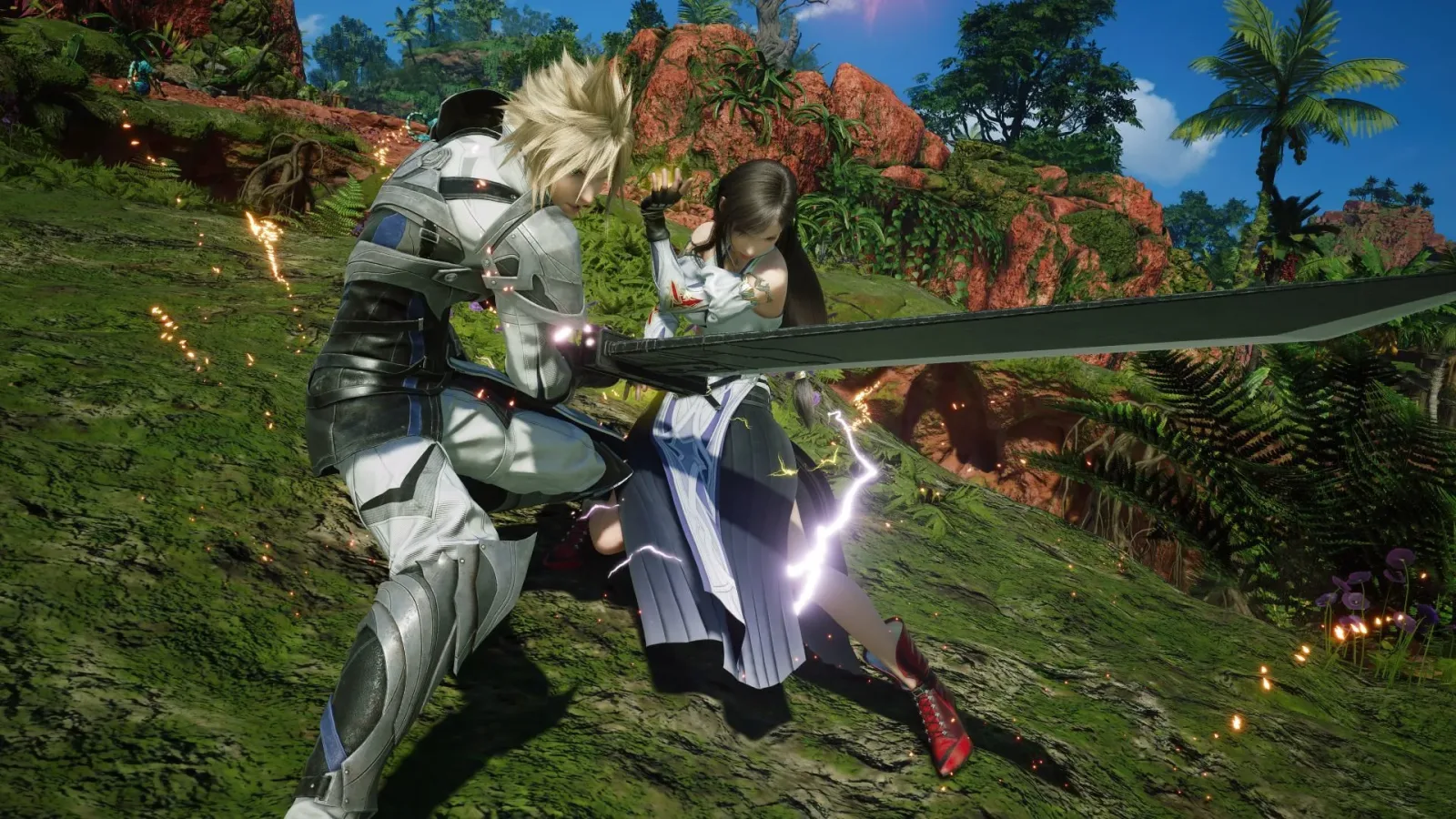
Final Fantasy 7 Revelation will allow players to select Hard Mode immediately rather than requiring them to finish the main story first. Producer Naoki Hamaguchi has confirmed that the option returns for the next entry in the Final Fantasy 7 Remake project, but stressed that it has been substantially rethought to suit Revelation's new design.
That is a meaningful change for players who felt the previous games held their most demanding official difficulty setting behind a full completion. Both Final Fantasy 7 Remake and Final Fantasy 7 Rebirth made Hard Mode a post-game selection, turning it into a challenge intended for returning players with knowledge of the systems, developed character builds, and a completed campaign behind them. Revelation will instead make that route available from the outset.
Hamaguchi said the mode "won't function in the exact same way" it did in the first two games. Rather than simply carrying over the old structure, the development team has reimagined the high-difficulty experience around the design and player options of the new game. That distinction is important: access may be arriving earlier, but the rules, balance, and intended rhythm of Revelation's hardest setting are not necessarily a direct continuation of what veteran players remember.
Hard Mode is no longer only a post-game proposition
The change addresses one of the more notable aspects of the earlier titles' difficulty setup. Players could adjust their regular campaign difficulty, but Hard Mode itself was positioned as a reward and a replay option after the credits. That approach gave the games a distinct second-playthrough challenge, but it also meant players looking for maximum pressure on a first run had to wait.
For useful background on this topic, read Nintendo Says Zelda 40th Anniversary Switch 2 Demand Was Underestimated, Restocks Planned.
For a large role-playing game, that wait can be significant. A player may enjoy experimenting with advanced combat restrictions, more punishing encounters, and more deliberate preparation, yet have little desire to begin another full campaign after completing a lengthy story. By placing Hard Mode on the opening difficulty menu, Revelation will let that audience set its preferred challenge level before the first major battle rather than after the final one.
It also potentially changes the relationship between progression and difficulty. A post-game Hard Mode can assume that players have already seen the campaign, understand the major mechanics, and know which tools will be useful. An option available from the beginning has to account for players encountering systems, opponents, and story encounters for the first time. Hamaguchi's comments suggest the team has taken that difference seriously rather than treating early access as a simple menu alteration.
More player options require a different kind of balance
Hamaguchi explained that the range of options available to players has expanded significantly in Revelation. While he did not outline every new system or tool involved, he indicated that this growth directly affected the way the team approached high difficulty. In the earlier games, limiting item use was a central part of Hard Mode's identity. For Revelation, the team concluded that banning items alone would not be enough to create the demanding experience it wants to deliver.
That does not confirm exactly which restrictions, rules, or combat adjustments Revelation's Hard Mode will use. It does, however, establish that the developers are considering challenge more broadly than a single limitation. The goal appears to be to build a mode that remains demanding even as players gain access to a larger set of strategic possibilities.
This is an especially relevant consideration for the Remake project's combat style. Its battles have combined real-time movement and attacks with command selection, party management, spells, abilities, Materia choices, and stagger-focused decision-making. The depth of that framework means that difficulty is not just about making enemies hit harder. Encounter balance can be shaped through enemy behavior, party resources, tactical timing, build choices, and the player's ability to use the full toolkit effectively.
Revelation's reworked Hard Mode may therefore be designed to test adaptation and system knowledge as much as endurance. Hamaguchi has not detailed the final rules, so players should not assume that any particular restriction from Remake or Rebirth will return unchanged. The confirmed point is that the old item-ban approach will not, by itself, define the new high-difficulty offering.
Enemy Strength adds another layer of control
Alongside the Hard Mode confirmation, Hamaguchi discussed a new difficulty-setting option called Enemy Strength. This setting will allow players to choose between the returning Dynamic option and static enemy strength.
Dynamic difficulty has appeared previously in the series, adjusting the experience around player progression and performance. Static enemy strength, by contrast, gives players a more fixed baseline for the opposition they face. The newly confirmed choice means players will have a greater degree of control over how combat scaling behaves during their adventure.
That flexibility could matter for several different play styles. Some players prefer an experience that responds to their growth and aims to keep battles from becoming too easy as their party becomes stronger. Others would rather know that enemies are operating from a consistent, predetermined level of strength, allowing them to judge their own builds and performance against a stable target. Revelation is set to accommodate both preferences.
Hamaguchi said the development team has created a challenging environment intended to satisfy players seeking high difficulty while also expanding player freedom and strategic options. Taken together, the Hard Mode and Enemy Strength announcements point to a broader philosophy: Revelation is not only trying to offer a tougher setting, but also to offer more ways for players to decide what "tougher" means for their own run.
End-game content is expected to play a larger role
The producer also confirmed that Revelation will feature a broad selection of end-game content after players complete the main story. He contrasted this with the structure of Remake and Rebirth, explaining that the new game is being built to offer additional content and challenges beyond the central campaign.
That promise is notable in the context of Hard Mode's new first-playthrough availability. If the mode can be selected at the start, it no longer has to serve as the sole major reason to revisit the game after completion. Instead, it can sit alongside a wider set of post-story activities and challenges. Players who choose a standard difficulty for the campaign may still have new goals to pursue afterward, while those who begin on Hard Mode may have end-game tests waiting beyond the conclusion of the narrative.
No specific end-game activities were named in these comments. As a result, it remains unclear whether they will focus on combat, character development, special encounters, repeatable challenges, exploration, or a combination of those ideas. Still, the stated intention is clear: finishing the main story should not mark the end of Revelation's challenge-oriented content.
For players who enjoyed pushing the prior games' combat systems through optional battles, this is an encouraging direction. The Remake project has included encounters capable of demanding careful party construction and a strong grasp of its mechanics, particularly when players take on difficult optional objectives before they are fully prepared. Revelation's expanded post-game ambitions suggest the final stretch of content may be designed with that appetite for deeper challenge in mind.
A promising change for newcomers and veterans alike
The most immediate takeaway is straightforward: players who want the hardest available experience will not need to complete Final Fantasy 7 Revelation before choosing it. That is a player-friendly option, particularly for fans who enjoy tackling story-driven RPGs at their most demanding from day one.
Just as important, Hamaguchi's comments avoid presenting Hard Mode as a recycled checkbox. The team is revisiting the mode because Revelation's design offers more player tools and calls for a different balancing approach. Static and Dynamic Enemy Strength options should further help players shape how combat feels over the course of the game.
There are still major details to learn, including the exact mechanics behind Hard Mode, the full behavior of the Enemy Strength setting, and the content that will make up Revelation's post-game offering. But the early picture is one of a game aiming to give its audience more control. Whether players want a standard first journey, a fixed combat benchmark, an adapting challenge curve, or a demanding Hard Mode run from the very beginning, Revelation is being positioned to provide more than one path forward.
Community
Discussion
Start the conversation.
No comments have been posted yet.