

Fire Emblem: Fortune's Weave appears to have a strong foundation in one of the areas that matters most to the series: its people. Its setting is described as an intriguing departure for the tactical RPG, full of mysteries, unusual details, and a fresh take on the familiar fantasy framework. At the center of one early playthrough is Theodora, a newly crowned queen whose campaign has the potential to stand among the more distinctive character stories in Fire Emblem.
But compelling heroes and enjoyable support conversations may not be enough to offset a difficult opening stretch. After roughly 30 hours with Fortune's Weave, early impressions point to an experience in which map travel, resource collection, restricted training, and slow renown gains repeatedly get in the way of the tactical battles and character development players may be hoping to find.
That criticism is specifically focused on Part One of the game and on Theodora's route, so it leaves room for the structure to improve later. Still, the reported friction is substantial. The first section can make the act of progressing feel less like leading an army through a high-stakes fantasy conflict and more like spending long stretches moving through menus and routes in pursuit of materials, access, and modest rewards.
Theodora Is a Promising Lead for a New Fire Emblem Story
Fortune's Weave is divided among four protagonists known as the Flame Lords, each with a story broken into separate parts. Theodora is one of those four central figures, and her setup is immediately dramatic. She became queen after a conflict with her brother, a struggle that cost her an arm. Now equipped with a powerful magical replacement, she enters the Heroic Games with the hope of reclaiming ancestral territory lost by her kingdom.
For useful background on this topic, read AI-Coded Game Mashup Mods Go Viral, but Playability Remains a Major Question.
That ambition comes with a dangerous cost. The same arm that gives Theodora new power is also tied to corruption that is gradually affecting her mind. It is a classic Fire Emblem-style source of personal and political stakes: a ruler must protect her people while confronting a threat that is intimately bound to her own strength.
Theodora also stands out because games do not often make queens their active, playable leads, especially not queens portrayed primarily through capable leadership rather than cruelty, vanity, or detachment. Her characterization is said to present a ruler who feels worth following. That sense is strengthened through her interactions with the allies who join her over the course of the campaign.
Support conversations have long been among Fire Emblem's defining features, and Fortune's Weave seems to understand their importance. The exchanges between Theodora and her growing team are described as the element doing the most to sustain momentum through the game's slower periods. For players invested in relationships, personalities, and the long-term fate of a party, the cast may provide a meaningful reason to push forward.
A Time System That Sounds Flexible, but Creates Friction
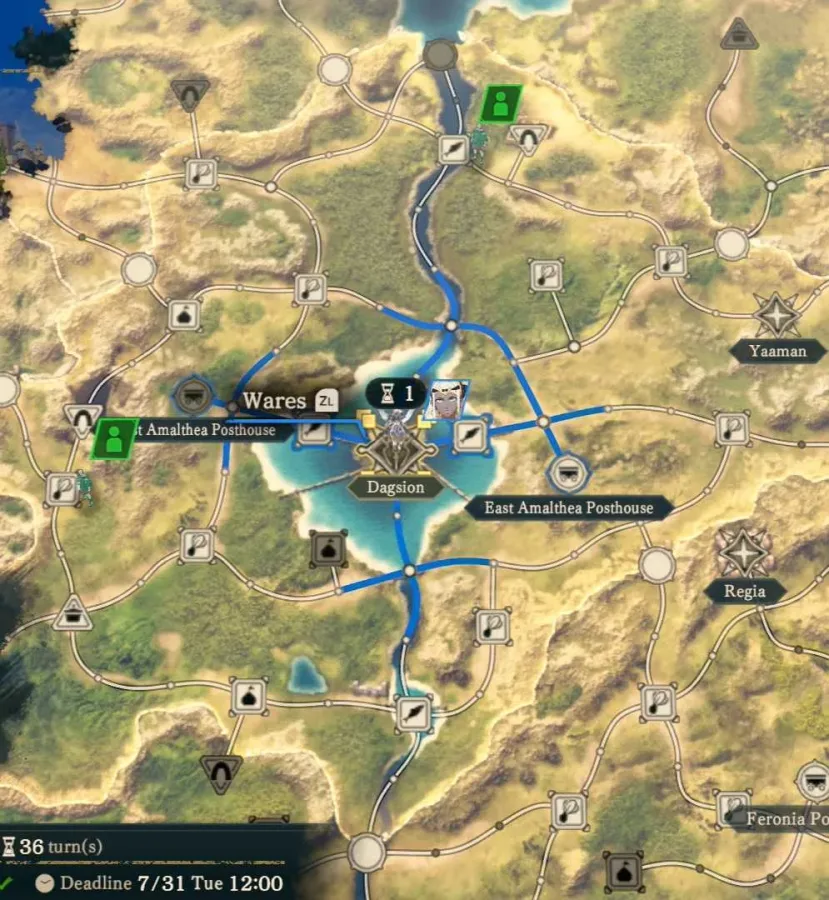
Fortune's Weave uses a calendar and time-management structure, though it handles time differently from games such as Fire Emblem: Three Houses. Days are subdivided into smaller units, effectively turning travel and certain decisions into a resource-management exercise. Moving from March 15 to March 20, for instance, can involve five calendar days alongside 20 smaller time segments.
In theory, this creates more room for activity. Several familiar social and preparation tasks, including training-related activities or sharing meals, do not directly consume the same travel time. Instead, those activities are governed by stamina for individual characters and by limits on how many times an action can be taken during a particular day or week.
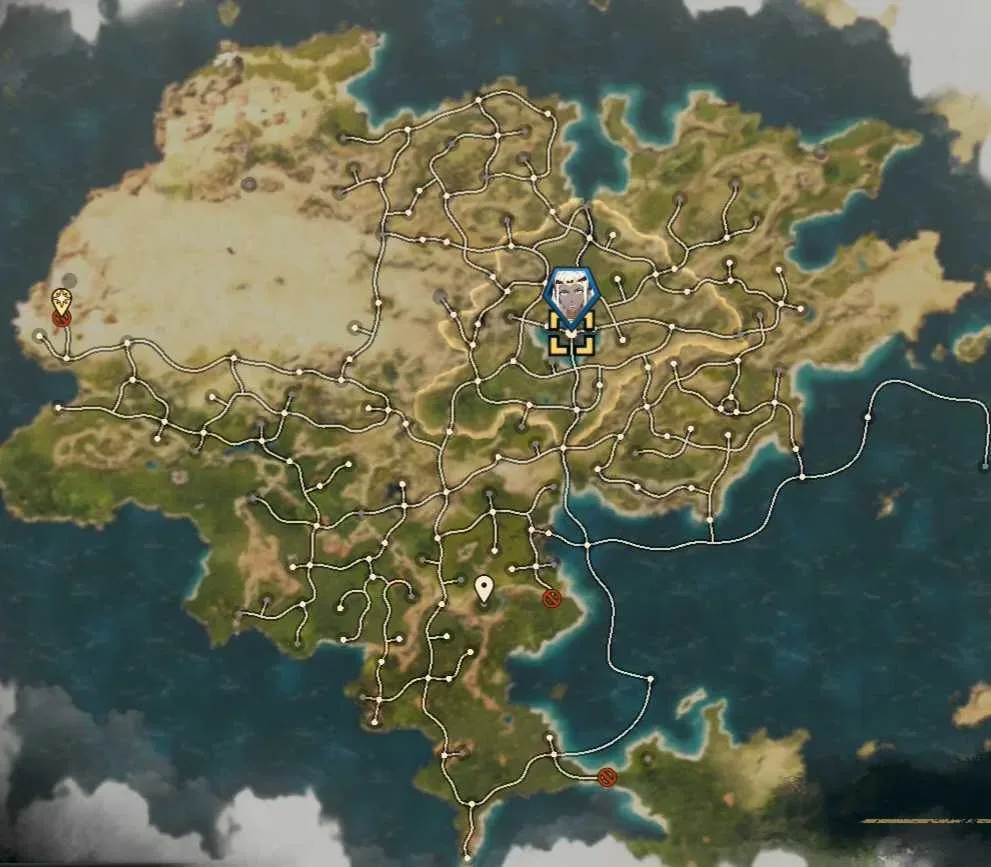
The trouble is that traveling across the map appears to absorb the bulk of the available time. Rather than selecting a destination and accepting a total travel cost, players must choose routes one segment at a time. The design likely accounts for the map's branching paths and alternate routes, but it can make basic navigation feel cumbersome.
Along the way, players can stop at nodes for resources such as fish, meat, vegetables, and smithing supplies. There are also settlements, meals, stores, and dungeons spread throughout the world. The breadth of those possibilities might sound appealing, but the scale of the map turns exploration into a significant commitment. Reaching a new location can require 15 to 20 time segments, with similar amounts needed to open up that region's nodes and then return to a major hub.
Some chapters reportedly provide more than 100 segments before a deadline. Even so, the system can feel wasteful when so much of that allowance disappears simply getting from one activity to another. Carriages can lessen some of the burden, but only within a given region. They do not solve the larger problem of moving between regions or returning to the central city.
Training Restrictions Undercut Exploration
The travel problem becomes more pronounced because character skill training is limited to once per week and must be completed in the main city. That restriction means a player who is deep into map exploration may need to abandon their current goal, spend time returning to the hub, complete training, and then spend more time retracing the journey.
There is apparently a fast-travel option locked behind an unspecified point of progression, but it is not available early enough to ease this initial strain. The promise of a later quality-of-life tool does little for players spending dozens of hours inside the most restrictive version of the system.
Time limits can be a powerful narrative mechanic when they reinforce urgency. A game about a looming threat, a rescue mission, or an approaching catastrophe can make each decision carry dramatic weight. Here, the travel demands are said to feel more obstructive than tense. Rather than elevating the Flame Lords' stories, the calendar can make routine logistics dominate the player's attention.
The contrast with the fantasy role-playing game The Blood of Dawnwalker is notable. Both use time as a meaningful part of their structure, but Fortune's Weave is described as lacking the same narrative pressure that makes time expenditure feel purposeful. When a mechanic mainly communicates that a player cannot conveniently train or reach a destination, it risks becoming an obstacle rather than an engaging strategic consideration.
Renown, Recruitment, and the Material Collection Loop
Progression is also tied to renown. Certain routes and parts of the map are blocked until the player reaches the required rank, while recruitment of the game's many potential allies can demand higher renown as well. Main-story progress contributes to that rank, as do ordinary side quests and tasks unique to each Flame Lord.
For Theodora, that personal objective involves sending supplies back to her citizens. The issue is that broad side quests provide only small amounts of renown, leaving supply gathering as one of the most effective early methods for advancing. Those assignments require collecting specific quantities of specific materials from particular regions: 10, 20, or even 30 items at a time.
Adding to the frustration, finding the required goods can be dependent on chance. A player may travel to the correct region and still not receive the materials they need, resulting in more movement across the map and more time spent at collection nodes. That can create a discouraging loop: gather supplies to earn renown, earn renown to unlock routes and recruits, then repeat the process because the next goal demands more materials.
For a campaign built around a royal commander, this can feel mismatched with the fantasy. Theodora should evoke the image of a leader directing forces in battle, perhaps even taking the field from the back of a winged mount. Too much early time spent looking for vegetables, fish, and crafting ingredients makes her grander role feel distant.
Too Few Meaningful Battles in the Opening Hours
Perhaps the greatest concern is what this structure means for Fire Emblem's core tactical appeal. Dungeons are described as offering clashes that can become repetitive, with little difficulty or meaningful decision-making in the back-and-forth exchanges. Meanwhile, the larger strategic battles played out on proper maps are reportedly too infrequent.
Those major encounters are especially important because they are where characters can earn the experience needed for substantive growth. Outside of them, players can assign units to automatic activities that let them train, gather materials, or fight without direct control. That may be useful for players who enjoy optimizing systems, but it can be disappointing for anyone who wants to personally command their units rather than delegate so much of their advancement.
The early result is a rhythm dominated by exploration, scheduling, and management: explore, return to train, head back out, collect supplies, and repeat. For a strategy RPG, that balance can make the game feel as though it is frequently playing itself during the exact period when a new campaign should be demonstrating why its battles are exciting.
Four Routes Make the Opening Impression More Important
Fortune's Weave compounds these concerns by placing its story across four Flame Lords. Multiple protagonists can be a major strength, offering contrasting perspectives on a shared world and encouraging repeat playthroughs. Yet that same design makes a slow Part One especially intimidating. If each route asks players to endure a similarly tedious opening chapter, seeing every story could become a daunting prospect.
There are systems said to offer benefits that smooth out subsequent runs, though they have not yet been seen in action. Those could matter enormously. A structure that rewards later playthroughs with faster movement, easier progression, or reduced repetition may substantially improve the full package. But it also means the first route--potentially the one a player is most excited to begin--could deliver the roughest experience.
For now, Fortune's Weave seems caught between a vibrant narrative premise and an overly laborious early-game routine. Theodora and the supporting cast provide a strong emotional pull, while the setting offers enough mystery to inspire curiosity about where the larger story is heading. Whether the game ultimately earns that investment may depend on how quickly it relaxes its travel constraints, improves access to combat, and lets players spend more time acting like tactical leaders instead of resource runners.

Community
Discussion
Start the conversation.
No comments have been posted yet.