

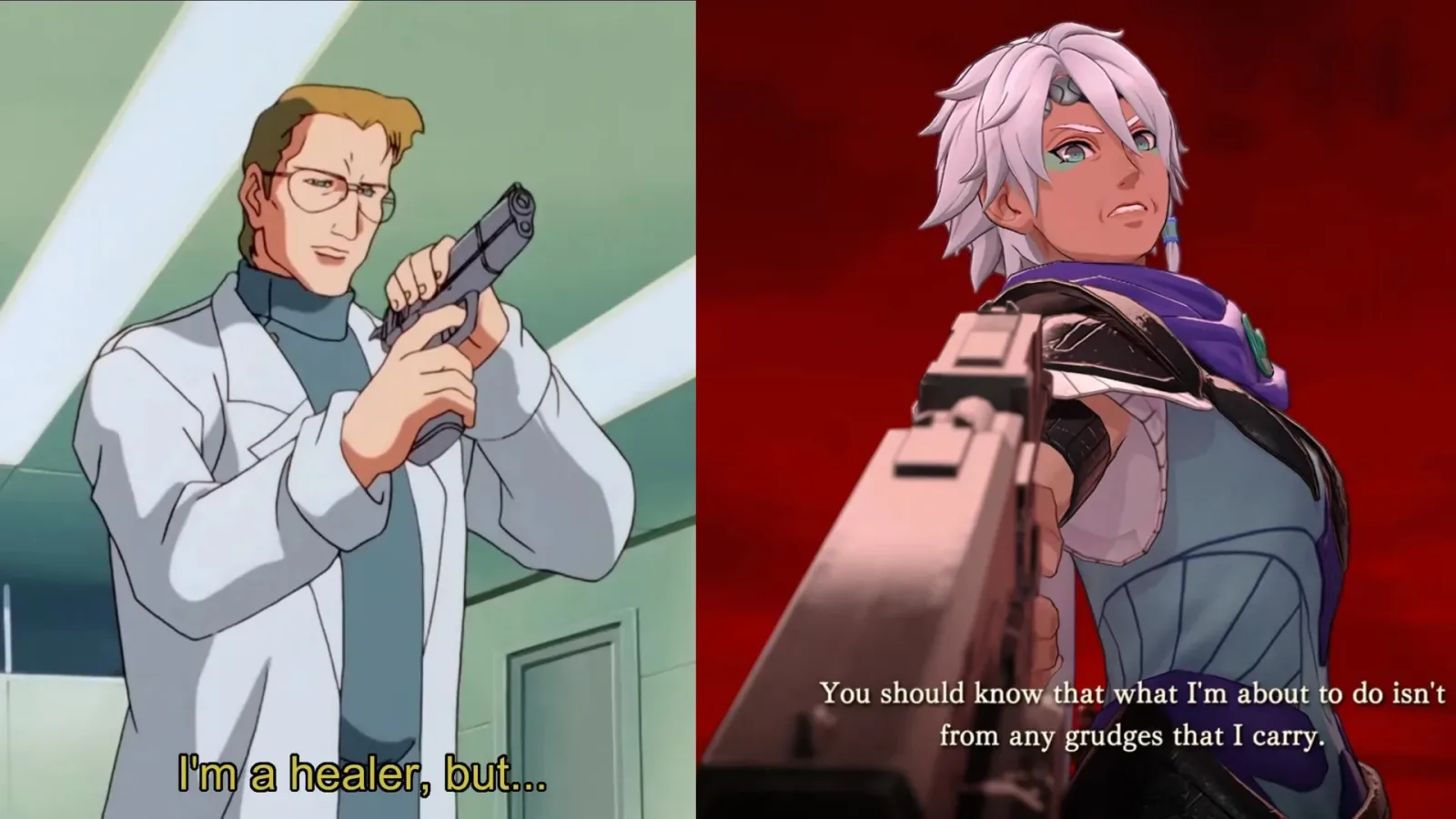
Fire Emblem: Fortune's Weave is reportedly giving one of Nintendo's long-running fantasy strategy series a striking new tool: guns. Firearms are said to be a new weapon category in the game, and their introduction appears to matter for more than combat mechanics. In an early sequence described from the game's prologue, they also deliver an unusually blunt, funny, and dramatic character moment--one involving a priest named Troy and an enemy lieutenant who badly underestimates the group facing him.
Fire Emblem has changed plenty across its many installments. The basics of turn-based tactical battles, carefully assembled armies, social bonds, political conflict, and high-stakes fantasy have endured, but each entry tends to find room for a new wrinkle. Sometimes that means a revised class system, an unusual setting, transformed units, emblems, crests, battalions, or a new way to handle the franchise's familiar weapon relationships. Fortune's Weave, however, seems prepared to add a concept that immediately alters the visual and narrative language of the battlefield.
Swords, lances, axes, bows, magic, staves, daggers, and mounted weapons all feel at home in Fire Emblem's traditional medieval-fantasy vocabulary. A gun does not--at least not at first glance. That tension is precisely why the new weapon type has the potential to stand out. A firearm in a fantasy army does not merely represent another attack animation or damage calculation. It changes what players expect a character to be capable of, how threats can be framed in a scene, and how far a confrontation can escalate in an instant.
Guns are reportedly treated as gauntlet weapons
Mechanically, guns in Fire Emblem: Fortune's Weave are described as being grouped with gauntlet weapons. That categorization has an important gameplay implication: equipping them raises a unit's evasion, helping that character avoid incoming attacks. It is an intriguing fit for a weapon that might otherwise be expected to function as a distant, slow, or purely offensive option.
For useful background on this topic, read Final Fantasy 7 Revelation Targets Around 200GB as Trilogy Finale Nears.
The classification suggests that firearms may be designed around mobility, quickness, or close-range confidence rather than simply acting as a replacement for bows. That would make them feel distinct within the existing tactical ecosystem. A character wielding a gun could potentially occupy a different battlefield role from an archer, a knife user, or a traditional brawler, even if the game's underlying classifies-the-weapon-as-gauntlets approach comes with familiar rules.
There is still limited clarity on how guns compare with the rest of the armory over a full campaign. The available hands-on details only cover their appearance in the brief prologue, rather than their wider availability or long-term balance. It is therefore too early to say whether guns will become a dominant option, a specialized tool, or a limited feature tied to particular units and story beats. Their initial impact, though, seems less about raw power than about personality.
Troy gives the weapon type an immediate identity
The character most closely associated with this early firearm moment is Troy, an older woman who is also a priest. That combination alone makes her memorable. Older women are still too often overlooked in video game casts, particularly in party-based fantasy adventures where playable heroes frequently skew young. A veteran character with religious healing duties already brings a welcome contrast to that convention.
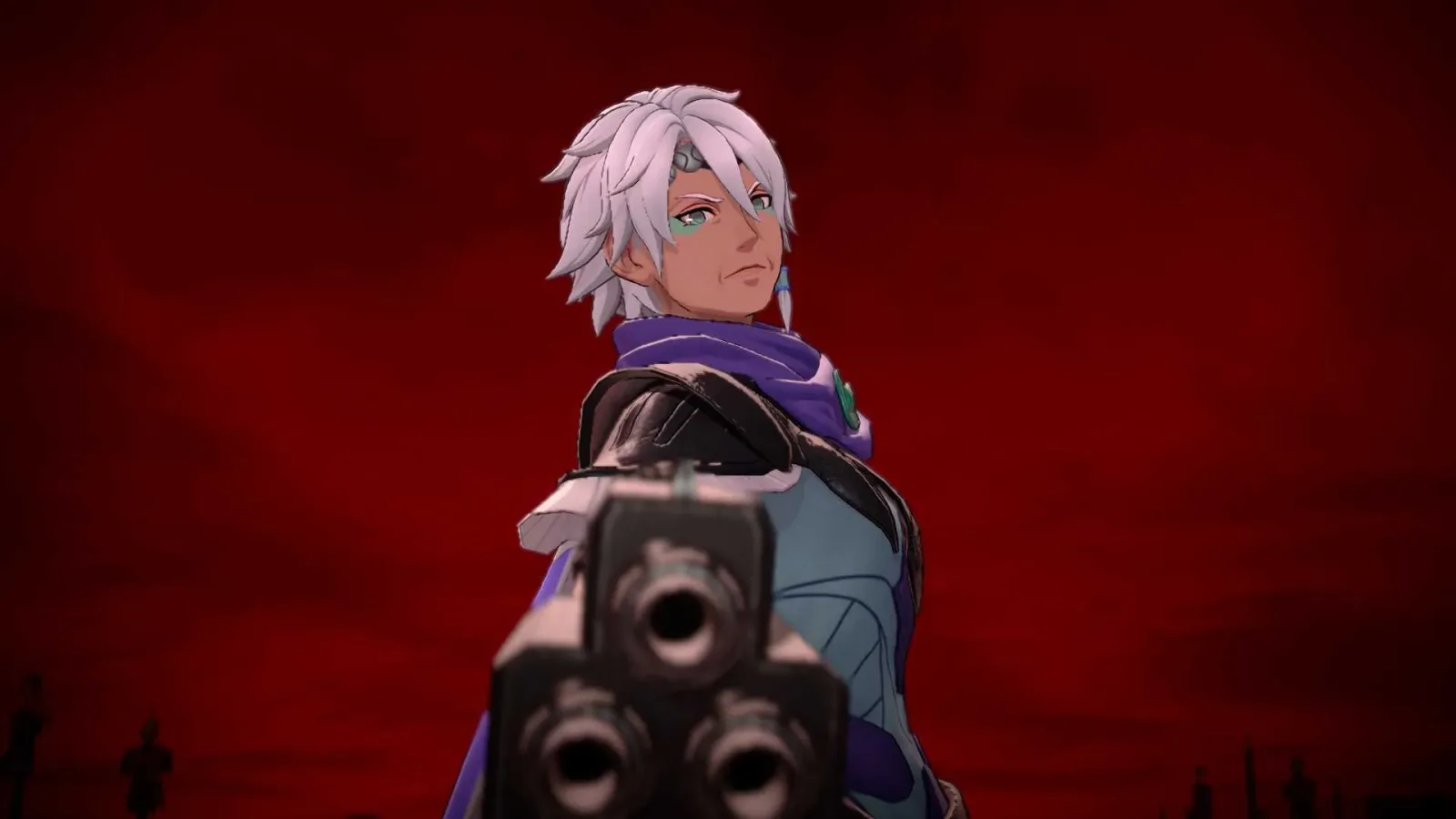
Then she has a gun.
Healers have long held a recognizable place in Fire Emblem's battlefield structure. They support allies, restore health, remove harmful conditions, and often begin as units who must be carefully protected from direct danger. Even when they later gain offensive magic, their core identity is generally rooted in assistance and restraint. A priest carrying a firearm turns that expectation on its head without discarding the healer role entirely.
It creates a character concept with an immediate punchline: the medic who can patch up the squad and then personally solve the problem threatening it. The contrast recalls the familiar "I'm a healer, but..." joke, where a support-focused character possesses a surprisingly aggressive or intimidating side. In Troy's case, the game appears to turn that contrast into an actual storytelling device instead of leaving it as a surface-level novelty.
There is also something especially effective about placing a firearm in the hands of a priest within a setting populated by armored warriors, blade-wielding nobles, rogues, magical specialists, and mythic enemies. Guns make a character read differently before they even speak. They communicate a degree of practicality, decisiveness, and danger that sits in productive friction with the ornate fantasy surroundings.
An early cutscene reportedly makes the case for firearms
The reported prologue scene gives that friction a memorable payoff. After the party defeats a lieutenant serving Balor, the death god, the apparently beaten enemy launches a surprise attack. The ambush catches the group off guard and brings a building down on them. It is the kind of reversal Fire Emblem stories know well: victory proves temporary, a villain reveals another move, and the heroes are abruptly placed in danger.
Fortuna, the goddess of Fate, intervenes. She rewinds time, allowing the party to avoid the ambush that would have trapped them. Time manipulation itself is not a foreign idea to modern Fire Emblem, but the described follow-through is much less conventional. Confused by the party's sudden absence, the lieutenant looks around for his vanished opponents.
That is when Troy reportedly appears at point-blank range and fires repeatedly into him. Her response is paired with the line, "That's the force it takes to get anything into the skull of a man like that."
It is a scene that lands because it uses the gun as more than a visual accessory. The firearm changes the rhythm of the moment. The antagonist expects a fantasy-story reprieve after pulling off a devastating betrayal. The heroes have been saved through divine manipulation of fate. Then, instead of an extended duel or another spell exchange, Troy ends the immediate threat with uncompromising speed.
The result is darkly comic, but it also tells players something about her. Troy is not simply a kindly priest with an unconventional item equipped in a menu. She appears alert, capable, and entirely willing to act decisively when someone endangers her allies. The weapon gives the scene a sharper punctuation mark than a staff, tome, or sword likely would have provided.
Why the tonal contrast could work for Fire Emblem
Fire Emblem has never been as tonally uniform as its broad medieval-fantasy image suggests. The series can move from tragic royal succession disputes to lighthearted support conversations, from battlefield sacrifice to oddball character quirks, and from divine apocalypses to surprisingly contemporary jokes. Its best casts often work because they allow sincere emotional stakes and eccentric personalities to exist side by side.
Guns could fit comfortably into that tradition if Fortune's Weave continues to use them with intention. They are inherently funny when first introduced into a world otherwise defined by sword-and-shield imagery, but that does not mean they have to undermine the drama. The early Troy sequence appears to use that surprise to heighten a dangerous moment rather than trivialize it. The firearm is funny because it is unexpected; it is satisfying because the enemy has just endangered the party; and it is character-building because Troy is the person holding it.
That is a stronger use of a new weapon type than simply placing a new icon in an equipment list. New mechanics are most memorable when the story understands what makes them unusual. A gun can alter tactical options, but it can also influence staging, dialogue, character archetypes, and audience assumptions. A villain standing a few steps from a swordfighter may still feel like he has time to react. A villain standing in front of Troy evidently has made a much worse calculation.
Questions remain beyond the prologue
Much remains unknown about how extensively firearms will shape Fire Emblem: Fortune's Weave after its opening material. The available account does not establish how many playable gun users there will be, whether guns are broadly available across classes, what their range and other limitations might be, or whether enemies will use them with the same frequency. It also does not reveal whether Troy's moment is representative of the game's overall tone or an intentionally outsized introduction.
Those unanswered questions are part of what makes the idea compelling. If guns remain rare, they could preserve their novelty and make characters such as Troy feel especially distinct. If they become widely accessible, the game may need to explore how a fantasy world organized around traditional armies has adapted to them. Either direction could offer interesting tactical and narrative opportunities.
For now, the strongest takeaway is that Fortune's Weave seems to understand the value of committing to its unusual premise. The gun is not being presented solely as a modern-looking weapon transplanted into Fire Emblem's fantasy framework. In the prologue, it reportedly becomes the basis for one of the game's most forceful character introductions. Troy's combination of priestly duties, older-warrior presence, healer utility, and startling directness makes her immediately difficult to ignore.
Whether guns ultimately prove powerful on the battlefield is still uncertain. As a way to establish a character and abruptly overturn a villain's advantage, however, they already appear to have made a very convincing argument.
Community
Discussion
Start the conversation.
No comments have been posted yet.