

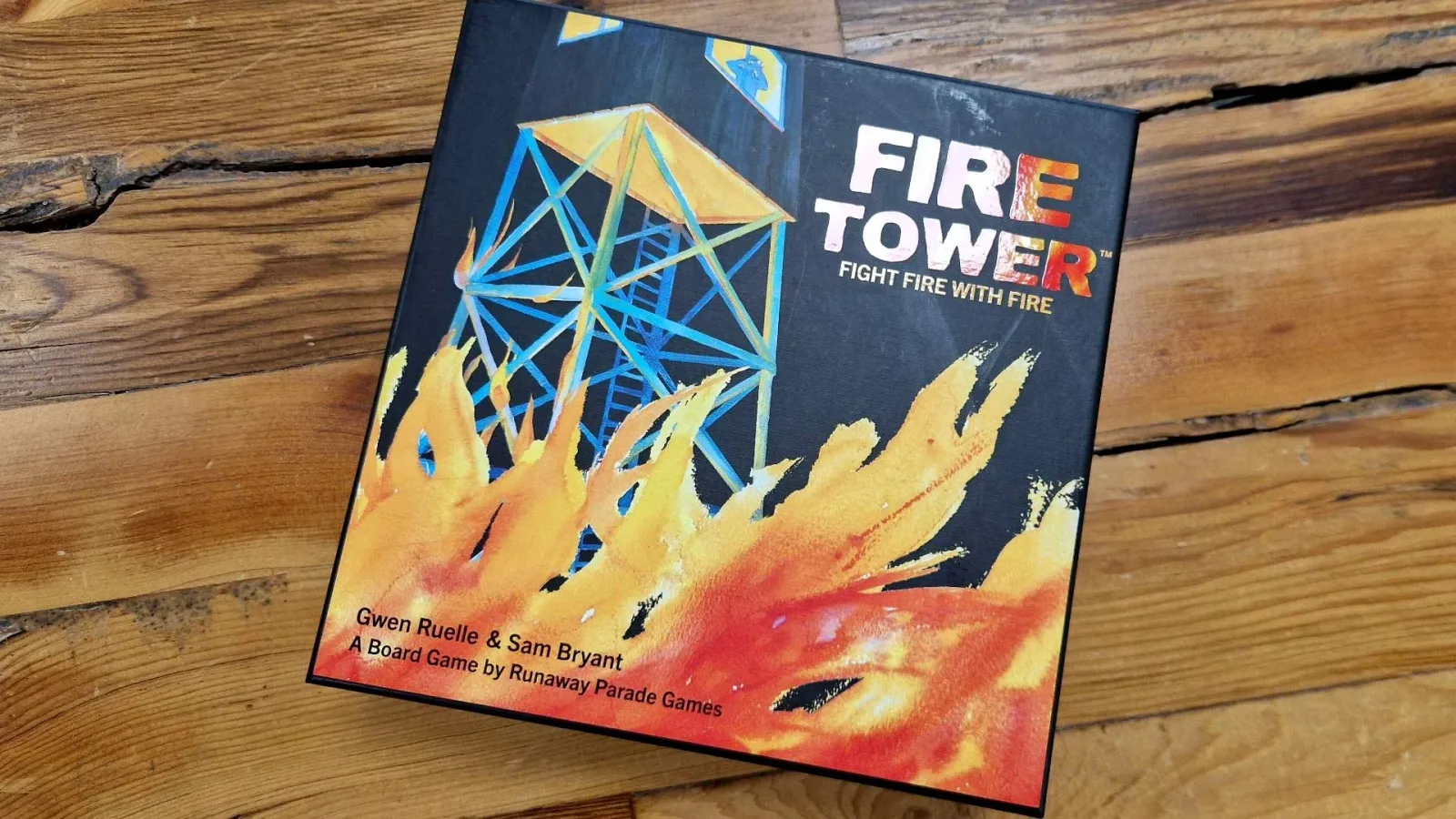
Fire Tower has the kind of premise that sounds immediately approachable: players are lookouts positioned around a forest, trying to keep their own tower standing while a fast-moving fire spreads across the map. The twist, of course, is that nobody is merely reacting to the blaze. Everyone has opportunities to steer it, intensify it, block it, and, at the right moment, send it directly toward a rival.
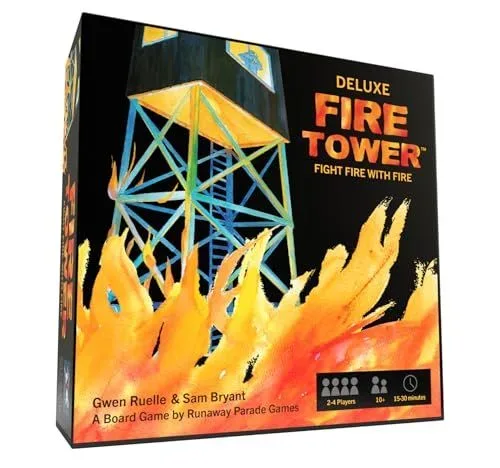
That mix makes Fire Tower a particularly appealing tabletop recommendation for groups that want a strategic game without committing to a long rules explanation or an all-evening session. It is designed for players aged 10 and up, supports games that can run around 15 to 30 minutes, and presents its central ideas in a form that can be understood remarkably quickly. Beneath that accessible surface sits a competitive game full of timing, retaliation, temporary alliances, and sudden reversals.
The result is a game that can fit neatly between a casual family board game and a more confrontational strategy experience. It is not about building an elaborate engine over several hours. Instead, it is about reading the board, anticipating where the fire can travel next, and keeping the most disruptive cards in hand until they will hurt someone else the most.
A wildfire game where survival is only part of the plan
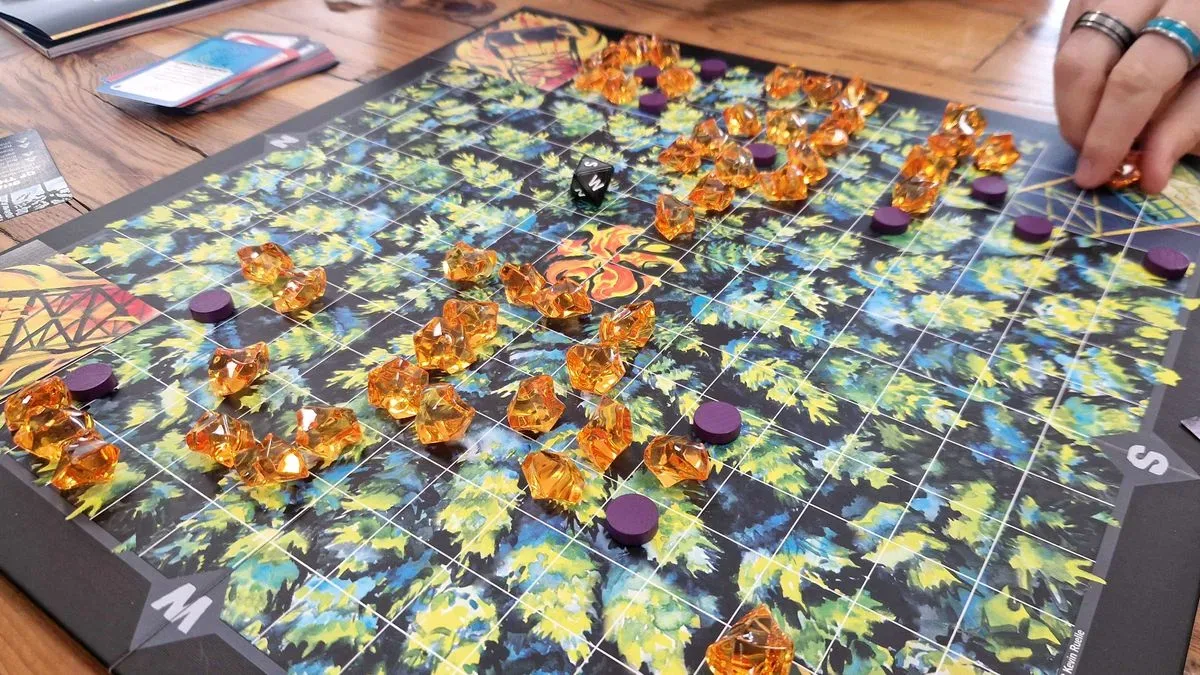
In Fire Tower, the objective is simple: be the last tower left. A central grid represents the forest, with each competitor occupying a position around its edges. Fire tokens gradually fill the board, creating a constantly shifting danger zone that can eventually reach and destroy a player's tower.
For useful background on this topic, read LEGO Godzilla Officially Revealed as a 5,363-Piece Monsterverse Display Set.
Every turn begins with the spread of the fire in the direction indicated by the wind: north, south, east, or west. That alone creates a clean and readable core system. Players do not need to memorize extensive exceptions or consult a dense reference sheet to understand the immediate stakes. Look at the wind, look at the existing flames, and follow the fire's path.
But Fire Tower quickly becomes more than a passive disaster-management game because players also play cards. Some cards manipulate the wind, while others allow more direct interference. A player may add more fire to the board, leap flames across spaces, or trigger an effect that expands the blaze across multiple squares at once. Defensive options also exist, including ways to extinguish fires, establish firebreaks, and use emergency water to protect a tower at a critical moment.
That contrast between open information and hidden hands drives much of the tension. Everyone can see which parts of the forest are burning and where the wind is currently headed, but nobody knows exactly what another player is holding. A position that looks secure can become precarious after one sharp wind change. A rival who appears finished may have the card needed to wipe out a line of flames or send danger in an entirely new direction.
Simple turns, meaningful decisions
One reason Fire Tower is easy to learn is that the sequence of play is compact. Spread the fire, then use a card. The rhythm is intuitive, and new players can start making consequential choices almost immediately.
Yet the game's straightforward structure creates room for decisions that matter. Using a powerful card early can solve a pressing problem, but it might also remove the surprise factor from a later play. Holding it too long can be equally risky if a competitor takes the initiative first. Firebreaks can redirect an approaching blaze, but their protection is not absolute; cards can remove them, and changing the wind can make a carefully prepared barrier irrelevant.
Players are therefore encouraged to think beyond the current turn. A patch of fire that seems harmless now may become dangerous if the wind rotates. Adding flames near an opponent can be useful, but it is even stronger when the board's geometry gives that fire a likely route toward their tower. It is also possible to create pressure that forces another player to spend a defensive card, leaving them less prepared for the next threat.
This makes Fire Tower satisfying for experienced tabletop players without making it opaque to newcomers. Its strategy is situational rather than technical. Players learn by watching the fire move, trying cards, and seeing how quickly a plan can change. The system gives the game a lively, readable quality that is valuable at mixed-experience tables.
Direct competition is the point
Fire Tower is at its strongest when players embrace its openly adversarial nature. This is a game where helping yourself often means making life harder for someone else. Redirecting the wind, skipping flames over a defensive line, or igniting several spaces at once can all produce the kind of table-wide reaction that makes a short competitive game memorable.
That also means the group matters. Players who dislike targeted attacks or who find it frustrating to be knocked down by a late reversal may not enjoy the game's most memorable moments. A player can spend much of a match appearing safe, only for an opponent to find an angle that changes the wind and delivers a decisive final push toward their tower.
There is potential for players to gang up on a perceived leader, too. In some groups, that will feel like a natural catch-up mechanism; in others, it may feel harsh. Fire Tower does provide tools for recovery, however. Large-scale extinguishing effects, emergency water, and firebreaks can help a player survive a concentrated assault. Because the board state shifts so quickly, a target is not necessarily doomed simply because the fire begins closing in.
The best mindset is to treat these swings as part of the game's intended drama. Fire Tower is not trying to offer a quiet optimization puzzle. It wants players to seize opportunities, bluff with the cards they keep concealed, and enjoy the occasional perfectly timed reversal.
A strong fit for quick game nights
For families and groups with limited time, the 15-to-30-minute play length is a major advantage. It is short enough to bring out before dinner, between larger games, or during a holiday gathering where not everyone wants to spend an hour learning a complicated ruleset. Its clear objective also makes it easier to introduce to relatives or friends who do not regularly play modern board games.
At the same time, the game has enough volatility that repeat plays should not feel identical. The wind direction, card timing, firebreak placement, and changing player priorities create new patterns each session. A player who won by staying conservative in one match may find that same approach fails the next time, while a bold aggressive move can either secure victory or leave its user exposed.
Fire Tower includes a two-versus-two cooperative option as well, offering an alternative for players who would rather work with a teammate than face every other tower alone. Still, the free-for-all format appears especially well suited to the design, as its card-driven surprises and shifting board alliances become more pronounced when every player is ultimately looking out for themselves.
Those seeking additional variety can look to Rising Flames, an expansion intended to add more to the experience. The base game already delivers a concise and complete contest, but an expansion can be appealing for groups that play it regularly and want fresh wrinkles added to its fire-spreading formula.
An important theme consideration
Fire Tower's wildfire theme may understandably be uncomfortable for some players. Forest fires are not an abstract concern in real life; they have caused severe loss and disruption for communities around the world, including during recent fire seasons. A game that treats fire as the engine for competitive tactics can therefore feel insensitive depending on a player's experiences and perspective.
That reaction is entirely valid, and the theme alone may make Fire Tower unsuitable for some tables. The game is highly abstract in its presentation, focused on tokens, directions, and tactical card effects rather than realistic depictions of disaster. For some, that abstraction may create enough distance to enjoy its mechanics. For others, it will not, and there is no reason to push past that discomfort.
It is worth considering the people at the table before bringing it out, especially during periods when devastating wildfires are prominent in the news or have affected someone personally. The same features that make Fire Tower accessible mechanically do not remove the real-world associations of its subject matter.
Why Fire Tower stands out
There are plenty of games that advertise themselves as easy to learn, but not all of them provide much to think about after the first few turns. Fire Tower stands out because it pairs genuinely fast onboarding with choices that remain tense throughout the match. The rules do not get in the way, but the card play and changing wind ensure that players still have reasons to plan, react, and second-guess one another.
Its best moments come from the gap between apparent safety and actual safety. A player can look comfortably removed from the fire, only to discover that one directional change and one well-held card are enough to transform the entire board. Conversely, a tower surrounded by danger can sometimes survive through smart defense and force the fire back toward the player who thought they had already won.
For anyone looking for a compact strategy board game with a strong competitive edge, Fire Tower offers a compelling package. It is quick, easy to explain, and suited to a broad range of players, while still delivering the satisfying sting of a carefully engineered takedown. Just be prepared for the wind to turn--and for your friends to make sure it turns against you.
Community
Discussion
Start the conversation.
No comments have been posted yet.