

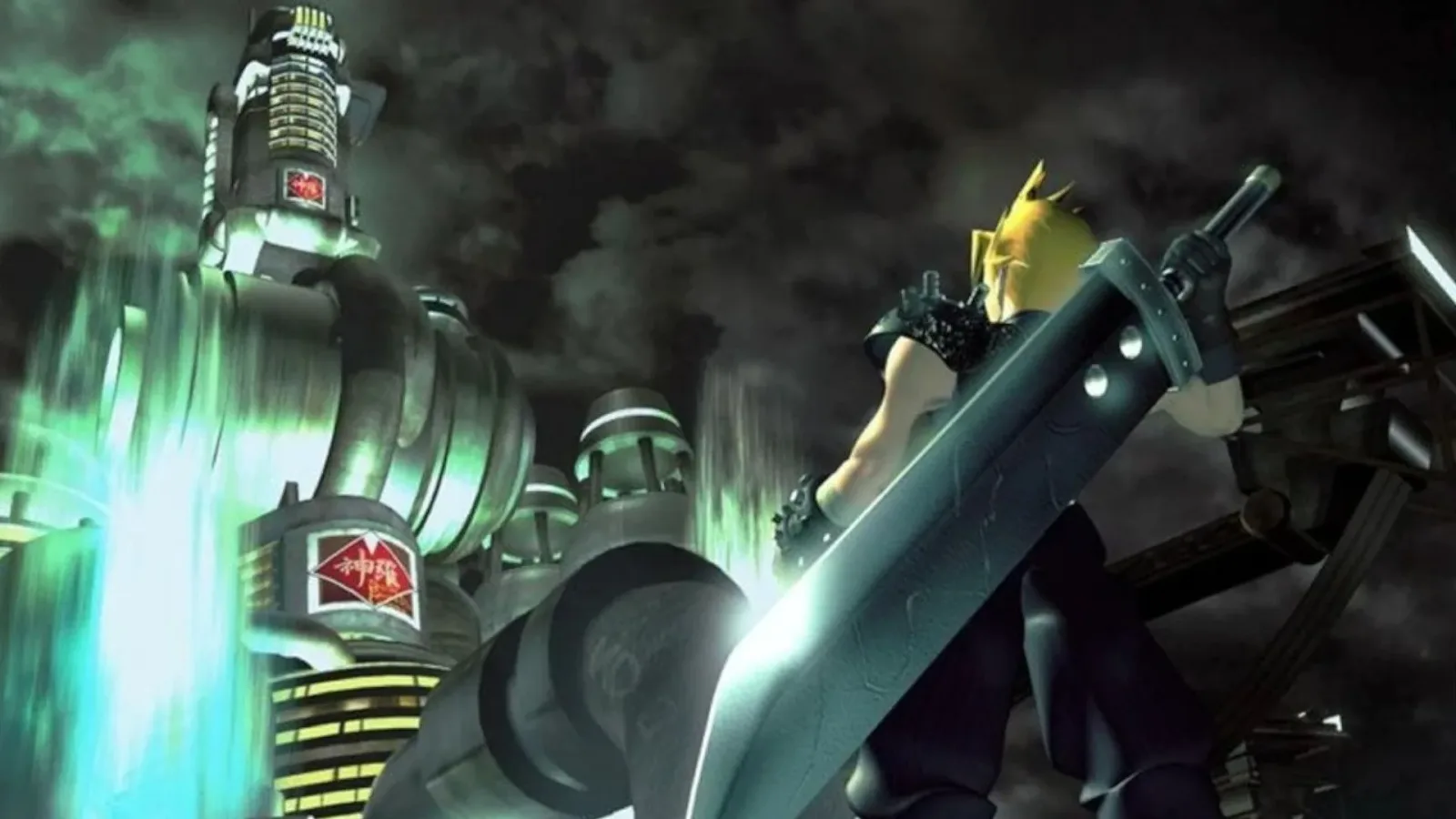
Former PlayStation president Shuhei Yoshida has looked back on one of the most consequential third-party deals in console history: Square's decision to bring Final Fantasy VII to the original PlayStation rather than a Nintendo platform. For Yoshida, who worked as Square's account manager while part of PlayStation's third-party team, the moment remains among the achievements he is most proud of from his long career at Sony.
It is difficult to overstate what the decision meant in the mid-1990s. Final Fantasy had been deeply associated with Nintendo hardware through the NES and Super Nintendo eras. Square had delivered some of the defining role-playing games of that period, including Final Fantasy VI, Chrono Trigger, and Secret of Mana. When Square moved its next numbered Final Fantasy to Sony's new console, it did more than secure a high-profile game for PlayStation. It signaled that the industry's balance of power was changing.
A mission to win major third-party series
Yoshida described PlayStation's early third-party strategy as a direct effort to bring the most popular publisher-owned properties to Sony's platform. The company was entering a market in which Nintendo had long held enormous influence, particularly in Japan, and attracting established franchises was essential if the first PlayStation was going to be viewed as a serious alternative rather than an untested newcomer.
Japanese role-playing games were especially important at the time. Yoshida noted the scale of enthusiasm around the genre, pointing to the major demand generated by new Dragon Quest releases in Japan. While Enix, then still separate from Square, published Dragon Quest, Square's Final Fantasy was similarly one of the country's biggest and most influential RPG names.
For useful background on this topic, read GTA 6 Missing Persons Guide: Find the Port Gellhorn Killer.
That made Square's eventual decision a landmark win. The publisher had built much of its reputation on Nintendo systems, but its ambitions for the next Final Fantasy were increasingly tied to the storage capacity and audiovisual possibilities offered by CD-ROM technology. Sony's PlayStation was designed around discs, while Nintendo chose cartridges for the Nintendo 64.
Why cartridges became the central issue
Series creator Hironobu Sakaguchi wanted to make a more cinematic, narrative-driven game that could use computer-generated movie sequences. Those ambitions ran into the limitations of cartridge-based storage. Cartridges had advantages, including fast loading and durability, but they could not economically hold the vast amount of data needed for extensive pre-rendered video, high-quality audio, and a larger cinematic presentation on the scale Square envisioned.
CDs opened a different path. Their greater capacity gave developers room to pursue full-motion video and more elaborate presentation without facing the same storage restrictions. For Square, that distinction was decisive. Final Fantasy VII ultimately shipped on three PlayStation discs, a format choice that became inseparable from its identity and from the marketing around its dramatic visuals.
Yoshida recalled that Square's move followed Sakaguchi's realization that a cartridge-based system could not support the cinematic vision he wanted for the project.
The technical argument was therefore also a creative one. The move was not simply about choosing the newer or more commercially promising console. It was about selecting a platform capable of supporting Square's desired approach to storytelling. Final Fantasy VII used its striking computer-generated cutscenes, large-scale set pieces, and ambitious narrative presentation to reach audiences far beyond the established Japanese RPG fanbase.
Its release helped demonstrate that console role-playing games could become global blockbuster events. It remains one of the most widely recognized games in the series and a pivotal release for PlayStation's early catalog.
Hundreds of development kits and a clear commitment
Yoshida's recollection includes a detail that illustrates just how seriously Square embraced the transition. As the account manager for Square at the time, he received an order for roughly 200 PlayStation development kits from the publisher once the decision had been made.
That was not the posture of a company casually experimenting with a second platform. It reflected a substantial commitment to PlayStation development and suggested that Square intended to build a significant pipeline around Sony's hardware. In the context of the era, it was a striking statement from one of the developers most closely tied to Nintendo's 16-bit success.
The impact reached well beyond one game. The Nintendo 64 earned lasting affection for its first-party classics and distinctive library, but its cartridge format became a major hurdle in an industry increasingly moving toward CD-based development. Developers seeking larger storage capacity, more extensive audio, and video-heavy presentation frequently found Sony's machine better suited to their projects.
As a result, the Nintendo 64 faced a difficult third-party landscape. Several major franchises that had appeared on Nintendo systems in earlier generations had prominent installments arrive on PlayStation instead. The wider trend included major releases connected to series such as Mega Man, Dragon Quest, Metal Gear, and Street Fighter. The exact circumstances varied from publisher to publisher, but the pattern reinforced PlayStation's image as the place where the industry's biggest third-party games were gathering.
Final Fantasy VII's long PlayStation legacy
Among all those changes, Square's decision carried particular symbolic and commercial weight. Final Fantasy VII did not merely add another familiar brand to PlayStation's lineup; it became one of the console's defining games. Its success helped introduce many players outside Japan to Japanese RPGs, while its characters, music, story, and imagery went on to become fixtures of gaming culture.
The move also established a long-running relationship between mainline Final Fantasy and PlayStation hardware. For years afterward, the numbered series was strongly associated with Sony's consoles. Mainline entries remained PlayStation exclusives until Final Fantasy XIII arrived on Xbox 360, marking a significant change in the franchise's platform strategy.
That history makes Yoshida's pride understandable. Securing Final Fantasy VII was not just a short-term business success. It helped define the original PlayStation's software identity and contributed to a broader shift in how major Japanese publishers approached console development. Sony had entered the market with a platform tailored to the disc era, and Square's support became one of the clearest demonstrations of what that approach could mean.
Nintendo and Final Fantasy come full circle
The contrast is especially notable given the franchise's upcoming return to Nintendo hardware for a major release. Final Fantasy VII Revelation, due next year, is set to be the first major entry in the series to launch on a Nintendo console on day one since Final Fantasy VI.
That does not erase the historical importance of Square's original move. Instead, it highlights how dramatically the games business has changed since the cartridge-versus-CD battle of the 1990s. Modern platform strategies are more flexible, hardware capabilities have converged in many areas, and large releases routinely reach multiple ecosystems. Yet the story of Final Fantasy VII remains a reminder that format decisions can alter creative plans, business relationships, and the competitive direction of an entire console generation.
There has also been discussion around how Final Fantasy VII Revelation will approach player feedback. The project's leadership has indicated that the story itself is not being shaped by fan reactions, though feedback about the overall gameplay experience is being taken into account. That distinction suggests the developers intend to preserve their planned narrative direction while remaining open to lessons from how players respond to the game's design and feel.
For Yoshida, however, the defining memory remains rooted in the birth of the original PlayStation era: a publisher once synonymous with Nintendo making a major commitment to Sony's new machine, driven by a desire to create something that the technology of the time made difficult elsewhere. The order for around 200 development kits was a practical detail, but it also represented a turning point. Square was not only changing platforms. It was helping PlayStation become a destination for the kind of ambitious, cinematic games that would come to define the console for millions of players.
Final Fantasy VII's migration to PlayStation stands as one of gaming's great strategic pivots: a technical choice with creative consequences, a third-party coup with lasting commercial value, and a moment that helped turn Sony's first console into a dominant force.
Community
Discussion
Start the conversation.
No comments have been posted yet.