

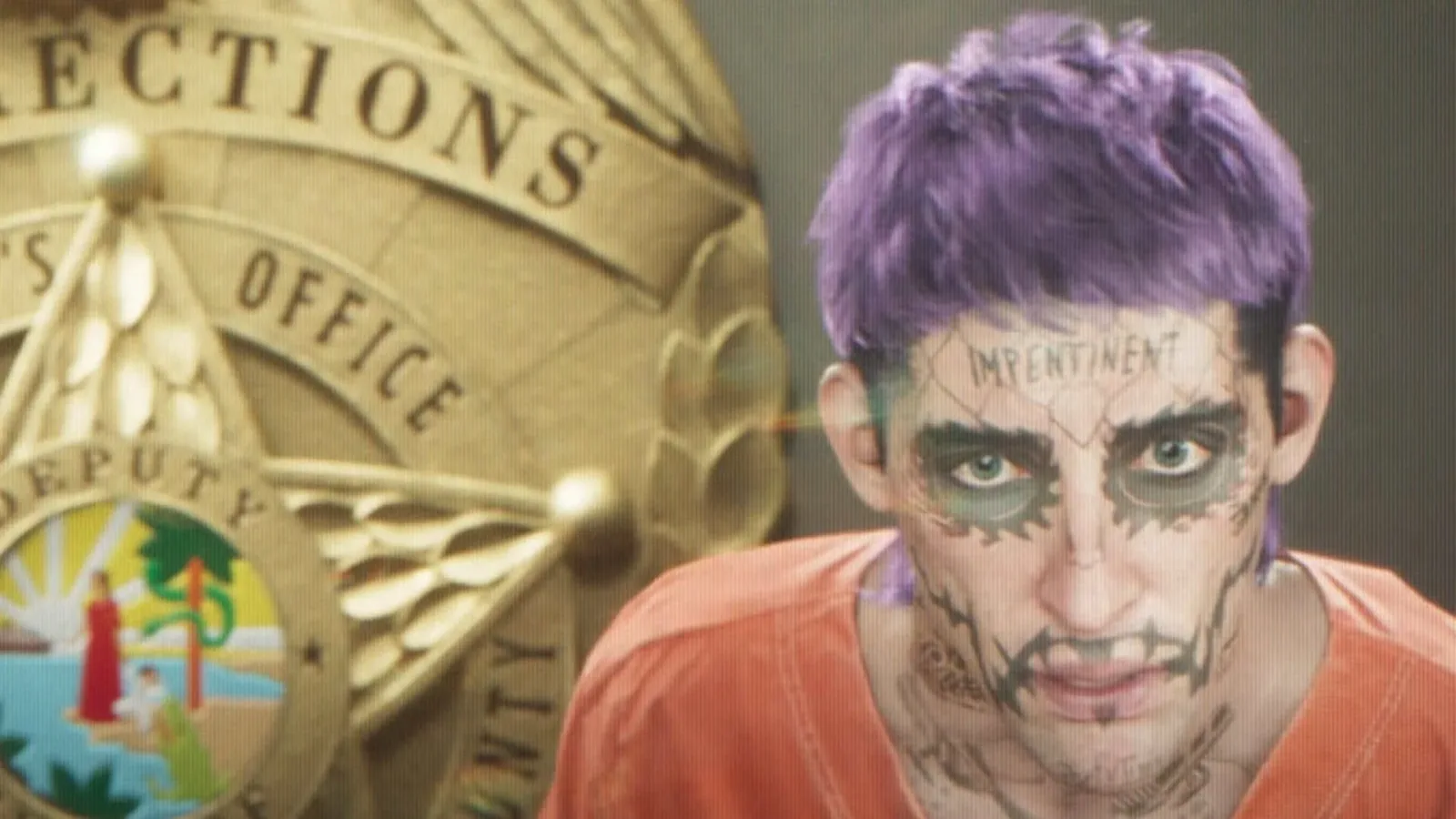
Lawrence Sullivan, the internet personality widely known as the Florida Joker, has confirmed that he has a voice role in Grand Theft Auto 6. The development follows a lengthy and highly publicized dispute over a purple-haired, tattooed figure seen in the game's early promotional material--a character many viewers believed resembled Sullivan.
Sullivan said in a social-media video that he is an "official voice actor" on GTA 6, celebrating his involvement after years of online discussion over whether Rockstar Games had used his likeness. His name can be found in the game's credits among performers listed for the title's local population, and the character associated with him appears in an in-game social-media clip.
It is a remarkable resolution to a situation that began as a threat of legal action, shifted into a request for creative participation, and has now resulted in Sullivan becoming part of one of gaming's biggest releases. Rockstar itself had not publicly confirmed that the original trailer character was directly based on Sullivan, but the resemblance had been central to the debate from the start.
Embedded X/Twitter post
From viral mug shot to a GTA 6 connection
Sullivan first became widely recognized online after his mug shot circulated across social platforms. His distinctive appearance--particularly his face tattoos and brightly colored hair--led to the nickname Florida Joker. When viewers saw a similarly styled character in the announcement trailer for Grand Theft Auto 6, comparisons arrived almost immediately.
For useful background on this topic, read GTA 6: Should You Sell to Donnie or Brian? Fence Choice Explained.
The character shown in the trailer had purple hair and facial tattoos that audiences felt closely echoed Sullivan's appearance. For many fans, it seemed like precisely the kind of exaggerated, headline-inspired depiction that the Grand Theft Auto series has often used while building its satirical versions of American culture.
Sullivan, however, did not initially treat it as merely a joke or an amusing reference. He publicly argued that his look had been used without approval and said he was considering a lawsuit seeking $10 million. The claim generated major attention, partly because Rockstar's games are famous for pulling from recognizable cultural trends, strange news stories, and regional stereotypes while turning them into fictional characters and scenarios.
No public confirmation established that the trailer figure had been modeled on Sullivan. Even so, the visual similarities remained a talking point for fans throughout the extended wait for the game. Sullivan eventually altered the direction of his public demands. Instead of centering the conversation on financial compensation, he said he wanted a chance to participate in the project.
"Let me voice the character. Let me go to the meet-and-greets. Let me promote the game," Sullivan said while discussing what he wanted from the situation.
That proposal has, at least in part, become reality. Sullivan now says he performs the voice of his in-game counterpart.
A small role with a memorable scene
The Florida Joker-associated character appears through Snapmatic, the fictional social-media ecosystem used in the game. In the clip, he confronts another man whom he accuses of copying his image. The exchange escalates into a fight, with the purple-haired character knocking the other person unconscious.
Afterward, Sullivan's voice can be heard delivering a confrontational line: "Who the real one now b****. Take them fake tats off." The moment turns the years-long debate around the alleged resemblance into an in-world gag about imitation, authenticity, and attention.
Later material involving the character depicts him being arrested. That arc closely fits the chaotic, short-form viral-video energy associated with Grand Theft Auto's modern presentation, where side characters and passing clips can be used to make the larger world feel noisy, unpredictable, and perpetually online.
The appearance is not being presented as a major story role. Sullivan is credited as part of the local-population voice cast, a category generally associated with people who help populate the game world with pedestrians, bystanders, incidental characters, and situational voices. Yet in a series where brief encounters can become fan favorites, the cameo is likely to draw attention well beyond its scale.
Sullivan celebrates his place in the cast
In his announcement video, Sullivan addressed those who had doubted he would be involved with the project. He said that people had spent the last three years insisting that he would not appear in the game, before celebrating the confirmation in characteristically blunt fashion.
His message makes clear that he sees the casting as a personal victory. What had become a recurring argument across social media has ended with Sullivan receiving the opportunity he publicly requested: a chance to voice the character viewers connected to him.
The situation also gives the game an unusual layer of real-world context. A public figure who believed a fictional portrayal borrowed too heavily from his visual identity has now become a performer in the same title. Rather than remaining outside the production and criticizing it, he is now included in its cast and credits.
That does not answer every question surrounding the original character design, and Rockstar has not offered a public statement confirming a direct one-to-one inspiration. But Sullivan's participation changes the broader story. Whatever the initial creative origins of the purple-haired figure may have been, the finished game includes Sullivan's voice and acknowledges him among the performers who help bring its world to life.
An outcome suited to Grand Theft Auto's culture of parody
The Grand Theft Auto franchise has long operated in a space where recognizable cultural details are heightened, distorted, and folded into satire. Its cities, brands, media personalities, crimes, advertisements, and everyday weirdness are fictional, but they often feel familiar because they draw on the tone of contemporary life.
That approach can make individual similarities especially noticeable. In the social-media age, a single trailer frame can be paused, shared, compared with a viral photo, and argued over by millions of people. Sullivan's case became one of the most visible examples of that dynamic around GTA 6, because his appearance was already so recognizable online.
The ultimate result is particularly fitting for a game built around performative personalities and the speed with which viral fame can become entertainment. The person at the center of a debate about a possible parody has been incorporated into the fictional world, where his character is shown defending his own look from an alleged copycat.
It is also a reminder that modern game credits can contain more than famous lead actors. Large open-world productions rely on extensive supporting casts to give streets, shops, public spaces, radio-style segments, and social feeds a sense of activity. A local-population credit may not place a performer at the center of the campaign, but it can still produce a scene that players remember and share.
What this means for players
For players, the most immediate takeaway is simple: the Florida Joker connection is no longer limited to speculation about an old trailer. Sullivan has confirmed that he voices the character, and the game's credits include his name among its wider voice cast. Players who encounter the Snapmatic sequence will hear him participate directly in the scene.
For fans who followed the dispute from the beginning, the cameo offers an unexpectedly cooperative conclusion. Sullivan's original response was combative, including the proposed $10 million legal claim. His later request focused on voice work, promotional opportunities, and appearances related to the game. The voice role fulfills the most concrete and creative part of that request.
It also adds another small piece to the enormous cultural footprint surrounding Grand Theft Auto 6. Even before release, every trailer, rumor, and detail attracted intense examination. Now, one of the title's best-known real-world comparison points has become an actual credited performer rather than simply remaining a subject of fan theories and legal speculation.
Sullivan summed up his new association with the game in a phrase that captures the shift from adversary to participant: "GTA boys for life." Whether players view the scene as a clever meta-joke, a surprising reconciliation, or simply another strange detail from Vice City's surrounding culture, the Florida Joker has secured a place inside Grand Theft Auto 6.

Community
Discussion
Start the conversation.
No comments have been posted yet.