

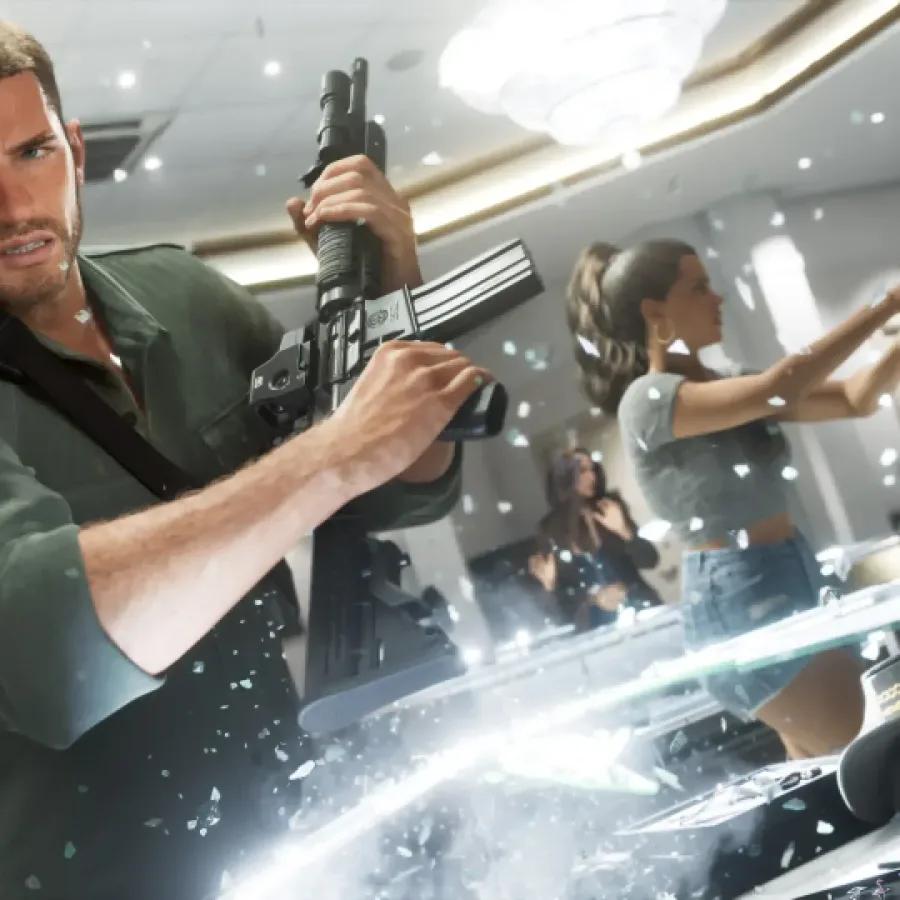
Grand Theft Auto 6 may be built around crime, fast cars, and the freedom to cause chaos, but many players are apparently spending their earliest hours in Leonida doing something very different: behaving themselves.
Reports from across the player community point to an unexpectedly cautious opening to Rockstar's latest open-world crime game. Rather than immediately testing every weapon, grabbing the nearest parked car, and launching into an enormous chase, players say they are keeping their own vehicles, obeying traffic signals, avoiding trouble with civilians, and thinking carefully about whether a minor theft is worth the consequences.
The reason is GTA 6's revamped wanted system. Police are said to be quicker to take notice, considerably more dangerous once a confrontation starts, and far more persistent after the player has initially escaped. The result is a version of Grand Theft Auto where a spontaneous crime can create problems that linger long after the sirens have faded.
Embedded X/Twitter post
Embedded X/Twitter post
Crime has consequences in Leonida
For decades, one of the series' most recognizable pleasures has been its sandbox mayhem. Players could choose to follow missions and explore at their own pace, but they could also seize a vehicle, pick a fight, provoke law enforcement, and see how long they could last. Escaping the police was often a frantic but familiar loop: create enough distance, find a quiet spot, and wait for the heat to disappear.
For useful background on this topic, read Periphery Turns Zelda: Ocarina of Time Into a Live Metal Solo During Tour Finale.
GTA 6 appears to demand more from anyone trying to get away. Escaping the immediate pursuit is only the first part of the process. Police may lose sight of a suspect at the scene, but they remain alert in the surrounding area. Players are encouraged to leave the area, swap vehicles, alter their look with a disguise or changed clothing, and avoid remaining around any companion connected to the offence.
That makes the aftermath of a crime feel more involved than simply waiting out a meter. A player who steals a car or starts a fight may be able to break line of sight, but they still need to consider whether their car, clothing, weapon, or location will make them easier to identify. Even returning home may not be an easy reset if the neighborhood remains under scrutiny.
The system also reportedly treats openly carrying a weapon as a serious risk. Walking around with a gun in plain view can draw unwanted police attention, meaning players cannot necessarily move through the world armed to the teeth without inviting a response. It is a small change with broad implications for how players travel, explore, and prepare for missions.
Players are choosing caution over chaos
Reactions shared on X suggest this pressure is already altering player habits in ways that would have seemed unusual in an older Grand Theft Auto release. One player said they had reached two hours of play without committing any crime outside missions, describing the new approach to law enforcement as intimidating. Another said they were genuinely nervous about trying to take a random car.
That hesitation extends beyond major offences. One player described entering a private backyard, being threatened with a call to the police, and immediately fleeing into the water. Another said they had been using their own car and generally minding their business because police encounters were so punishing.
There are also stories of players stopping at red lights and using indicators while driving. In another example, a player was frustrated by the cost of a taxi ride to Jason's house, only to realize after a friend asked why they did not steal a vehicle that the thought had not even occurred to them. For a franchise whose title itself evokes vehicle theft, that is a remarkable shift in instinct.
These anecdotes do not mean GTA 6 has stopped being a game where players can cause trouble. Instead, they show how a stricter response can change the calculation. When the repercussions are substantial, even players who normally embrace open-world disorder may decide that a taxi fare, a long walk, or a slower route through traffic is the safer choice.
Small incidents can become bigger problems
Part of the tension comes from how easily a player can allegedly trigger police attention. Law enforcement is not only a response to the most obvious crimes. Players have said officers may become hostile when someone films an arrest in progress, turning curiosity about a street-level event into a potentially dangerous situation.
That kind of interaction makes the world feel less mechanically predictable. In past games, players could often assume precisely which actions would raise a wanted level and which would be ignored. If policing is more reactive to behavior around active incidents, players need to read a situation before stepping too close. The game's cities and neighborhoods become places where attention itself can carry risk.
One player's account captures the practical effect particularly well: they said they could not return home because they were wanted in their own neighborhood and lacked the money to change clothes. Whether planned or improvised, this is the kind of emergent problem a more persistent search system can create. A low-level offence does not have to become a spectacular chase to disrupt a player's plans; it can complicate travel, money management, wardrobe choices, and access to familiar locations.
That pressure may also make successful escapes more satisfying. A clean getaway is no longer only about high-speed driving. It can involve knowing the local streets, abandoning a recognizable vehicle, avoiding the places officers are watching, and blending back into civilian life. The player is not simply outrunning police cars; they are managing suspicion.
The return of six stars raises the stakes
GTA 6 also includes a six-star wanted level. Reaching it is described as extremely difficult, but players who manage it should expect something closer to a survival challenge than a standard chase sequence.
At six stars, the wanted level reportedly cannot decrease. There is no calm period to wait through and no straightforward route back to normal life. The objective becomes lasting as long as possible against an overwhelming response. That creates a sharp divide between the cautious, day-to-day behavior players are adopting during regular exploration and the deliberate decision to push the game to its absolute limit.
For players who miss the traditional Grand Theft Auto rampage, the highest wanted tier should still provide a place for that fantasy. But it is no longer presented as a temporary burst of spectacle that can be erased by driving around the block. The cost of escalation is designed to be real, and the game appears willing to sustain that pressure.
A different rhythm for an open-world crime game
The most interesting element of GTA 6's police system may be the rhythm it creates. The series has always balanced authored crime stories with unscripted player behavior, but a more enduring law-enforcement response changes the pace between those moments. Players may spend longer evaluating their environment, protecting their current vehicle, and keeping a low profile while moving between missions.
That can make the eventual decision to break the law feel more meaningful. Stealing a car is no longer necessarily the default way to travel. Carrying a weapon is no longer just standard preparation. Starting a confrontation may carry consequences that continue into later activities. In a world built to encourage freedom, GTA 6's police seem to be giving restraint a new kind of value.
Of course, players will continue to learn the boundaries of the system, discover escape strategies, and eventually find ways to exploit or outsmart it. That process is part of the appeal of any Grand Theft Auto release. For now, though, the early community mood suggests Leonida's police have succeeded at something unusual: making a sizeable number of players voluntarily act like responsible citizens.
At least until they decide to see whether they can survive six stars.
Community
Discussion
Start the conversation.
No comments have been posted yet.