

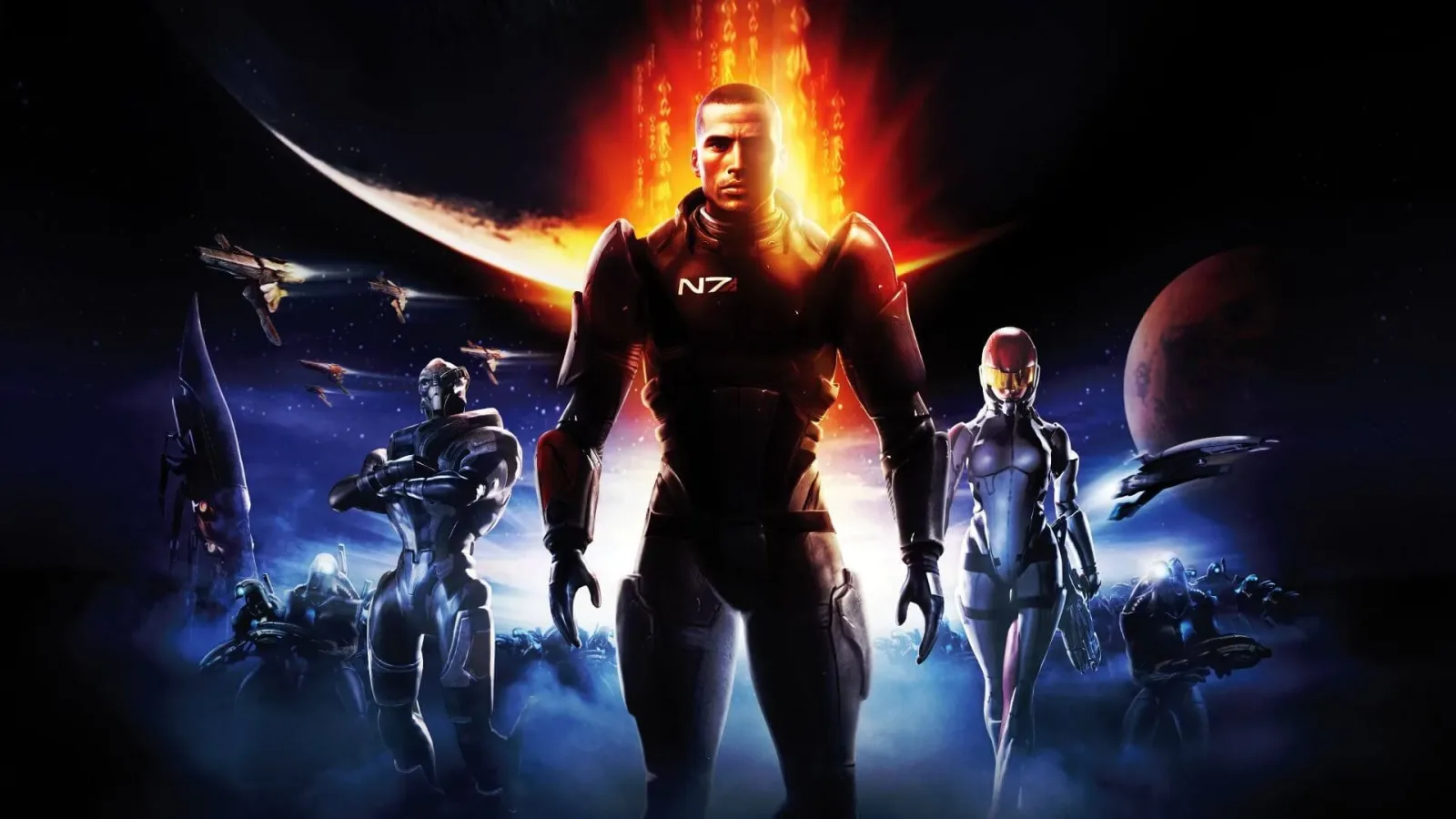
The original Mass Effect is remembered as one of the defining role-playing games of its era: a space opera that combined squad-based combat, branching dialogue, an expansive galaxy, and a cinematic presentation that helped shape the direction of big-budget games for years afterward. But the production behind that landmark release was, by one former BioWare developer's account, every bit as intense as its final scale suggested.
Armando Troisi, who worked as a cinematic designer on Mass Effect, has reflected on the demanding conditions and high-risk decisions that accompanied the game's development. In a conversation with FRVR, Troisi described a team facing a stack of difficult problems at once: a new engine, a new universe, a new console generation, and an attempt to make an RPG feel like an interactive film.
That ambition came with a punishing workload. Troisi recalled a period of crunch in which developers worked on a schedule of 21 consecutive days followed by a single day off as the team tried to bring the project across the finish line. He remains proud of what the developers made, but his account is also a pointed reminder that celebrated games can arrive through unsustainable working practices.
Impossible Targets and a "Troublemaker in Chief"
Troisi spoke warmly about Mass Effect director Casey Hudson's drive to pursue goals that seemed unattainable. Hudson would set daunting objectives for the team, Troisi said, with an attitude that effectively treated the challenge as something the developers simply needed to solve. Within BioWare, Troisi said Hudson had earned the tongue-in-cheek label of "troublemaker in chief," reflecting a habit of pressing the team toward unusually ambitious work.
For useful background on this topic, read The AmiGoonies Brings the 1986 MSX Classic to Commodore Amiga.
That mindset suited a project such as Mass Effect. BioWare was not merely building another dialogue-heavy RPG. The studio wanted to create a galaxy-spanning story with film-inspired camera work, dramatic character performances, player choice, and a sense of scale that could hold together across long play sessions.
In retrospect, it is easy to take some of those elements for granted. Cinematic dialogue systems, companion-focused storytelling, wheel-based conversation choices, and camera framing designed to evoke television and film became familiar features in blockbuster games. At the time, though, combining them with a large 3D RPG was a much more difficult proposition.
Troisi characterized the game as something that, in a practical sense, seemed like it should not have been possible to make. The production was dealing with what he called a "triple threat": new technology, a new intellectual property, and the transition to new console hardware. Any one of those factors could make a project difficult. All of them arriving together greatly raised the stakes.
Learning From Film While Reworking the Technology
The cinematic team's process reportedly involved both artistic study and technical improvisation. Troisi said developers were effectively modifying and pushing the game engine in attempts to get the desired scenes working. The team was not working from a settled template for how a cinematic RPG should look or function; it was attempting to establish that language during production.
Film served as a reference point. Troisi recalled that the team would play The Good, the Bad and the Ugly in the background and study its cinematography. They would examine why a shot worked and consider ways to reproduce comparable visual storytelling in an interactive setting.
That detail helps explain why Mass Effect's presentation stood apart from many RPGs of its generation. Its conversations often used close-ups, over-the-shoulder angles, reaction shots, and shifting camera positions designed to convey tension or emotion. The approach was not simply decorative. In a game built around player decisions, the cinematic language had to support changing dialogue paths and character relationships while still preserving a consistent dramatic tone.
Traditional film has precise control over every cut and performance. A role-playing game has to account for player-created protagonists, equipment changes, alternate decisions, optional quests, different companion combinations, and countless possible scene states. Achieving a film-like rhythm under those conditions requires tools, systems, and production planning that can handle variation without making every exchange feel mechanical.
Mass Effect's team was trying to solve those issues while also contending with technical limits. Troisi said the game pushed the boundaries of real-time rendering. That push was central to its identity: BioWare wanted players to feel they were participating in a science-fiction epic rather than simply navigating menus between isolated conversations and missions.
Console Problems Continued Until Late in Production
The technical pressure was especially pronounced on console. Although the first Mass Effect was initially an Xbox 360 console exclusive for roughly six months, Troisi said the game was not functioning properly on console until very late in development.
That revelation gives additional context to the game's launch-era technical reputation. Mass Effect was widely praised for its world-building, characters, choices, and cinematic aspirations, but players also encountered bugs, lengthy loading moments, uneven performance, animation issues, and other rough edges. Troisi connected the late console progress to the game releasing in what he described as a glitchy state.
The problem was not just about getting visual assets onto a console. A large RPG must manage a substantial amount of data, including environments, dialogue, music, combat encounters, textures, character models, mission scripting, and player progression. Streaming that material reliably while maintaining an immersive pace is a major engineering challenge. For a team working on unfamiliar hardware and a fresh engine, it could become a fundamental production risk.
There is an important distinction between explaining why a game shipped with problems and excusing those problems. Troisi's recollection does not erase the frustrations that players experienced. It does, however, show the degree of technical strain behind a game that was trying to reach beyond established expectations of its time.
Crunch Was Not a Small Footnote
The most sobering part of Troisi's account is the schedule he described. Working 21 days before receiving one day away from the project goes far beyond a brief burst of late-night work before a milestone. It suggests a prolonged and extreme crunch period, one in which recovery time was minimal.
Crunch has long been a major issue in the games industry, particularly on large productions with rigid deadlines, uncertain technical foundations, or changing creative demands. Employees may feel personal pride in a project and a genuine desire to see it succeed, but that pride can exist alongside exhaustion, burnout, strained relationships, and health consequences.
Mass Effect's legacy makes the tension especially visible. The game was a creative success and became the beginning of one of gaming's most recognizable science-fiction series. Troisi called the experience extremely difficult, yet said he believed the final result made the effort worthwhile. That feeling is understandable for someone who helped deliver an influential work. Still, the story raises a larger question for the industry: whether a great result should ever require a schedule like the one he recalls.
Modern game development conversations increasingly recognize that artistic accomplishment and humane production practices should not be treated as opposing goals. Ambition is valuable, but planning, staffing, leadership, realistic scope, and the willingness to delay or reduce features can be equally important. A studio should not need months of extreme overtime to prove its commitment to a game.
An Interactive Film That Changed Expectations
For Troisi, Mass Effect's defining achievement was the scale of its ambition. He viewed it as more than an interactive narrative, describing the goal as an interactive film wrapped around a strong story and a rich fantasy setting. That is a concise way of capturing what made the game resonate.
Players were not merely watching Commander Shepard's journey. They were choosing responses, deciding whom to trust, shaping relationships, assembling a squad, and making decisions with consequences that could echo across the broader series. The cinematic framing gave those choices an extra sense of weight, even when the technology did not always fully match the production's aspirations.
Its influence can be seen in the years that followed. Character-driven RPGs continued to invest heavily in performance capture, directed camera work, companion arcs, moral decisions, and dialogue systems designed to make the player feel present inside a story rather than outside it. Not every game followed Mass Effect's exact model, but its success demonstrated that there was a large audience for that kind of authored, cinematic role-playing experience.
Troisi's memories ultimately present Mass Effect as both a triumph and a cautionary production story. Its developers aimed for something that had not been widely achieved in that form before, and they succeeded in creating a game that remains significant. Yet the extreme crunch he describes should be recognized as part of the cost paid by the people making it, not romanticized as a necessary ingredient of great art.
Mass Effect endures because of its memorable characters, its sense of discovery, and its willingness to make player choice feel dramatic and personal. The team's technical experimentation and cinematic study helped build that identity. But as the industry continues to pursue bigger and more elaborate worlds, Troisi's account is also a reminder that the next leap forward should not depend on asking development teams to sacrifice nearly every day of their lives to achieve it.
Community
Discussion
Start the conversation.
No comments have been posted yet.