

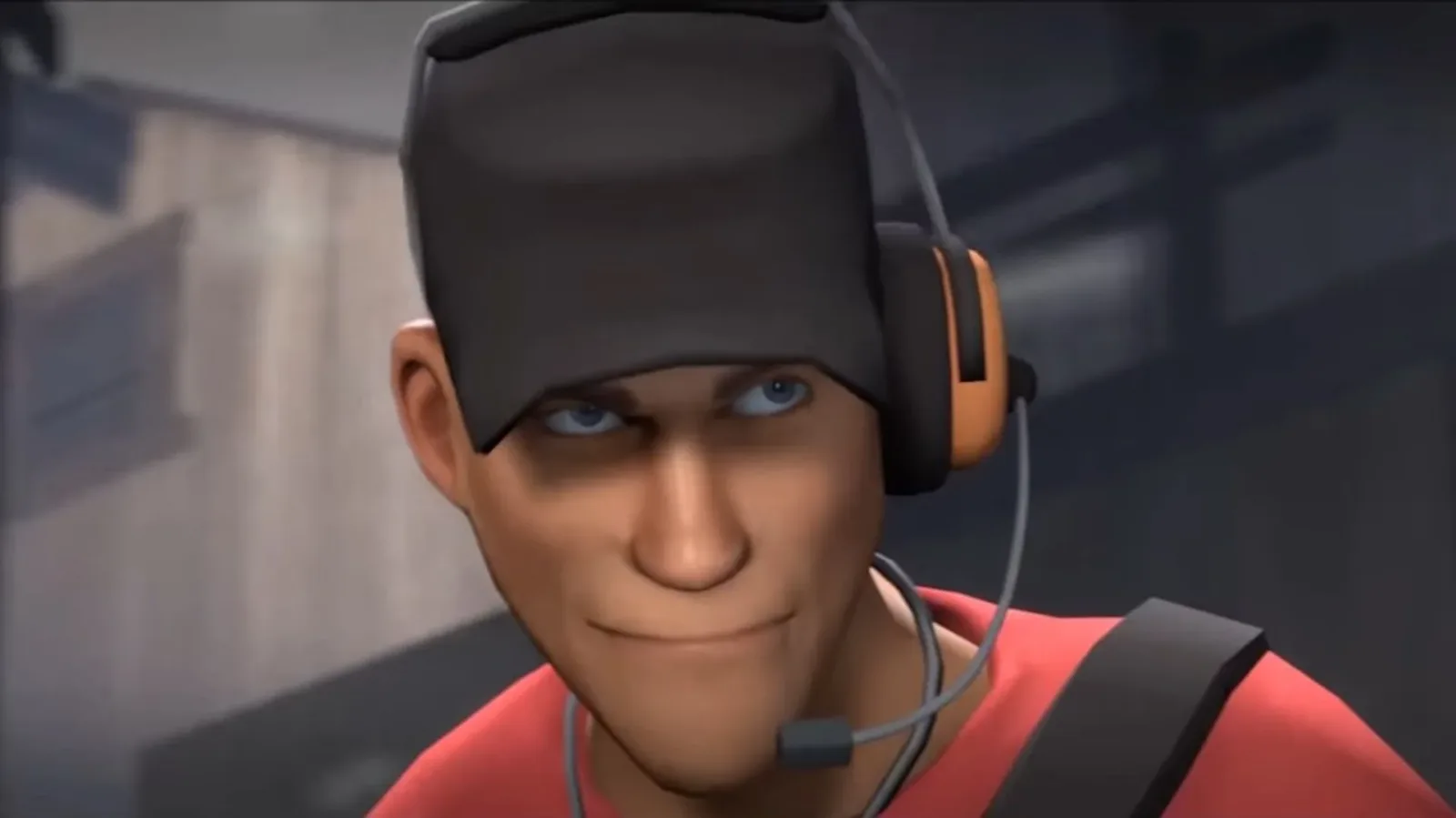
For years, players of Counter-Strike and Team Fortress 2 have debated Valve's unusual approach to supporting two of PC gaming's most enduring multiplayer shooters. Both games have built enormous communities, cultural staying power, and thriving economies around their cosmetics and in-game items. Yet their updates have often looked modest beside the giant seasons, battle passes, character releases, map overhauls, and feature-packed roadmaps seen elsewhere in the live-service space.
Former Valve writer Chet Faliszek says that sense of surprise was not limited to fans looking in from the outside. Recalling his time at the company, Faliszek said developers themselves could be struck by how positive the response to relatively small additions could be, especially when compared with the scale of work happening on other Valve projects.
Faliszek worked at Valve from 2004 until 2017. During that period, he contributed to franchises including Half-Life, Portal, Team Fortress, Counter-Strike, and Left 4 Dead, where he was co-project lead. His perspective therefore comes from more than a decade spent inside the studio during an era that helped define Valve's reputation for influential single-player releases, experimental multiplayer games, community-created content, and occasional long gaps between major announcements.
Small updates, enormous audiences
Speaking in response to a question about the limited size of some updates for Counter-Strike and Team Fortress 2, Faliszek described an internal feeling that the teams were fortunate that players remained receptive. He stressed that this was not a matter of deliberately trying to mislead or shortchange the audience. Instead, he characterized it as an acknowledgement that other game teams could have vast groups of people producing a huge assortment of features, while a Valve shooter might receive something as comparatively simple as a handful of cosmetic items and still generate considerable enthusiasm.
For useful background on this topic, read Final Fantasy 7 Revelation Targets Around 200GB as Trilogy Finale Nears.
His recollection points to an important distinction in how players judge support for a game. A smaller patch is not automatically unwelcome. For a long-running competitive game, a balance adjustment, new cosmetic collection, operation-themed event, community map, or technical fix can be meaningful because the core activity is already familiar and deeply established. Players may not need a full reinvention every few months if the game's fundamentals continue to sustain the community.
That does not mean the desire for more substantial support disappears. Counter-Strike and Team Fortress 2 fans have historically been outspoken when they feel their games need stronger communication, more consistent anti-cheat efforts, bigger content drops, or faster responses to persistent issues. The contrast between those concerns and the enthusiasm for small additions is part of what makes Faliszek's comments notable. A committed audience can celebrate a limited update while still wanting a clearer long-term plan.
A snapshot of Valve before 2017
There is a major caveat to keep in mind: Faliszek left Valve in 2017. His remarks describe his experience during his tenure, not necessarily the current structure, staffing, priorities, or decision-making processes at the company. Nine years is a long time in game development, particularly for a studio whose projects, tools, hardware ambitions, and multiplayer strategy have shifted considerably over time.
Most importantly, Counter-Strike 2 did not launch until 2023. As a result, the Counter-Strike period Faliszek is discussing would have been centered on Counter-Strike: Global Offensive, rather than the current version of the game. While Counter-Strike 2 carries forward the competitive legacy and much of the audience associated with Global Offensive, its technology, update history, production needs, and internal circumstances should not simply be assumed to mirror those of the earlier title.
Team Fortress 2 also has its own distinct history. Released in 2007, it became a defining example of a class-based shooter whose expressive art direction, instantly recognizable characters, and unusual sense of humor supported a remarkably long lifespan. Its content cadence has changed dramatically across the years. Early post-launch periods included major class updates and headline events, while later years often brought a different rhythm, with community contributions and seasonal additions playing a more visible role in keeping the game active.
Faliszek's recollection should therefore be read as a window into Valve's past rather than an explanation for every present-day update. It nevertheless offers a useful reminder that even developers can be surprised by the relationship between the amount of content shipped and the reaction it receives.
Why Valve's games create different expectations
Valve has long occupied an unusual position in PC gaming. The company is not only a developer but also the operator of Steam, a platform that has shaped how games are sold, updated, distributed, and discovered on PC. That broader role has often led fans to speculate about the company's development resources and why certain franchises receive attention while others remain quiet.
From the player perspective, the question is easy to understand. If a game has millions of players, a flourishing item market, and years of demonstrated demand, why would a major update not arrive on the kind of predictable schedule commonly associated with modern live-service games? But output is not determined by audience size alone. Development priorities can depend on technical work, experimental projects, team interest, internal tools, maintenance demands, quality standards, and the broader goals of a company.
Valve's reputation has also been built partly on unpredictability. It can spend years without extending a beloved series, then return with a project that substantially changes expectations. That history encourages fans to examine every patch and every absence of a patch for signs of larger plans. In Counter-Strike and Team Fortress 2, however, players are often responding to games that are already deeply woven into the fabric of PC gaming. Their appeal is not dependent solely on a constant stream of dramatic expansion-style releases.
- Counter-Strike thrives on competitive consistency, tactical depth, and an ecosystem shaped by maps, skins, esports, and player mastery.
- Team Fortress 2 endures through its class design, personality, modding and community culture, cosmetics, and highly replayable objective modes.
- Both games benefit from communities that attach value to incremental changes because those changes land in worlds players have spent years learning and sharing.
Player enthusiasm is not a blank check
The most revealing part of Faliszek's comments may be the mix of appreciation and disbelief behind them. Developers can be grateful that players welcome a small content drop without interpreting that welcome as proof that the community expects nothing more. In multiplayer games, every update arrives in a broader context. Players remember the patches that fixed longstanding problems, the events that created memorable moments, and the stretches when they felt ignored.
That is especially true for titles with the longevity of Counter-Strike and Team Fortress 2. Their audiences include newcomers, casual regulars, competitive veterans, collectors, creators, server operators, and people returning out of nostalgia. Those groups may all be pleased by a few new skins, but they do not necessarily share the same definition of meaningful support.
A cosmetic release can excite collectors and help refresh a game's visual culture. A balance patch can matter enormously to dedicated competitors. Security and anti-cheat improvements may be the central concern for players whose matches are affected by bad actors. New maps can change the routine for everyone. Larger events can bring old friends back together. The size of an update is only one way to measure its importance.
An unusually candid look at a famous studio
Faliszek has become known for frank reflections on his years at Valve, and this anecdote fits into the continuing fascination around the studio's internal culture. Fans rarely get a complete picture of how a major developer allocates people and time, particularly when that developer is associated with so many landmark games. Even a brief memory about modest updates can prompt bigger questions about team scale, project ownership, and what success looks like inside an organization.
Still, the comments do not offer a definitive blueprint for Valve's current operations. They instead capture an attitude from a particular period: a team recognizing that its players were willing to find excitement in additions that might look small next to the output of studios built around frequent, highly structured live-service releases.
For Counter-Strike and Team Fortress 2 fans, that may sound both validating and frustrating. It validates the notion that the communities' enthusiasm has always been exceptional. At the same time, it may reinforce the feeling that loyalty can lead players to accept less frequent or less expansive additions than they would from another developer. The tension has existed around Valve games for years, and it is unlikely to disappear soon.
What remains clear is that both series have outlived many of their contemporaries. Their communities have repeatedly shown that a small update can still become a major conversation, whether it adds cosmetics, changes competitive play, addresses technical concerns, or simply signals that Valve has not forgotten a game people still care about. Faliszek's memories suggest that, at least during his years at the studio, Valve's developers understood just how remarkable that continued player investment was.
Community
Discussion
Start the conversation.
No comments have been posted yet.