

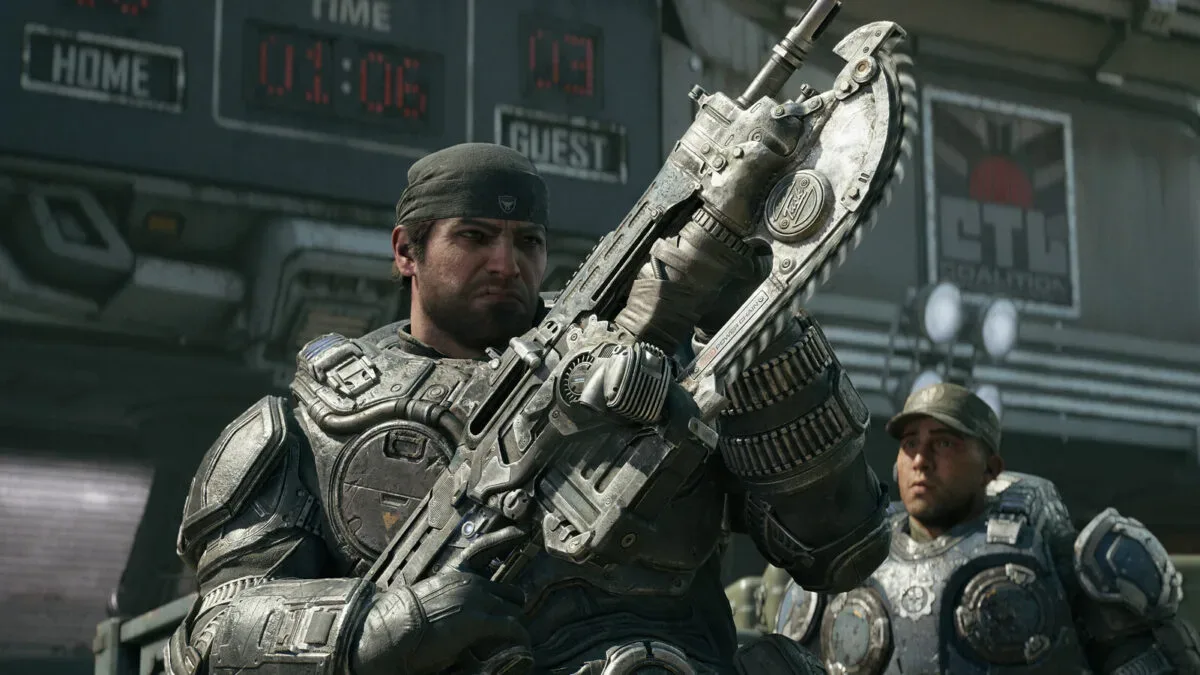
Gears of War: E-Day is reportedly off to a complicated commercial start--at least when viewed through the narrow lens of estimated premium copies sold. The newest entry from The Coalition has earned some of the strongest reviews the series has seen in years, but estimates from market-data firm Alinea Analytics suggest that critical success has not translated cleanly into traditional full-game purchases.
The firm's figures, which have not been confirmed by Microsoft, point to a much larger audience playing through Xbox Game Pass than buying the shooter outright. That distinction is increasingly important for Xbox, where first-party releases arrive on the subscription service at launch and where a game's apparent popularity can no longer be measured simply by copies sold.
One early estimate framed the game at roughly 320,000 copies sold during its first week. A more detailed breakdown subsequently shared by Alinea Analytics analyst Rhys Elliott put the figure at about 230,000 premium sales at that point, including approximately 168,000 copies on Steam and 62,000 across Xbox console and PC storefronts. The differing totals underline the uncertainty around third-party estimates and the difficulty of drawing definitive conclusions without official sales data.
Embedded X/Twitter post
What appears less disputed in the analysis is that E-Day has reached a substantial number of players through Game Pass. The estimate places Game Pass usage at around 1.7 million players, far above the projected number of customers who purchased the full game. For a modern Xbox exclusive, that is both a sign of broad access and a prompt for difficult questions about revenue, subscriptions, and the value of day-one launches.
For useful background on this topic, read Dungeons & Dragons Heads to a Galaxy Far, Far Away With Star Wars: Tyro Squadron.
A sales story shaped by subscriptions
For decades, a blockbuster game's performance was most easily understood through launch sales: how many people bought it, at what price, and how quickly. Game Pass has disrupted that familiar equation. A subscriber can play a new Xbox-published title without buying the standard edition, meaning player counts may rise even while conventional unit sales look smaller than they would under a retail-only model.
That makes Gears of War: E-Day a particularly notable test case. Gears remains one of Xbox's defining shooter franchises, and the game's favorable reception would normally be expected to encourage a strong launch at the usual premium price. Instead, the available estimates indicate that most of its early audience chose the subscription route.
That is not automatically evidence of failure. Game Pass customers pay recurring fees, and a major exclusive can help retain existing members even if it does not trigger an obvious spike in new subscriptions. It can also drive spending through expansions, cosmetics, upgrades, and future games. Yet those benefits are harder for outsiders to quantify than a sale at a listed price.
Microsoft has not publicly corroborated the reported sales, player totals, revenue figures, or the suggested number of new Game Pass users associated with E-Day. As a result, the estimates should be treated as an analytical snapshot rather than a final accounting of the game's business performance.
The Premium Edition is a key part of the equation
A major element of the estimate involves the game's Premium Edition upgrade. Alinea Analytics suggested that approximately 722,000 Game Pass players paid $30 for that upgrade, which granted early access ahead of the wider launch. That option has become a familiar Xbox strategy: subscribers receive the standard game through Game Pass, while dedicated fans can spend extra to play several days sooner and receive additional content or bonuses.
In this case, the upgrade is estimated to have contributed heavily to Xbox-side revenue. The analysis placed total revenue at roughly $37 million at the time, with about $26 million attributed to Xbox. Elliott argued that the upgrade spending helped explain why Xbox accounted for nearly three-quarters of revenue despite Steam representing the vast majority of estimated outright copies sold.
The arrangement produces an unusual customer hierarchy. Some of the most committed fans--people willing to pay for early access--may pay only the upgrade fee while retaining access through an existing Game Pass subscription. Meanwhile, buyers who purchase the full game on Steam or outside the subscription ecosystem pay considerably more upfront.
Critics of the current model argue that this can reduce the amount collected from the audience most eager to play a new first-party release immediately. In a hypothetical world without day-one Game Pass, many players who chose a $30 early-access upgrade may instead have bought the full-priced version. Of course, that hypothetical also assumes they would have purchased at launch rather than waited for a sale, borrowed access through a friend or skipped the game altogether.
That uncertainty is at the heart of the debate. It is impossible to know precisely how many Game Pass players would have converted into $70 purchases if the game had not been included. Any assessment of "lost" premium revenue depends on assumptions about player behavior, subscription retention, the timing of purchases, and the cost of producing and marketing the game.
Why Game Pass player counts are not the entire answer
At first glance, 1.7 million Game Pass players sounds like a strong outcome. It gives Gears of War: E-Day a far larger reachable audience than its projected sales figure alone, and it may support multiplayer activity, online communities, streaming visibility, and long-term engagement. Those factors matter greatly for a series built around cooperative and competitive play.
But high engagement does not automatically settle the financial question. A subscription library spreads the value of one monthly payment across many games, and the financial return on any individual release is not visible to the public. Microsoft may have internal metrics covering playtime, reduced churn, upgrade purchases, new memberships, hardware spending, and player activity across its wider ecosystem. None of those are available in the estimates.
There is also the question of scale. The analysis argued that E-Day did not appear to generate a massive wave of subscription growth despite its quality and franchise recognition. If accurate, that would be more concerning than the raw copy-sales number, because a day-one release is often expected to provide a compelling reason to join or remain subscribed.
At the same time, the purpose of a flagship Game Pass launch may not be limited to acquisition. A high-profile game can help keep customers from cancelling, reinforce the perceived value of the service, and make Xbox hardware, PC storefronts, cloud features, and future add-on purchases more attractive. Those outcomes may be financially meaningful even if they cannot be seen in a public Steam chart or estimated unit-sales report.
A broader Xbox strategy remains under scrutiny
The conversation around Gears of War: E-Day arrives during continued scrutiny of Xbox's broader publishing strategy. Microsoft has spent years positioning Game Pass as a central pillar of its gaming business, while also bringing more titles to PC and, in selected cases, competing console platforms. The company is therefore balancing premium game sales, recurring subscriptions, player reach, and platform growth all at once.
That balancing act has become more urgent amid anxiety over the stability of game-development teams. The Coalition is one of several Xbox studios operating in an environment shaped by industry-wide layoffs, rising development costs, and pressure to demonstrate sustainable returns. A well-reviewed game that reaches millions of people may still face tough internal questions if its revenue model is viewed as insufficient.
Elliott's analysis suggested that a low-cost, ad-supported Game Pass option would not directly solve the issue of committed fans paying less to access a major new release. One possible alternative would be charging more for the Game Pass tiers that include day-one first-party games. Another would be limiting immediate access to higher-priced plans, or eventually removing day-one access for certain releases.
Microsoft has already indicated a shift in that direction for Call of Duty, announcing earlier in 2026 that the franchise would no longer be handled under the same day-one Game Pass approach. That decision has fueled speculation that Xbox may be reassessing the economics of putting every major first-party title into the service at launch.
What the estimates can--and cannot--tell us
The early picture for Gears of War: E-Day is not a simple verdict. The game appears to have been warmly received, has reportedly reached millions through Game Pass, and seems to have generated meaningful upgrade revenue. Yet the estimated premium-sales figures also illustrate how difficult it has become to judge a subscription-era release by traditional standards.
If the reported figures are broadly accurate, the game is a vivid example of Game Pass changing where revenue comes from rather than merely increasing or decreasing it. Steam may account for most full-game purchases, while Xbox's own ecosystem can generate most of the estimated revenue through subscriptions and paid early-access upgrades.
Until Microsoft shares official figures or more time passes, it will remain unclear whether Gears of War: E-Day is meeting the company's internal expectations. What is clear is that the game has become part of a larger debate: whether day-one subscriptions remain the best way to maximize the value of Xbox's biggest releases, or whether the model needs to evolve as premium development becomes more expensive.
Community
Discussion
Start the conversation.
No comments have been posted yet.