

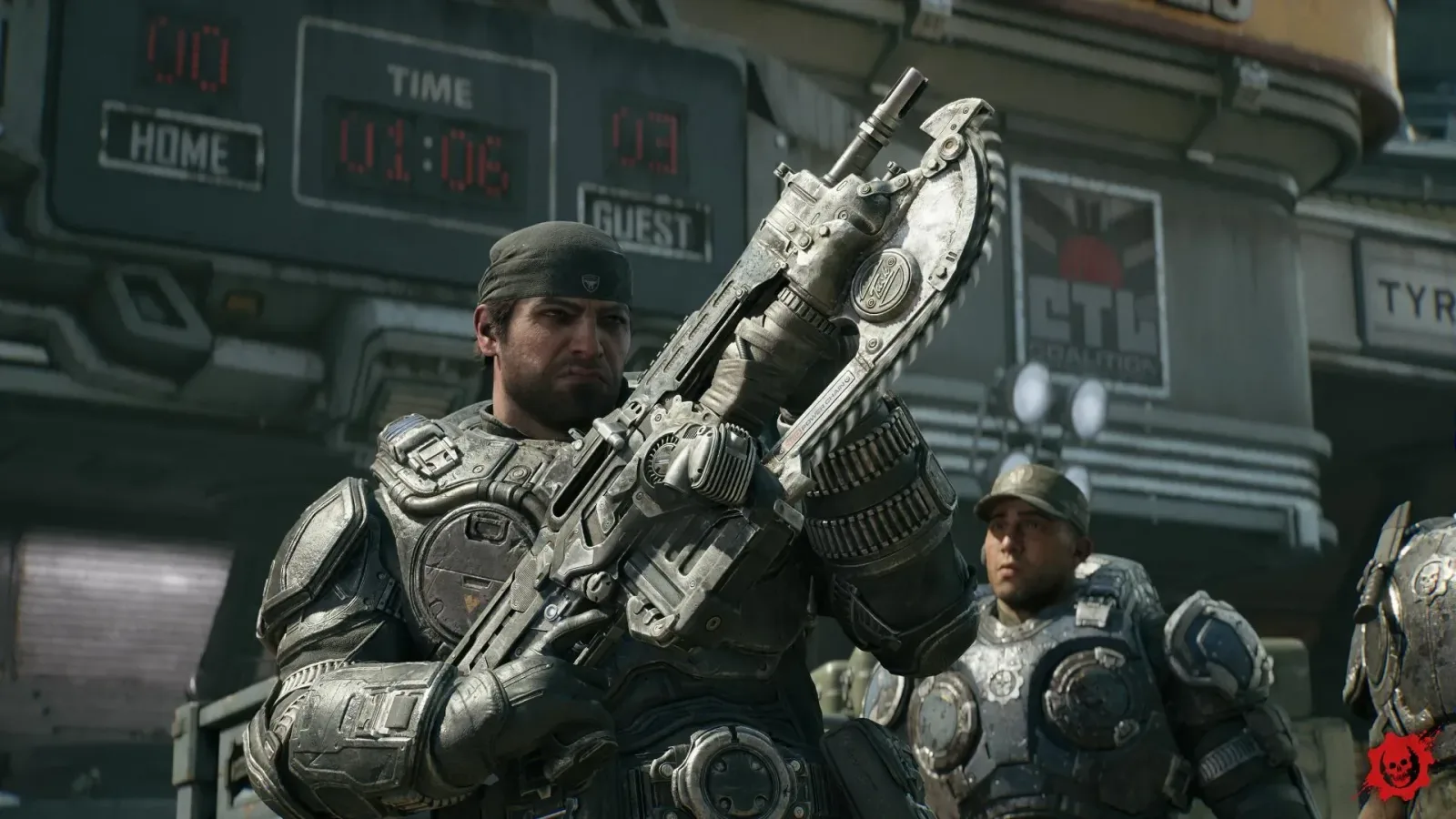
Gears of War: E-Day is a triumphant return for Xbox's defining cover-shooter series. Set at the beginning of humanity's war with the Locust Horde, it revisits a foundational event in Gears lore while resisting the temptation to simply recreate an Xbox 360-era memory. The result is a game that preserves the series' brutal, weighty combat identity but expands the ways players explore, build their loadouts, and approach the collapsing city around them. On Xbox Series X/S, it stands as a confident, frightening, and remarkably complete package.
Its greatest achievement may be how effectively it makes an already familiar historical event feel uncertain and overwhelming. Emergence Day is not portrayed as an occasion for uncomplicated heroics. It is a catastrophe unfolding faster than anyone can understand, turning a celebration of military service into a desperate struggle for survival. The campaign makes the Locusts terrifying again, and that renewed menace gives every firefight a purpose beyond the immediate satisfaction of landing a perfect active reload or revving a Lancer.
Verdict: A defining disaster brought to life
Gears of War: E-Day earns its 9.5/10 score by understanding both what the franchise needs to retain and what it needs to evolve. The fundamentals remain intact: chunky movement, desperate cover exchanges, gruesome weapons, formidable enemies, and a squad bound together under impossible pressure. Yet the campaign builds on those strengths with more inviting urban spaces, side objectives, character and weapon progression, and tactical tools that add flexibility to encounters without diluting Gears' forceful rhythm.
There are modest shortcomings. One important new squad member does not receive enough depth until late in the campaign, while social multiplayer matchmaking can result in encounters with opponents whose experience and class levels greatly exceed a newer player's. Those issues are real, but they do little to undermine a campaign and multiplayer offering with exceptional range, polish, and confidence.
For useful background on this topic, read Sonic Team Veterans Call Sonic Adventure the Series' Toughest Development Challenge.
Emergence Day as horror
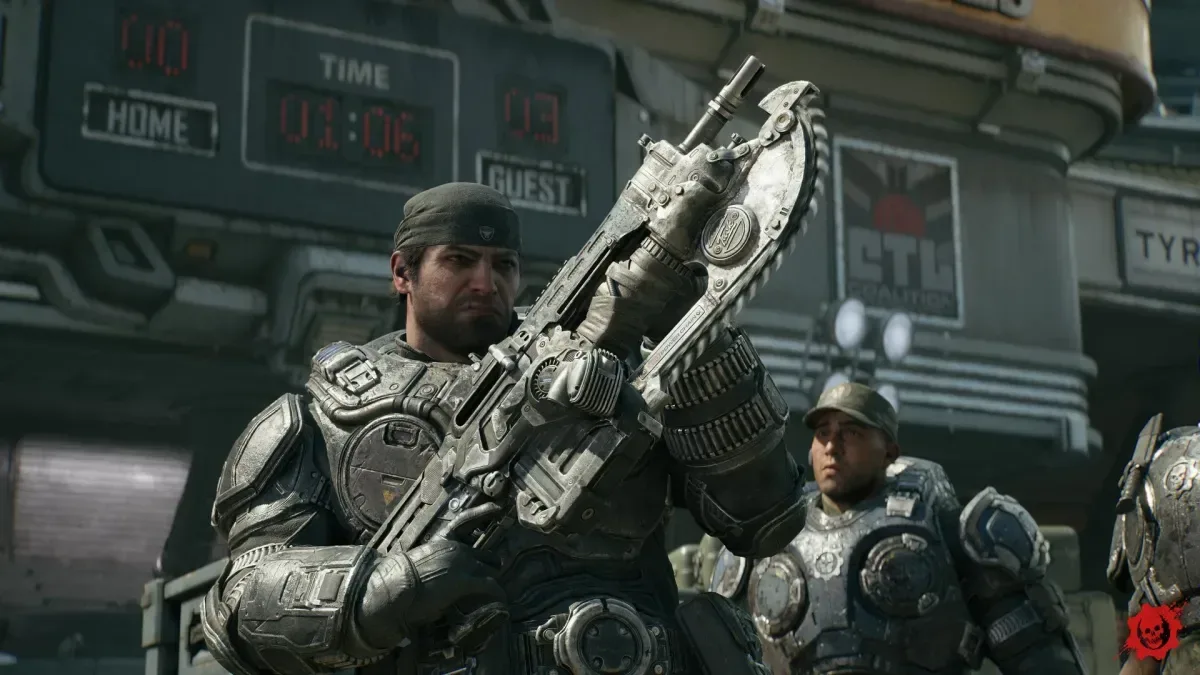
The story follows Marcus Fenix and Dominic Santiago as they arrive in the city of Kalona to be honored for their service in the recently concluded Pendulum Wars. Peace, however, lasts only briefly. A previously unknown force erupts from beneath the ground: the Locust Horde. Across three devastating days, Kalona becomes the center of a military and civilian disaster that humanity is fundamentally unprepared to confront.
The early tone is closer to horror than to a conventional military power fantasy. Monsters of every shape and size rise from the streets, civilians are caught in the violence, and organized forces are quickly overwhelmed by the scale and ferocity of the assault. The visual of a city falling apart in real time is central to E-Day's impact. Kalona is not simply a collection of levels to clear; it is a place whose destruction feels inevitable.
That inevitability creates a compelling contradiction. Marcus and Dom are heavily armed, enormously capable soldiers, and the player can tear through hostile forces with spectacular efficiency. Still, the broader situation never feels safely under control. Each victory occurs against the backdrop of failed defenses and increasingly desperate plans. No matter how many Locusts are defeated in the moment, Kalona's fate is sealed. That tension makes the invasion feel much larger than any single squad.
A strong squad, with one delayed payoff
Marcus and Dom are joined throughout the campaign by Mags and Lucas, whether the game is played solo or cooperatively. The returning leads bring emotional weight with them, particularly as Marcus and Dom reckon with the loss of Dom's brother Carlos. Their earlier-era versions still carry recognizable traits, but the setting gives their relationship a rawer context than a simple nostalgia exercise could provide.
Mags is an especially effective addition. A determined former soldier pulled reluctantly back into service the moment the Locusts emerge, she gives the group another powerful perspective on the crisis. Her presence feels useful in combat and meaningful in the narrative. Lucas, meanwhile, is framed as a rule-following newcomer with a habit of supplying obscure facts. He has an entertaining surface role, but his characterization is comparatively thin for much of the story.
A late-game thread gives Lucas more substance and ultimately helps him stand alongside the rest of the group. It is a successful payoff, though one that would have been even stronger if the game had begun developing him sooner. The campaign's emotional foundation remains solid nonetheless, with the team dynamic helping turn the citywide disaster into a personal struggle as well as a military one.
Combat that respects the past and moves forward
The heart of Gears of War: E-Day is an outstanding collection of firefights. Battlefields are carefully arranged to encourage the series' familiar dance between cover, aggression, flanking, and precise timing. Improved traversal and tactical abilities broaden the options available during those clashes, while the arsenal delivers the satisfying impact expected from Gears. A sniper round, a close-range shotgun blast, or a chainsaw charge all carry the necessary physical force.
Rather than relying on the mostly linear shooting galleries associated with earlier entries, or leaning fully into the broad open areas of Gears 5, E-Day uses Kalona's streets as dense spaces for discovery. Abandoned side roads, debris-filled alleys, and ruined shops contain collectibles, upgrades, and optional activities. These areas reward exploration without losing the campaign's sense of momentum or urgency.
Side missions can involve aiding survivors or locating hard cases containing weapon modifications. Those mods are a major reason combat feels so adaptable. Guns, armor, and tactical abilities can all be adjusted to support a preferred style. A Longshot modification that reloads after a headshot encourages accurate marksmanship, while a narrowed Incinerator shotgun spread trades some broad coverage for greater reach and damage. Armor perks can reward perfect reloads with extra damage or provide healing after close-range kills. Tactical abilities can heal allies or mark enemies for the squad.
This system does not replace Gears' fundamentals; it reinforces them. Players can shape a powerful build around their favorite weapons and habits, then take that loadout into the campaign's escalating confrontations. The sensation of becoming more capable is balanced by the ongoing impression that the Locust threat remains bigger than the squad can ever completely contain.
Multiplayer offers chaos and cooperation
The multiplayer suite gives E-Day considerable life beyond the campaign. Versus modes remain faithful to the franchise's fast, punishing competitive identity. Team Deathmatch and zone-control battles provide recognizable Gears conflict, while Crucible introduces a new power core-delivery objective that fits naturally into the game's high-pressure team combat.
The social playlists can currently produce uneven matchmaking. Matches may place lower-level players against opponents with substantially higher player or class levels, creating obvious disadvantages before a round is underway. That imbalance is a concern, though it may improve as the player population settles and ranked play becomes available.
Horde Siege is the more exciting long-term prospect. This evolution of Gears' cooperative defense formula draws heavily from extraction shooters. Squads move through Kalona's open streets to complete PvE objectives, with the option to pursue the primary goal and extract quickly or take on additional tasks to gain upgrade points for their character class. Friendly squads can exist within the same session, allowing objectives and battles to intersect in ways that support emergent cooperative stories.
Some veterans may miss the elaborate planning and defensive structure of the series' most intricate wave-based Horde modes. A standard 10-wave Horde option is present, providing a more familiar alternative. Even so, Horde Siege is an ambitious interpretation of what cooperative Gears can be: mobile, unpredictable, and driven by the shared decision of whether to leave safely or press deeper into danger.
Who should play Gears of War: E-Day?
Longtime Gears fans will find a respectful return to Marcus and Dom's formative conflict, but E-Day is not dependent on nostalgia alone. It is also a strong choice for players seeking a polished third-person shooter with a campaign that emphasizes horror, catastrophe, and squad relationships alongside explosive combat. Cooperative players have substantial reasons to stay after the credits, particularly through Horde Siege and the broader multiplayer selection.
Those who want only a strictly traditional Horde experience may prefer the standard mode, and competitive players should be prepared for some early matchmaking irregularity. Otherwise, E-Day is an exceptionally easy recommendation for Xbox Series X/S players who value aggressive tactical action and a world that makes every battle feel consequential.
Final takeaway
Gears of War: E-Day proves that returning to the beginning can still be a major step forward. Kalona's fall delivers one of the franchise's most frightening and consequential stories, while the combat systems add customization and exploration that enhance rather than distract from Gears' defining strengths. With only a few narrative and matchmaking blemishes, this is a powerful resurgence for the series and one of its very best entries.
Community
Discussion
Start the conversation.
No comments have been posted yet.