

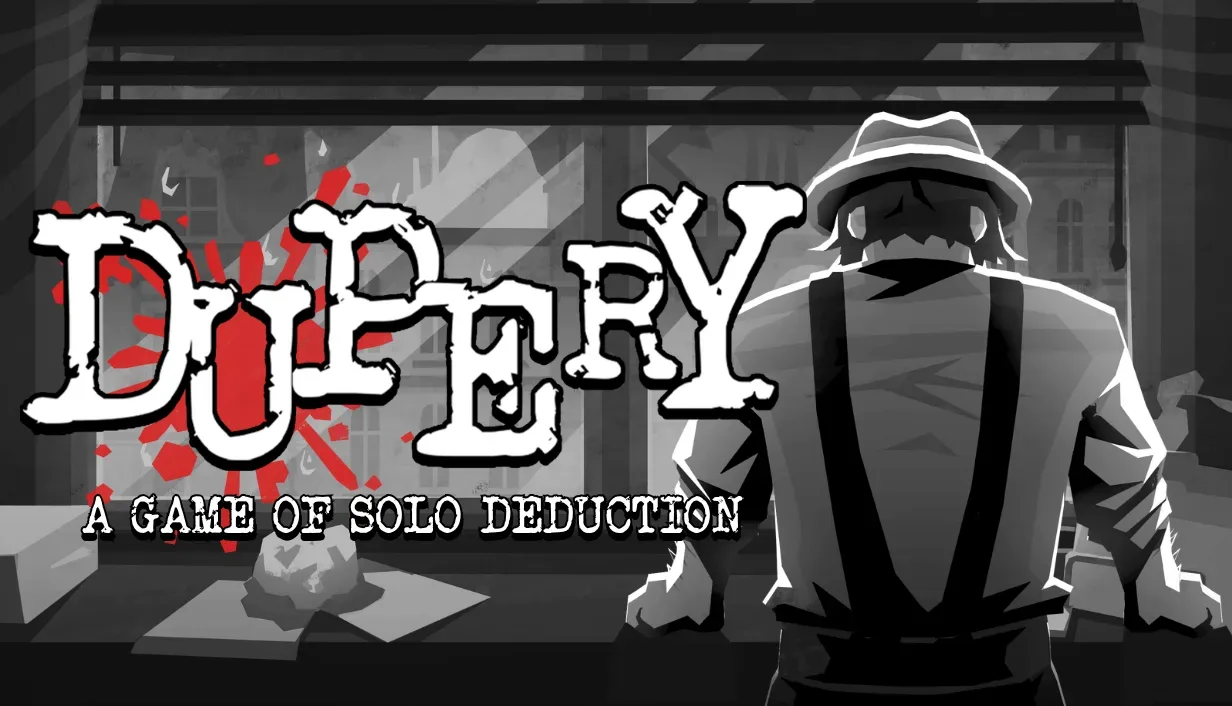
Dupery: A Game of Solo Deduction is scheduled to launch for PC through Steam on October 15, 2026. Developed by Gilded Rune Games and published by Yogscast Games, the title combines the suspicion-driven reasoning associated with social deduction games with roguelite progression and puzzle-solving, all built around a single-player detective format.
The Steam release will begin with a 20% launch discount. That promotion follows a community alternate-reality game completed by members of the game's Discord server. Players known as the Discord Detectives solved the clues in the ARG, unlocking the discount for the game's debut.
The premise places players in an atmospheric film noir mystery, where arriving at the right conclusion is only part of the job. Dupery is designed around examining a cast of possible suspects, sorting through information, mapping connections, and making arrests. Its central twist is that it draws inspiration from a genre usually focused on reading other human players, then adapts those tensions into a structured solo investigation.
A social deduction game without the group requirement
Traditional social deduction games often depend on conversation, deception, voting, and the uncertainty created by a room full of people. Dupery instead frames deduction as an individual detective exercise. Players will be tasked with identifying the roles and motives within each case, using evidence and logical connections to determine who is involved.
For useful background on this topic, read Torchlight: Infinite SS14 Tartarus Arrives October 15 With Prison Strategy and a New Youga Trait.
That approach could make the game appealing to players who enjoy the thought process behind hidden-role games but prefer to tackle mysteries alone. The format also gives Gilded Rune Games room to build detective work around repeatable runs rather than a fixed one-and-done campaign structure.
There are more than 175 handcrafted roles in Dupery. That breadth is intended to make each investigation more complex than simply finding a single obvious culprit. Roles can shape how characters fit into a case and how the player interprets available information, meaning the challenge is expected to come from understanding relationships, contradictions, and possibilities across a large pool of potential identities.
The game's design also emphasizes variety through its case generation. Investigations are procedurally generated, so players should not expect every run to follow the same arrangement of people, mechanics, and deductions. While the roles themselves are handcrafted, the changing combination of elements is meant to ensure that familiarity with the game's systems does not turn every new case into a routine solution.
For another perspective on this story, read Dupery: A Game of Solo Deduction Sets October 15 Steam Launch.
Cases, regions, and changing conditions
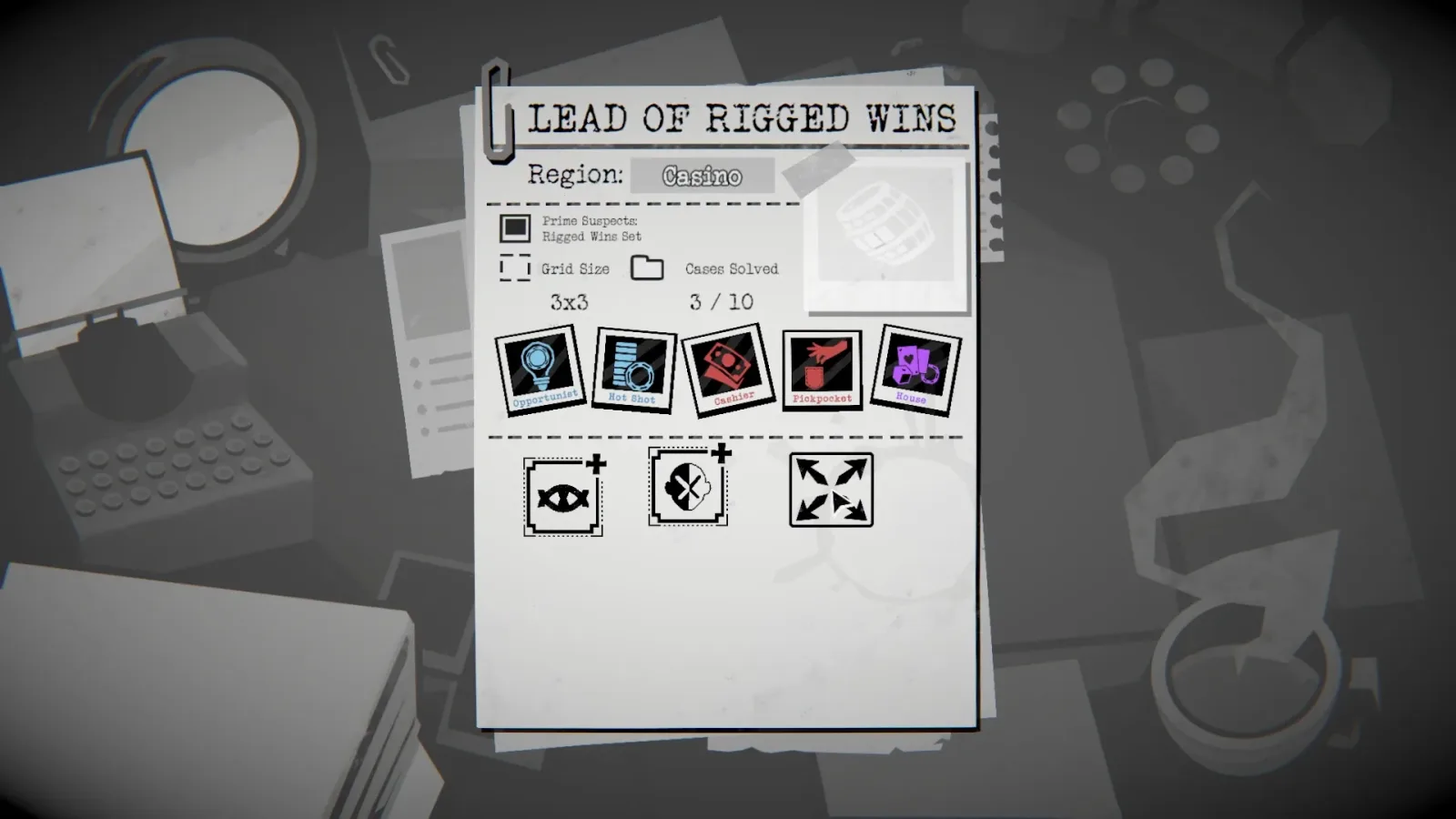
Dupery will include three regions, each with its own mechanics and roles. This suggests that progressing through the game will involve more than encountering a larger number of suspects. Different regions can alter the investigative context, requiring players to account for new rules and character types as they work through the mystery.
Between missions, players will be able to select from roles, quirks, and modifiers. Those choices add a roguelite layer to the detective framework. Instead of each mission existing in total isolation, a run can be shaped by decisions made before the next case begins. The available options may influence the kinds of complications a player is willing to take on, the tools they prioritize, or the way they approach uncertain information.
Roguelite structure is a natural fit for a deduction game when the underlying cases can change from run to run. It creates a loop where players learn the game's language over time: what various roles can mean, how particular mechanics interact, and when a pattern is genuinely convincing rather than merely plausible. With procedural cases, the goal is not simply to memorize answers, but to become more effective at building and testing theories.
The game also gives consequences to the player's judgment through a reputation meter. Arrests must be managed carefully, rather than treated as risk-free guesses. A detective who makes accusations too freely may damage their standing, adding pressure to commit only when the available reasoning is strong enough. That system should make uncertainty meaningful, particularly in cases where several explanations initially appear possible.
Building the case on a crime board
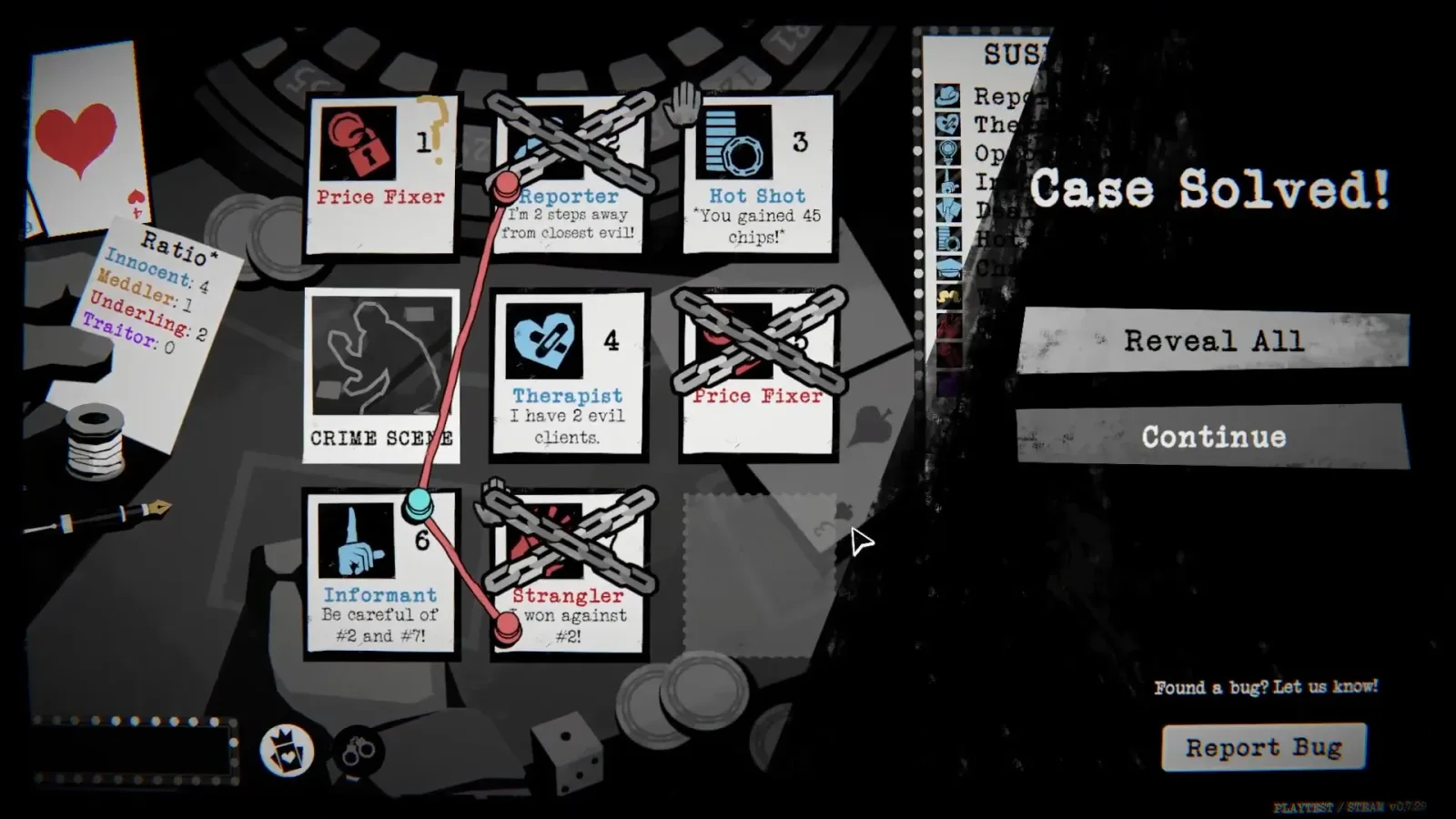
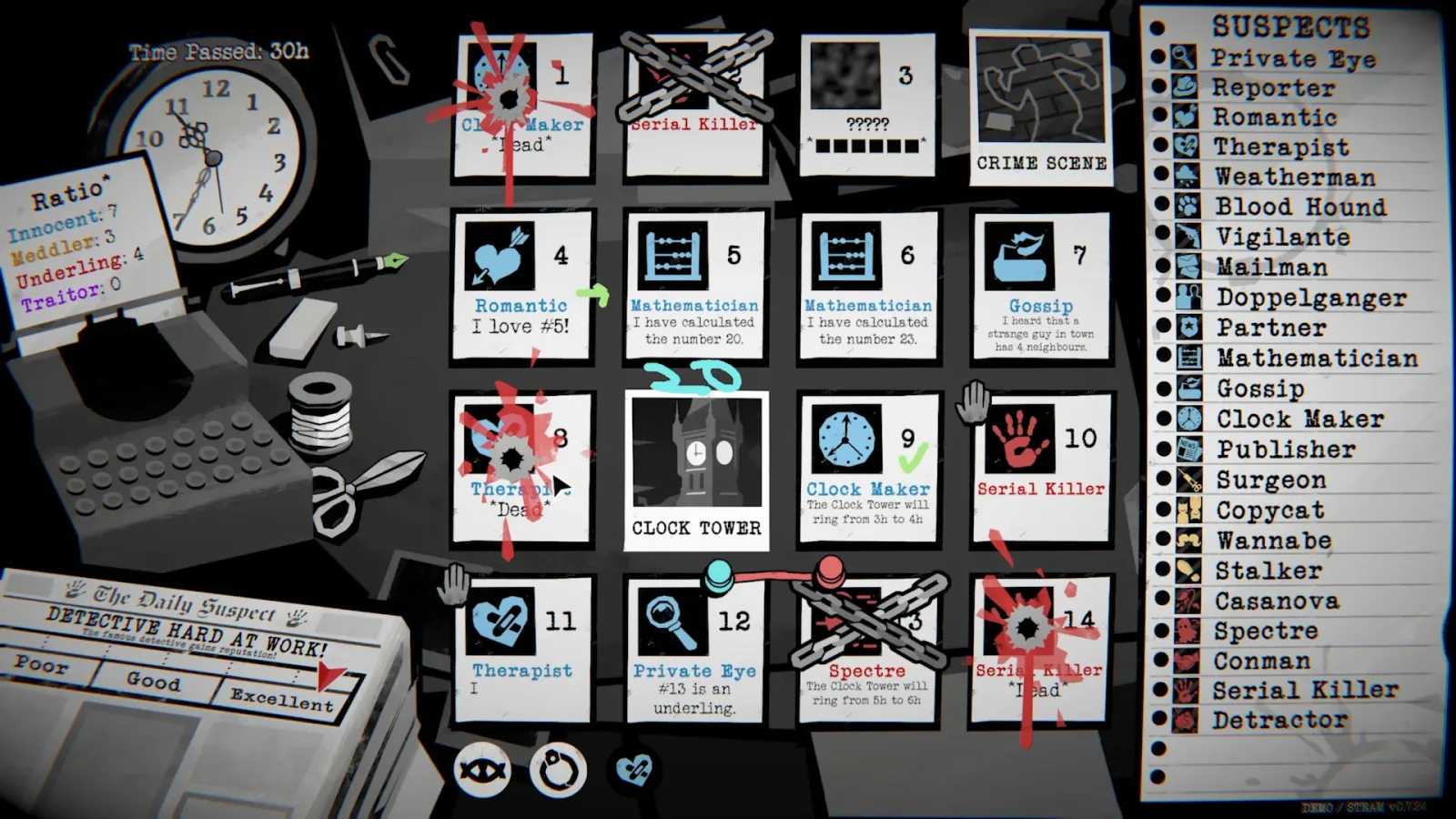
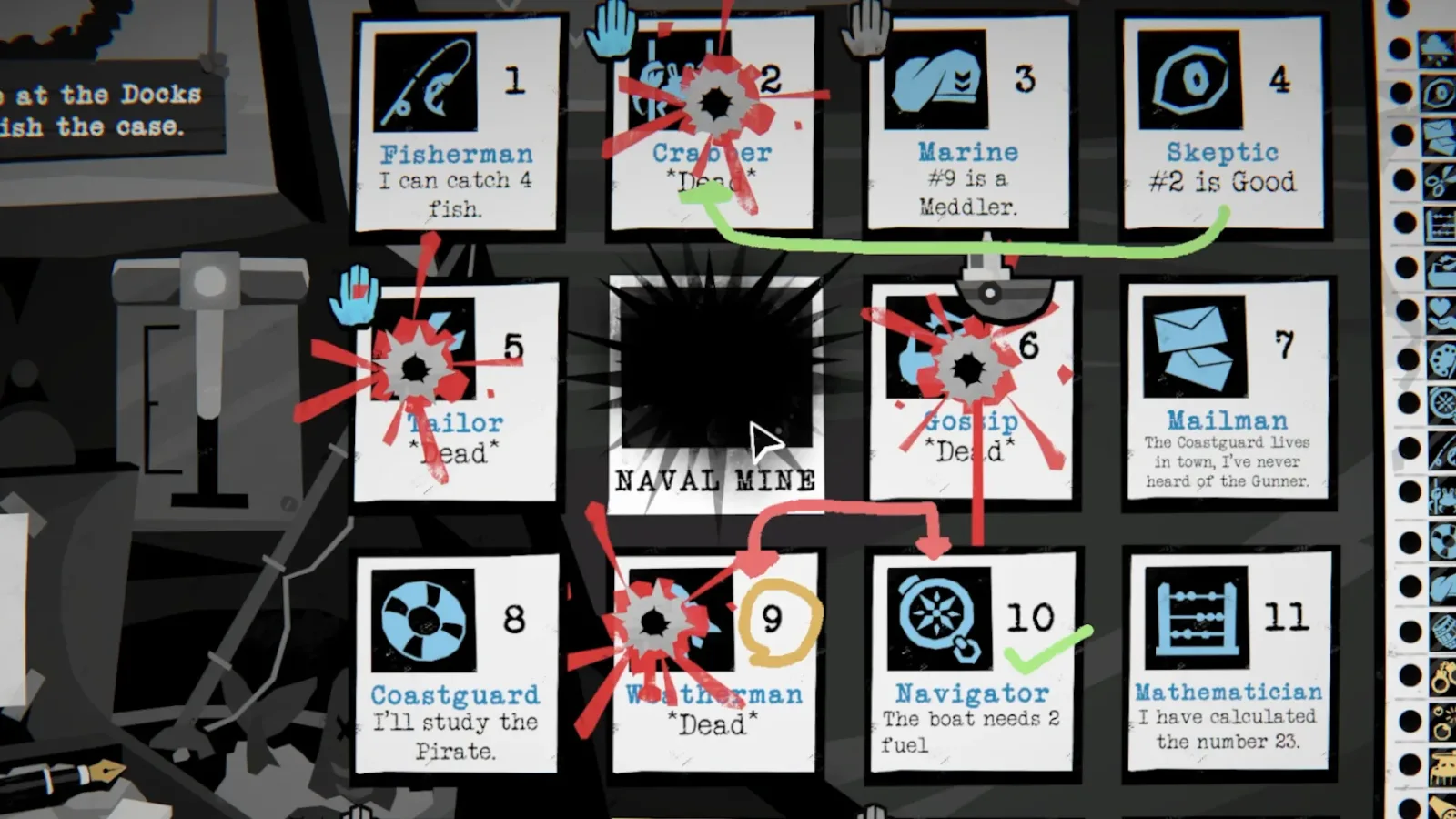
To support its investigative focus, Dupery features an in-game notation toolkit. Players can use strings, pins, and notes to construct a crime board and track what they have learned. The feature brings a familiar visual language of detective fiction into the play experience, allowing evidence and suspicions to be organized in a more deliberate way.
A crime board can be particularly useful in a game with a wide range of roles and shifting conditions. Rather than relying only on memory, players can lay out theories, connect details, and keep track of questions that have not yet been answered. As cases become more involved, this sort of tool can turn the act of note-taking into part of the deduction itself.
The film noir setting complements that board-driven process. Noir mysteries are often defined by shadowy motives, compromised authority, and investigators trying to find truth in situations where nobody appears fully reliable. Dupery's premise leans into that mood while using game systems to make the work of suspicion and inference interactive.
Its detective focus is also distinct from games that use deduction only as a narrative flourish. Here, the player is not just following a prewritten investigator through a mystery. The structure centers on solving cases, making decisions about arrests, and responding to the variables created by procedural generation and selectable modifiers. The player's reasoning is meant to be the engine of progress.
Community puzzle solving unlocks the launch offer
The 20% Steam launch discount was revealed during the Convergence Showcase after the Dupery Discord community completed its ARG. Community members worked together to solve the clues, and the successful effort translated into a practical reward for everyone interested in picking up the game at release.
That event reflects the same broad spirit as Dupery's subject matter: following leads, comparing information, and working toward a conclusion. In this case, the detective work took place outside the game ahead of launch. The reward does not change the announced October 15 release date, but it does mean prospective players will have a lower entry price during the launch promotion.
No additional platform versions have been announced. The confirmed release is for Steam on PC, with Gilded Rune Games handling development and Yogscast Games publishing.
What to expect when Dupery arrives
Dupery: A Game of Solo Deduction is positioned as a hybrid for players who want mystery-solving with replayability. Its main ingredients are clear: a noir presentation, a large set of handcrafted roles, procedurally generated investigations, region-specific mechanics, pre-mission choices, and a reputation system that asks players to consider the cost of being wrong.
The combination may be especially interesting for fans of logic-heavy games that reward careful organization. A notebook-like interface is useful, but the included strings, pins, and notes suggest the game wants players to actively externalize their thinking. Connecting names, roles, clues, and possible motives is an essential part of classic detective storytelling, and Dupery makes that process a direct mechanic rather than background flavor.
Players looking for a purely linear, authored mystery should keep the roguelite angle in mind. Procedural cases and selectable modifiers point to a game designed for repeated attempts, adaptation, and gradually improving command of its systems. The promise is less about solving one immutable crime and more about facing an evolving sequence of cases where each run can create fresh complications.
Dupery: A Game of Solo Deduction launches October 15, 2026, on Steam for PC. Its 20% launch discount will be available as part of the release, following the successful completion of the Dupery community ARG.


Community
Discussion
Start the conversation.
No comments have been posted yet.