

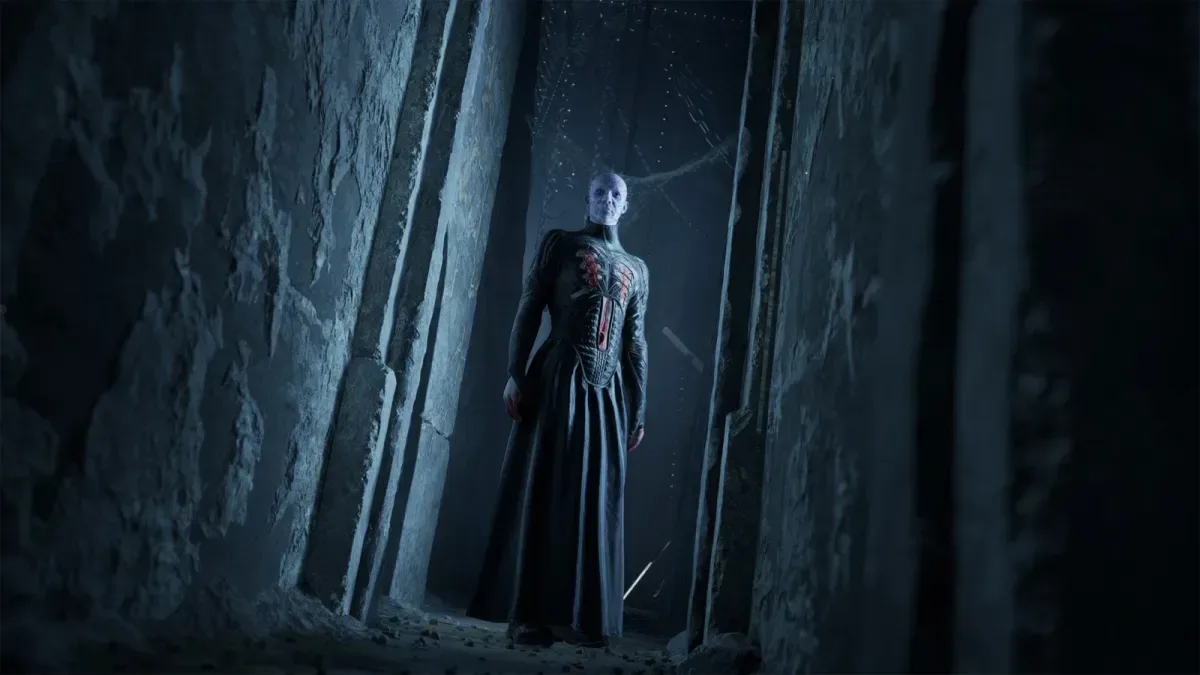
Clive Barker's Hellraiser: Revival understands the visual vocabulary of Hellraiser. There is flesh, metal, ritual, dread, and a world where desire and suffering are tangled together in ways that should be uncomfortable. Its strongest environments evoke the franchise's horrible grandeur, while Doug Bradley's return as Pinhead brings an unmistakable authority to the Cenobites' leader. Those qualities give Saber Interactive's PlayStation 5 action-horror game a foundation with genuine appeal.
Unfortunately, that foundation is repeatedly buried beneath bad design decisions and a long list of technical problems. What should be a roughly 10-hour plunge through the Labyrinth and its human-world horrors instead becomes an uneven battle against floaty combat, strange resource restrictions, unreliable encounters, and glitches that regularly puncture the mood. There are stretches where Hellraiser: Revival resembles a respectable adaptation. Far too often, though, it feels less like carefully constructed horror and more like a malfunctioning attraction whose machinery is visible from every angle.
A familiar rescue story with a strong horror backdrop
The story follows Aiden Lynch, whose girlfriend Sunny is taken into the hellish Labyrinth after opening the dreaded puzzle box. To restore her mortal body, Aiden has to confront Cenobites, navigate the otherworldly maze, and battle a cult that worships the beings and their philosophy of pain. It is a straightforward setup, but the wider circumstances are more compelling than its lead character.
Aiden is an unremarkable protagonist, largely existing so the horrors around him have someone to happen to. The plot's better material comes from the Cenobites, the cult, Sunny's predicament, and the unsettling discoveries scattered throughout the journey. The game also makes room for solid scares and disturbing moments without requiring extensive prior knowledge of the films or other Hellraiser material. Longtime fans should notice meaningful callbacks, while newcomers can follow the central conflict without feeling excluded.
For useful background on this topic, read Resident Evil Requiem Began Life as an Online Game Before Capcom Refocused on Horror.
Its handling of the property's sexual and grotesque imagery is similarly more assured than much of the rest of the experience. Hellraiser: Revival does not sanitize the franchise's gore or its sensual menace, yet it generally avoids pushing that content into a truly objectionable place. The resulting atmosphere is dark, bloody, and suitably transgressive.
However, the storytelling is undermined by inconsistent presentation. Cinematic and in-game scenes can suffer from poor lip synchronization, while quieter dialogue is at times muffled by the audio mix. Subtitles may fail to match the spoken lines or simply not appear when needed. These flaws do not merely look rough; they weaken crucial dramatic beats and make an already ordinary protagonist even harder to invest in.
Combat rarely earns its brutality
Hellraiser: Revival is played from a first-person perspective, combining firearms, melee attacks, stealth, crafting, exploration, and occasional puzzle-box powers. That outline resembles proven survival-horror design, but the individual systems do not come together with much confidence.
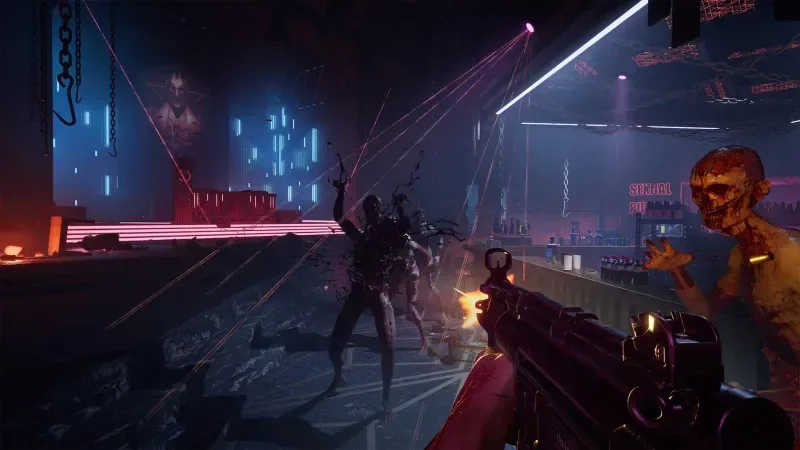
Basic combat lacks impact. Melee attacks and gunfire feel light, and aiming firearms is especially awkward. Shooting should be a reliable last resort in a survival game, yet the controls make it feel more cumbersome than tense. An attempted quick-turn command, activated by pressing the left stick downward, creates another recurring irritation. It is easy to trigger accidentally while sprinting, causing Aiden to suddenly turn around when he should be fleeing forward. There is no apparent option to remap that input.
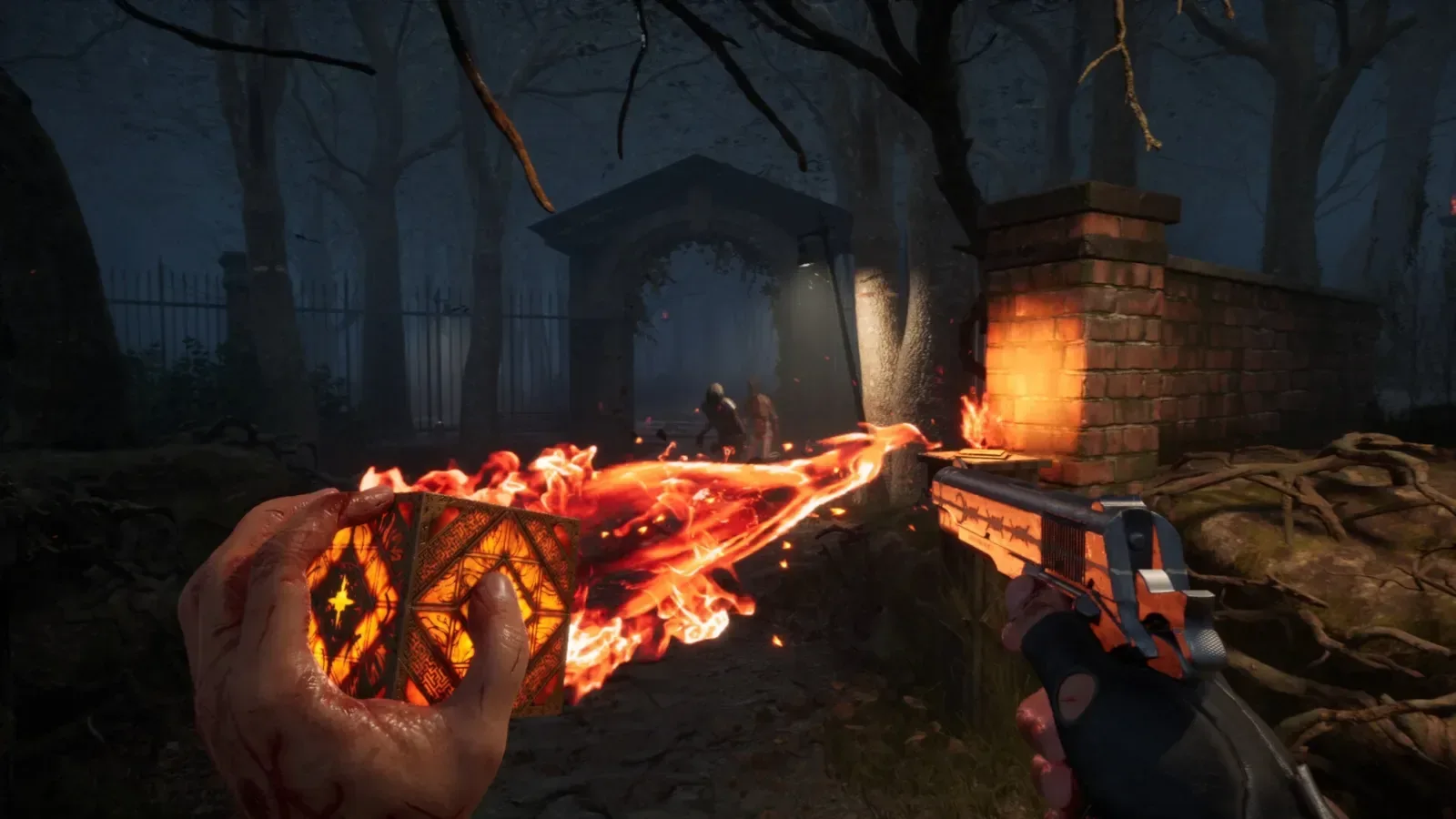
The puzzle box provides the most interesting combat ideas. Its telekinetic abilities can pull and throw environmental objects, sometimes turning hazards such as saw blades against enemies. Aiden can also absorb fire from torches and hurl it back at targets. These powers offer brief flashes of imaginative, Hellraiser-specific action, and they are more engaging than the conventional shooting around them. Still, they cannot fully compensate for the unconvincing feel of the core combat loop.
Enemy design compounds the problem. Cultists often behave with startling incompetence: they can shoot at walls, fail to pursue effectively, take cover inconsistently, and even harm themselves with grenades. Rather than creating a dangerous tactical opposition, many encounters become easy to evade or exploit. One important antagonist can reportedly be defeated by simply circling a table and firing as he slowly follows the same route without adapting.
Other fights swing in the opposite direction, overwhelming the player with aggressive mutated humans known as the Unworthy. These mob encounters can be punishing, but not in a way that feels strategically rewarding. Their difficulty often comes down to whether the game has supplied enough healing, ammunition, money, or suitable weapons beforehand.
A survival economy that creates the wrong kind of pressure
Resource scarcity is a fundamental part of survival horror, but Hellraiser: Revival's economy is erratic rather than carefully calibrated. Ingredients for basic bandages can be plentiful for a time, then become extremely difficult to find later despite continued exploration. Long stretches may pass with no ability to craft anything useful. That can turn low-health situations from suspenseful into exasperating.
Money is also limited, making shops an important source of preparation. Yet certain items can be available one moment and then seemingly unavailable at random the next. Saving for a stronger weapon before a major battle only to find that the store no longer sells it is not a compelling survival-horror dilemma. It is an opaque restriction that denies planning rather than testing it.
Similar frustrations arise when the game appears to withhold the tools suited to upcoming challenges. Armored foes might appear when blunt melee weapons are absent, or a boss encounter may begin with only a sliver of health remaining and little opportunity to recover. A good horror game makes players improvise under pressure. Here, the lack of options can feel arbitrary, producing annoyance instead of dread.
The Labyrinth is the clearest glimpse of what this could have been
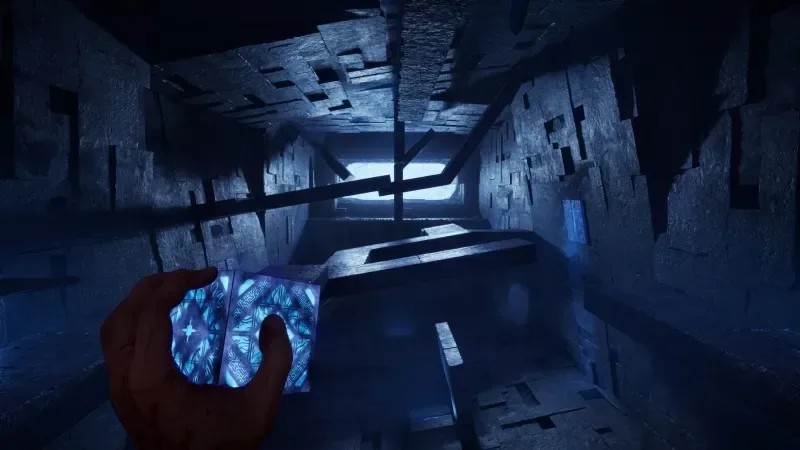
The exploration-focused Labyrinth sections are the game's relative high point. These areas lean away from conventional combat and toward navigation, traps, environmental hazards, and telekinetic manipulation of blocks and objects. The controls for those puzzles can be finicky, but the change of pace is welcome.
More importantly, the Labyrinth has the strongest art direction in the entire game. Its macabre architecture, oppressive spaces, and nightmarish imagery deliver the atmosphere expected from a Hellraiser adaptation. When Revival slows down and lets players explore these spaces, it approaches the mood of an effective horror experience.
Even these better sequences are not immune to the game's unstable state. A chase involving the Chatterer can lose all tension when the creature gets stuck behind a stone block. Progress may require backtracking far enough to reset the sequence before the pursuit resumes. It is the sort of issue that immediately reveals the seams of a horror game, replacing fear with the awkward awareness that a scripted event has broken.
Technical problems dominate the PS5 experience
The technical condition of Hellraiser: Revival is its most persistent and damaging problem, with issues reportedly becoming more frequent as the campaign advances. Environmental pop-in is common, and characters or objects can flicker in and out of existence. The game's locations are often visually impressive in still moments, but that impression collapses when the world seems unable to remain stable.
More serious bugs affect combat and progression. Aiden can fall through floors after being knocked down, briefly exposing the skybox beneath the level. Enemies may become trapped in geometry, while hits can register through solid walls and deny potential loot. Audio can disappear during violent executions, draining scenes that should be gruesome and impactful of their intended effect. Healing animations may freeze in the middle of combat, leaving the player exposed and potentially causing an undeserved death.
There are also reports of encounters failing to recognize that every enemy has been defeated, such as a fight while waiting for an elevator. In those instances, reloading a save and repeating the sequence may be necessary. A major boss can become stuck on a car during what seems intended to be a scripted moment. These are not small cosmetic blemishes; they directly interfere with pacing, challenge, and completion.
Who should enter the Labyrinth?
Dedicated Hellraiser fans may find enough value in the presentation to be curious. The gore is committed, the Labyrinth looks appropriately dreadful, and Pinhead's appearance benefits enormously from Doug Bradley's performance. People seeking lore references, a few effective scares, and an accessible entry point to this particular story may see fragments worth appreciating.
For most players, however, the problems are too extensive. Fans of polished first-person survival horror, deliberate combat, and carefully balanced resource management will likely find the game's frustrations outweigh its appealing ideas. The PS5 version's technical failures are especially difficult to overlook because they repeatedly disrupt the exact atmosphere the game works hardest to build.
Final takeaway
Clive Barker's Hellraiser: Revival has an appropriately gruesome heart and occasional flashes of cleverness, particularly whenever the puzzle box and the Labyrinth take center stage. But its decent narrative framework, franchise fidelity, and memorable Pinhead performance cannot carry a game riddled with weak gunplay, ineffective AI, baffling resource decisions, and severe bugs.
This is an adaptation with glimpses of a worthy horror experience trapped inside an unreliable and frequently miserable one. Hellraiser devotees may want to watch for substantial improvements, but in its present PlayStation 5 form, Revival is far more punishing than pleasurable.
Community
Discussion
Start the conversation.
No comments have been posted yet.