

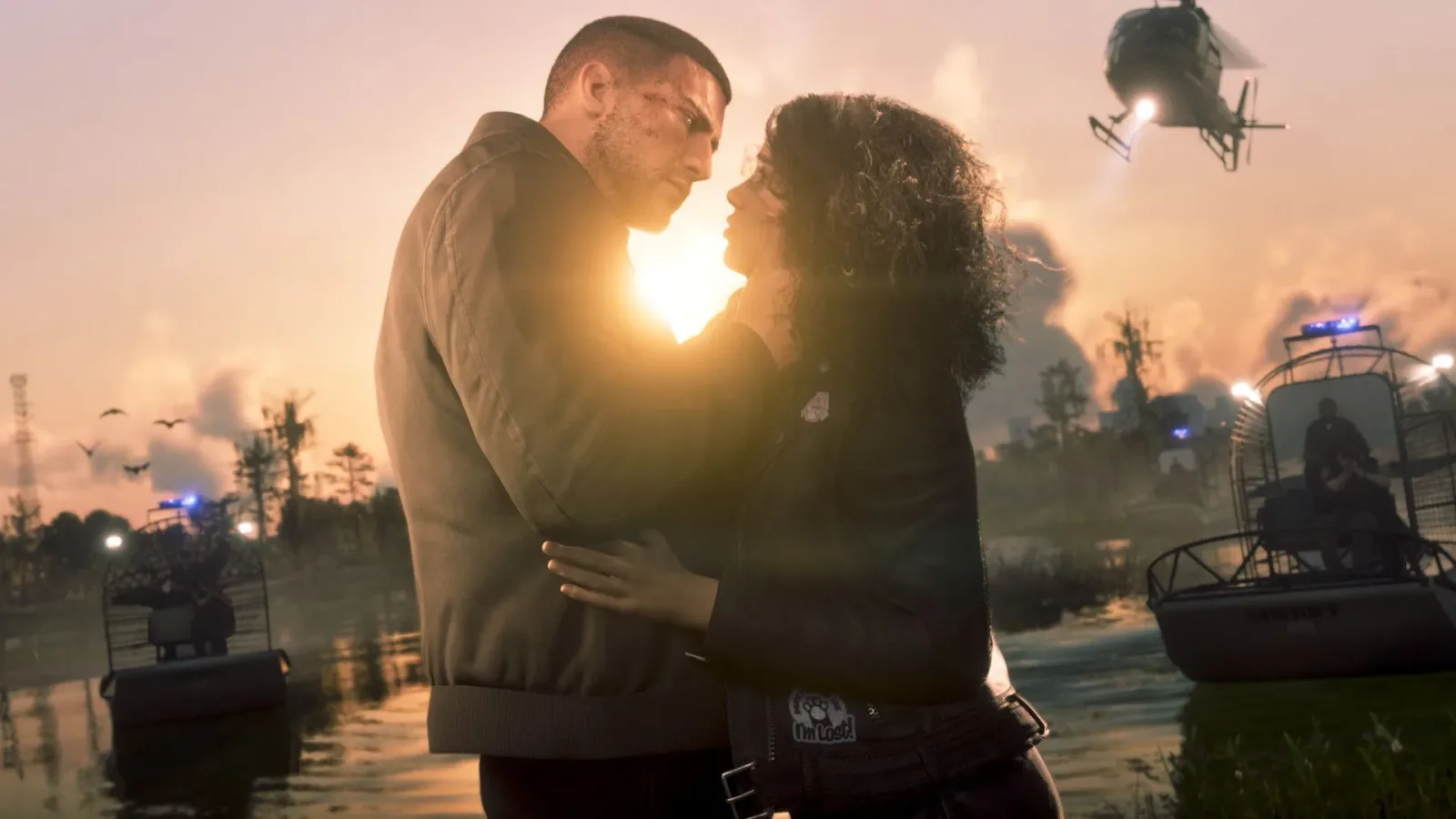
Grand Theft Auto 6 may place players in a world of robberies, violence, excess, and the distinctly volatile streets of Vice City, but Rockstar Games says the emotional center of its next open-world crime saga is much smaller and more personal. Jason and Lucia are intended to be characters players can connect with, not merely avatars for escalating criminal mayhem.
Rupert Humphries, Rockstar's senior vice president of narrative, has described that goal as an effort to ground the game's enormous world in the relationship between its two central figures. In his view, the pressure surrounding contemporary life is an important part of what informs Leonida, the fictional state that houses Vice City and GTA 6's wider setting.
"Playing GTA 6, the main thing we want players to feel is connection," Humphries said. "To Jason and Lucia, who they need to believe in and inhabit for this journey through the game, but then also that connection in the game between the two characters."
That framing is notable for a series that has long built its identity around satire, criminal ambition, and open-ended player chaos. Grand Theft Auto has certainly featured memorable friendships, families, romances, betrayals, and partnerships before. Yet GTA 6 appears to be putting the bond between its two protagonists at the front of the experience from the outset. Jason and Lucia are not simply two playable leads occupying the same map; Rockstar wants their shared struggle to be the lens through which players understand Leonida.
For useful background on this topic, read GTA 6 Narrative Lead Explains Jason's Quiet, Controlled Approach.
A world designed around pressure
Humphries connected the game's character work to what he sees as an increasingly noisy, demanding atmosphere in everyday life. Political turmoil, environmental concerns, traditional media, and social media all contribute to a sense that people are under relentless strain. His description of Leonida suggests Rockstar is using that tension as more than background flavor for missions and radio jokes. It is a key part of the setting's social fabric.
"Living in the actual world in this present moment, it feels like there is so much noise and so much pressure on everyone," Humphries said. "Politics, the environment, media, social media. It's coming at you from everywhere. It seems like we are all about two bits of bad luck away from completely losing it."
For Rockstar, that feeling of instability is reflected across the streets of Vice City and the rest of Leonida. Humphries said the people in this version of Florida-inspired America have been pushed toward different forms of madness. That can emerge through conspiracy theories, self-improvement movements that become cult-like, dreams of instant wealth, or drug use. It is a broad social portrait, but one consistent with the series' tradition of observing modern culture through exaggeration and dark comedy.
The difference is that GTA 6 does not seem content merely to point and laugh at the absurdity. Its narrative leadership is presenting the instability of Leonida as a condition that affects ordinary people, including its protagonists. Jason and Lucia may make criminal choices, but Rockstar's stated ambition is to make players understand the forces and personal stakes surrounding those choices.
Jason and Lucia are criminals, but not meant to be cartoons
There is no suggestion that GTA 6 will abandon the criminal foundation of Grand Theft Auto. Jason and Lucia's story includes robberies and killings, and their lives sit squarely within the series' familiar ecosystem of desperate schemes and dangerous opportunities. Rockstar is not trying to recast them as conventional heroes.
Instead, the studio is aiming for a more human kind of identification. The couple's circumstances are portrayed as constrained, with legal and respectable routes toward stability feeling difficult or inaccessible. Their belief that the world is stacked against them does not erase the consequences of their actions. It does, however, offer a narrative context for why they might view crime as the only path left open to them.
That distinction could matter greatly for the tone of the game. In a satirical open-world series, it is easy for characters to become vehicles for punchlines or targets for the player's destructive freedom. By emphasizing Jason and Lucia's emotional reality, Rockstar appears to be searching for tension between spectacle and sincerity: the pair can be capable of terrible acts while still feeling vulnerable, frightened, hopeful, and dependent on one another.
It also gives GTA 6 an opportunity to explore a more intimate version of the classic Grand Theft Auto fantasy. The franchise often follows people chasing money, status, revenge, or escape. Jason and Lucia's journey may still involve all of those impulses, but Rockstar's comments suggest their defining motivation is not individual conquest. It is survival as a pair.
Connection as the game's core idea
Humphries' most revealing point is that GTA 6 carries an underlying note of optimism, even within a society presented as chaotic and corrosive. The game's world may be filled with people chasing scams, falling into destructive habits, or attaching themselves to increasingly strange beliefs, but Jason and Lucia represent the possibility that companionship can keep people from being completely consumed by that environment.
"With all that going on, we wanted to have two humans at the center of the story that the player can care about and see themselves in," Humphries said, "and then this idea that maybe, however bad you are, we might all be better off when we're together and not going it alone."
That is a surprisingly earnest thesis for Grand Theft Auto, and it may mark a meaningful tonal shift from Grand Theft Auto 5. GTA 5's trio of Michael, Franklin, and Trevor produced plenty of compelling character drama, but the game's broader outlook was often intensely cynical. Its targets included wealth, celebrity, technology, consumer culture, law enforcement, politics, entertainment, and nearly every institution around its version of Los Angeles. Personal relationships were regularly transactional, strained, or actively destructive.
GTA 6 is still likely to offer sharp satire, particularly given the material Rockstar has highlighted in Leonida. But the central relationship may give the game an emotional anchor that differs from GTA 5's often detached and caustic perspective. Jason and Lucia do not need to become morally clean for that approach to work. Their connection simply needs to feel credible enough that players want them to make it through the next disaster.
Leonida's satire could have more personal consequences
The state of Leonida has already been positioned as a place where viral culture, outrageous headlines, petty criminality, nightlife, wildlife, and larger-than-life regional personalities collide. Humphries' comments add another layer to that image. The weirdness of the world is not just scenery for the player to observe; it is part of the pressure cooker shaping the people who live in it.
That could make GTA 6's satire land differently from past entries. A conspiracy theorist, a get-rich-quick promoter, or a self-help guru can still be funny. Yet Rockstar's narrative approach leaves room to show why people might be drawn to those figures in the first place. In a setting where secure work, social trust, and personal stability seem increasingly fragile, extreme answers can become attractive. Leonida's madness may be exaggerated, but it is rooted in recognizable anxieties.
For Jason and Lucia, the key question will be whether their relationship gives them a way to resist that spiral or pulls them further into it. A criminal partnership can be protective, but it can also intensify risk. If both characters feel they have nowhere else to turn, their devotion to each other could become the source of their strength and the reason they keep crossing new lines.
What it means for GTA 6's story
Rockstar has not laid out every turn in Jason and Lucia's arc, and the ultimate shape of their relationship remains unknown. That uncertainty is part of the appeal. The pair's dynamic could move through loyalty, conflict, ambition, fear, betrayal, or reconciliation, possibly all within the same sprawling journey. What is clearer is the studio's desired emotional result: players should feel invested in both people, rather than treating them only as instruments of mayhem.
That is a difficult balance for any Grand Theft Auto game. Players expect a huge playground, criminal escalation, unpredictable encounters, and a world ready to react to their worst impulses. A story asking for empathy has to coexist with all of that freedom. Rockstar's answer appears to be making the protagonists' bond central enough that the chaos has stakes beyond money or spectacle.
If GTA 6 succeeds on those terms, Vice City and Leonida could be more than a lavishly detailed arena for crime. They could become the setting for a story about two flawed people trying to stay connected while everything around them encourages isolation, exploitation, and desperation. Jason and Lucia may not be innocent, but Rockstar's message is that players should be able to recognize something of themselves in the pressure they face--and in the hope that facing it together might be better than facing it alone.

Community
Discussion
Start the conversation.
No comments have been posted yet.