

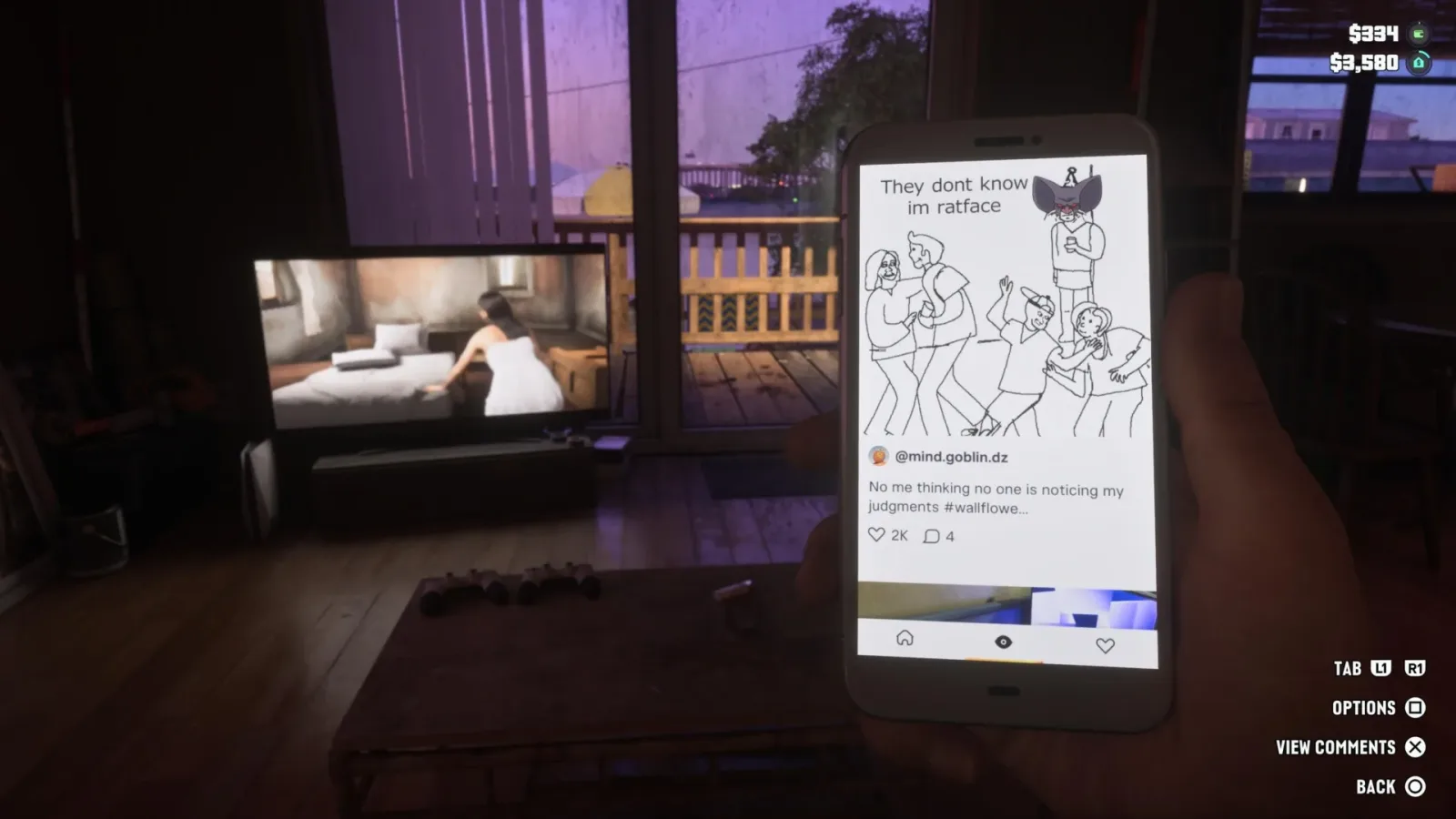
Grand Theft Auto 6 is taking a noticeably different approach to the internet than its predecessor. While Grand Theft Auto 5 let players browse a sprawling collection of parody webpages through its Eyefind search engine, the new game will not include that conventional browser-driven web experience. Instead, Rockstar Games has built its digital world around smartphone applications and social media.
Rob Nelson, Rockstar Games' head of development, explained that traditional websites simply did not serve the same purpose in Grand Theft Auto 6 that they did in the 2013 release of Grand Theft Auto 5. The decision was not presented as a blanket rejection of in-game websites forever. Rather, it grew out of what the team felt was useful for this particular story, its world, and the way players will engage with protagonists Jason and Lucia.
"It didn't feel necessary for us," Nelson said when discussing the absence of websites. Rockstar instead wanted to commit to apps, making the smartphone a more focused gateway to the game's digital culture. That means players should expect the satirical lens once spread across standalone webpages to be concentrated more heavily in the feeds, interfaces, notifications, and services people encounter through their phones.
From Eyefind to an app-driven world
Grand Theft Auto 5 arrived at a time when the web was still commonly imagined as a destination made up of individual sites. Its version of Los Santos reflected that era with impressive breadth. Players could use the Eyefind search engine, visit travel and real-estate pages, read strange advertisements, browse social platforms, and make purchases through mock online storefronts.
For useful background on this topic, read MSI Codex Z2 Gaming Desktop Drops to $1,299 in Black Friday Deal.
The game's online ecosystem was packed with jokes and familiar targets. Bleeter served as its spin on Twitter, while Lifeinvader took aim at Facebook. Other sites extended the parody into commerce and luxury consumption. DockTease provided boats, Warstock Cache & Carry handled weaponized vehicles and military hardware, and other pages helped create the impression that nearly every odd service in Southern San Andreas had its own web address.
That structure fit a game made in the early 2010s. Smartphones were already important in GTA 5, but they still functioned in part as tiny computers capable of opening the wider web. A search engine and a web of distinct destinations were a natural way to satirize an internet culture built around browsing, clicking, and landing on increasingly bizarre pages.
For Grand Theft Auto 6, Rockstar appears to be following the shift in how many people now experience the internet. A substantial amount of online activity happens inside a relatively small number of apps rather than through open-ended browsing. Social networks, messaging services, marketplaces, short-form video feeds, maps, payment tools, and entertainment platforms all compete to keep users within their own interfaces. That change provides new material for Rockstar's satire.
Social media becomes the central target
The move away from websites does not mean Vice City will lack a digital culture. If anything, the emphasis on apps and social media suggests that GTA 6 may place online behavior closer to the center of its depiction of everyday life. Rockstar has already indicated through the game's public materials that social-media-style posts and viral clips are part of the atmosphere surrounding Vice City.
An app-focused approach can make that satire feel more immediate. Instead of stepping away from the world to seek out a joke on a webpage, players may encounter that same kind of commentary through the characters' phones and the way information spreads around the city. A feed can react to a public incident. A video can turn a local spectacle into a viral event. Notifications can create the sense that the world is constantly watching, recording, sharing, and exaggerating what happens in it.
That distinction matters for a series that has always used media as part of its worldbuilding. Radio stations, television shows, advertising, talk programming, billboards, and internet content have all helped make Rockstar's cities feel loud, absurd, and reactive. Shifting the focus to smartphone apps gives the studio another way to portray the specific habits and anxieties of the period it is satirizing.
It may also allow the game's interface to feel less like a menu of disconnected jokes. In GTA 5, the sheer quantity of sites was part of the appeal, but it also encouraged browsing for its own sake. In a newer setting, a smaller selection of deeper app experiences could potentially keep digital interactions tied more directly to characters, missions, contacts, and events unfolding in the open world.
A choice tied to crime progression
Nelson connected the decision to a larger design goal: ensuring players engage with Vice City and its economy rather than relying on the internet to order enormous quantities of goods. Rockstar wants Jason and Lucia's journey to feel like an organic climb from small-time criminal work to larger heists.
That progression is fundamental to the fantasy at the heart of a Grand Theft Auto game. The early stages are meant to establish the characters as people scraping together opportunities through petty crime, risky jobs, and direct encounters with the world around them. As their ambitions grow, the scale of their operations can grow with them.
Nelson described a desire to create meaningful reasons for the leads to be "doing Grand Theft Auto." In practical terms, that means their rise should be supported by activities that make sense in the setting. Robbing small liquor stores and pawn shops establishes a different relationship with the city than opening a phone browser and immediately buying every tool, weapon, vehicle, or luxury item a player could want.
Removing websites may therefore be as much about pacing as satire. When a game gives players easy access to a massive catalogue of purchasable items, it can flatten the feeling of economic development. Rockstar's stated approach suggests that GTA 6 wants acquisition, criminal escalation, and access to bigger opportunities to emerge through gameplay in the physical world.
That does not necessarily mean phones will be unimportant. On the contrary, apps may be deeply woven into the game's systems. The key difference is that the phone is being shaped around the activities Rockstar considers central, rather than acting as an all-purpose portal to a vast browser full of shopping pages. The studio's design appears intended to keep players moving through Vice City, meeting people, finding opportunities, and dealing with the consequences of actions on the ground.
Not a top-down ban on websites
Nelson stressed that Rockstar did not begin development with a rigid order forbidding websites. He characterized the outcome as something that developed naturally as the team considered what each feature needed to accomplish. When he asked Stu Petri, Rockstar's head of 2D and UI, about websites, Petri's response was essentially to ask what they would be needed for.
That exchange captures the practical philosophy behind the choice. A traditional web browser might be entertaining because of the jokes it can contain, but it also needs a reason to exist within the broader game. If apps can deliver the relevant communication, humor, services, and social commentary more effectively, then recreating an old-style web may amount to a distraction rather than an enhancement.
It is a revealing detail because it frames the change as a design question, not merely a statement about technology. Rockstar is not saying that websites no longer exist or that they could never return to a future Grand Theft Auto game. Nelson said they could appear again in later projects. For GTA 6, however, they were not considered necessary for the narrative and gameplay Rockstar wanted to build.
What players may lose and gain
Some players will undoubtedly miss the dense, optional rabbit holes of GTA 5's internet. The old websites rewarded curiosity with fake products, oddball businesses, ridiculous articles, and countless small pieces of flavor. They were a memorable part of Los Santos because they made the city seem large enough to contain a whole dysfunctional online economy.
But the absence of a browser does not automatically mean less satire or less detail. It means Rockstar is putting those details in different places. The success of that shift will depend on how extensive the phone apps are, how much they respond to player behavior, and whether they offer more than a streamlined route to mission essentials.
If the apps are rich enough, Vice City's digital life could feel more integrated than a collection of websites ever did. A social feed that evolves with the story, services that connect directly to the city's businesses, and app-based interactions that shape the protagonists' criminal rise could all deliver a different kind of immersion.
For now, the clearest takeaway is simple: Grand Theft Auto 6 is not treating the internet as a browser tab full of parody domains. It is treating it as an app-first, socially amplified layer of modern life. In a series built on reflecting and mocking the culture around it, that may be one of the more fitting changes Vice City can make.
Community
Discussion
Start the conversation.
No comments have been posted yet.