

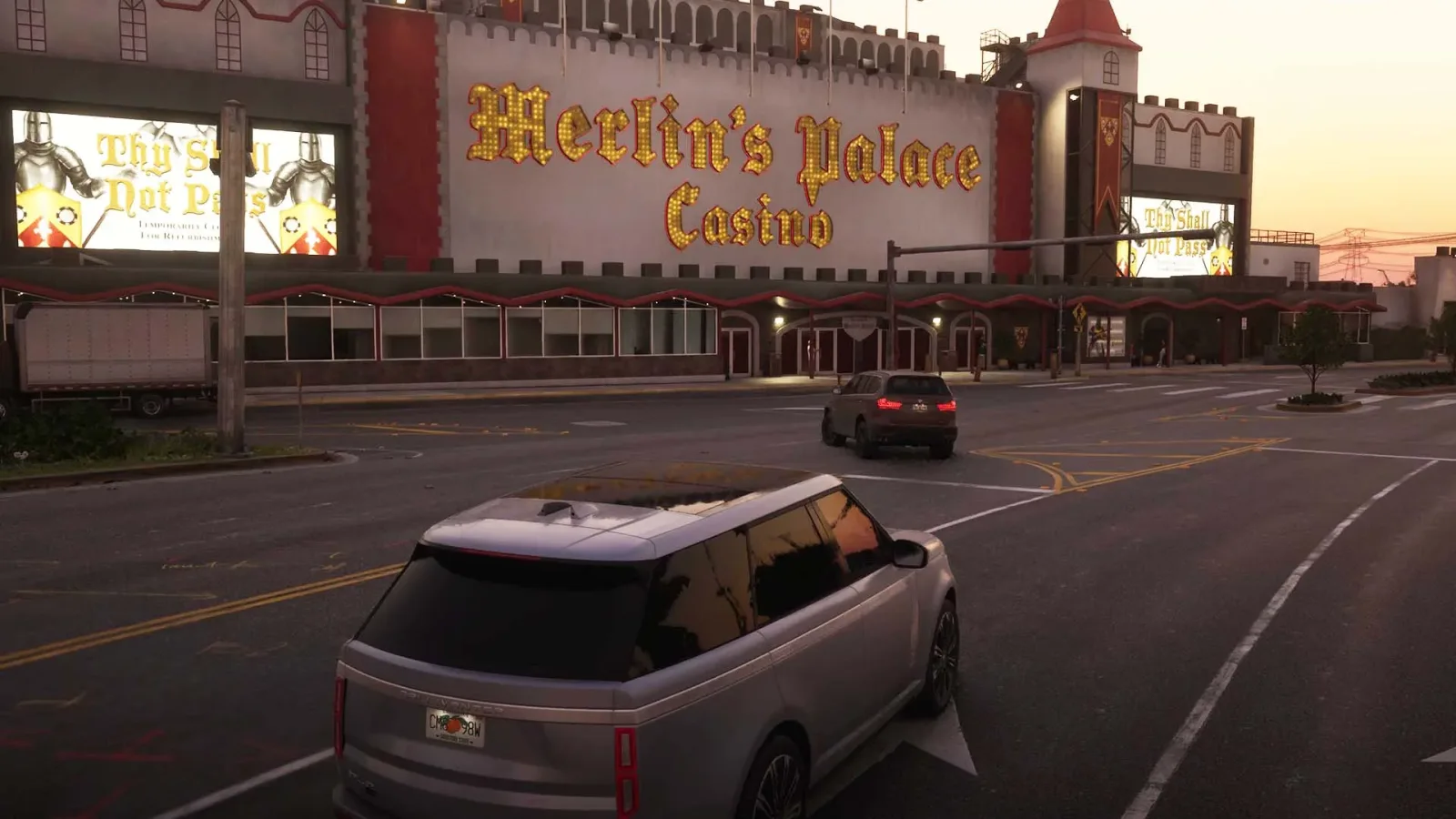
Grand Theft Auto 6 has been designed as Rockstar's biggest open world to date, but not every prominent location on its map is currently central to Jason and Lucia's story. Rockstar vice president of design Stephen Donkin has said that some of those seemingly underused spaces were created with long-term flexibility in mind, potentially leaving the studio room to revisit them if future gameplay or narrative ideas call for it.
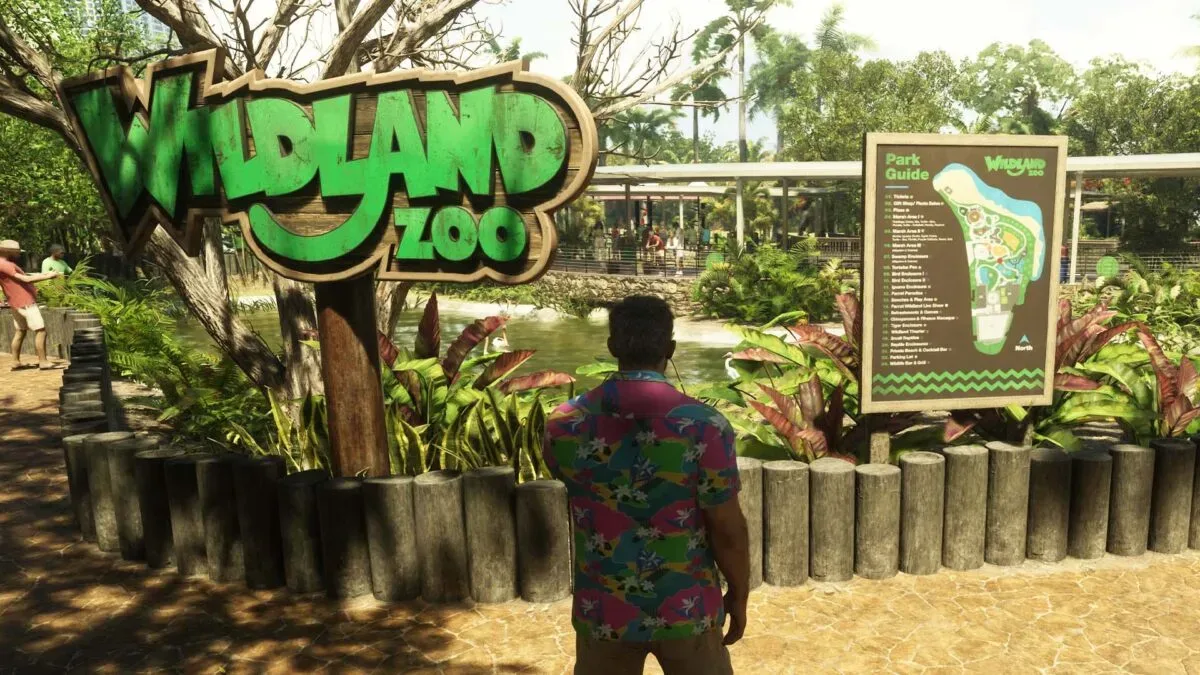
The comments address a natural question for players exploring such a dense world: why do several elaborate landmarks exist if they are not part of the main campaign or its side activities? Large casinos appear on the map but cannot be entered, while other locations, including a zoo, a graveyard and a small northern town, can be easy to miss entirely during a story-focused playthrough.
Donkin did not announce any expansion, update, or online plan. However, his explanation makes clear that Rockstar has intentionally retained options within the map rather than treating every major location as a one-and-done setting for the launch experience.
A world larger than the immediate story
Open-world games often face a balance between density and direction. Players want places that feel believable and worth exploring, but a campaign cannot realistically send them to every neighborhood, building, attraction, or landmark. Grand Theft Auto 6 appears to embrace that tension on a particularly large scale.
For useful background on this topic, read GTA 6 Map Crossing Test Takes More Than Three Hours on Foot.
After more than 130 hours with the game, there were still locations that had not been visited during the story. That includes the zoo and a small town in the north, neither of which was required by the main narrative in that playthrough. The fact that such areas can remain unseen for so long speaks to the size of the world, but it also raises expectations when those places are visibly detailed.
A zoo is not merely a generic building on a skyline, for example. It is the kind of destination players immediately associate with potential missions, activities, wildlife encounters, or story scenes. A large graveyard can similarly suggest character history, a dramatic mission location, or a setting for future events. When those spaces are present but not heavily used, players understandably begin looking for signs of content that may arrive later.
Rockstar's position is more measured than a promise of forthcoming additions. Donkin said the map was built "for the long term and with many factors in mind," adding that a handful of locations offer options if the team later has a gameplay or narrative reason to use them. That is significant because it frames the unused areas as deliberate creative capacity, not necessarily discarded content or an accidental gap.
Why GTA 6's casinos are not playable
The most conspicuous example is the presence of at least two large casinos that players cannot enter. They are not visited or mentioned during the story or the side missions encountered in the reported playthrough, making them stand out as highly recognizable but inaccessible pieces of the city.
Donkin explained that gambling did not feel appropriate for Jason and Lucia's story, especially considering the carefully managed balance of the game's economy. That decision points to an important distinction between a location existing within an open world and a mechanic being appropriate for the game around it.
In Grand Theft Auto 6, money carries meaningful weight. Players can find themselves working to afford a weapon purchase or pay to repair a vehicle. In a game with that kind of economy, unrestricted casino gambling could create a major balance issue. A player who can repeatedly reload saves and chase a favorable result might quickly accumulate far more money than the story's progression expects.
That possibility could undermine both the mechanical and dramatic sides of the campaign. If financial pressure is part of the experience, then an easy route to huge winnings could make certain purchases trivial and soften the impact of decisions about spending. It could also disrupt the intended rhythm of earning, upgrading, and preparing for the next stage of the story.
There are many ways a casino system could be designed, from tightly limited minigames to heavily regulated payouts, but each approach would require its own balancing and narrative justification. Rockstar's current choice was to leave gambling out of Jason and Lucia's storyline rather than introduce an activity that might distort the economy the team wanted players to experience.
Future options are not future announcements
The wording around the map's long-term design deserves careful reading. Rockstar has not identified what it may do with the casinos, zoo, graveyard, northern town, or any other currently less-used location. There is no stated release window, no announced story expansion, and no confirmation that particular locations will eventually become accessible or mission-critical.
Instead, the studio has said those areas give it options should a gameplay or narrative need emerge. That could mean many things in principle: a future mission setting, a new activity, an evolving part of the world, or material connected to a longer-running mode. It could also mean that some locations simply remain part of the map's broader sense of place unless the right use arises.
This is an important distinction for players speculating about post-launch support. A map prepared for potential change is not the same as a content roadmap. Rockstar has provided no details about what those future needs might be, and it would be premature to assume that inaccessible casinos will become gambling venues or that every unused landmark is a teaser for a specific expansion.
Still, designing with flexibility can be valuable in a game of this scale. Adding meaningful content to an established open world is easier when the geography already contains believable places capable of supporting new events. Rather than creating a new location out of nowhere, developers can return to an existing landmark and reveal a new purpose for it.
Environmental detail can serve more than one purpose
Even when a place has no immediate mission function, it can still be doing work for the world. Grand Theft Auto has long relied on satire, architecture, background activity, and exaggerated civic spaces to create the impression of a living region rather than a sequence of combat arenas. A casino on the horizon helps sell the identity of a city. A cemetery, zoo, or remote town makes the surrounding landscape feel more complete.
That environmental role matters even if players cannot enter every building. In fact, a large open-world map needs a mixture of interactive hotspots, scenic destinations, ordinary infrastructure, and mysterious or restricted sites to avoid feeling like a theme park where every structure is designed solely to dispense a quest.
The difference here is that Rockstar has acknowledged another possible function for some of these locations. They are not only set dressing; a small number were apparently planned with enough foresight to remain useful if a later design need appears. That does not mean they are finished content waiting behind a locked door. It means the map has been structured to accommodate change.
What players can take from Rockstar's comments
For now, Grand Theft Auto 6 offers plenty to explore without requiring players to see every corner of the map. The game's scale means that a story playthrough can leave substantial territory untouched, particularly when players stay focused on missions rather than wandering into every remote area and landmark.
Players hoping for access to the casinos should temper expectations. Rockstar has explained why gambling was excluded from the current narrative and economic framework, but it has not said that the feature will be added later. The same caution applies to the zoo, graveyard, and other striking locations that do not yet have an obvious role in the story.
What has been confirmed is more limited, but still interesting: Rockstar sees its Grand Theft Auto 6 map as a long-term foundation. Some parts of that foundation have been left with room to support future gameplay or storytelling if the studio decides there is a compelling reason to use them.
For an open world already described as Rockstar's largest, that approach may be as meaningful as any single inaccessible building. It suggests a world designed not only around what Jason and Lucia need at launch, but also around the possibility that the needs of Grand Theft Auto 6 could evolve over time.
Community
Discussion
Start the conversation.
No comments have been posted yet.