

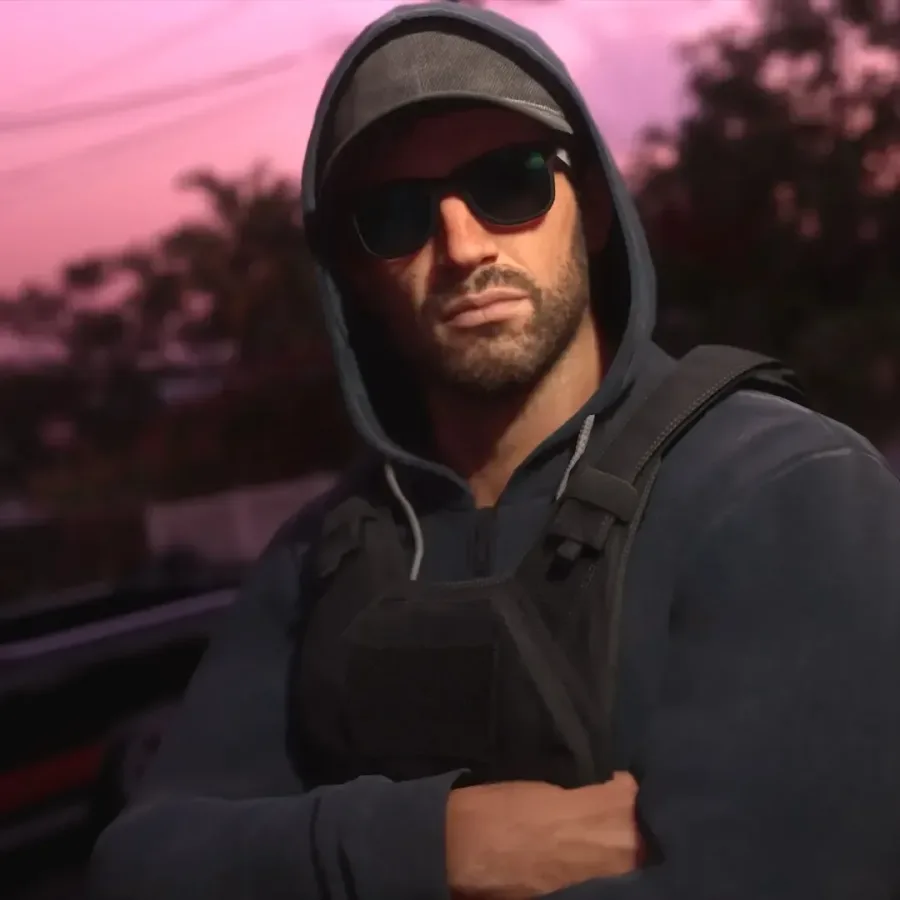
Grand Theft Auto 6 has arrived as a major entertainment event, and its reach is now extending well beyond the usual gaming conversation. Police departments in the United States have joined the wave of GTA 6 discussion with public-facing messages that use the game's criminal sandbox as the setup for a straightforward real-world reminder: whatever players choose to do in Leonida, they should not bring that behavior into their communities.
The Atlanta Police Department and the San Juan Police Department in Texas have each published GTA 6-themed public-safety messaging. The posts appear designed to meet audiences where they are during an enormous launch moment, mixing a familiar pop-culture reference with a serious point about consequences outside a video game.
It is also a revealing example of how far the series has moved beyond games culture. Grand Theft Auto releases have long attracted attention from broadcasters, politicians, businesses, parents, and critics. GTA 6 is generating that same broad interest at an even larger scale, making it an easy reference point for institutions that normally would not be part of a game launch conversation.
Embedded X/Twitter post
Embedded Instagram post
Atlanta's message: keep the chaos virtual
Atlanta Police used its social presence to encourage people to channel any more extreme impulses through GTA 6 rather than real life. The approach is playful, but the intent is unmistakable. Grand Theft Auto gives players space to steal cars, evade officers, stage robberies, and create mayhem without actual victims or real legal stakes. A police department's message is that the line between that fantasy and reality should remain clear.
For useful background on this topic, read GTA 6 Players Think Mandy's Flirty Side Quest Hides a Much Darker Secret.
That contrast is central to the franchise's appeal. GTA has always sold the sensation of freedom: players can explore a vast city, take part in missions, ignore the main story for long stretches, and experiment with systems that would carry severe consequences in real life. The action is fictional, bounded by software rules, and reversible with a reload or respawn. Real criminal behavior is none of those things.
The Atlanta post turns that basic distinction into timely public communication. Rather than treating GTA 6 as a niche hobby, it recognizes that many residents may be playing, watching streams, seeing clips, or simply encountering the game across social media. Using the game's language gives the warning a chance to travel farther than a routine safety notice might.
San Juan invokes the wanted level
San Juan Police in Texas made a similarly direct appeal, drawing on one of Grand Theft Auto's most recognizable mechanics: the wanted-level system. In the games, escalating police attention is represented by stars, with higher levels bringing more aggressive responses from law enforcement. The department's post emphasized that reaching a six-star level in real life is not a challenge or an achievement. It means the possibility of criminal charges and jail.
It is an effective comparison because the wanted level is understood even by plenty of people who have never completed a GTA campaign. In the fictional world, an intense pursuit can be exciting, absurd, and temporary. In reality, an encounter with law enforcement can have immediate and lasting consequences for everyone involved.
The message also reflects a useful difference between a game system and real public safety. GTA 6 can make criminal activity part of its mission design and open-world simulation because its world is built for player experimentation. Police departments are responsible for real people, real property, and real emergencies. Their posts may borrow a joke from the game, but they are not confusing those responsibilities with entertainment.
A launch big enough for everyone to join
GTA 6's launch has created the kind of attention that encourages nearly every type of organization to engage with it. Brands often look for ways to participate when a major game, film, sporting event, or music release dominates public conversation. Local government agencies are doing something comparable here, though with a civic-purpose angle.
That does not necessarily mean the departments believe GTA 6 will cause a crime wave. The posts read more like timely awareness campaigns than statements of alarm. The franchise's criminal premise supplies an obvious framing device, and the game's popularity supplies an audience. A short reminder about real-world consequences can be packaged in a form that is more likely to be shared and discussed.
There is a familiar history behind the attention. Each new Grand Theft Auto tends to renew arguments about violent games, provocative satire, player behavior, and the relationship between fictional action and real conduct. Mainstream news coverage frequently revisits those debates whenever Rockstar releases a new entry. GTA 6 has once again become a magnet for those concerns, even as the police posts themselves use humor rather than panic.
There is no simple basis for treating a fictional crime game as a direct predictor of real-world criminality. Millions of people have spent decades playing Grand Theft Auto and other games with violence, theft, combat, or destruction as mechanics without turning that play into real-life behavior. Games are designed around imagined scenarios, and players understand that distinction. Still, public institutions have reason to reinforce the obvious rule when the topic is dominating the cultural conversation: play can stay play.
Rockstar's deeper take on criminal fantasy
The renewed attention is partly driven by the scale and detail associated with GTA 6. The game allows players to pursue wild criminal fantasies in a world built to make everyday activities and illegal acts feel more involved than simple menu selections. Even smaller offenses, including robberies, have been described as more intricate and nuanced than the quick, highly abstract actions players might expect from older open-world games.
That detail can make the setting feel more immersive, but it does not change its fictional status. A game can depict dangerous choices while still providing a safe framework for exploring consequences, stories, satire, and spectacle. Grand Theft Auto's identity has always rested on that tension: it presents a broad criminal playground while repeatedly exaggerating and parodying the social systems around it.
The franchise is also intentionally abrasive. Its humor often targets celebrities, consumer culture, media, politics, internet trends, and subcultures. That style makes controversy unsurprising, particularly when a new release brings a much larger audience into contact with material that longtime players may recognize as part of the series' established tone.
Concerns over the game's portrayal of furries
One area of criticism surrounding GTA 6 involves the furry community. The game reportedly includes material in which furries are mocked, with depictions suggesting they are illegal in its fictional setting and are pursued by police. Some people within the real furry community have objected to the portrayal and do not see the joke as harmless or amusing.
That response underscores the limits of "it is only satire" as a complete answer to every criticism. Satire can be a defining creative tool, especially for Grand Theft Auto, but people can still reasonably object when they believe a joke turns a real community into an easy target. GTA has a long record of using exaggerated caricature, and GTA 6 is continuing that tradition in ways that will not land equally with every audience.
The police department posts are separate from that debate. They focus on real-world conduct, not the game's satire or how Rockstar portrays particular groups. Yet both conversations show why GTA 6 has become bigger than a conventional release. Its content, popularity, and social-media visibility are all feeding discussions among players and non-players alike.
The difference between a sandbox and society
The best reading of the Atlanta and San Juan messages is that they are practical, culturally aware reminders rather than a claim that GTA 6 itself is dangerous. In a virtual city, players can test boundaries, create chaos, fail spectacularly, and start over. In a real city, actions affect neighbors, families, victims, first responders, and entire communities.
That distinction is simple, but it is worth stating in the language people are already using. GTA 6 offers the fantasy of getting away with almost anything. Police departments are reminding people that there is no reset button for real-world crime.
Sales figures for GTA 6 were not yet available at the time of these public messages, but expectations surrounding the game suggest an exceptionally large launch. Whether it ultimately sets entertainment records or not, its first days have already demonstrated its cultural scale. The series is once again driving arguments, jokes, warnings, marketing tie-ins, and reactions from institutions far outside the games industry.
For players, the takeaway is uncomplicated: enjoy the fictional crimes, chases, and chaos that GTA 6 is built to provide. Let Leonida absorb the mayhem. In the real world, the consequences are not part of the game.
Community
Discussion
Start the conversation.
No comments have been posted yet.