

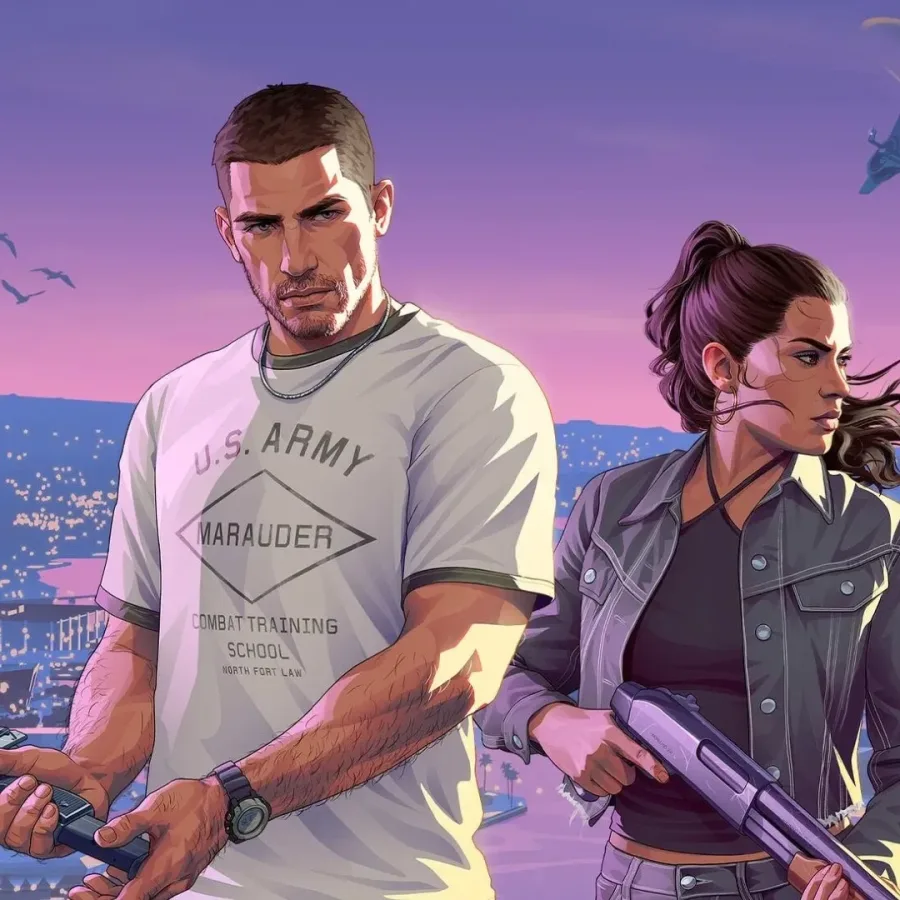
Grand Theft Auto 6 will target 30 frames per second on consoles, including PlayStation 5 Pro. Rockstar Games' confirmation resolves one of the largest remaining technical questions around the open-world blockbuster just days before launch, but it has also opened a fierce debate among prospective players. For some, the decision is an understandable compromise required to deliver an unusually dense and ambitious world. For others, especially those who expected the upgraded PS5 Pro hardware to provide a 60fps or 40fps option, it is a major disappointment.
The disagreement reflects a broader shift in expectations for premium console games. A generation ago, 30fps was routinely accepted for enormous, cinematic open worlds. In more recent years, however, performance modes that prioritize 60fps have become common in major releases, even if they require reductions to image quality, resolution, lighting features, or environmental detail. GTA 6 appears set to make a different choice: preserve its intended simulation and presentation while holding to a 30fps target.
Why GTA 6's frame-rate target matters
Frame rate is not simply a number on a specification sheet. It affects how smoothly movement appears, how quickly controller input feels reflected on-screen, and how responsive driving, aiming, and camera control can seem. A game running at 60fps updates the image twice as often as one at 30fps, which is why many players now see 60fps as a baseline for action-heavy games.
That preference is particularly relevant for Grand Theft Auto. The series combines fast driving, shooting, traversal, crowds, traffic, physics interactions, and a large number of dynamic events. Players may move rapidly between quiet exploration, vehicle chases, combat, and densely populated urban spaces. A higher frame rate can make all of those activities feel more immediate, so the lack of a selectable performance mode has become the central concern for critics of the announcement.
For useful background on this topic, read Final Fantasy 14 Patch 7.58 Eases Keyboard Brawler's Most Frustrating Typing Problems.
At the same time, 30fps is not automatically synonymous with an unplayable or poor experience. Consistency is crucial. A stable 30fps presentation with carefully managed frame pacing and low input latency can feel considerably better than a mode that nominally aims higher but fluctuates heavily during demanding scenes. Some players have pointed to Rockstar's Red Dead Redemption 2 as an example of a 30fps console game that remained highly playable and visually impressive, while also stressing that GTA 6 will need to avoid major slowdowns and sluggish controls.
Fans see a trade-off between density and speed
Supporters of Rockstar's decision have focused on the scale of the technical challenge. GTA 6 is expected to be a highly detailed modern open-world game, and its appeal will depend on more than raw rendering resolution. Crowded streets, vehicle behavior, non-player character routines, random incidents, environmental reactions, artificial intelligence, lighting, and streaming a vast world without disruptive loading all place pressure on console hardware.
In that view, the limiting factor is not necessarily the graphics processor alone. Open-world simulation can be heavily constrained by CPU resources. Raising frame rate from 30fps to 60fps effectively halves the time available for the game to calculate each frame. If Rockstar's world simulation is built around dense traffic, numerous NPCs, complex AI behavior, and persistent events, reaching 60fps may demand more substantial cuts than simply reducing resolution or disabling a graphical setting.
Players making that case argue that Rockstar faced a choice between reducing the density and complexity that distinguish the game or keeping those systems intact and targeting 30fps. They would rather see the studio pursue the latter, provided the final release is stable. For this group, GTA 6's visual ambition and living-world detail are the headline features, and a 30fps cap is an acceptable cost of achieving them on current consoles.
That argument does not persuade everyone. Critics note that other large-scale games increasingly offer multiple visual presets so players can decide for themselves whether they value fidelity or responsiveness. The absence of a 40fps compromise has drawn particular attention. When paired with a 120Hz display, 40fps modes can offer a noticeable improvement over 30fps while remaining less demanding than a full 60fps target. Players who hoped for that middle ground on PS5 Pro have been left especially frustrated.
PS5 Pro owners expected more
The confirmation that PS5 Pro will also target 30fps is at the heart of much of the reaction. Buyers of Sony's enhanced console expected it to improve the image quality and performance of demanding new releases, and some specifically anticipated that GTA 6 could be a showcase for the hardware. Instead, the game will retain the same frame-rate target as other console versions.
That does not mean PS5 Pro offers no advantages in GTA 6. The system is set to receive features including ray-traced shadows and PlayStation Spectral Super Resolution, commonly called PSSR. Those additions may improve lighting presentation and image reconstruction. But they do not answer the concern voiced by people who paid a premium in the expectation of a substantially smoother mode.
For those players, better upscaling and upgraded visual effects are welcome but secondary. The point of moving to more powerful hardware, they argue, is to gain a meaningful choice: retain the original graphics at a higher frame rate, or accept reduced visual settings in exchange for 60fps. With that choice apparently unavailable, some have questioned whether the PS5 Pro version will represent enough of a practical leap for them.
A smaller but vocal group has gone further, saying they will wait for a future version on newer hardware rather than play at 30fps. That is a familiar pattern for major Rockstar releases, which have historically lived across multiple hardware generations. However, there is no confirmation of a future enhanced console edition, and expectations about what a later version might deliver remain speculation.
The comparison with other 30fps releases
The response also exposes how differently 30fps can be received depending on the game. Several players have contrasted the reaction to GTA 6 with the criticism aimed at other big-budget releases that initially launched at 30fps before later receiving higher-frame-rate support. The argument is not that GTA 6 should be judged without regard to its unique scope, but that technical ambition should not automatically place a game beyond scrutiny.
There is also an important distinction between explaining a limitation and celebrating it. A CPU-heavy open world may indeed be difficult to run at 60fps, particularly if the developer is unwilling to reduce crowd density, AI complexity, traffic volume, or other systemic elements. Yet players can still reasonably prefer faster response and ask for an optional mode that makes different compromises. Both positions can be true: Rockstar may have sound technical reasons for its target, and consumers may be disappointed by the result.
Whether the wider audience sees the decision as a sensible sacrifice will depend largely on the game in motion. If GTA 6 delivers a stable image, responsive controls, and the kind of unprecedented world detail fans expect, many players may quickly move beyond the initial frame-rate debate. If performance struggles in busy locations or input response feels slow, the 30fps target will become a much larger part of the conversation.
No confirmed PC version or post-launch performance plans
Speculation has also grown around a possible PC edition, as a PC release could potentially offer substantially higher frame rates on sufficiently capable hardware. Reports and rumors have suggested a possible early 2027 arrival, but Rockstar has not confirmed a PC version. The company has only confirmed PlayStation and Xbox platforms so far.
Likewise, there is no confirmed plan for Rockstar to add a console performance mode after launch. Fans hoping for a future patch can point to the way many games receive technical updates over time, but Rockstar's history offers a reason for caution. Red Dead Redemption 2 has remained at 30fps on consoles since its 2018 debut. That does not prove GTA 6 cannot receive later enhancements, but it means players should not assume a 60fps patch is inevitable.
Xbox One players may be able to access the game through cloud streaming, but that should not be confused with a native last-generation version. Cloud access depends on the service and network conditions, while Rockstar's confirmed console focus remains on the current PlayStation and Xbox hardware.
Launch excitement remains enormous
Despite the dispute, anticipation for GTA 6 remains extraordinary. The game is nine days from release, pre-loading has begun, and its nearly 212GB install size means players with slower connections may want to start the download early. PlayStation and Xbox have each said that it is the most pre-ordered game in their respective histories, an indication of demand that could translate into a record-breaking launch.
For now, the 30fps confirmation gives players a clearer picture of what to expect on console. It may not be the answer every PS5 Pro owner wanted, and it will not settle the wider debate over performance modes in modern games. But it also underlines Rockstar's apparent priority: delivering GTA 6's world at its chosen level of simulation and visual complexity rather than scaling it back to pursue a higher console frame-rate target.
The final verdict will come once players can experience that trade-off for themselves. Until then, GTA 6's performance choice stands as one of the most consequential--and divisive--technical decisions surrounding the game's launch.
Community
Discussion
Start the conversation.
No comments have been posted yet.