

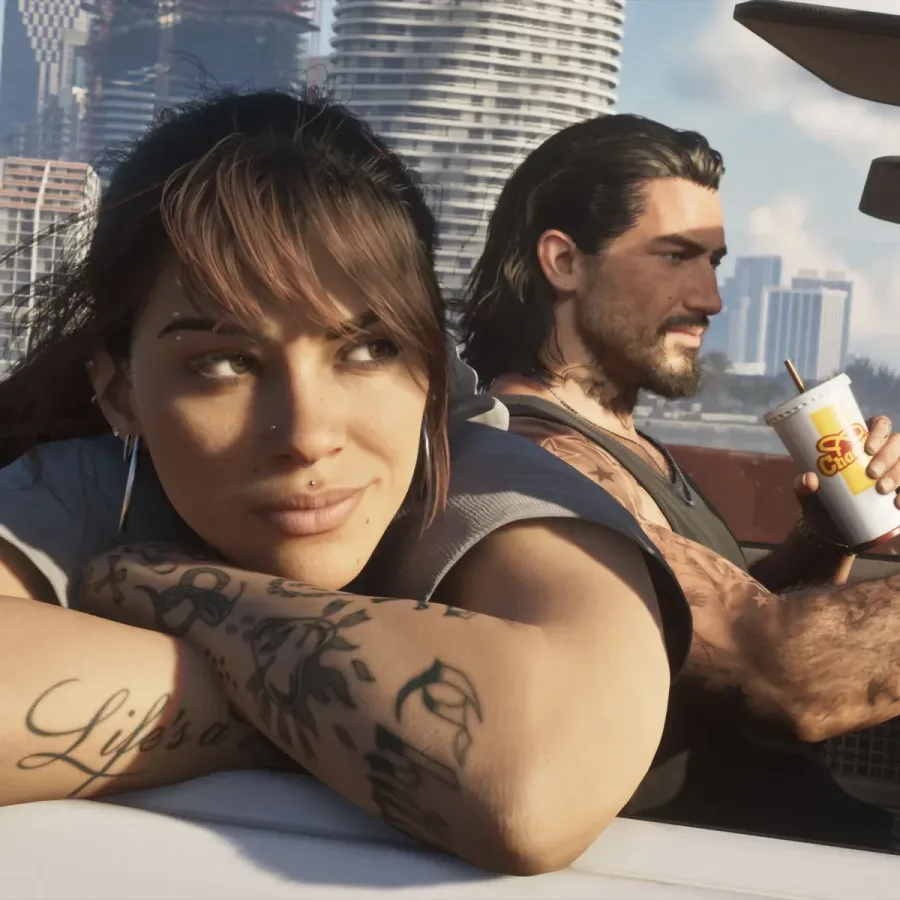
Grand Theft Auto 6 has always been expected to deliver a larger, denser, and more technically ambitious take on Rockstar Games' open-world formula. New gameplay details suggest that ambition may also reach into the small routines surrounding crime, travel, and life in Vice City. Players may need to stop for fuel, think carefully about how they display firearms in public, and ensure protagonists Jason and Lucia get enough rest between major jobs.
Those ideas have quickly created a familiar divide among fans. One group sees them as the kind of reactive, grounded details that made Red Dead Redemption 2 memorable. Another worries that systems designed to make a fictional city feel believable could slow down the spontaneous chaos that has long defined Grand Theft Auto.
The central question is not whether realism belongs in GTA. Rockstar has always used believable details to make its satire and mayhem more effective. The issue is how often those details will ask players to pause, manage resources, or conform to everyday rules before the game lets them get back to stealing cars, escaping police, and pursuing the next mission.
Embedded X/Twitter post
Embedded X/Twitter post
Embedded X/Twitter post
Visible guns will affect the people around Jason and Lucia
Co-development lead Rob Nelson has described a more nuanced approach to guns and civilian behavior than players saw in Grand Theft Auto 5. Carrying a long gun on a character's back may not immediately cause panic, but holding that same weapon in hand will make nearby people uncomfortable. NPCs can move away, while carrying more weapons and displaying them in a threatening manner will make the response more severe.
For useful background on this topic, read GTA 6's Midnight Local Launch Has Players Eyeing New Zealand Time Zones.
Police will also reportedly distinguish between merely possessing a weapon and looking ready to use it. If officers spot a character with a firearm, they may issue a warning. Holding a long gun with both hands in a firing-ready posture, however, can cause the situation to escalate.
That is a notable adjustment for the series. In 2013's Grand Theft Auto 5, players could often produce a shotgun in public without civilians reacting in a way that matched the danger. Nelson explained that this kind of behavior no longer fits the level of visual fidelity and population behavior Rockstar is pursuing in 2026. As character models, animations, and crowd reactions become more convincing, a city ignoring an openly brandished weapon becomes harder to accept.
It does not necessarily mean GTA 6 will become a strict simulation in which players are punished for every weapon choice. Instead, the system appears intended to create context. A rifle stored on a back may be tolerated differently from a rifle aimed at chest height in a crowded area. That distinction could give law enforcement encounters more texture, especially before a situation turns into a full wanted-level chase.
For players who enjoy planning heists, this may add meaningful tension. Walking into an area visibly armed could change the mood before a mission begins. For players who prefer immediate action, it may simply mean the first moments of an encounter are more reactive than before.
Fuel management enters the GTA sandbox
Perhaps the most debated detail is the confirmation that gas stations can be used to repair and refuel vehicles. Fuel systems are common in some open-world games, but their arrival in a modern GTA game changes the assumptions players make when taking a vehicle across a massive map.
Nelson indicated that refueling is intended to be quick rather than laborious. Filling a car reportedly takes around 10 seconds and is generally inexpensive. The design message is clear: Rockstar wants fuel to exist as part of the world without turning every drive into a lengthy chore.
Even so, a quick process can still shape play. A player who steals a car during a desperate getaway may have to account for its remaining fuel. An escape route could become more complicated if the vehicle runs dry, forcing a switch to another ride or a sprint on foot. A routine trip might also gain a small but memorable interruption when a gas stop becomes necessary.
Supporters of the feature argue that these moments can generate the unscripted stories that open-world games thrive on. Running out of gas at the wrong time could produce a scramble for a replacement car, a detour to a nearby station, or an unexpectedly chaotic confrontation. Critics, meanwhile, see the possibility of a mundane task intruding on the fantasy of limitless driving.
Much will depend on tuning. If fuel drains slowly, stations are plentiful, and refills stay brief, the mechanic could remain a background consideration until it creates a useful complication. If it demands too much frequent attention, it could become one more interruption between players and the activities they actually want to pursue. Rockstar appears aware of that concern, judging by the emphasis on the speed of refueling.
Realism with a purpose, not realism for its own sake
Fuel and weapon reactions are only part of a broader effort to make GTA 6's Miami-inspired Vice City feel lived in. Rockstar has promised its most realistic map in the series to date, and the details around Jason and Lucia suggest that the protagonists' everyday condition will matter as well.
Players will be able to tell whether the pair are sufficiently rested, with sleep affecting the regeneration of certain attributes. That does not mean the game is expected to impose a demanding survival-game sleep schedule. Still, the feature implies that the leads' routines can have mechanical consequences beyond mission success or failure.
Rockstar considered pushing this aspect further. Nelson said the team once explored a grocery-shopping feature that would have required players to replenish the refrigerator. It was ultimately removed. The explanation is revealing: the goal is to find a balance between realism and ease of play, and actions should have meaning beyond role-playing for its own sake.
That philosophy offers a useful lens for the other new systems. A gasoline stop is likely more interesting if it changes a pursuit or prompts a new decision. Sleep works better if it connects to a meaningful performance benefit. Visible weapons matter if they allow players to read and manipulate social tension in a more believable way. If these systems exist merely because they are realistic, they risk becoming busywork. If they consistently create choices, complications, or opportunities, they can enrich the sandbox.
The Red Dead Redemption 2 comparison is inevitable
Fans have naturally compared the emerging GTA 6 design to Red Dead Redemption 2. Rockstar's 2018 western embraced deliberate pacing, environmental immersion, and a substantial amount of character maintenance. It found power in quiet rides, camp conversations, hunting trips, and the feeling that Arthur Morgan inhabited a world with routines independent of the player.
GTA has a different identity. Its tone is sharper, more contemporary, and often deliberately ridiculous. The appeal of its cities includes the freedom to cause trouble at a moment's notice, then accelerate away from the consequences. Bringing more of Red Dead's grounding to Vice City could make the world more convincing, but GTA 6 must still preserve room for absurdity, speed, and player-driven disruption.
The good news is that the announced features do not automatically contradict that identity. More believable civilian reactions can make reckless behavior feel more consequential. Fuel limits can make a getaway more dramatic. Character fatigue can add a light strategic layer without turning every mission into a management exercise. The concern arises only if the demands of simulation overwhelm the pace and freedom players expect.
A few details cannot define the whole game
It is worth keeping perspective before treating GTA 6 as a full realism simulator. The available information describes selected mechanics, not the complete structure of the game. Rockstar has not detailed how quickly cars consume fuel, how optional refueling may be in normal play, how frequently sleep will matter, or exactly how much latitude players will have before police or civilians react to displayed weapons.
Those unanswered questions are important. The difference between an immersive touch and an irritating obligation often comes down to frequency, friction, and player control. A system that emerges occasionally during a high-stakes moment can be exciting. The same system, repeated constantly without interesting consequences, can feel tedious.
GTA 6 is scheduled to launch on November 19 for PlayStation 5 and Xbox Series X/S. Until players can explore Vice City themselves, discussion around refueling, firearms, and sleep will remain speculative. But the early picture is of a Rockstar game trying to make its world react more naturally without losing the unpredictable energy that made the series an open-world landmark.
That balancing act may be GTA 6's most important design challenge. Players are unlikely to object to realism simply because it exists. They will object if it gets in the way of fun. If Rockstar can make a fuel stop, a police warning, or a badly timed lack of sleep contribute to a memorable story rather than delay one, those details may become part of what makes Vice City feel unlike any GTA setting before it.
Community
Discussion
Start the conversation.
No comments have been posted yet.