

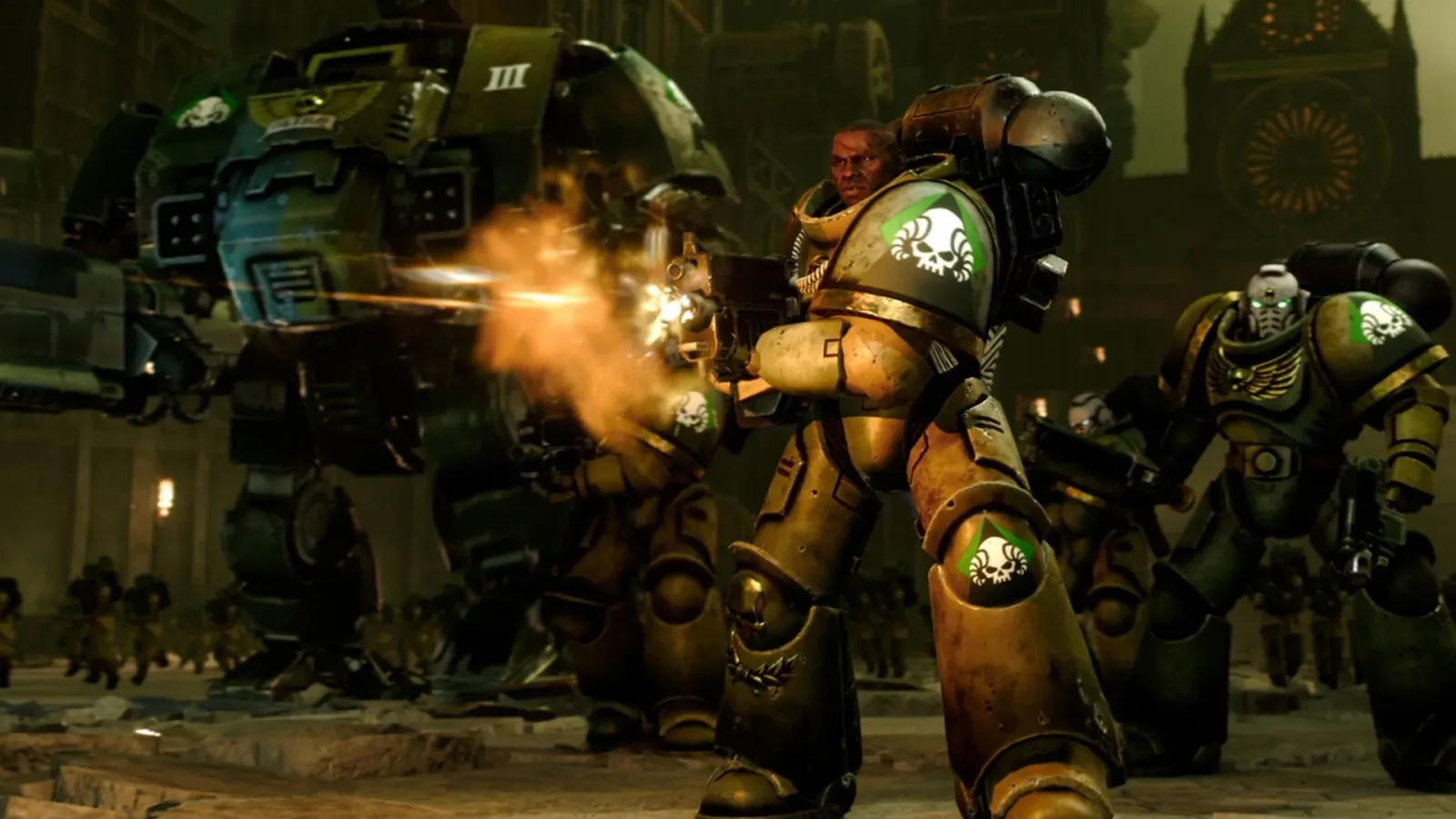
Total War: Warhammer 40K will include Traitor Guard forces when it launches, with Creative Assembly confirming that renegade elements connected to the Imperial Guard will appear during campaigns as hostile troublemakers. The studio has not yet explained whether these forces will receive a bespoke battlefield roster or simply represent altered Imperial Guard units, but it has made clear that players should expect rebellions and other destabilizing activity from them.
The confirmation adds an important layer of internal conflict to the game's depiction of the Imperium. The Imperial Guard, now commonly known in Warhammer 40K lore as the Astra Militarum, is one of the four playable factions revealed so far. Space Marines, Orcs, Aeldari, and the Imperial Guard round out the currently announced playable launch lineup. The Traitor Guard, meanwhile, appear set to occupy a different position: an opposing force encountered in the wider campaign rather than a confirmed selectable army.
Dave Petry, battle product owner for Total War, addressed the group's existence following a hands-on Gamescom session. Petry was careful not to spell out the faction's exact mechanics, but said there would be "some presence of traitorous things occurring." He added that these forces would be present as enemies to fight and would be "causing trouble and uprisings throughout your campaign."
That wording leaves plenty of room for speculation, but it establishes a few meaningful facts. Traitor Guard forces are not merely background flavour, and they are expected to have a campaign-level impact. They will appear at launch, players can battle them, and their activities will be tied to disorder across the galaxy-spanning conflict. What remains unknown is whether that disorder is delivered through scripted events, rebel armies, settlement unrest, a separate political system, or another campaign mechanic.
For useful background on this topic, read Ultima VII: The Black Gate Still Defines What a Living RPG World Can Be.
A familiar Warhammer 40K threat enters Total War
The Traitor Guard label covers Imperial military personnel who have turned against the Imperium. In the setting, that betrayal can emerge from Chaos corruption, desperation, local rebellion, opportunism, or a commander's decision to abandon Imperial rule. Their basic visual and military language can resemble that of the Guard they once served beside, which makes them an especially fitting threat for a Total War campaign about contested worlds, armies, and loyalty.
Unlike a straightforward alien invasion, a Traitor Guard uprising has the potential to create uncertainty within Imperial territory itself. An army may be equipped with familiar tanks, infantry formations, artillery, and command structures, but no longer fight for the same cause. In a strategy game, that concept naturally supports the idea of internal instability: garrisons breaking away, local powers revolting, or hostile armies emerging in regions where the player assumed order had been secured.
Creative Assembly has not confirmed any of those specific scenarios. Still, Petry's reference to uprisings suggests that the faction's presence will matter beyond a one-off enemy encounter. The phrase also fits the broader Total War tradition of campaigns where maintaining control over territory can be as important as winning a large battle. Expansion creates vulnerabilities, and an enemy that can generate unrest behind the front line could make the Imperial Guard's strategic position feel appropriately precarious.
Playable status and unit differences are still unconfirmed
The biggest unanswered question is how distinct the Traitor Guard will be from the playable Imperial Guard. Petry did not say whether the renegades would field their own exclusive units, altered abilities, Chaos-influenced equipment, special commanders, or an entirely separate battle identity. It is therefore too early to treat them as a full faction in the same sense as Space Marines, Orcs, Aeldari, or the Imperial Guard.
There is also no announcement that Traitor Guard will be playable at launch. Their confirmed role is that of a force players can encounter and fight during the campaign. That could mean a limited non-playable faction, a more developed AI army with its own systems, or a foundation for a later expansion. Creative Assembly has only confirmed plans to add more factions after launch; it has not connected those plans to the Traitor Guard specifically.
Total War has historical precedent for factions appearing in a game world before becoming available as complete player armies. In the first Total War: Warhammer, Bretonnia could be found on the campaign map at launch, but the faction did not become playable until its unit roster had been developed further the following year. That example does not prove the same approach will be used for Traitor Guard in Warhammer 40K, but it shows that the series has previously separated campaign presence from a fully supported playable roster.
For now, the most cautious reading is also the clearest one: the Traitor Guard are confirmed enemies with campaign relevance, while their faction depth and player availability have not been announced.
Chaos remains a major unknown
Traitor Guard naturally raise another major subject for Warhammer 40K: Chaos. Corruption by the Ruinous Powers is among the best-known paths to Imperial betrayal, yet there has not been a concrete confirmation of a dedicated Chaos presence in the game's revealed material. The Gamescom campaign preview centered on Space Marines fighting Orcs, so it did not offer a direct look at Chaos armies, daemons, Chaos Space Marines, or the many human forces aligned with them.
That absence should not be mistaken for a declaration that Chaos will not arrive. Total War: Warhammer 40K is planned to expand with additional factions after launch, and the scale of Warhammer 40K makes further additions an expected part of its long-term future. But the developer has not identified which factions will be next, when they will be added, or whether Traitor Guard activity is directly tied to a larger Chaos plan.
The distinction matters because Traitor Guard can exist across a wide spectrum of stories. Some may be overtly Chaos-worshipping soldiers, while others may be separatists, revolutionaries, mutineers, or militarized populations rejecting Imperial authority for reasons that have little to do with daemonic allegiance. Creative Assembly's guarded comments leave open the possibility that the game will use the name broadly, rather than limiting it to one particular kind of heresy.
Whatever form they take, their inclusion offers an opportunity to represent a crucial aspect of the setting. The Imperium is not simply a unified bloc standing against aliens. It is vast, rigid, violent, and frequently fractured by competing leaders and local crises. A campaign where Imperial forces can face threats from within should help make that scale and instability feel more authentic.
Why uprisings could matter to the campaign
Total War's appeal has traditionally come from the relationship between its strategy map and its real-time battles. Armies need to be raised, territory defended, resources protected, and rival factions contained before two forces meet on the battlefield. A hostile group that can trigger uprisings has the potential to pressure all of those systems at once.
If Traitor Guard forces emerge in contested regions, players may need to decide whether to keep an army at home or send it to a distant war. If they are connected to public order or local loyalty, newly conquered planets could become harder to hold. If they operate as roaming rebel forces, they could force commanders to deal with unpredictable threats while larger enemies advance elsewhere. None of these implementations has been detailed, but the idea of unrest is a natural fit for the strategic structure Total War is known for.
On the battle side, a renegade Guard army could also provide a different kind of opponent from the currently revealed factions. The Space Marines are elite super-soldiers, Orcs bring a brutal green tide, and Aeldari suggest speed and specialized technology. A human enemy using familiar militarized formations could turn the focus toward conventional firepower, armour, artillery, and attritional warfare. Whether the final game develops that contrast remains to be seen, since no Traitor Guard battle has been publicly shown.
An intentionally limited confirmation
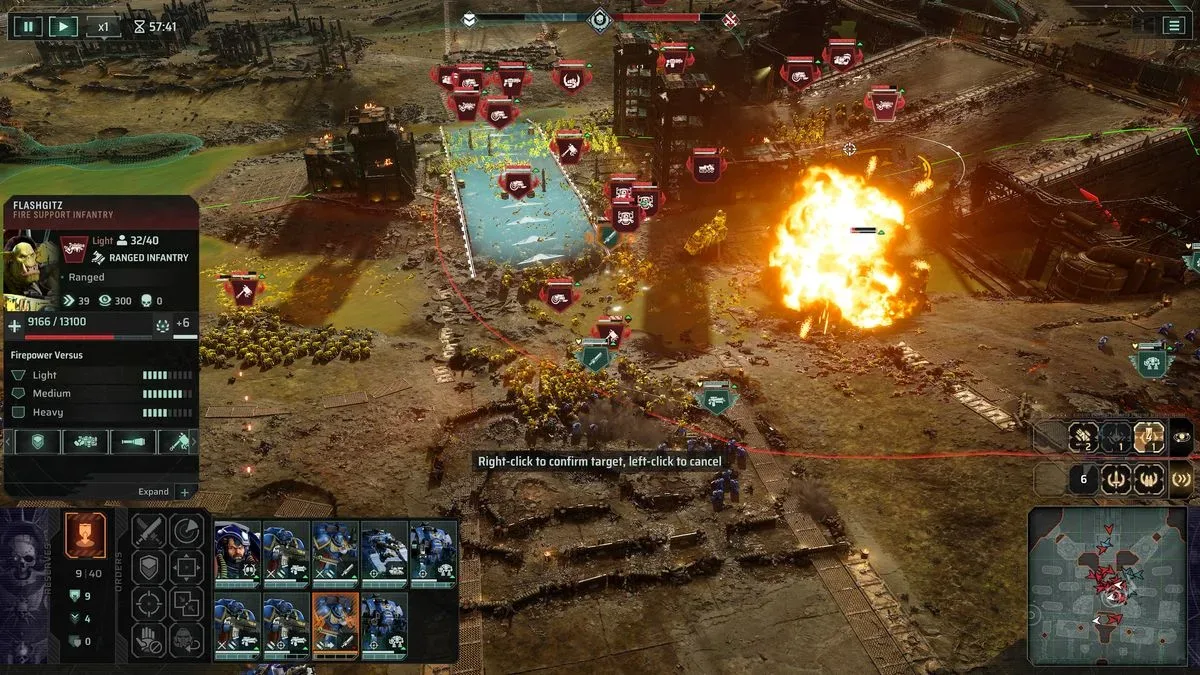
Creative Assembly's message is deliberately narrow, but it still answers a question raised by the appearance of a Traitor Guard faction icon during the Gamescom hands-on session. The icon was not accidental window dressing: Traitor Guard forces will be in the game at launch, they can be fought, and they will contribute to disruptions during a campaign.
Players hoping for a full renegade army announcement will need to wait for more information. The developer has not confirmed special units, leaders, lore subfactions, Chaos affiliations, playable status, or the precise mechanics behind their uprisings. Those omissions are significant, especially with a setting as broad as Warhammer 40K.
Even so, the confirmation is an encouraging sign for anyone looking for a campaign that captures more than headline conflicts between famous armies. The Traitor Guard can represent the fault lines inside the Imperium itself, turning supposedly secure territory into another battlefield. As Total War: Warhammer 40K moves toward its closed beta and further gameplay reveals, how those rebellions work may become one of the more important details shaping the game's strategic identity.
Community
Discussion
Start the conversation.
No comments have been posted yet.