


Grand Theft Auto 6 begins with the promise of big crimes, bigger cities, and the inevitable chaos associated with a trip to Vice City. Yet one of the most memorable ideas in its early hours is remarkably small-scale. Before the wider world fully takes hold, Jason has a life in Key Lento: a coastal rhythm built around exercise, casual jobs, friends, fishing, drinks, domestic downtime, and just enough criminal work to keep his pockets full.
It is not a life that can last. It is not even a particularly safe life once the details are examined. But it feels comfortable, and that comfort is the point. Key Lento does more than provide GTA 6 with an introductory region and a checklist of opening activities. It gives the player a version of Jason's future that seems plausible for a while: a low-stakes existence where he can stay close to Lucia, earn enough money to get by, and avoid becoming swallowed by the ambitions and betrayals that usually power a Grand Theft Auto story.
That makes the game's opening chapter especially effective. GTA has often excelled at making places feel alive, but Key Lento appears to use that strength in a more intimate way. Rather than immediately asking players to conquer a city, it lets them settle into a routine. The eventual pressure to move beyond that routine is stronger precisely because the game first makes the routine worth wanting.
A small world that feels like a real home
Jason's days in Key Lento can take on the shape of an uncomplicated beachside schedule. He can wake up, step into the coastal sunshine, work out, shower, down a protein shake, and pick an outfit suited to the heat. Board shorts and Hawaiian shirts are not simply visual jokes here; they help establish a character who seems temporarily at ease with his surroundings.
For useful background on this topic, read Samsung's 32-Inch Flat Monitor Drops to $142 for Black Friday.
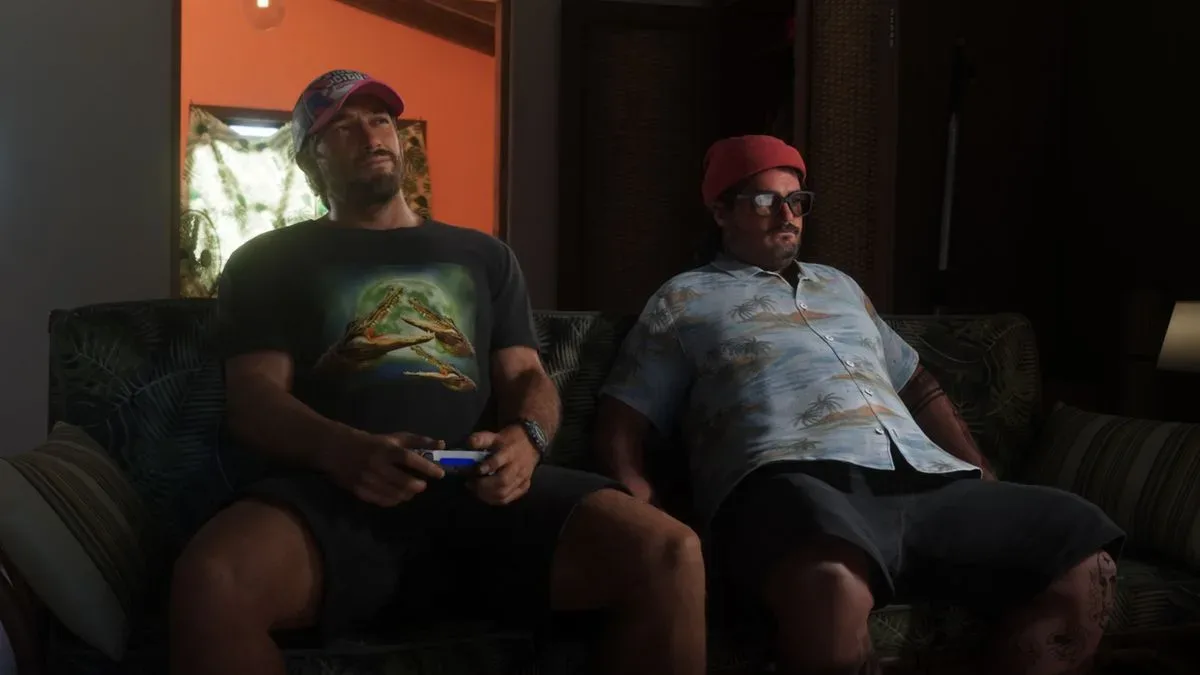
From there, the day can move in different directions without breaking that relaxed mood. There is fishing, birdwatching, shooting hoops, television, gaming on the JoyStation, and spending time with Lucia in the evening. Jason can meet Cal for a drink at the local bar. He can explore the Keys rather than race through them. Even the criminal possibilities have a local, almost errand-like quality in this early stretch. A player might infiltrate a Kingfisher hideout, steal a drug stash, or pursue a robbery or treasure hunt, then return to the familiar comfort of home.
That balance is important. A fully peaceful coastal-life simulator would be a strange fit for Grand Theft Auto, and GTA 6 does not pretend Jason has somehow stepped outside the franchise's criminal foundations. Instead, it gives the danger a limited scale. Mishaps connected to drug dealing and confrontations with the Kingfishers can puncture the calm, but they do not immediately erase it. They become part of the local economy and social structure Jason is already navigating.
The result is an opening that suggests criminality does not always arrive as an explosive escalation. Sometimes it looks like a favor, a small score, or a dubious obligation that feels manageable until it does not. Jason may be living casually, but the life supporting that casualness is unstable from the beginning.
Brian's house is more than a mission hub
The importance of Key Lento is tied closely to Brian's house. Once it has been repaired, the waterfront property becomes a convincing home base. It is rent-free, close to the water, near Cal and the bar Jason likes, and apparently comfortable enough to support an easygoing routine. There are neighbors, some more forward than others, but the overall impression is one of community rather than isolation.
In many open-world games, a safehouse is primarily functional: a place to save, change clothes, recover, and receive the next assignment. Brian's house seems to have greater emotional value because it enables the kind of daily life GTA 6 is presenting. It is where a busy day can end. It is where Jason can return after an afternoon of wandering or a job that got messier than intended. And it is part of the framework that allows his relationship with Lucia to feel grounded before larger pressures begin to reshape their circumstances.
Jason's arrangement with Brian also helps explain why the fantasy works at all. He has enough work to maintain himself, enough cash to enjoy the area, and enough free time to actually experience the place. That is an unusual combination in a crime game, where protagonists are often immediately trapped by debt, pursuit, desperation, or ambition. In Key Lento, Jason is not entirely free, but he has room to breathe.
That breathing room gives players permission to imagine an alternate path. What if he simply kept things small? What if he exercised in the morning, handled a job around midday, explored in the afternoon, and made it back to Lucia before night? It is easy to see why that possibility can become attractive, even while the story steadily makes clear that it is built on shaky ground.
The comfort is intentional, and so is the warning
GTA 6's first chapter reportedly unfolds at a measured pace, introducing the people and routines that shape Jason's early life in the Keys. This slower approach makes the region's eventual instability matter more. The player is not merely informed that Jason has something to lose; they are given time to participate in it.
That is why the looming shift carries more weight than a standard open-world tutorial transition. Vice City has an obvious pull, even before Lucia enters the picture. It represents possibility on a grander scale: more work, more money, more responsibility, and a life that might seem less constrained than Jason's existence in Key Lento. Jason's wish for more from Brian points in the same direction. He is not wholly satisfied with staying put, however appealing the sunlit routine may be.
At the same time, Donnie's increasingly reckless behavior signals that standing still may not truly be an option. Jason's connections to Brian and Donnie make it difficult to believe that keeping his head down will protect him forever. The threat of being taken to the pig farm is a blunt reminder that the Key Lento life is not a clean escape from criminal consequences. It is simply a quieter form of compromise, one that can survive only while the people around Jason remain predictable.
That contradiction is what makes the chapter feel richer than a simple vacation before the action begins. Jason's beachside life is both appealing and flawed. The player can understand why he wants it, while also understanding why it cannot contain him indefinitely.
Why a longer stay would have been tempting
There is a strong argument that the early game could have benefited from even more time in Key Lento. Not because GTA 6 should abandon Vice City or turn into an endless simulation of fishing trips and protein shakes, but because the more deeply players inhabit Jason's initial normality, the more powerful its loss becomes.
An extra stretch of days could have allowed the game to develop the routines further: more casual interactions with neighbors, more reasons to visit Cal, more incremental improvements to Brian's house, and more opportunities to see Jason and Lucia share a life that is modest but recognizable. Small optional activities can accomplish a great deal in this context. They do not need to deliver huge rewards. Their value lies in turning a location into somewhere the player chooses to be.
There is also a character benefit. Jason's laid-back appearance and habits could easily be read as surface-level style, but Key Lento gives them a setting where they make sense. His workouts, casual clothes, and low-key social life are not random details. They are part of a temporary identity: a man who can plausibly believe he has found a workable balance between love, friendship, small-time crime, and the warm coast.
Of course, that identity was always likely to break. The southern tip of Vice City would not have held Jason forever, with or without Lucia. Grand Theft Auto stories are built around movement, escalation, and characters who reach beyond the lives they claim to want. A game that stayed entirely in Key Lento would eventually deny its own larger premise.
But GTA 6 does not need to choose between a quiet opening and a major crime saga. Key Lento demonstrates how the two ideas can strengthen each other. The relaxation is not a distraction from the story's momentum. It is part of the engine that drives it.
Key Lento gives Vice City something to compete with
Open-world games often assume that a larger city is automatically the most exciting destination. GTA 6's opening appears to challenge that assumption by making the smaller coastal community feel genuinely desirable. Vice City may promise spectacle, opportunity, and danger, but Key Lento offers something more personal: a sense of belonging.
That distinction matters for Jason and for the player. If the only appeal of the Keys were pretty scenery, leaving would be easy. Instead, the chapter builds a complete, if fragile, version of daily life. Jason has a house, a partner, familiar faces, activities, work, and time. He can imagine the future in manageable terms. The tragedy is not that he loses perfection. It is that he loses a life that might have been good enough.
That makes Key Lento one of GTA 6's most valuable early locations. It is not merely where the story starts. It is the place that proves there was another way to live, however temporary that possibility may have been. By the time Jason is drawn toward larger ambitions and more dangerous relationships, the player understands what he is leaving behind: not just a map region, but the rare Grand Theft Auto fantasy of slowing down and staying put.

Community
Discussion
Start the conversation.
No comments have been posted yet.