

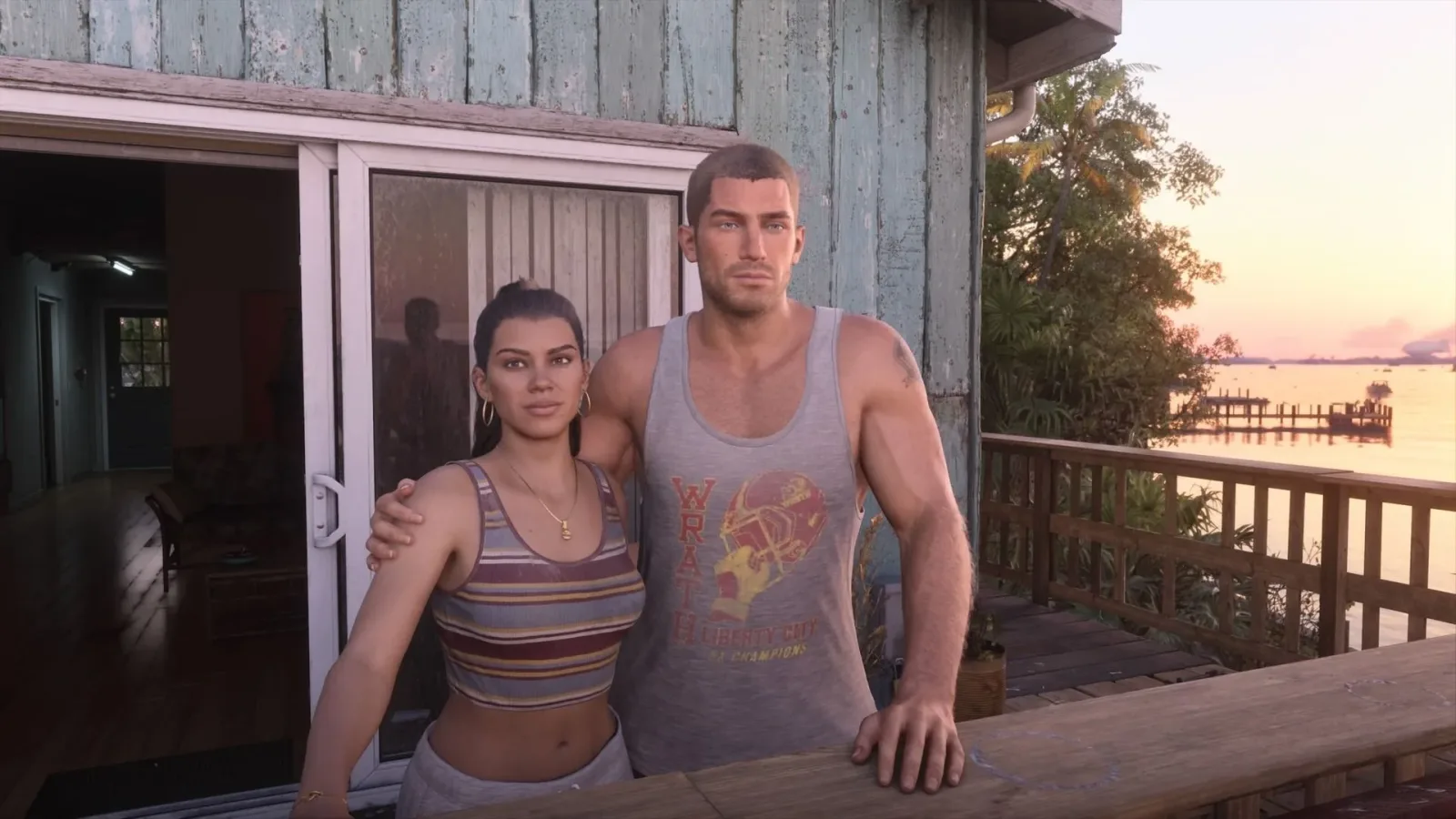
Grand Theft Auto 6 has reportedly reached the kind of commercial scale that invites an obvious question: how many publishers will now attempt to build their own version of it? One market analyst's answer is blunt--probably none of the competent ones.
Estimates place GTA 6 at just under 50 million copies sold, with total revenue above $4 billion. Those are enormous figures by any measure, even in an industry accustomed to blockbuster launches, long-tail sales, and franchises with decades of recognition behind them. Yet the argument is not that the game has created a simple path for competitors to follow. Instead, its extraordinary performance may demonstrate just how difficult, risky, and historically specific this type of release has become.
Rhys Elliott, head of market analysis at Alinea Analytics, has characterized GTA 6 as a potential "last of its kind": a vast, ultra-expensive, globally anticipated AAA event that arrived after years of cultural momentum and managed to satisfy immense expectations. In that view, the game is less a blueprint for the next generation of big-budget development than the closing landmark of a particular era.
A success story that is difficult to reproduce
It is easy to see why executives might look at the reported sales and revenue totals with envy. A game capable of generating billions of dollars can reshape a publisher's financial outlook, dominate social conversation, and keep audiences engaged for years. But copying the visible result is very different from recreating the conditions that produced it.
For useful background on this topic, read Shuhei Yoshida Calls Final Fantasy VII's PlayStation Move a Career-Defining Moment.
GTA 6 was not built in a vacuum. It follows 2013's Grand Theft Auto 5, one of the most successful entertainment products ever made, and benefits from a franchise identity that has been established over multiple generations of hardware. The newest entry also arrived after roughly 13 years of anticipation. That length of time gave audiences room to speculate, revisit older games, debate every official reveal, and turn the absence of a sequel into part of the event itself.
There is also the matter of Rockstar's reputation. The studio has spent decades becoming closely associated with technically ambitious open worlds, elaborate detail, cinematic presentation, and games that can become broader pop-culture touchstones. That standing cannot be bought simply by assigning a massive budget to a new project. It has to be earned over a long period, often through repeated successes--and even then, there is no guarantee that the audience will respond in the same way.
Elliott's point is that a publisher looking at GTA 6's performance should not conclude that it needs to approve its own billion-dollar crime sandbox. The safer conclusion may be that Grand Theft Auto occupies a rare position in the market, one created by timing, history, brand strength, community interest, and an unusually long development runway.
The industry has seen the dangers of chasing a phenomenon
Gaming has a long history of companies trying to recreate another title's lightning-strike success. The pattern is familiar: a breakout release proves there is enormous demand for a certain experience, publishers race to fund similar projects, and the market becomes crowded before most of those projects can even launch.
Fortnite is one of the clearest modern examples of a game whose success inspired widespread imitation. Its combination of free-to-play access, live-service updates, social play, cross-cultural visibility, and evolving events made it far more than a conventional hit. But attempts to manufacture "the next Fortnite" have repeatedly shown the limits of that thinking. A successful live-service game depends not only on a solid launch, but on a community that stays, a content pipeline that can sustain years of updates, and an identity strong enough to stand apart from every rival.
The same lesson was visible in an earlier generation of online games. For years, major projects were marketed or discussed as possible World of Warcraft challengers. Some were well-made, some found dedicated audiences, and some became notable successes in their own right. Very few displaced the game they were supposedly built to defeat. The label of a "killer" often revealed more about industry ambition than it did about what players actually wanted.
That history matters when considering GTA 6. The game's success may look like an invitation to scale budgets higher, extend development longer, and chase increasingly universal mainstream appeal. But the analyst's argument is that it should instead serve as a warning about survivorship bias. Players see the triumphant final product. They do not necessarily see the many expensive projects that attempted to reproduce another company's hit and failed to build the same audience.
Why GTA 6 may be a bookend rather than a template
Grand Theft Auto 5 was widely seen as a defining work of its period, showing where open-world games, online ecosystems, and blockbuster production values could go. GTA 6, by contrast, is being positioned as something closer to a culmination. It represents a peak expression of the traditional mega-budget AAA model: a huge, premium, culturally dominant release with years of pent-up demand behind it.
That does not mean games at this scale will immediately disappear. Major publishers still have established franchises, substantial resources, and audiences eager for ambitious sequels. However, the economics surrounding them are increasingly intimidating. Longer production cycles mean teams can spend many years working before a product reaches the public. Enormous budgets raise the sales threshold required for a project to be considered successful. Delays, shifting technology, changing audience habits, and rising staffing costs can all magnify the risk.
Even a very successful game may not be enough if its cost has expanded too far. That is the tension at the center of the current AAA business: players often want richer worlds, better visuals, more systems, and more content, while publishers are being forced to consider whether each escalation in scope is financially sensible.
GTA 6 stands apart because it has entered this environment with a level of anticipation few games can approach. Its reported results suggest that the demand was real, but they do not prove a new intellectual property--or even another famous franchise--could draw the same scale of response. For most companies, trying to match that outcome could mean taking on a level of financial exposure that is difficult to justify.
Other giants face a high bar
The implications extend beyond Rockstar's own series. Future releases such as Red Dead Redemption 3 and The Elder Scrolls 6 will inevitably be measured against the new standard in public discussion, especially where scale, immersion, and open-world design are concerned. But matching GTA 6's commercial impact is a far tougher challenge than simply making an excellent game.
Both of those franchises carry major brand recognition and passionate fan communities. Both are associated with expansive worlds and long waits between entries. Still, GTA's particular cultural reach is unusually broad. Its modern setting, satirical edge, accessibility to casual audiences, and decades-long presence in popular culture give it a distinct advantage as an event release.
Comparisons can also become misleading. A game does not need to sell nearly 50 million copies or generate billions in revenue to be a creative and commercial triumph. Treating GTA 6 as the mandatory benchmark for every ambitious release risks flattening a diverse medium into a race that only a tiny number of companies could possibly enter.
A more uncertain, but potentially more varied future
Elliott's view of the post-GTA 6 landscape is not purely pessimistic. The current pressure on AAA development is undoubtedly unsettling, particularly as companies confront budget concerns and a more cautious investment climate. But the decline of one dominant model does not mean the decline of games as a medium.
It could mean more varied strategies. Publishers may place greater value on projects with controlled scope, recognizable concepts, and sustainable development plans. Mid-sized games, independent productions, focused single-player experiences, and carefully managed online titles can all thrive without requiring the impossible goal of becoming the next global entertainment singularity.
For players, that may ultimately be healthier than an industry in which every major decision is guided by the hope of discovering another Fortnite, another World of Warcraft, or another Grand Theft Auto. Phenomena of that magnitude are memorable precisely because they are rare. Trying to mass-produce them has often led to disappointment.
GTA 6's reported performance is still an extraordinary achievement, and it will remain a major reference point for years to come. Yet its biggest lesson may not be that games must become larger, more expensive, and more all-encompassing. It may be that some successes are inseparable from the unique circumstances that created them. GTA 6 can be admired as a landmark without being mistaken for an instruction manual.

Community
Discussion
Start the conversation.
No comments have been posted yet.