

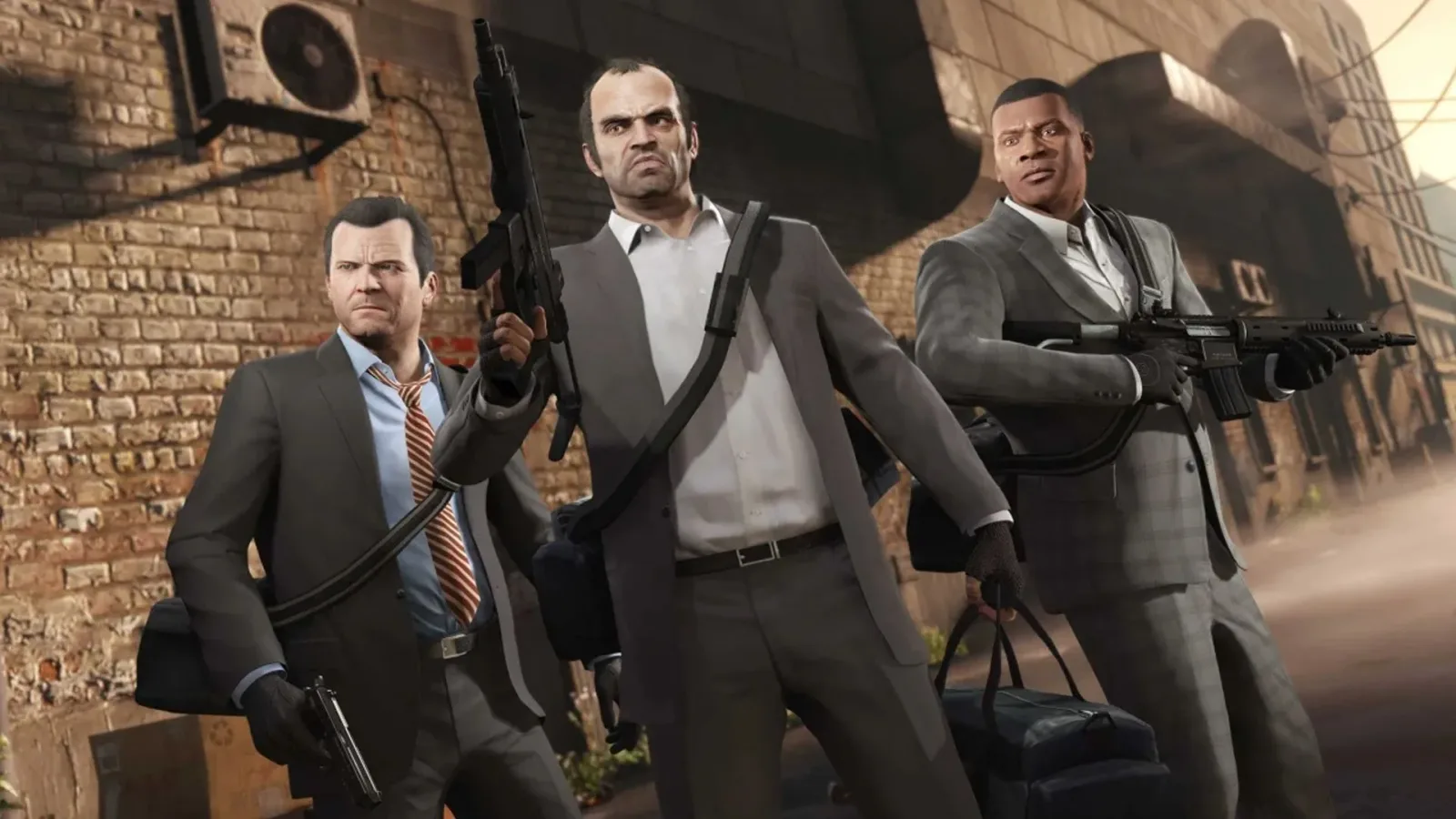
Few roles in video games arrive with the cultural weight attached to being a Grand Theft Auto protagonist. Rockstar Games' crime saga has spent decades turning its central characters into fixtures of gaming culture: familiar voices, instantly recognizable faces, and the basis for jokes, quotes, memes, and player memories that can last for generations. That is why the performers who previously helped define the series have some direct advice for Grand Theft Auto 6's incoming leads: enjoy the experience, follow Rockstar's direction, and prepare for a change that may stay with them for years.
At MCM Comic Con, Ned Luke, Shawn Fonteno, Steven Ogg, and Young Maylay were asked what they would tell the actors taking on GTA 6's central roles. Luke, who played Michael De Santa in Grand Theft Auto 5, kept his recommendation straightforward: have fun. But the wider response from the group made clear that the job carries a much larger personal impact than recording a conventional role.
Fonteno, best known as Franklin Clinton in GTA 5, stressed the importance of trusting Rockstar. His view was that the developer will point its performers in the right direction, an observation with particular relevance to a series where tone can shift rapidly between satire, action, drama, absurd comedy, and emotionally grounded character scenes. He also echoed a warning offered by Maylay: get ready. In Fonteno's words, it is a ride that the new actors will be on for a long time.
A role that follows performers long after release
That long-term perspective comes from experience. Grand Theft Auto games do not simply have launch windows; their characters frequently remain present in popular conversation long after the credits roll. Players revisit old missions, replay favorite radio segments, make videos around memorable scenes, and repeat dialogue until it becomes part of the wider language of gaming. A protagonist can become inseparable from the performer in the eyes of many fans, even though the work involved voice acting, performance capture, writing, animation, design, and a vast team effort.
For useful background on this topic, read Final Fantasy Resonance Sales Renew Calls for a Turn-Based Mainline Future.
Young Maylay, who portrayed Carl "CJ" Johnson in Grand Theft Auto: San Andreas, offered perhaps the clearest example of how durable that connection can be. San Andreas is roughly two decades behind the upcoming GTA 6 era, yet CJ remains one of the most recognizable characters in the franchise. The line "Aw shit, here we go again" has lived far beyond its original scene, becoming one of gaming's most repeated reactions to inconvenience, disaster, and the prospect of doing something difficult all over again.
Maylay told the GTA 5 cast that when GTA 6 arrives, they will be in the same position he occupies now: veterans whose work is still being discovered and celebrated by people who may not have played the game at launch. At convention appearances, he encounters longtime fans, including people with gray hair who recognize him as CJ. The point was not merely that a Grand Theft Auto performance becomes famous. It is that the actor and the audience can grow older alongside the character's legacy.
That is a useful lens through which to view GTA 6's still officially unconfirmed lead performers. Fans believe they have identified the people behind the new central characters, but the cast has not been formally established in the material discussed by the veterans. Until such details are confirmed, the speculation should remain just that. What is clear, however, is that whoever takes those roles will be entering a franchise with an unusually committed and multigenerational audience.
Why Rockstar's guidance matters
Fonteno's call to listen to Rockstar is also more than a generic piece of workplace advice. The studio's games are intensely authored, even within worlds that let players cause chaos, explore freely, and create their own unscripted stories. The protagonists need to hold the experience together. They must make sense in cinematic missions while remaining convincing when players move from a serious story moment to a spectacular crash, a botched robbery, or an extended detour across the map.
That balance is a major part of why GTA characters resonate. They are often portrayed as ordinary people, or at least people with recognizable frustrations and ambitions, despite operating inside exaggerated criminal worlds. They are not typically mythical chosen heroes or invincible super-beings. They can endure absurd punishment and survive events that would flatten a real person, but their personalities are rooted in human impulses: money, family, status, fear, resentment, loyalty, desperation, and the pursuit of a better life.
GTA 5's trio demonstrates how much that framework depends on performance. Michael's self-destructive dissatisfaction, Franklin's ambition and uncertainty, and Trevor's volatile unpredictability gave players three sharply different ways to experience Los Santos. Luke, Fonteno, and Ogg did not simply provide recognizable dialogue; their portrayals helped define the contrast among the three playable characters. The writing established the foundation, but the actors made their rhythms, tensions, and reactions feel distinct.
San Andreas accomplished something similarly lasting with CJ. His return to Los Santos, family conflicts, friendships, rivalries, and rise through the game's criminal world gave the sprawling adventure an emotional anchor. As Maylay's ongoing convention encounters show, that connection has not disappeared just because newer Grand Theft Auto installments have since arrived. A new generation does not necessarily replace an older fandom in this series. More often, it joins it.
GTA 6 faces an audience built across generations
Maylay's observation that he was not "shut down" by the GTA 5 generation is important. Franchise fandom is not always a competition between eras. Someone who first played San Andreas can appreciate GTA 5, while a player who started with GTA 5 can go back and find CJ's story. The same pattern will likely shape GTA 6. Its new protagonists will have to make a first impression on players who have waited years for the next major entry, but they will also enter a continuing conversation populated by fans of Vice City, San Andreas, GTA 4, and GTA 5.
That puts immense scrutiny on the new leads, but it also offers a rare opportunity. A successful Grand Theft Auto character is not limited to a single release cycle. The role can lead to years of community recognition, convention appearances, interviews, fan art, online clips, and a place in the collective memory of games. "Get ready," then, is not only a warning about publicity around launch. It is advice about adapting to a new relationship with fans.
There is also a practical reality behind Luke's more relaxed "have fun" message. Grand Theft Auto's stories can be dark, cynical, and intense, but the series' strongest performances often come from actors who can find energy in its extremes. There are dramatic confrontations, uncomfortable silences, broad comic outbursts, and moments of ridiculous escalation. Enjoying that creative range may be essential to delivering a character players want to spend dozens of hours with.
The franchise's performers remain part of its identity
The discussion arrives as attention around GTA 6 continues to intensify. The upcoming game's protagonists will inherit a standard established by characters such as CJ, Michael, Franklin, and Trevor, while needing to create identities that stand on their own. That task will be demanding, but the comments from the former leads are notably supportive rather than territorial.
Luke offers permission to enjoy the moment. Fonteno urges the incoming cast to put faith in the developer's creative guidance. Maylay emphasizes preparation for the attention and longevity that can follow. Together, those points amount to a concise survival guide for one of entertainment's most visible gaming roles.
For players, the advice is a reminder that the faces of Grand Theft Auto are not disposable pieces of a larger machine. They are central to why individual entries endure. A city, soundtrack, mission structure, and open-world sandbox may draw people in, but a memorable protagonist gives those experiences a voice. GTA 6's new stars are set to discover exactly what that means--and, if the history of the series is any indication, they may be hearing from fans about those roles for decades to come.
Community
Discussion
Start the conversation.
No comments have been posted yet.