

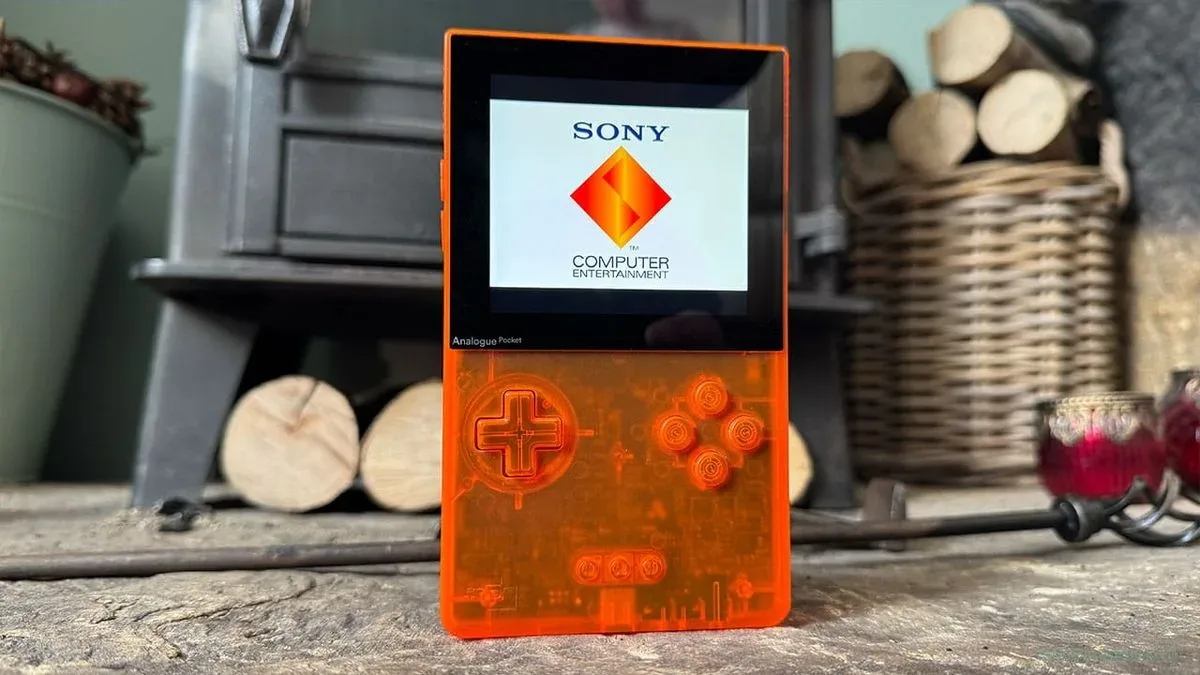
Analogue Pocket owners now have a new way to explore the original PlayStation library on the FPGA handheld. A working PlayStation core called GuardianSoul has surfaced for the system, representing a significant milestone for a device best known for playing Game Boy, Game Boy Color, and Game Boy Advance cartridges, as well as a growing collection of community-made OpenFPGA cores.
The arrival is notable because PlayStation support has long been one of the most requested additions for the Pocket's enthusiast community. Sony's first console remains home to a huge catalogue of 3D games, CD-based role-playing games, arcade racers, platformers, survival horror classics, and unusual one-off releases. Bringing that library to a compact FPGA portable has obvious appeal, especially for players who want one machine capable of covering a broad stretch of retro gaming history.
GuardianSoul does not represent a conventional, ground-up Pocket core project. It is based on the MiSTer PSX core and incorporates work associated with PS-FPGA GTE and other existing projects. Its development also comes with an important disclosure: artificial-intelligence tools, specifically OpenAI Codex and Anthropic Claude, were used in its creation. A human programmer made decisions about the project's direction and design, while the AI-assisted process used code from the established projects as part of building GuardianSoul.
That origin will understandably prompt different reactions across the FPGA and preservation communities. AI-assisted coding has become a contentious subject, particularly when a project is built on the foundations of open community work and when questions of authorship, maintenance, credit, and code quality are involved. Still, the most immediate point for Pocket users is that GuardianSoul is reportedly functional in early hands-on use, making it a potentially important option for those who wish to experiment with PlayStation software on the handheld.
For useful background on this topic, read Prototype Pokémon Red Development Cartridge Listed With $25,000 Opening Bid.
What GuardianSoul Means for the Analogue Pocket
The Analogue Pocket is not a typical software-emulation handheld. Its FPGA, or field-programmable gate array, can be configured to recreate hardware logic in a manner distinct from running a conventional emulator on a general-purpose processor. That distinction is central to the Pocket's appeal, though the experience and degree of accuracy still depend on the individual core and the hardware being reproduced.
OpenFPGA has allowed developers to expand the Pocket beyond its cartridge slots and official adapters. Community cores have made the device attractive to players interested in a single portable system for older platforms. However, each additional console poses its own technical challenges. The original PlayStation is a much more demanding target than the 8-bit and 16-bit systems that dominate many retro handheld collections, thanks to its 3D-focused architecture, CD-ROM media, dedicated graphics hardware, and the quirks developers learned to exploit throughout its lifespan.
A usable PlayStation implementation therefore has value beyond novelty. The Pocket's compact screen and portable form factor are a natural match for shorter sessions with racers, action games, and platformers, while its FPGA-focused audience has been eager to see how far the machine's community ecosystem can go. GuardianSoul suggests that PlayStation experiences can now be part of that conversation.
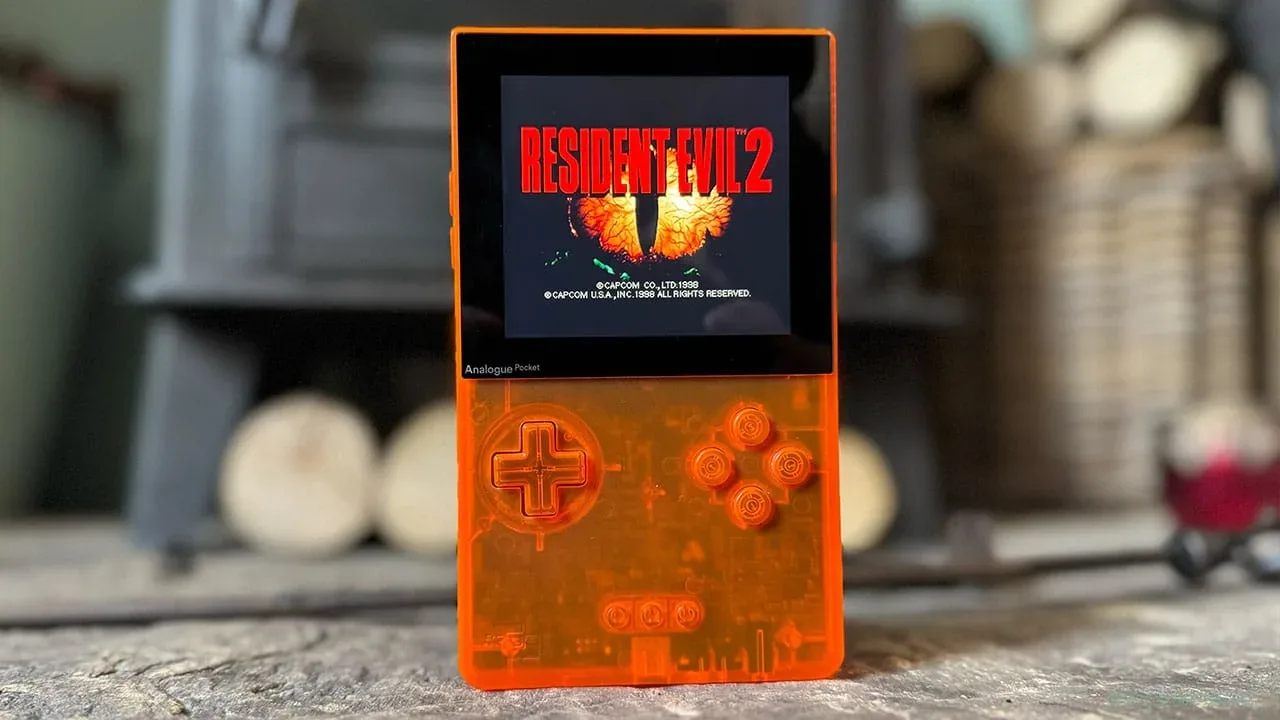
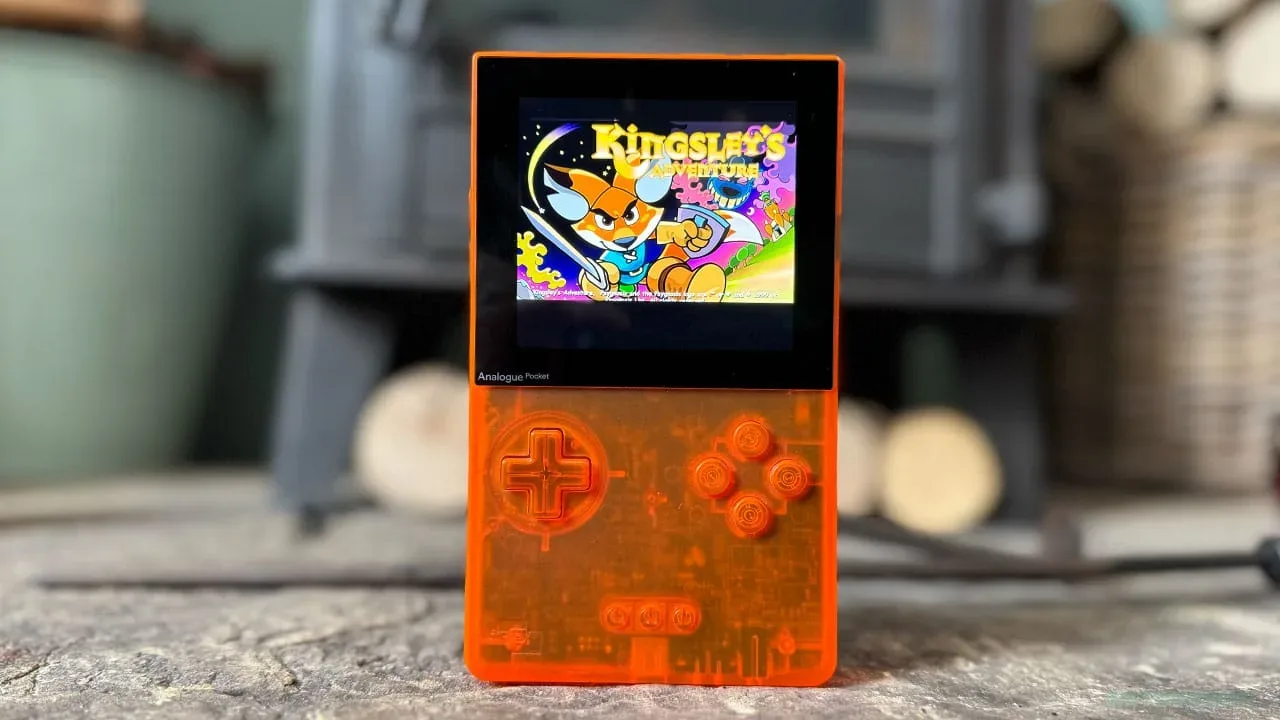
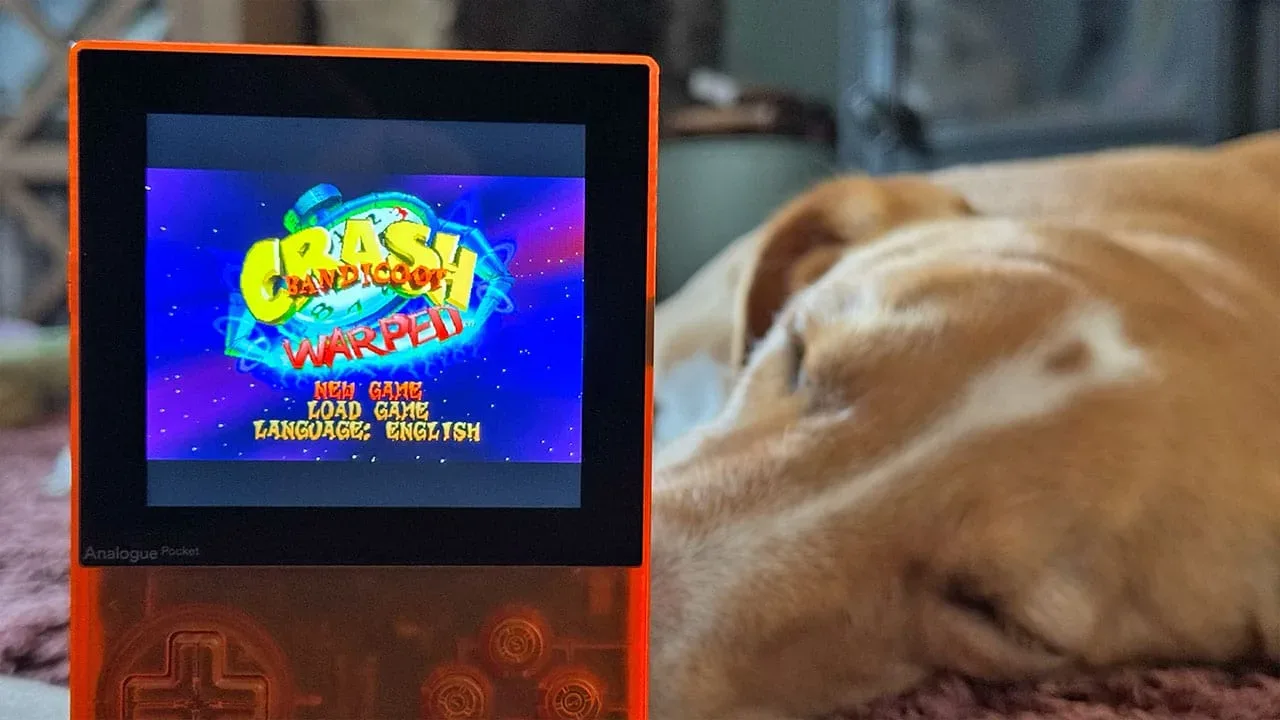
Early testing has included King's Field-style curiosity? Not quite: one of the games reported as working is Kingsley's Adventure, the colourful 1999 action-platformer that blends elements fans may associate with games such as Banjo-Kazooie and The Legend of Zelda. Also tested successfully were Resident Evil 2, Crash Bandicoot: Warped, and Crash Team Racing. These are useful examples because they cover different kinds of PlayStation games: 3D adventure action, survival horror, a major platforming series, and a fast-paced kart racer.
The reported results are encouraging. The games loaded without issues in this initial use, ran smoothly, and had good loading times. There was also no noticed increase in battery drain compared with less technically demanding Pocket activities such as playing Donkey Kong Country or Pokémon FireRed. That is only an early observation rather than a comprehensive battery benchmark, but it is still a positive sign for anyone considering PlayStation games as part of regular handheld use.
Installation and File Organisation
GuardianSoul can be obtained through Pocket Sync or GitHub. Pocket Sync is particularly useful for Pocket owners because it can simplify core installation and related setup. In this case, it reportedly identifies the required files and BIOS components needed to get started, reducing some of the manual work that can make FPGA setup intimidating for newcomers.
Users should take care to provide their own legally obtained game files and BIOS material where required. The early setup approach described for GuardianSoul places PlayStation game files in separate folders inside the Common directory within the Pocket SD card's Assets folder. Organising titles this way has been reported to work successfully with the core.
As with any developing FPGA project, it is sensible to keep expectations measured. A handful of successful games is not the same thing as proof of complete library compatibility. PlayStation software can behave very differently from one title to another, and edge cases may emerge involving video modes, audio, controller handling, memory cards, disc swapping, regional variants, or games that rely on unusual hardware behaviour. Players interested in GuardianSoul should regard it as a promising work in progress unless and until broader compatibility testing establishes its limits.
An Exciting Step, With Open Questions
GuardianSoul arrives at a moment when the retro gaming space is increasingly shaped by the overlap between dedicated hardware, preservation-minded development, open-source collaboration, and automated coding tools. Its technical result is difficult to ignore: PlayStation games can now run on the Analogue Pocket through a core built from major prior FPGA efforts. For many owners, the practical outcome is compelling. A device that already handles beloved portable systems can now potentially carry PlayStation favourites in the same small kit.
At the same time, the project's AI-assisted development should not be treated as a footnote. Transparency around the tools used is valuable, and users may reasonably decide for themselves whether that process affects their interest in installing or supporting the core. The long-term health of a project also depends on matters beyond an initial release, including documentation, bug fixing, attribution, compatibility work, community feedback, and maintainership.
The strongest case for GuardianSoul will ultimately be made through continued testing. More games need to be tried, troublesome titles need to be documented, and updates will determine whether the core becomes a dependable part of the Pocket ecosystem or remains an intriguing technical demonstration. The early reports from games including Resident Evil 2, Crash Bandicoot: Warped, and Crash Team Racing indicate a very encouraging start.
For Analogue Pocket users with properly dumped PlayStation libraries, GuardianSoul opens up a new experimental frontier. It is not merely another menu entry on an SD card: it is a step toward making one of gaming's most influential 32-bit platforms playable on a portable FPGA device. Whether players are revisiting well-known hits or seeking out overlooked releases such as Kingsley's Adventure, the Pocket's library has just become substantially more interesting.
Community
Discussion
Start the conversation.
No comments have been posted yet.