

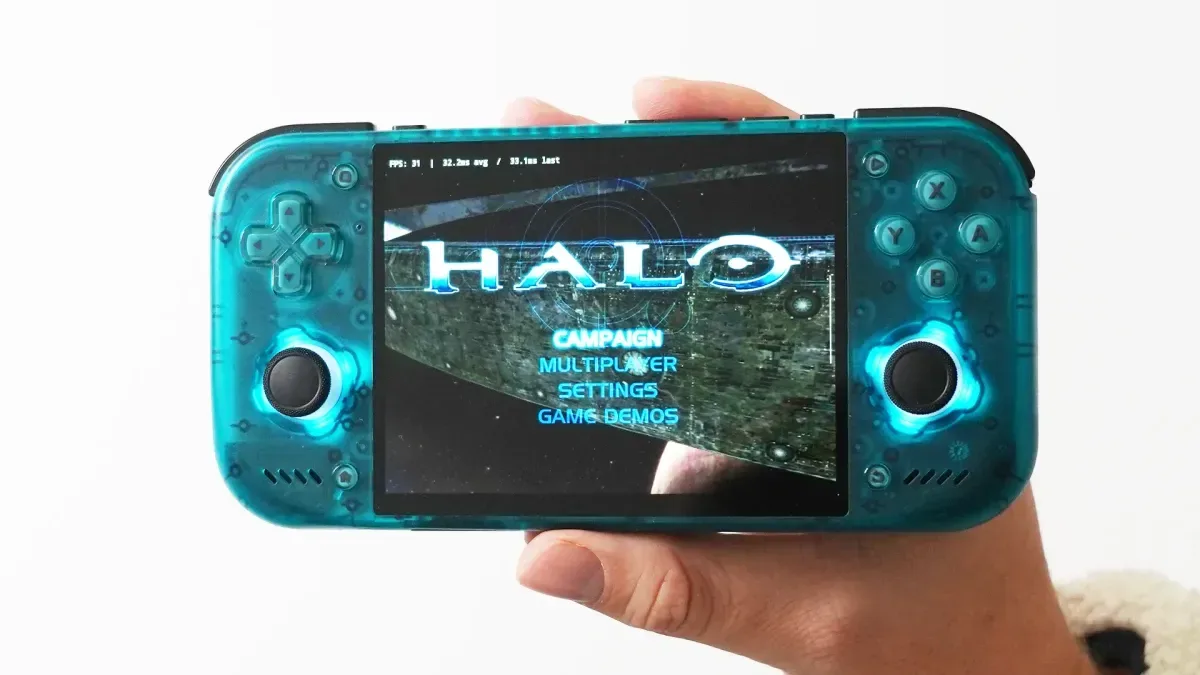
Android handheld owners have spent years hoping for a dependable way to revisit original Xbox games away from a television, but the road to that point has been uneven. Experimental apps have appeared, updates have promised progress, and compatibility claims have often proved difficult to reproduce across different devices. HakuX, a new Android emulator focused on Microsoft's first console, is attracting attention because it appears to clear a meaningful early hurdle: a sizable number of games can boot and run with encouraging performance on supported hardware.
The emulator is not yet positioned as a universal, effortless solution for the entire original Xbox library. Some high-profile games still display serious visual problems or require driver changes before they become reasonably playable. Even so, testing with the current 1.2.0 release points to an important step forward for an area of Android emulation that has long lagged behind systems such as the PlayStation 2, GameCube, PSP, and older cartridge-based consoles.
What HakuX is trying to accomplish
HakuX is an Android original Xbox emulator developed by r-fandango. It is presently distributed through GitHub rather than the Google Play Store, so prospective users must manually obtain and install its APK after conducting their own security checks. That alone places it more firmly in enthusiast territory than a consumer-ready app, particularly for people unfamiliar with Android's manual installation process.
Once installed, HakuX can be pointed to a folder containing game files in ISO or XISO ISO formats. The emulator then presents the detected library from its main screen. In favorable cases, games load quickly, controls are already mapped, and users can begin adjusting visual settings without a lengthy configuration process.
For useful background on this topic, read ATMOSFAR Reaches 400,000 Steam Wishlists Ahead of Early Access Debut.
The developer has said HakuX was rebuilt from the ground up while applying lessons learned from the limitations involved in optimizing an earlier Xemu fork. That distinction matters because Android original Xbox emulation has frequently been associated with projects that offer an impressive-looking interface but struggle to translate into stable, practical play on real handheld hardware. A clean rebuild does not guarantee broad compatibility, but the early results suggest HakuX is pursuing a more focused technical foundation.
Strong early results, including demanding Xbox games
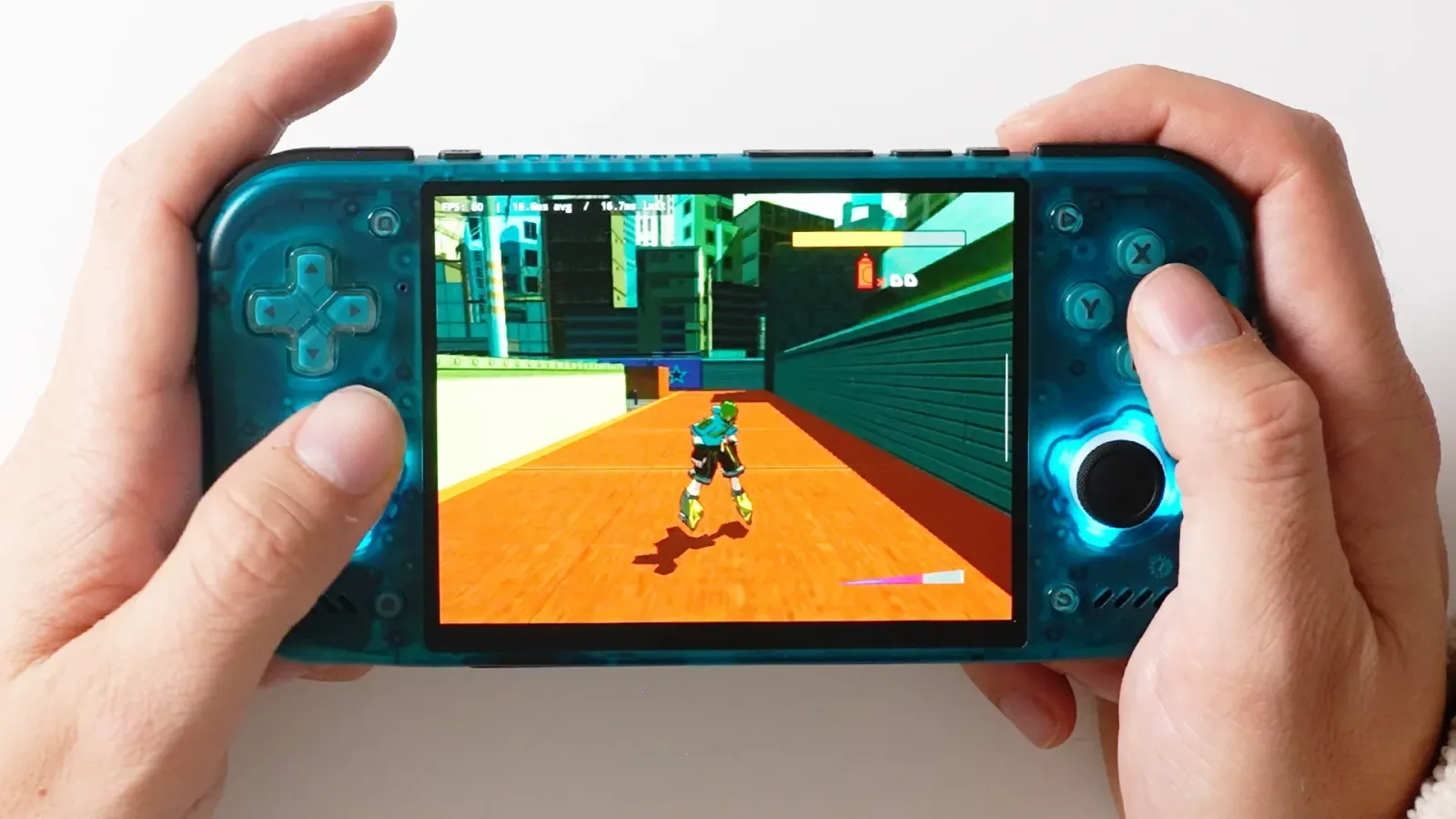
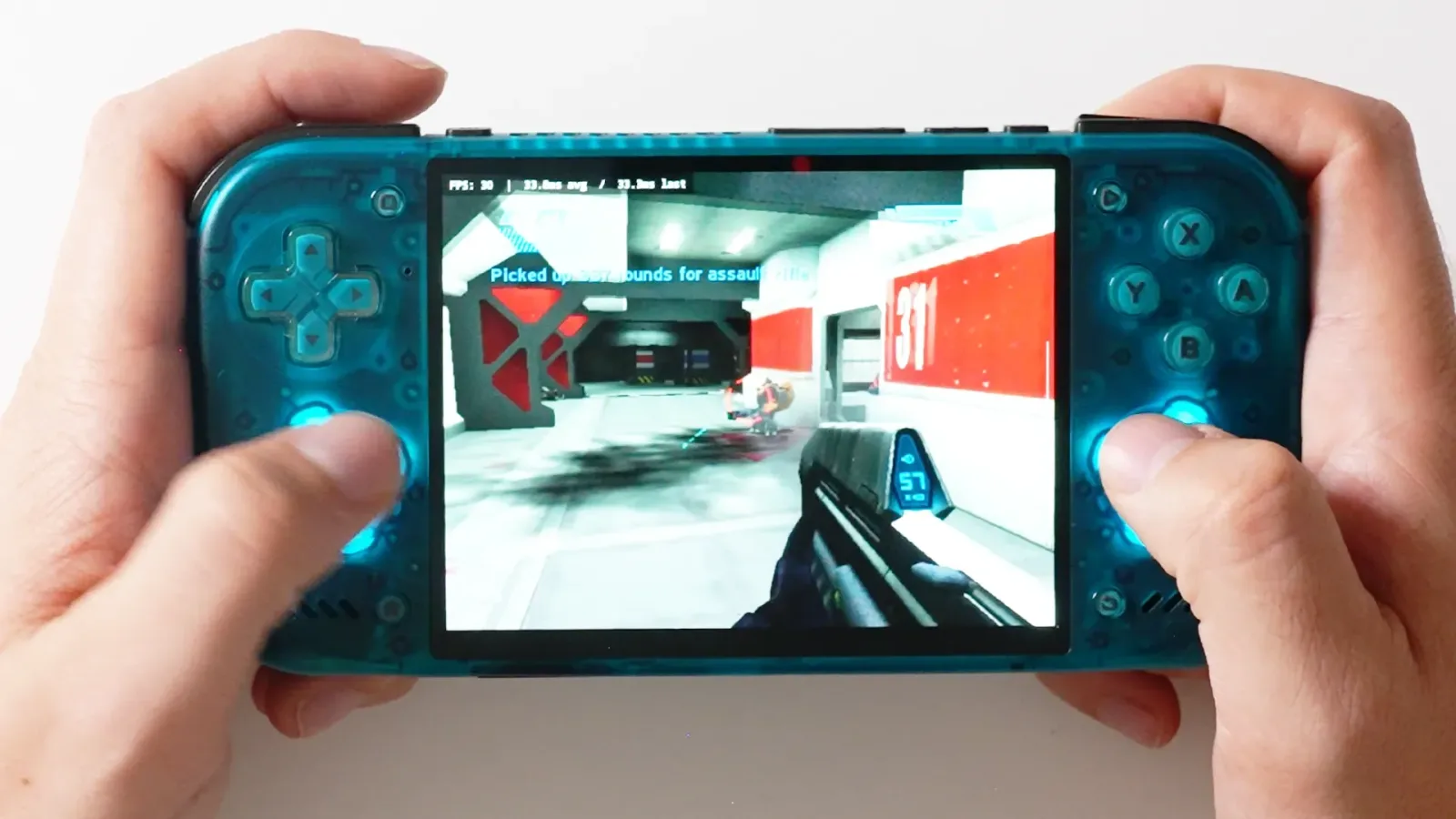
Initial testing on Retroid Pocket Duo and Retroid Pocket Nova handhelds has delivered particularly positive results with several demanding titles. Halo: Combat Evolved and Jet Set Radio Future reportedly ran at more than 30 frames per second. Those are notable games to see working well in this environment: Halo remains one of the original Xbox's signature releases, while Jet Set Radio Future is a frequently requested game for preservation-minded players because it has never received a straightforward modern rerelease.
A broader group of tested games reportedly produced good results roughly 80 percent of the time. That is not a compatibility guarantee, and a small test sample cannot define the behavior of the Xbox catalog as a whole. Still, it is a promising figure for software at this stage, especially when the successful titles include games known to be more demanding than the 8-bit, 16-bit, or early 3D libraries commonly associated with compact Android emulation devices.
HakuX also includes the settings users would expect from a modern handheld emulation app. Controls can be altered, aspect ratio can be changed, and games can be upscaled as high as 1080p where performance allows. There is local-area-network multiplayer support as well, meaning two people connected to the same Wi-Fi network can potentially use compatible games' LAN features. That is an especially fitting addition for an original Xbox emulator, considering how strongly the platform is associated with local multiplayer and system-link play.
The caveat: it is not plug-and-play for every game
For all of the excitement around HakuX's stronger showings, its limitations are just as important. Fable and Halo 2, two major Xbox releases, reportedly suffered from glitching visual artifacts during testing. These issues make clear that a game loading is not the same thing as a game being playable from beginning to end, and that performance can vary sharply even among titles from the same console.
Graphics drivers are a major part of that equation. The 1.2.0 update is said to bring meaningful performance improvements, especially on handhelds using Adreno graphics hardware. However, some games may need extra work beyond installing the emulator and selecting a ROM folder. Installing Turnip drivers improved both Fable and Halo 2 in testing, a result that is encouraging technically but less appealing for anyone hoping for a seamless setup.
This is the line that separates HakuX's potential from a full recommendation for every Android player. Users comfortable with experimenting with drivers, reading compatibility discussion, and trying alternate settings may get considerably more out of it than users who expect console-like simplicity. Driver installation and version selection can be confusing, and the best configuration may differ depending on the specific device, chipset, game, and emulator build.
That does not diminish the value of the improvements. It instead puts HakuX in the proper category: a fast-moving enthusiast project with tangible performance gains, not a finished all-purpose replacement for original Xbox hardware. Players should expect occasional glitches, games that fail to boot, and titles that need further optimization.
Why Android hardware makes this development worth watching
The appeal of a capable original Xbox emulator on Android is obvious. Modern Android handhelds provide portable screens, built-in controls, expandable storage, and increasingly powerful processors in a form factor that suits older game libraries exceptionally well. A reliable Xbox option would give owners access to a distinctive catalog that includes Microsoft exclusives, Sega favorites, arcade racers, shooters, and multiplatform games with versions that can differ substantially from their PlayStation 2 or GameCube counterparts.
Retroid's Pocket Duo and Pocket Nova were used for the reported tests, but results should not automatically be assumed for every Android phone or handheld. Hardware class, GPU architecture, cooling, operating-system version, and driver support can all affect emulation performance. The positive focus on Adreno-based devices in the 1.2.0 update is particularly relevant: Android's fragmented hardware landscape means emulator progress on one device family does not always translate directly to another.
Upscaling is another reason users will be watching closely. Original Xbox games were designed around standard-definition displays, and the ability to render them at higher resolutions can make a dramatic difference on a modern handheld screen. But higher resolution also increases the workload. Players chasing a crisp 1080p image may need to make compromises in harder-to-emulate games, while those prioritizing smooth performance may prefer native or modestly increased resolution.
A careful setup is still essential
Because HakuX is not on Google Play, users should be particularly cautious before downloading anything. They should verify they are using the project's legitimate distribution page, understand Android's installation permissions, and avoid unofficial repackaged builds. Backing up device data and checking community feedback on a new version are sensible steps for anyone testing early emulator software.
Players should also use game dumps created from software they legally own and comply with the laws that apply where they live. Emulators themselves are tools, but distributing or downloading copyrighted game files without permission raises separate legal and ethical issues. Keeping a well-organized personal library of properly dumped games is also helpful for HakuX, since the app scans a selected folder for supported ISO and XISO ISO files.
For newcomers, the most practical approach may be to start with one game known to perform well, test the default settings, and only then explore resolution changes, controller remapping, networking, or alternative graphics drivers. That makes it easier to identify whether a problem comes from the game, a setting, the device, or the driver stack.
An encouraging milestone, not the final destination
HakuX is not yet the flawless Android Xbox emulator many handheld fans have been waiting for. The visual artifacts seen in games such as Fable and Halo 2, along with the occasional need for Turnip drivers and manual tweaking, show that substantial work remains. Yet its success with games including Halo: Combat Evolved and Jet Set Radio Future gives the project a stronger foundation than many previous attempts.
For Android retro-gaming enthusiasts, that is enough to make HakuX one of the more interesting emulation projects to follow. Its 1.2.0 update appears to have improved performance in ways that users can actually see and feel, rather than merely adding another compatibility claim to a changelog. If future updates expand stability, simplify driver handling, and improve support for difficult titles, Android handhelds could become a far more convincing home for original Xbox preservation and portable play.
Community
Discussion
Start the conversation.
No comments have been posted yet.