

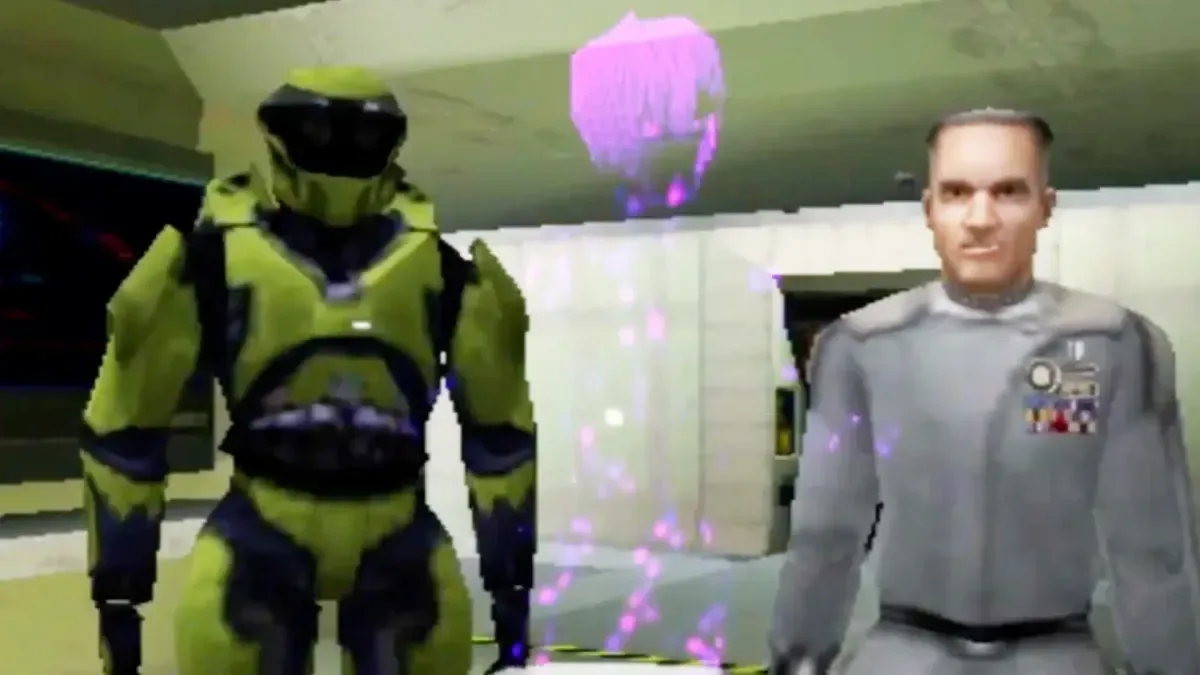
Halo: Combat Evolved has reached another unlikely piece of retro hardware. Following a recent effort that brought the landmark Xbox shooter to Nintendo 64 hardware, a separate work-in-progress project has demonstrated Bungie's 2001 classic running on the Sega Dreamcast.
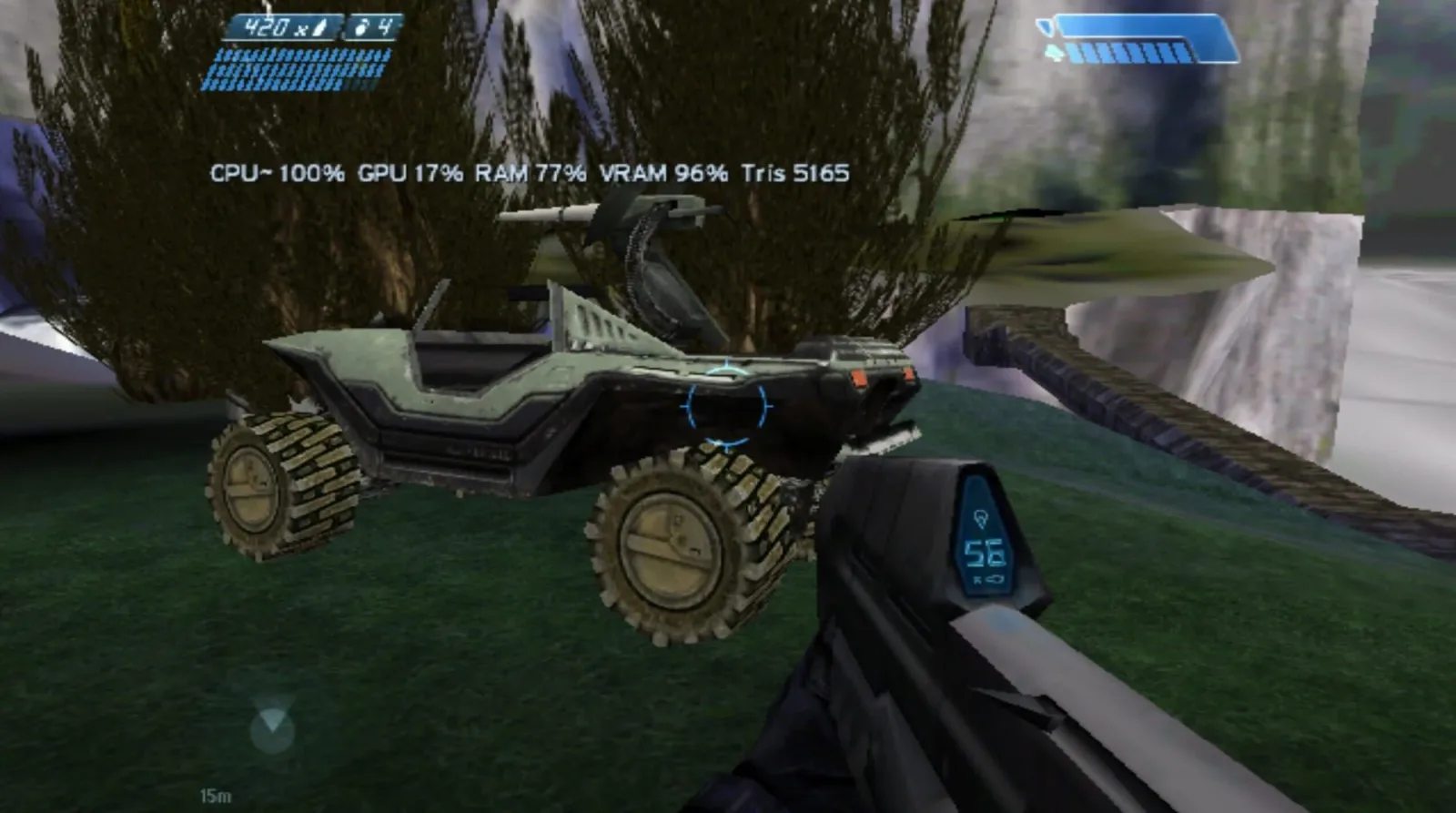
The early Dreamcast build is being developed by JiltedValkyrie, who shared more than 20 minutes of gameplay footage showing Master Chief moving through portions of the game's opening aboard the Pillar of Autumn, before exploring areas of Halo itself. It is far from a finished conversion, with visible bugs, extended loading, and uneven performance, but it is already a remarkable technical experiment for a console that launched before Halo's original Xbox debut.
That distinction matters. Halo was designed as a defining showcase for Microsoft's first console, while the Dreamcast was Sega's final home system and a machine with substantially less processing power at its disposal. Making the game run at all is an accomplishment; making it comfortable to play will be the much harder next step.
An early build with a familiar opening
The current footage gives Halo fans a recognizable starting point. The game opens with the Master Chief aboard the UNSC ship Pillar of Autumn, placing its classic corridors, Marines, enemies, and first encounters into a context few would have expected to see on Dreamcast hardware. The demonstration also includes a look at outdoor exploration on the Halo ring.
For useful background on this topic, read Rastan's Ambitious Amiga 500 Conversion Receives a New Work-in-Progress Update.
At this stage, the conversion should be understood as a technical project rather than a replacement for the original version. The build can be played, but it still has frequent visual and gameplay issues. Loading interruptions are notable, and glitches are part of the experience. Its performance also has clear room to improve, particularly when the screen is filled with enemy combatants, allied Marines, geometry, and effects.
Even so, the footage establishes an important baseline: this is not simply a proof-of-concept screen or a brief menu boot. It is Halo gameplay operating on real Dreamcast hardware, including some of the game's most immediately recognizable early environments.
Performance work is already under way
JiltedValkyrie has said that performance optimization has been an active focus, including work carried out through the night. One reported improvement involves removing dead enemies and Marines from play so they no longer consume valuable CPU time. That kind of despawning is a practical compromise in a project where every available cycle matters.
The developer also pointed to the cost of rendering skinned vertices, which can place significant pressure on the system's computation budget. Character animation is a major part of what makes Halo's battles feel alive, but it is also expensive. On a machine with limited resources, deciding what remains visible, what can be removed, and how long assets persist is crucial to keeping the action moving.
The Dreamcast's CPU runs at 200MHz. By comparison, the original Xbox used a 733MHz CPU and came with a much more capable graphics processor. Raw clock speed is not the only measure of a console's capability, and the systems have very different architectures, but the broad challenge is clear. Halo was built around hardware that had far more room for 3D scenes, character models, animation, effects, and combat encounters than Sega's earlier console can readily provide.
That makes a smooth, original-like frame rate difficult to expect, especially in combat. Still, the recent tweaks reportedly improved frames per second in those busier moments. For an unfinished fan-driven port, incremental gains such as these are meaningful, since they can determine whether a scene feels merely impressive to witness or genuinely viable to play.
The control problem is as important as the frame rate
There is also a significant practical limitation beyond graphics and CPU overhead: the standard Dreamcast controller is not a natural fit for Halo's modern twin-stick control scheme. The game requires simultaneous movement and camera aiming, and the stock controller does not provide two analog sticks.
As a result, the current Dreamcast version requires a controller with dual analog sticks, or alternatively a mouse and keyboard setup. That requirement makes sense for a first-person shooter as dependent on fluid aiming as Halo, but it narrows the project's plug-and-play appeal for owners using original peripherals.
For many players, Halo's success was tied not only to its world design and combat sandbox, but also to how it refined console shooter controls. Its original Xbox setup made the analog-stick approach feel intuitive to a huge audience. Translating that experience to Dreamcast, where the controller design belongs to an earlier moment in console development, is a fundamental compatibility obstacle rather than a minor inconvenience.
It also illustrates why ports to old hardware involve more than just getting code and assets to function. A project can technically boot, render environments, and run missions, yet still require new solutions for the physical interface players use every second. In Halo's case, a dual-stick controller or mouse-and-keyboard input is presently part of the package.
A new chapter in retro hardware experiments
The Dreamcast project arrives amid renewed interest in running Halo: Combat Evolved on machines that were never meant to host it. The Nintendo 64 effort drew significant attention among retro and Halo communities, and the Dreamcast build continues a broader wave of experiments that echo the long-running question of whether a device can run Doom.
Halo has become an especially fascinating candidate for this kind of work because its original version is strongly associated with a major hardware transition. It was an early Xbox flagship, a game that helped establish Microsoft as a console manufacturer, and a title remembered for pushing cinematic first-person action forward on living-room hardware. Seeing it squeezed onto platforms from the previous generation turns that history on its head.
These projects are also not attempting to hide their compromises. The limitations are part of the appeal. On original Xbox hardware, Halo's large spaces, driving sequences, AI encounters, atmospheric soundtrack, and distinctive visual identity were presented with resources that supported the game's ambitions. On Dreamcast, developers must constantly negotiate what can be displayed, simulated, animated, loaded, and controlled at any one moment.
That process can produce unusual versions of familiar games: enemies may vanish more aggressively after defeat, objects may be simplified, graphical effects may be reduced, and loading behavior may be more visible. Yet these concessions are often precisely what makes the undertaking interesting to retro enthusiasts. They expose the hidden technical decisions behind a game that, on its intended hardware, can appear effortless.
Why the Dreamcast remains a compelling target
The Dreamcast has retained a reputation as one of gaming's most beloved "what if" consoles. Sega's final home platform had a short commercial life, but its design, arcade heritage, distinctive library, and forward-looking features have given it a lasting enthusiast community. New homebrew, ports, and hardware experiments continue to find an audience because the system remains both capable enough to support ambitious ideas and constrained enough to make every breakthrough notable.
Halo is an especially striking fit in that respect. The game belongs to a period when first-person shooters were rapidly changing on consoles, and the Dreamcast itself was already home to games that demonstrated strong 3D ambitions. But the two were never natural contemporaries in the market: Halo arrived as a key Xbox exclusive after the Dreamcast era was effectively over.
That alternate-history quality is difficult to ignore. A playable Dreamcast Halo does not rewrite the past, nor does it mean the console could have delivered the same experience as the original Xbox without major changes. What it does offer is a glimpse of an impossible port--one created years later by enthusiasts willing to explore the boundaries of aging hardware.
What comes next for the project
There is no indication that the Dreamcast version is complete, that all of Halo: Combat Evolved is currently playable, or that a finished release is imminent. The available footage and comments instead point to a project still deep in performance work, testing, and iteration. More optimization will be needed before it can approach a consistently polished experience.
The immediate priorities are easy to see: reduce the impact of crowded fights, improve loading behavior, resolve bugs, and continue refining the use of Dreamcast CPU and graphics resources. Controller accessibility will remain another major question, since requiring dual-stick-compatible hardware or a mouse and keyboard is a substantial caveat for anyone hoping to play on original equipment.
For now, the most important takeaway is not that Dreamcast has received a definitive version of Halo. It has not. Instead, this is an evolving demonstration of what determined developers can attempt when they combine reverse-engineering knowledge, modern development tools, and a willingness to make difficult compromises. The build is rough, occasionally unstable, and technically constrained--but Master Chief is moving through the Pillar of Autumn on a Sega Dreamcast, which remains an extraordinary sight in its own right.
As work continues, the project will be one to watch for retro hardware fans, Halo historians, and anyone drawn to the increasingly inventive world of unlikely game ports.
Community
Discussion
Start the conversation.
No comments have been posted yet.