

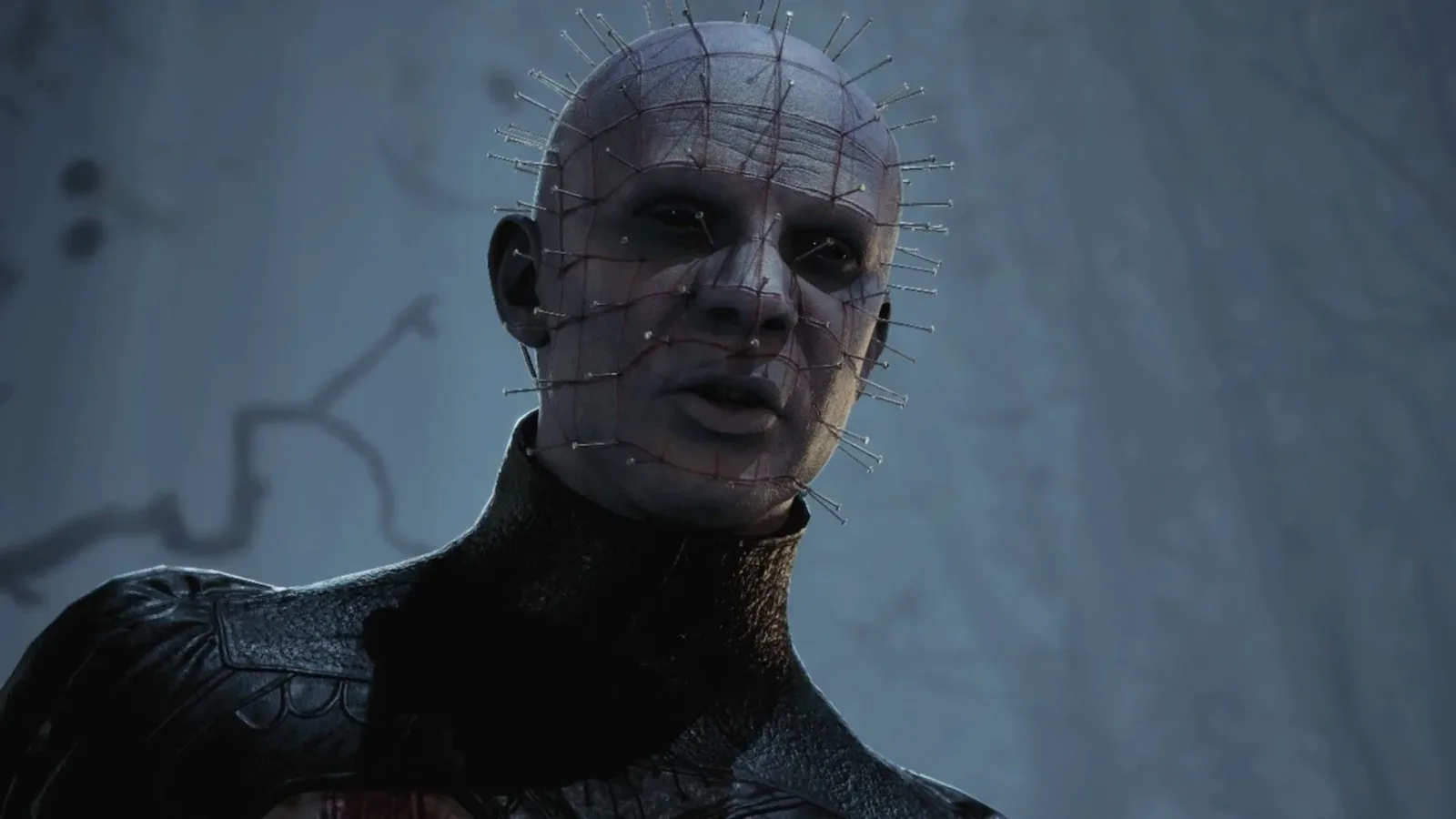
Clive Barker's Hellraiser: Revival is built around an idea that horror rarely presents as clearly as it should: the frightening part is not simply pain. It is the inability to stop pursuing a feeling, even when that pursuit has pushed far beyond anything recognizably human. Saber Interactive's first-person horror game takes that principle into the territory of the Cenobites, where agony, pleasure, devotion, mutilation, and curiosity no longer have meaningful boundaries.
That thematic foundation makes Revival a natural fit for fans of one of Warhammer 40,000's most excessive forces: Slaanesh and the Emperor's Children. The two fictional worlds are distinct, and Hellraiser is not attempting to become a Warhammer game in disguise. Yet the early material surrounding Aidan's journey through the Scarlet Church and the Labyrinth carries a remarkably similar atmosphere to the Chaos-worshipping excess associated with Slaanesh. In both cases, the danger begins with desire. The characters want to see, feel, create, consume, or experience more than the limits of ordinary life can offer. The nightmare follows when "more" is never enough.
Aidan's Descent Begins With Sensation
Revival opens in deliberately provocative fashion. Aidan is introduced in a BDSM-inflected sexual encounter before Hellraiser's iconic Hell Priest, Pinhead, and other Cenobites enter the scene. Sunny, Aidan's partner, is torn apart in an act of gruesome violence, but the reaction is not framed as straightforward victimhood. Aidan is horrified; Sunny seemingly is not. That contrast is important because it establishes the game's central tension almost immediately. Hellraiser has always treated the Cenobites as beings who have passed through the usual categories of pleasure and suffering, and Revival appears intent on making players confront that philosophy rather than merely fight monsters in dark corridors.
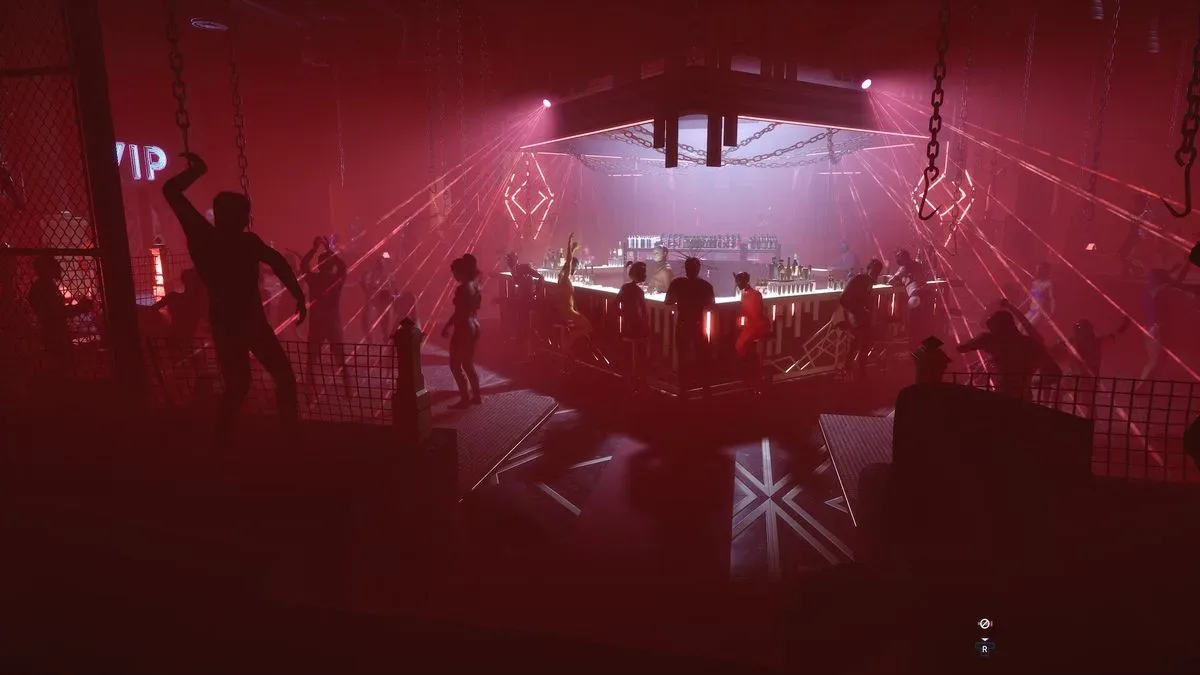
After escaping a torture chamber, Aidan reaches a sex club tied to the Scarlet Church, a cult devoted to the Cenobites. Just as he seems ready to abandon this world, Sunny's disembodied voice calls to him. The promise of saving or freeing Sunny draws him onward, but it also places him in the familiar horror position of chasing something he may not fully understand. The voice is an emotional anchor, a temptation, and a pathway deeper into a place where normal moral and physical rules have broken down.
For useful background on this topic, read The House of Tesla: Definitive Edition Brings Electrical Puzzles to iOS and Android.
That is where the comparison with Warhammer 40,000 becomes especially potent. Slaanesh is the Chaos God of excess, desire, obsession, perfection, and sensation. The deity's followers are not defined solely by lust, despite the surface-level shorthand often associated with the faction. They pursue every extreme: flawless art, sensory overload, violence as performance, pain as revelation, music that shatters sanity, and beauty twisted into something grotesque. Hellraiser's Cenobites operate from a similarly unsettling premise. They are not interested in a conventional distinction between heavenly joy and hellish torment. The point is transcendence through experience, whatever terrible form it takes.
The Emperor's Children Connection
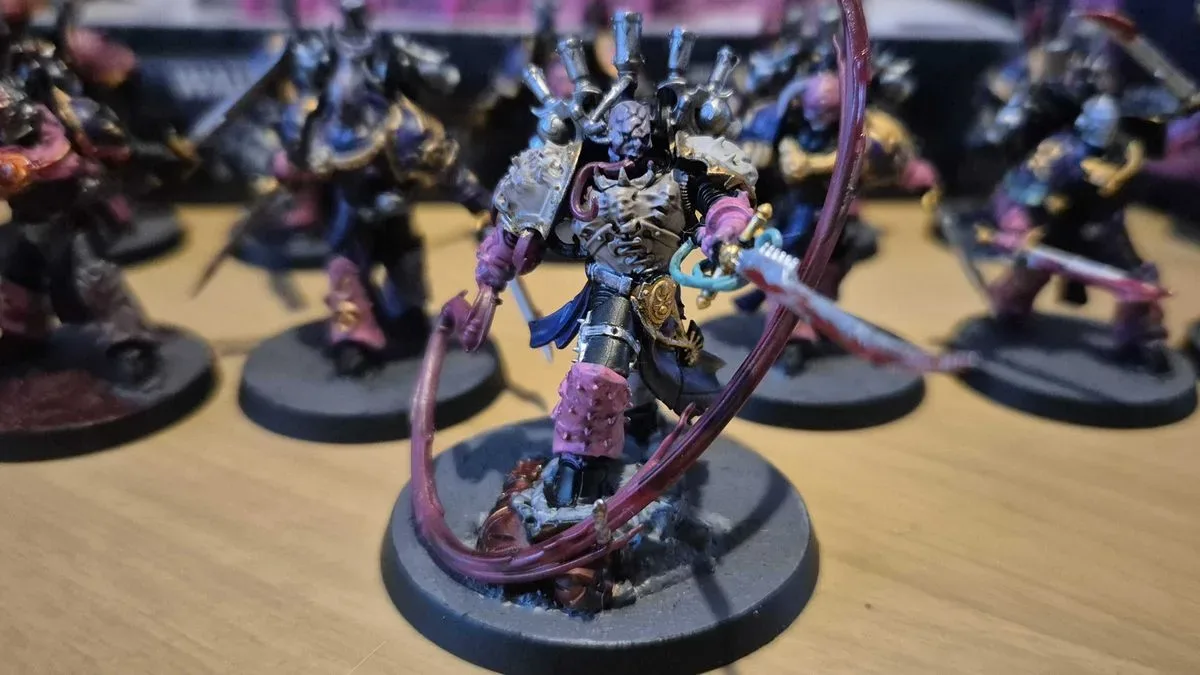
The Emperor's Children are perhaps Warhammer 40,000's clearest expression of this descent. Once an elite Space Marine Legion, they were proud, ambitious, and fixated on excellence. Their fall became a transformation of that drive into all-consuming appetite. In the events associated with the Laer temple, the Legion encountered a civilization steeped in ecstatic ritual and a strange call that pulled at their desires. What began as conquest and curiosity became a route toward Slaanesh, with the Legion increasingly surrendering itself to impulses that had once been restrained by military discipline, loyalty, and identity.
Aidan's route through Revival understandably recalls that arc. He enters a world where ritualized bodies, mysterious voices, and alluring horrors all push him toward a deeper confrontation with the unknown. The comparison is not about matching plot points one-for-one. Rather, it is about the emotional logic at work. Both stories understand that corruption is more compelling when it offers something to the person being corrupted. The forbidden realm cannot be merely repulsive. It must also be fascinating enough to make stepping closer feel possible.
That balance is central to Hellraiser's enduring power. A purely disgusting environment can shock an audience, but fascination creates a more lasting unease. The Labyrinth is frightening because it promises revelation along with ruin. In the same way, Slaanesh's influence is frightening because it magnifies impulses that are fundamentally recognizable: wanting to be better, hungrier, more creative, more satisfied, more alive. The horror lies in what happens when there is no internal limit left to say that enough has been achieved.
The Labyrinth as a Grimdark Space
Revival's version of the Labyrinth reportedly makes that overlap feel visual as well as thematic. The otherworldly environments are terrifying, but they are not presented as empty darkness. They possess an attraction that encourages continued exploration. Leather-bound enemies react violently when their private rituals are interrupted, treating attack as both self-defense and another form of sensation. That is a very Hellraiser concept, but it also would not feel out of place amid the cults, warbands, and corrupted pleasure-seekers of Slaanesh.
The human-world locations associated with the Scarlet Church further strengthen the grimdark impression. Mutilated bodies hang overhead while paintings are displayed as objects of pride, placing artistic expression and physical desecration side by side. It is an aesthetic that echoes the Emperor's Children at their most decadent: violence is not simply a practical tool or a sign of cruelty, but material for spectacle. The body becomes a canvas, an instrument, a sacrifice, or an art object.
Warhammer fiction has returned to that idea repeatedly, particularly in stories concerning the Emperor's Children. The Legion's obsession with perfection eventually makes ordinary standards of beauty meaningless. A work must be more shocking, more intense, more intimate, or more extreme than the last. That philosophy produces the kind of lavish grotesquerie that can make a setting simultaneously repellent and difficult to look away from. Hellraiser has long occupied a comparable space, where elaborate costume, flesh, ritual, and architecture combine into a nightmare with its own dreadful elegance.
Fabius Bile and the Horror of Experimentation
One apparent Scarlet Church figure is shown performing a surgical procedure on a living person, a moment that invites another Warhammer parallel: Fabius Bile. The infamous Emperor's Children apothecary is known for his grotesque experiments, his manipulation of flesh, and his pursuit of knowledge with little regard for consent or conventional ethics. He represents a different angle on Slaaneshi excess. His fixation is not simply on indulgence; it is on mastery, alteration, and the belief that the body is raw material waiting to be improved or remade.
That same clinical-yet-blasphemous energy suits Hellraiser perfectly. The franchise's horrors are often intimate. They involve hooks, skin, nerves, wounds, and deliberate transformations. The most disturbing imagery is not always the loudest or bloodiest. Sometimes it is the sense that a character has become an object in someone else's experiment, ritual, or artistic project. A surgical scene within the Scarlet Church therefore feels like more than another horror-game set piece. It reinforces the culture that Aidan has entered: one in which people are valued for what can be extracted from their capacity to feel.
Why the Comparison Works So Well
Hellraiser: Revival and Warhammer 40,000 approach excess from different directions. Hellraiser is intimate, sensual, and often centered on individual temptation, forbidden objects, and the violation of bodily boundaries. Warhammer is cosmic and militarized, expanding its horror across galactic civilizations, immortal gods, and armies that have turned themselves into monuments to obsession. Still, both understand that the most effective version of this horror is not random cruelty.
There is always a belief behind it. Cenobites offer an experience beyond human comprehension. Slaanesh's followers seek a final sensation or perfect expression that remains forever out of reach. The Scarlet Church worships the entities that have made transcendence and torment inseparable. The Emperor's Children devote themselves to a god whose gifts ensure that every satisfaction becomes a fresh hunger. These are visions of desire stripped of moderation, compassion, and consequence.
For players familiar with the Horus Heresy era and the Emperor's Children's fall, Revival's environments may feel especially recognizable. A bloodied gallery, a ritual chamber, or a figure calmly treating another person's body as a canvas can evoke the same grim fascination as the Legion's most infamous excesses. The connection is not that either setting is trying to duplicate the other. It is that both are drawing from a shared horror tradition in which beauty and revulsion become impossible to separate.
A Horror Game for the Morbidly Curious
That makes Clive Barker's Hellraiser: Revival potentially compelling for more than dedicated Hellraiser fans. Its use of Pinhead and the Cenobites gives it an unmistakable franchise identity, while its focus on cult activity, alluring nightmare spaces, and transgressive imagery creates room for a broader kind of dark fantasy horror. The game's first-person perspective should make Aidan's movement through these spaces feel immediate: every corridor, ritual, and encounter can become another invitation to look closer at something that should perhaps be avoided.
For Warhammer 40,000 fans drawn to Slaanesh, the Emperor's Children, or the body-horror experimentation surrounding Fabius Bile, Revival may offer a familiar kind of dread on a far more personal scale. It is not about battlefield conquest or the fate of an empire. It is about a person moving through a world that has made excess sacred, attempting to reach someone he cares about while every step risks bringing him closer to the same abyss.
Hellraiser: Revival's strongest shared thread with Warhammer's Slaaneshi horror is simple: both know that the most terrifying door is not always forced open. Sometimes it is opened willingly, by someone convinced that what waits on the other side might finally make them feel complete.
Community
Discussion
Start the conversation.
No comments have been posted yet.