

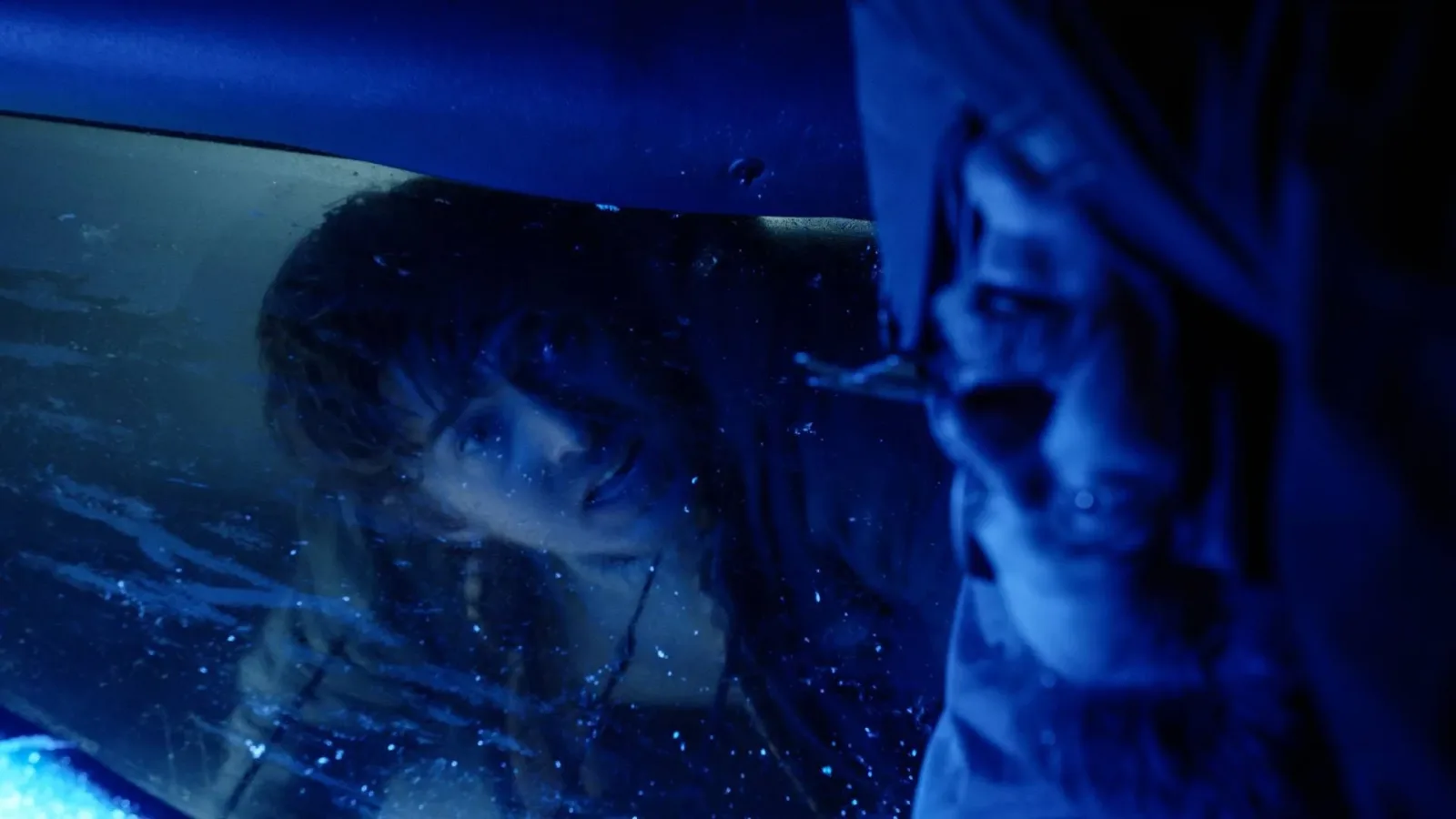
Hideo Kojima has offered an enthusiastic reaction to Zach Cregger's Resident Evil, describing the film as an experience that brought him back to the tension, frustration, and compulsive fear of playing the original 1996 game on PlayStation.
In a social-media post translated automatically from Japanese, Kojima said he went into the movie primarily because it was Cregger's latest project. But the filmmaker and game creator came away impressed by how aggressively the new Resident Evil leans into classic horror techniques. In particular, he highlighted its ominous musical cues, escalating horror set pieces, and sustained use of jump scares.
More notably, Kojima did not frame the movie as a straightforward attempt to convert one particular Capcom game into a feature film. Instead, he interpreted it as something closer to a film about the people playing Resident Evil--the "remote control operators," in his wording--rather than a direct screen version of the game's plot.
Embedded X/Twitter post
"This isn't a film adaptation of Resident Evil--it's a movie about the players ... who played Resident Evil," Kojima wrote in the translated post.
For useful background on this topic, read Marshall Monitor III ANC Headphones Drop to $250 in Limited Amazon Deal.
That distinction goes to the center of what many viewers want from an adaptation of a long-running interactive horror series. The strongest game adaptations do not necessarily need to recreate every room, enemy encounter, puzzle, or cutscene exactly as fans remember it. They need to understand why those moments worked in the first place. For the early Resident Evil games, the answer was often vulnerability: limited resources, unfamiliar spaces, an ever-present threat of death, and the unnerving realization that the player's next decision could waste valuable ammunition or lead directly into disaster.
Kojima's comments suggest Cregger's film captures that sensation without attempting a one-to-one reconstruction. The movie draws from the games' wider lore, but it is not presented as a strict adaptation of a single entry. Its story is set on the periphery of Resident Evil 2, placing it near a familiar part of the franchise's timeline while leaving room for its own perspective and characters.
A return to the original Biohazard feeling
In Japan, the original Resident Evil is known as Biohazard, and Kojima specifically compared the movie's effect to his first time playing that landmark PlayStation release in 1996. He likened himself to Bryan, a character in the film, and recalled repeatedly getting killed in the game while yelling in frustration.
It is a particularly fitting comparison for a series built around failure as part of its horror language. Modern audiences may associate Resident Evil with action spectacle, especially after later installments pushed toward more elaborate combat and blockbuster-scale threats. The first game was different in texture. It made players move carefully through the Spencer Mansion, manage a small inventory, and confront enemies that could be terrifying simply because the controls, camera angles, and available supplies made every confrontation feel hazardous.
That early-game anxiety is difficult to transfer directly to film. A player has agency; they can choose to open a door, inspect an item, flee an enemy, or risk using their final healing herb. A movie viewer cannot make those choices. Cregger's apparent answer, at least as reflected in Kojima's reaction, is to make the audience feel the mounting pressure of somebody stuck inside the kind of nightmare that the games famously create.
The opening immediately set the tone for Kojima. He said the film begins with background music that evokes the style of John Carpenter's The Thing, the paranoia-soaked science-fiction horror classic. From there, he felt the movie continually stacks traditional horror imagery and scenarios with a steady barrage of shocks. That is a substantial clue to the film's approach: rather than treating the brand as merely an action vehicle with monsters, it seems intent on foregrounding dread, surprise, and discomfort.
Why Kojima's reaction carries weight
Kojima's opinion is notable not just because he is one of gaming's most recognizable creators, but because his own work has repeatedly examined the overlap between games and cinema. From the cinematic presentation of the Metal Gear series to the film-industry collaborations surrounding Death Stranding, Kojima has long engaged closely with movies, genre storytelling, and the question of how interactive works can borrow from screen language without losing their identity.
His remarks on Resident Evil therefore land as more than simple franchise nostalgia. He appears to have responded to the movie's ability to reinterpret a familiar gaming emotion through a non-interactive medium. Calling it a film about the players may be his way of saying it does not merely borrow names, creatures, and locations. It recreates the sensation of being caught in the games' cruel rhythm of anticipation, panic, failure, and trying again.
Fans who follow Kojima's movie commentary also frequently scrutinize the length and detail of his posts. While there is no formal rating system attached to them, longer reflections are often taken as a sign that a film made a stronger impression on him. His response to Resident Evil was far more expansive than some of his brief reactions to other high-profile releases, making the positive tone difficult to miss.
Alongside his comments on Cregger's movie, Kojima also mentioned being pleased to pick up a pamphlet connected to The Dig, Tom Cruise's new movie, referred to in his post as Digger. The aside is characteristic of a post that reads as a personal theatergoing reflection rather than a conventional review, but the bulk of his attention remained on the horror film and its connection to the earliest Resident Evil experience.
Resident Evil without a rigid single-game blueprint
The decision to position the film around the edges of Resident Evil 2 rather than bind it completely to that game gives Cregger's version a potentially useful degree of freedom. Resident Evil 2 is among the series' most beloved entries, with an especially recognizable Raccoon City setting, police-station locations, and characters. A literal adaptation would invite immediate scene-by-scene comparisons, from casting and creature design to which campaign route or story variations were selected.
A peripheral story can instead use the setting's identity as a foundation. The looming catastrophe, biological horror, and institutional secrecy associated with the franchise can still be present, while the film can create its own pace and use its own protagonists to build suspense. That does not eliminate the challenge of satisfying longtime fans, but it may allow the movie to chase the series' mood more effectively than a checklist-style adaptation would.
It also fits a franchise that has never stood still. Across games, animated projects, live-action films, remakes, and spin-offs, Resident Evil has been reimagined many times. Some versions focus on survival horror; others lean into action, conspiracy thriller storytelling, camp, or outright spectacle. Cregger's take appears to put horror-comedy and blood-soaked fear at the front, while still aiming to evoke the player's relationship with danger.
Early critical reaction has similarly been positive. One published assessment awarded the film four stars and called it frightening, funny, and exceptionally bloody, arguing that it ranks among the genre's strongest horror-comedies and could be a leading contender for the best video game movie so far. That reaction aligns closely with Kojima's emphasis on relentless scares, though his own comments focus more directly on what the movie means to someone who remembers the original PlayStation game.
The value of making viewers feel like players
For a series with nearly three decades of history, the most meaningful compliment may be that Resident Evil did not simply remind Kojima of its lore. It reminded him of how he felt while playing. That is a more elusive target than faithfully reproducing costumes or monster designs, and it is also the quality that has helped the best horror games remain memorable long after players know where the scares are hidden.
The original Resident Evil made players fear the next room. Its successors expanded that formula in different directions, but the core experience was always rooted in uncertainty. Whether Cregger's film ultimately becomes a favorite among the wider fanbase will depend on how audiences respond to its particular mix of comedy, gore, and horror. Kojima's reaction, however, indicates that it has already connected with at least one creator deeply familiar with the emotional power of the series.
For viewers hoping for a Resident Evil movie that understands the franchise as more than a collection of recognizable names and monsters, that is an encouraging sign. The film's apparent ambition is not simply to show an outbreak from a safe distance. It wants to put the audience in the position of someone who has just opened the wrong door, heard something moving nearby, and realized that another game over may be only seconds away.
Community
Discussion
Start the conversation.
No comments have been posted yet.