

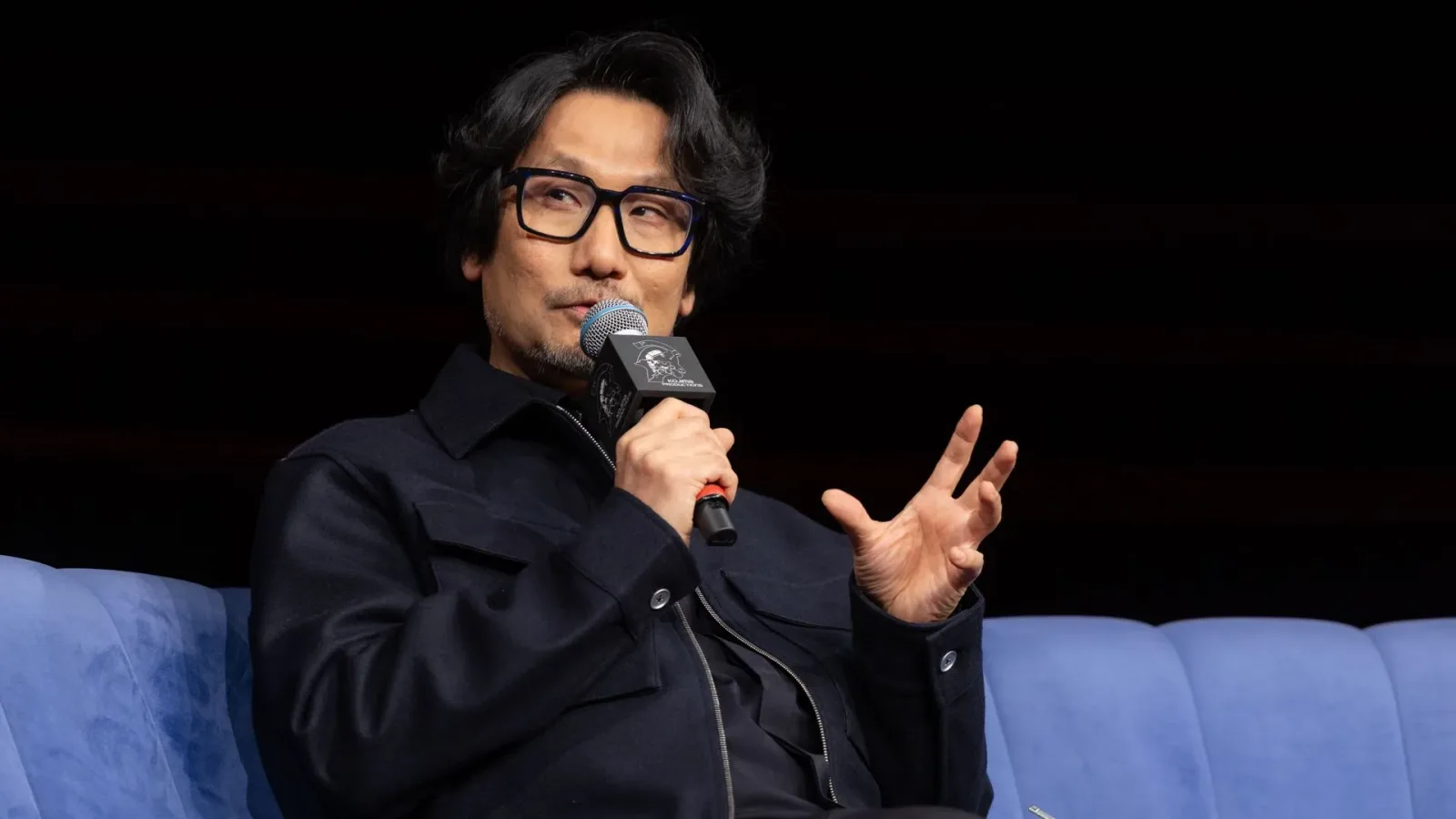
Hideo Kojima has offered high praise for Backrooms director Kane Parsons, while also candidly admitting that he feels a measure of envy at the 21-year-old filmmaker's remarkably early arrival in major studio filmmaking.
Speaking during the Japanese premiere of Backrooms, Kojima reflected on the difference between Parsons' path and his own. Kojima, now 63, was also a young creative when he made the first Metal Gear at 23. But while he began shaping one of gaming's most influential series in his early twenties, the chance to work with film company A24 did not emerge until he was around 59.
"I made Metal Gear at 23 - but A24 didn't get in touch with me until I was about 59," Kojima said when asked about the connection he sees between himself and Parsons. "So it's completely different, isn't it?"
Kojima then put his feeling more directly: "I'm envious, honestly. There was no A24 when I was about 25. I wish they'd called."
For useful background on this topic, read Gundam Rogue Orbit Hands-On: A Fresh Mech War Built for New Players.
A young filmmaker's unusual route to the big screen
Parsons' career has been anything but conventional. Before directing a theatrical feature, he built an audience online, including through animated Attack on Titan fan films. His breakthrough came with The Backrooms, a short released on YouTube that accumulated 93 million views. The project transformed a piece of online horror culture into an especially visible calling card for a young director working with digital tools and internet-native ideas.
That momentum eventually led to the feature-film version of Backrooms. Parsons directed the movie when he was 20, and he has since become the youngest director to have a debut film open at number one at the box office. The film has also been one of the major success stories of 2026's record-setting summer at the box office.
For Kojima, Parsons' age is only part of what makes the achievement stand out. The game creator focused on the director's roots in digital media and what can happen when those instincts are brought into a traditional filmmaking context.
"He's 21, and I'm 63. But when people who grew up digital take that digital sensibility and burn it onto analogue film -- I think what you'll see is just how remarkable a result that can be."
The thought is particularly fitting coming from Kojima, whose work has consistently crossed boundaries between games, cinema, music, fashion, performance, and internet culture. His projects have long been discussed through a cinematic lens, but his comments at the premiere underline a slightly different point: digital-first artists do not merely inherit established film language. They can bring new ways of thinking about mood, editing, imagery, scale, and audience engagement when they move into filmmaking.
From Metal Gear to a changing media landscape
Kojima's comparison also draws attention to how dramatically the paths into entertainment have changed. He created the original Metal Gear at 23, establishing foundations for a series that would become synonymous with stealth action and elaborate storytelling. Yet the industry around game creators in that era was very different from the one Parsons entered.
Today, an online short can reach tens of millions of viewers without a conventional studio launch. A creator can demonstrate not only artistic ability but also an understanding of tone, production workflows, and audience interest in public, long before a first feature is made. Parsons' The Backrooms is an example of that potential: a compact project from online video culture that gained a reach normally associated with much larger productions.
That does not make Parsons' accomplishment simple or automatic. Moving from a viral short to a number-one theatrical debut is an extraordinary leap, especially for a director so early in his career. Still, the route itself would have been difficult to imagine when Kojima was first developing games. His remarks about wishing A24 had existed when he was 25 are a humorous observation, but they also recognize how new companies and new distribution channels can create opportunities that were previously unavailable.
The generational contrast is notable because Kojima's own career has helped make conversations between games and film more commonplace. The Metal Gear Solid games became famous for their dramatic cutscenes, dense political themes, and presentation that frequently embraced filmic spectacle. More recently, Death Stranding has continued Kojima's interest in ambitious audiovisual storytelling, while attracting performers and collaborators closely associated with film and television.
Even so, Kojima did not frame Parsons as simply following the same route. Instead, he treated the Backrooms director's success as evidence of a distinct digital generation making its own transition into cinema. That distinction matters. Parsons' experience began with web video and a phenomenon that spread through online spaces; Kojima's began in the game industry decades earlier, in a period before today's creator-driven platforms existed.
Kojima's own A24 project remains in development
The A24 reference carries an obvious extra significance for Kojima. He is currently collaborating with the company on a film adaptation set in the Death Stranding universe. Michael Sarnoski, whose directing credits include Pig and A Quiet Place: Day One, is attached to direct the project.
There is still no confirmed release date for the Death Stranding film. As a result, details about how it will adapt or expand on the game universe remain limited. The involvement of Sarnoski, however, gives the project a filmmaker with experience in both intimate character-focused work and a large-scale studio genre release.
Kojima's comments at the Backrooms premiere should not be mistaken for an indication that he is leaving games behind for cinema. Around his 63rd birthday, he said that he would like to remain focused on creating games despite the attention and possibilities offered by movies. That stance makes his relationship with film look less like a career change and more like another extension of a creative practice that has always drawn from multiple mediums.
For fans of Death Stranding, that is likely a reassuring message. The adaptation can develop as a separate expression of the universe without requiring Kojima to abandon the interactive work that made his name. For the broader games industry, it is also a reminder that film adaptations are no longer necessarily treated as an endpoint or a replacement for game development. They can exist alongside new games, bringing different creators and audiences into the same fictional world.
Why Kojima's praise matters
Kojima's endorsement is meaningful not just because of his stature, but because he understands the pressures of being regarded as a young visionary. He knows what it means to make defining creative work early, then spend decades navigating the expectations created by that success. His response to Parsons contains admiration, amusement, and a clear awareness that the opportunities available to artists are shaped by their time.
There is also generosity in the way he described Parsons' accomplishment. Rather than presenting the younger director as an anomaly who must prove himself against established names, Kojima emphasized the value of his digital upbringing. In doing so, he suggested that the next generation's tools and creative backgrounds can produce work that established industries should take seriously.
Backrooms has already turned a YouTube-era horror concept into a major box-office result, while Parsons' number-one debut has made him a record-setting young director. Kojima's response at the Japanese premiere captures the unusual scale of that rise. A creator who launched a genre-defining game series at 23 can still look at a 21-year-old filmmaker's route to a theatrical hit and see something new to admire.
For Kojima, the comparison ends not in bitterness but in appreciation. He may wish an A24-like opportunity had appeared earlier in his own career, yet his current work with the company shows that the connection has arrived nonetheless. Meanwhile, Parsons' ascent offers a vivid sign of how quickly a digital creator's work can travel from an online audience to cinema screens. Their careers began in different eras and different forms, but both point to the increasingly porous line between games, online media, and film.
Community
Discussion
Start the conversation.
No comments have been posted yet.