

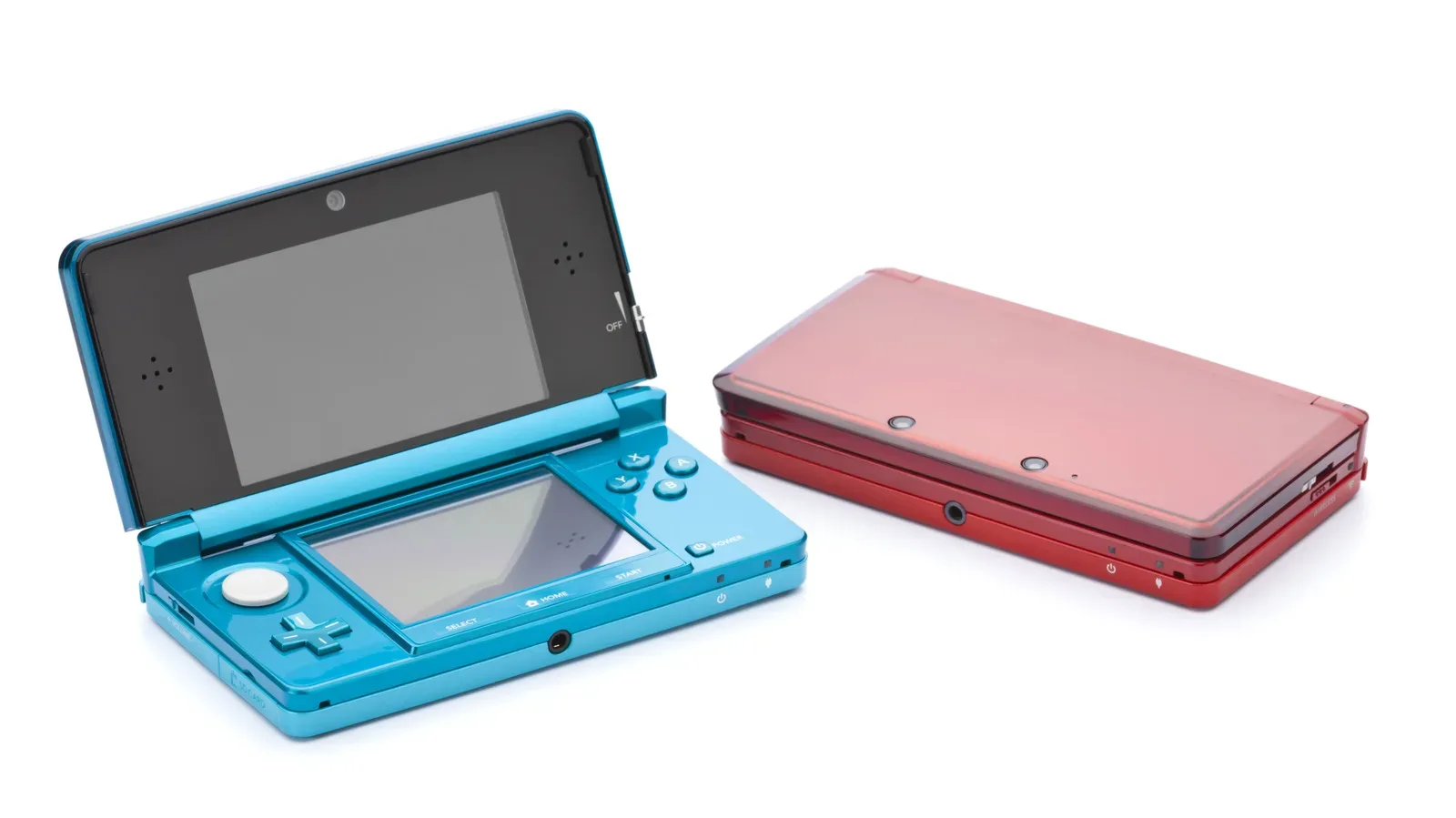
The Nintendo 3DS has been out of production for years, its eShop is closed, and Nintendo's official online services for the system are no longer running. On paper, that sounds like a firm reason to move on. In practice, the handheld still occupies a very unusual place in 2026. It has one of Nintendo's richest portable libraries, a compact clamshell body that remains genuinely easy to carry, and an identity that newer hardware has never completely replaced.
That does not mean a 3DS is automatically a bargain or the right answer for everyone. The used market has changed dramatically. Systems that once felt like inexpensive secondhand pickups can now cost more than expected, while certain physical games have become serious collector items. Meanwhile, a refurbished original Nintendo Switch can be a less expensive way to access a different, broader modern Nintendo catalog.
Whether the 3DS is worth buying now comes down to a few simple questions: which games are you hoping to play, how much do you value real pocketability, and how comfortable are you with a discontinued platform that increasingly depends on physical collecting or community-maintained solutions?
The biggest obstacle is no longer age -- it is price
For many years, the Nintendo 3DS family was an easy recommendation for budget-minded players. Used original models could be found around the $100 mark, and even the larger systems were often relatively accessible. That is no longer a dependable expectation.
For useful background on this topic, read Disney Says It Is Not Discussing an Epic Games Acquisition 'Right Now'.
In 2026, refurbished 3DS units can sell for around $250 at GameStop, with XL versions often commanding still more. Condition, model, color, included accessories and regional demand can push prices in different directions, but the broad reality is clear: the 3DS is no longer simply a cheap old handheld.
That changes the value calculation. A refurbished original Nintendo Switch is available for about $180, making it a less expensive hardware purchase in some cases. The Switch is newer, has access to currently supported software, and receives ports or remakes of a number of games associated with earlier Nintendo systems. Anyone who mainly wants a convenient Nintendo machine rather than the specific experience of using a 3DS should compare both options closely.
The price issue extends to games. Plenty of 3DS cartridges remain reasonably priced, particularly common releases and games that were widely distributed. But some sought-after titles are far more expensive than they were when new. The Yo-kai Watch series and Dragon Quest VIII: Journey of the Cursed King, for example, can demand notably higher prices on the secondary market. Building a physical library can become expensive very quickly if a player's wish list leans toward harder-to-find role-playing games or niche releases.
The shutdowns matter more than many buyers expect
Nintendo shut down 3DS eShop purchases in 2023, ending the ability to buy new digital games and downloadable content through the storefront. In 2024, the company also closed online services for the 3DS. The result is a system whose official ecosystem is substantially diminished.
For a first-time buyer, the eShop closure is especially important. There is no longer a straightforward official route to browse older digital exclusives, pick up discounted downloads, or fill gaps in a collection without tracking down cartridges. Players are largely limited to the physical market when buying games for a stock system.
The loss of official online functionality also removes an important piece of the 3DS era. Competitive matches, co-operative sessions and other online features are no longer available through Nintendo's servers. Miiverse, which was once a distinctive social feature across Nintendo hardware, is also part of that lost period.
StreetPass remains a special case. Because its local wireless interactions do not rely on Nintendo's online servers, the feature can still function when 3DS owners pass close enough to one another. It remains one of the system's most charming ideas: carrying the console could quietly exchange game data, Mii characters, puzzle pieces and other small surprises with nearby users. The practical challenge in 2026 is finding other people still carrying a 3DS in everyday life. StreetPass is alive in a technical sense, but much harder to encounter organically.
Its form factor is still difficult to beat
The strongest argument for the 3DS is not nostalgia alone. It is the physical design. Even as handheld gaming has flourished, many modern portable devices are large enough that they require a bag, case or dedicated compartment. The Switch family, Steam Deck-style devices and Xbox Ally hardware all make portability possible, but they do not offer the same grab-and-go convenience.
A 3DS, particularly when closed, can fit into a jacket pocket or purse with little fuss. The clamshell layout protects the screens during travel, reducing the anxiety that comes with tossing an exposed-screen device alongside everyday items. For commuters, frequent travelers, or anyone who wants a system ready for a short train ride or waiting room session, this remains a major advantage.
The design is also notably resilient. The lid provides a measure of built-in protection, and the family of systems has a reputation for standing up well to regular use when treated reasonably. Basic repairs and cosmetic maintenance can be approachable for owners willing to learn: circle pads and exterior shells are examples of parts that can be replaced. Naturally, older used hardware can have worn batteries, damaged hinges, unreliable buttons or screen issues, so buyers should inspect listings carefully and factor potential upkeep into the purchase.
The game library is the reason to own one
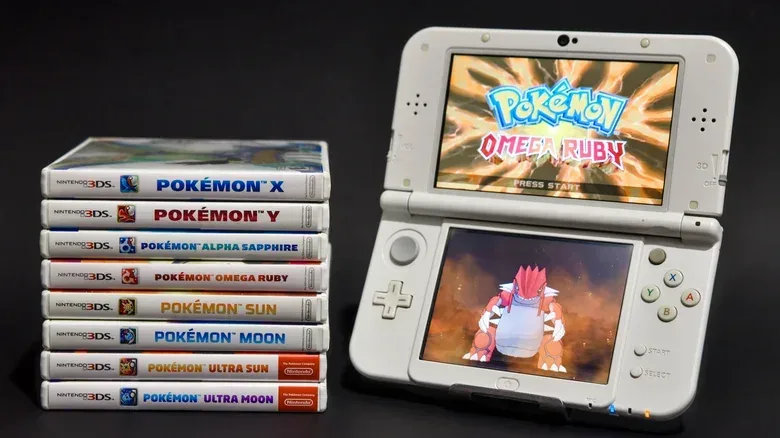
A 3DS makes the most sense for players who specifically want its catalog. The system offers a deep mix of Nintendo franchises, role-playing games, strategy titles, puzzle games and unusual dual-screen experiences. It also carries the legacy of the original DS through backward compatibility, effectively opening the door to two major handheld libraries on one device.
That last point is easy to overlook. The DS and 3DS were built around two screens, touch input and, in some cases, unique use of the microphone, cameras or stereoscopic display. Ports can preserve a game's story or core mechanics, but they do not always recreate the original hardware feel. Games designed around switching attention between screens can feel fundamentally different elsewhere.
The 3D display itself is similarly personal. Some players love the depth effect and the sense that it gives certain games a little extra visual character. Others leave it disabled, either for comfort or to extend battery life. It is not essential to enjoying the system, but it remains a feature that distinguishes the hardware from later Nintendo portable options.
There is also something refreshingly focused about the interface. The 3DS was designed as a game machine first. Its menus, icons and built-in applications have the colorful, toy-like charm associated with the era, without the constant pull of ads, social feeds or phone notifications. For players trying to separate game time from the rest of their connected life, that simplicity can be a benefit rather than a limitation.
Community projects can expand its possibilities, with caveats
The end of Nintendo's official support has encouraged community efforts to preserve aspects of the 3DS experience. Pretendo is one prominent project working to provide replacement network functionality for Wii U and 3DS games. It does not support every game, and its coverage continues to develop, but it represents a promising option for people interested in restoring parts of the online experience.
Using such services requires modifying the console. The 3DS is widely regarded as one of the more approachable systems to modify, with an SD card forming a central part of the process. Modding can also enable homebrew applications and emulation capabilities, potentially turning the handheld into a device for revisiting older software libraries.
Prospective owners should approach this route carefully. Modifying hardware involves responsibility, research and some risk, particularly if instructions are followed poorly. Players should also understand and follow the laws that apply where they live, as well as respect the rights attached to games and software. Community tools can make an aging system more flexible, but they are not a substitute for official support and should not be treated as effortless solutions.
Who should buy a 3DS in 2026?
The Nintendo 3DS is still worth buying for a player who wants its specific games, values a truly compact handheld, or is drawn to the original DS and 3DS design philosophy. It is particularly appealing for people who missed the generation entirely and want to explore a library that remains varied, inventive and full of handheld-focused experiences.
It is less compelling for someone whose goal is simply to buy the cheapest Nintendo system available. With refurbished original Switch systems available around $180, the 3DS can be the more expensive entry point before games are even considered. It is also not ideal for players who prioritize active official multiplayer, effortless digital purchasing, or access to the newest releases.
Alternatives exist for people focused primarily on older portable games. Companies such as Anbernic sell DS-style portable emulation devices for about $95, although these are limited to DS and earlier emulation rather than 3DS software. They may be worth considering for those interested in earlier handheld catalogs, but they do not replace what makes Nintendo's dual-screen 3D system distinct.
The bottom line: the 3DS is no longer an obvious low-cost recommendation, and its discontinued official services are a meaningful compromise. Yet it remains one of the most portable mainstream gaming devices ever made, with a library that has aged exceptionally well. Buy one in 2026 because you want the 3DS experience--not because you assume old hardware will be cheap. For the right player, it is still a wonderful little console. For everyone else, a Switch or another handheld may provide better value.
Community
Discussion
Start the conversation.
No comments have been posted yet.